
Table of Contents
Introduction
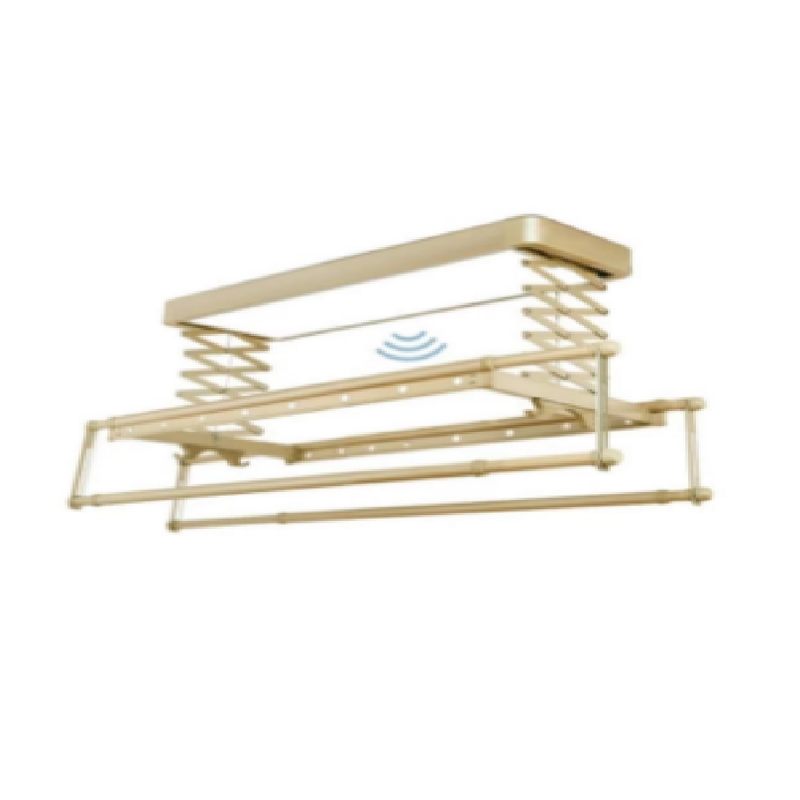
A small laundry room can have enough space for a washing machine, storage cabinets, and normal movement while still having nowhere convenient to dry clothes. The problem is often not the total size of the room but the way usable space is distributed. Floor area is already occupied, ceiling space may contain lighting or other equipment, yet one section of wall can remain almost completely unused.
A fold down drying rack approaches this problem differently from a portable floor rack. Instead of being carried into the room whenever laundry needs drying, the supporting structure stays attached to the wall. The drying section opens outward when required and returns toward the wall after the clothes are removed.
This creates a predictable temporary drying zone without introducing another large freestanding object into the room. However, the design works well only when the wall, mounting position, folding direction, open projection, wet-laundry load, and surrounding furniture have been considered together.
The important measurement is therefore not simply how thin the rack looks when folded. A successful fold down drying rack must work in two very different conditions: nearly flat against the wall when inactive and strong, accessible, and stable when extended with wet clothing.
Fold Down Is Different from Carrying a Folding Rack Away
Portable folding racks and wall-mounted fold-down racks both reduce their physical presence after drying, but they solve the storage problem differently.
A portable rack changes location. When laundry is finished, the complete structure can be folded and carried into a cupboard, beside an appliance, or into another room. The advantage is flexibility because the drying position can change whenever necessary.
A fold down drying rack normally remains in one location. Instead of removing the complete frame, users rotate or collapse the drying section toward the supporting wall.
This creates a permanent drying address inside the home without requiring permanent drying volume.
The distinction matters in households where storage is limited. A portable rack may fold very thinly yet still need somewhere to go. A wall-mounted fold-down structure uses the wall itself as its storage position, which eliminates the repeated cycle of carrying the rack into and out of the laundry area.
The compromise is that the chosen wall becomes important. Once installed, the drying zone no longer moves according to weather, sunlight, or changing room arrangements.
The Wall Becomes Part of the Drying Structure
A freestanding rack carries its load through legs that transfer weight to the floor. A wall-mounted rack transfers that load into its mounting points and the supporting wall.
This changes the engineering problem significantly.
The wall does not simply keep the rack from falling over. When the drying section extends outward, the weight of wet laundry acts at a distance from the mounting surface. This creates leverage against brackets, fasteners, joints, and the supporting structure behind them.
The basic behavior is closely related to the idea of a cantilever, where a projecting member is supported at one end while loads act along the unsupported section.
For a drying rack, the practical lesson is straightforward: the farther the loaded rails extend away from the wall, the more important the supporting structure becomes. Increasing drying depth without considering the wall connection can create a rack that appears spacious while empty but feels less secure once towels and wet garments are added.
A fold-down design therefore needs to be evaluated as a complete wall-mounted system rather than simply as several folding rods.
Closed Depth Is Only Half of the Space Calculation
The appeal of a fold down drying rack is obvious when it is closed. The structure may sit close to the wall and leave the floor almost completely open.
That appearance can be misleading if the open position is ignored.
Once extended, the drying rails project into the room. Clothes then add another layer of depth because sleeves, towels, trousers, and hangers extend beyond the frame itself.
A rack that sits only a few centimeters from the wall when closed may occupy a substantial zone during actual drying.
This means every installation should consider at least three dimensions: the depth of the closed rack, the projection of the open rack, and the additional volume created by hanging garments.
The third measurement is often the one that determines whether the drying area works naturally.
A rack positioned opposite a cabinet might appear to leave enough clearance until shirts are hanging from the outer rail. A drying section near a doorway may technically fit while empty but reduce the practical walking route once clothing is added.
The complete laundry envelope needs to be measured rather than only the metal frame.
A Fold Down Rack Works Best on a Wall with a Clear Working Zone
The widest empty wall is not automatically the best wall.
A successful position needs enough horizontal space for the rack, enough clear depth for the open structure, and enough surrounding room for users to load garments comfortably.
Cabinet doors, washing-machine doors, switches, shelves, windows, curtains, and frequently used walkways all need to be considered.
This is especially important in small laundry rooms because an apparently unused wall may already perform several invisible functions. A cabinet door may swing across it. A basket may normally sit below it. Users may need that wall clearance when removing clothes from the washing machine.
A practical wall-mounted drying area should therefore be tested in its open and loaded condition before installation decisions are finalized.
The wall should provide not just mounting space but operating space.
Installation Height Changes the Entire User Experience
A rack mounted too high may save space but become uncomfortable to load. A rack installed too low can interfere with appliances, worktops, or other activities below it.
The ideal height depends partly on how the rack opens.
If the drying section rotates downward toward the user, the mounting position can be higher because the working surface becomes more accessible after opening. If the rack remains relatively horizontal, the mounting height needs to account directly for comfortable garment placement.
Long clothing adds another variable.
Trousers, dresses, and towels hanging from a low-mounted rack may reach a worktop or appliance below. Raising the rack creates more clearance, but excessive height can make outer rails difficult to reach.
The most useful height therefore balances loading access with garment clearance rather than simply placing the product as high as the wall allows.
Fold-Down Movement Needs to Be Controlled
The transition between stored and open positions is one of the most important parts of the product.
A drying section should not drop abruptly when released. Wet laundry equipment is handled frequently, often in narrow spaces where the user’s hands are close to hinges and supporting brackets.
Controlled movement makes the structure easier to understand and safer to operate.
The mechanism should also communicate clearly when the rack has reached its working position. Users should not need to wonder whether a bracket has fully engaged or whether another section still needs adjustment before laundry is added.
This becomes more important when several household members use the same rack. A mechanism that only feels intuitive to the person who installed it can become frustrating in shared use.
Good folding behavior should require little explanation.
The Hinge Is a Working Component, Not Just a Storage Feature
On a fold down drying rack, the joint between the wall-mounted section and the drying frame performs two very different jobs.
During opening and closing, it allows movement.
During drying, it must contribute to a stable structure.
That transition is crucial. A joint that rotates very freely may feel convenient while empty but allow noticeable movement under load. A mechanism that is excessively tight may provide stiffness yet become unpleasant to operate every laundry cycle.
Repeated use also matters. Every opening and closing cycle places movement through the same pivot area. Over time, poor joint tolerances can lead to looseness that affects the outer drying rails more noticeably because those rails sit farther from the wall.
For this reason, long-term joint performance deserves as much attention as frame material.
Wet Towels Test Wall-Mounted Racks Better Than Empty Hangers
A rack can look extremely solid with several empty clothes hangers attached to it.
Wet towels create a more meaningful test.
They are heavy, broad, and likely to be positioned across outer rails where their weight acts farther from the wall. Wet jeans, jackets, and bedding create similar challenges.
Real households also load drying racks unevenly. Several towels may go onto one side while lightweight clothing occupies another. Users generally choose the nearest convenient rail instead of carefully balancing every garment.
A well-designed fold down drying rack should tolerate these ordinary loading patterns within its intended capacity.
Testing should therefore include realistic wet textiles and uneven distribution rather than relying only on static loads placed close to the mounting brackets.
Rail Length and Projection Need to Be Balanced
Longer rails create more hanging capacity, but they also project farther into the room or place more load on the supporting frame.
This creates a design trade-off.
A shallow rack is less intrusive but offers limited space for broad towels or several rows of garments. A deeper rack provides greater capacity but needs more room around it and increases leverage on the wall connection.
The best configuration depends on the household’s normal laundry.
A single person drying shirts and small garments may benefit from a relatively shallow wall-mounted structure. A family regularly drying towels and children’s clothing may need greater rail area.
Maximum capacity should therefore emerge from the use case rather than from simply extending the frame as far as possible.
The Wall Under the Rack Can Still Be Useful
One advantage of wall mounting is that the floor beneath the rack can remain available, but that does not mean the area should automatically be filled with tall furniture.
Anything placed beneath the drying zone has to coexist with wet garments.
A washing machine can work well below some installations if there is sufficient vertical clearance. Low storage can also be practical. However, tall bottles, open shelving, or frequently accessed cabinets may become difficult to use while laundry is hanging above them.
The rack and the area underneath should therefore be planned together.
If the lower space has a clear purpose, the installation can make more efficient use of the complete wall rather than simply replacing one form of clutter with another.
Fold Down Drying Racks Work Particularly Well in Narrow Laundry Rooms
Long, narrow rooms often have enough wall area but very little spare floor width.
A freestanding rack can quickly reduce the usable walking route because its legs occupy space at floor level while the drying wings extend outward above them.
A fold down drying rack removes the supporting legs from this equation. When closed, the normal walkway can remain almost unchanged. During drying, only the upper part of the room becomes more occupied.
This can make wall mounting especially useful in laundry rooms, enclosed balconies, utility corridors, and other spaces where people still need to pass through while clothes are drying.
The benefit is not simply that the rack folds. It is that the floor footprint and drying footprint are separated.
A Dedicated Wall Position Can Simplify the Laundry Routine
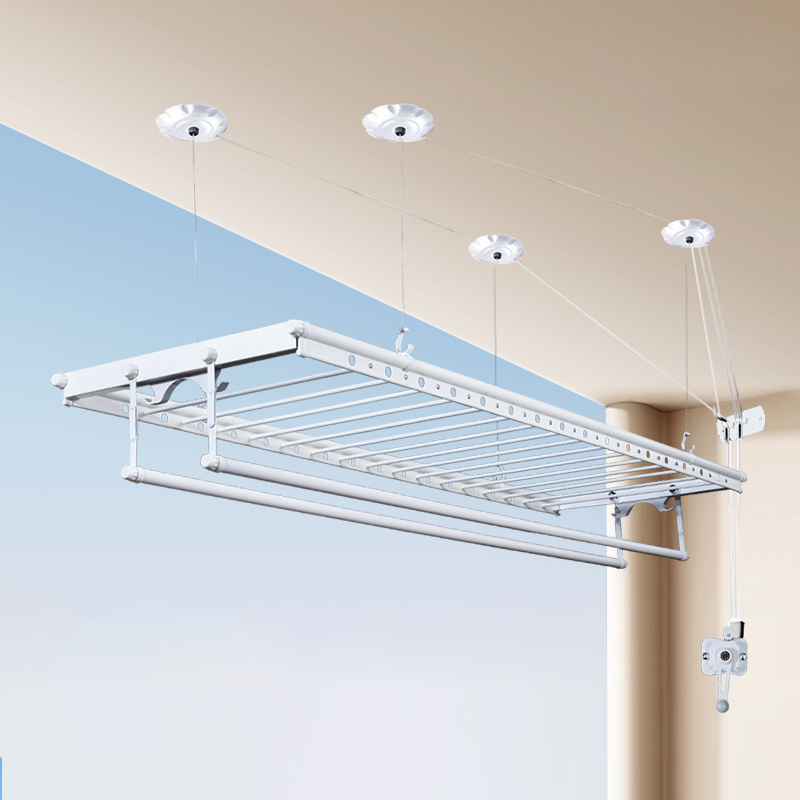
Portable racks offer freedom, but freedom also requires a decision every time laundry is washed.
Where should the rack go today?
Is there enough room beside the window?
Has furniture been moved into its usual position?
Does the rack need to be retrieved from storage first?
A permanently installed fold down drying rack removes these small decisions. The household knows where the drying area will be, and the supporting structure is already available.
This can make sense when the laundry location itself is stable.
If the washing machine is permanently installed in one utility area and there is a suitable nearby wall, a fixed fold-down position can shorten the route between washing and drying.
The wall becomes part of the laundry workflow rather than merely an unused vertical surface.
The Best Rack Should Fold Down Without Blocking the Washing Machine
Locating the drying rack close to the washing machine is usually convenient, but the two products need to operate independently.
A washing-machine door or lid should still open normally when the rack is extended. Users should be able to remove wet laundry while the drying structure is ready for loading.
This sounds obvious, yet small laundry areas frequently contain overlapping operating zones.
The same issue applies to dryers, utility sinks, cabinets, and storage drawers. A rack that prevents another household function from operating normally creates a scheduling problem: one item must be closed before another can be used.
Good space planning allows these functions to overlap physically without conflicting mechanically.
Wall-Mounted Folding Is Only One Form of Flexible Drying
Fold-down wall systems are especially useful when vertical wall space is available, but not every room provides that condition.
Portable folding racks can move between locations. Ceiling-mounted systems use the upper part of the room. Retractable structures change width rather than rotating through a large angle.
This is why the broader concept of a foldable drying rack laundry setup should be evaluated according to which surface of the room is genuinely available. A wall-mounted structure is attractive only when the wall can remain dedicated to the full operating zone.
In some apartments, the wall is already filled with cabinets and windows while the ceiling remains largely free. In other homes, ceiling installation may be impractical but one utility-room wall is almost unused.
The correct design follows the available architecture.
Fold Down and Fold Away Are Similar but Not Identical Ideas
A fold-away rack emphasizes what happens after use: the drying structure becomes less intrusive.
A fold-down rack emphasizes the direction of operation: the usable section typically moves downward or outward from its stored position.
The two ideas frequently overlap, especially in wall-mounted laundry equipment, but thinking about them separately improves product evaluation.
The fold-down movement needs to feel controlled and accessible. The fold-away position needs to be compact enough that the closed structure genuinely returns the wall area to normal use.
A rack can perform well in one condition and poorly in the other.
For example, it may open smoothly but remain bulky against the wall after closing. Another product may become extremely flat yet require an awkward sequence before reaching the working position.
Both states deserve equal attention.
The Folded Rack Should Not Become Wall Clutter
A wall-mounted product remains visible even when it is not being used.
This creates a design consideration that portable racks largely avoid.
If the rack is installed in a utility room hidden from normal living areas, appearance may be relatively unimportant. If it sits on an apartment balcony visible from the living room, the closed structure becomes part of the interior.
Folded thickness, frame proportions, visible brackets, rail organization, and surface finish can therefore influence how intrusive the rack feels during the much longer periods when it is empty.
A good fold-down design should visually communicate that it is stored rather than look like an unfinished structure permanently attached to the wall.
Airflow Still Matters After the Space Problem Is Solved
Wall mounting creates drying capacity, but it does not automatically create effective air drying.
Garments still need reasonable separation, particularly thicker textiles such as towels, jeans, and sweatshirts. Packing every rail tightly can restrict the space around wet fabrics even when the rack itself offers substantial capacity.
Wall position also matters because one side of the drying area is naturally closer to a solid surface.
If wet textiles are pushed directly against the wall, the usable air space around those surfaces becomes more limited. The rack should therefore project far enough for garments to hang naturally without being compressed against the mounting surface.
This creates another balance between compactness and performance.
A rack that stays extremely close to the wall while loaded may save depth but provide a less useful drying arrangement.
Partial Opening Can Be Useful When the Structure Allows It
Not every laundry cycle requires maximum rack depth.
A few shirts or small garments may need only part of the available drying area. If a fold-down design allows individual sections to operate independently, the working footprint can remain smaller for these light loads.
This is particularly useful in narrow rooms because the drying zone can respond to the laundry rather than always extending to maximum capacity.
However, intermediate positions must still be structurally intentional.
A section that merely happens to remain halfway open is not the same as a rack designed to support clothing safely in that configuration.
Useful partial deployment needs stable stopping positions rather than improvised adjustment.
A Large Wall Rack Needs Stronger Thinking, Not Just More Rails
Increasing the width of a fold down drying rack creates more capacity, but it also increases structural demands.
A wider frame transfers load across a larger wall area and may need additional supporting points. Longer rods experience greater deflection, while multiple folding sections introduce additional joints that must remain aligned.
The design should therefore scale structurally as capacity increases.
This becomes especially important when the product is intended for family laundry. A larger rack encourages larger loads, including wet towels, trousers, and household textiles that are substantially heavier than the shirts often shown in product imagery.
Large capacity should be evaluated under the conditions it is designed to invite.
Metal Structure and Folding Structure Need to Be Evaluated Together
Material selection is important, but material alone does not determine whether a wall-mounted drying rack feels strong.
A thick metal rail connected through a weak folding joint can still perform poorly. Conversely, a carefully designed frame can use material efficiently when loads are distributed through suitable geometry and support points.
The useful approach is therefore to evaluate the complete structure: rails, brackets, joints, mounting plates, stops, connections, and load paths.
YIHUI’s discussion of metal drying rack configurations also distinguishes freestanding, wall-mounted, and ceiling-mounted structures according to how they use floor, wall, and overhead space. For a fold-down wall rack, that distinction is particularly important because structural performance begins at the mounting surface rather than at the floor.
Good material is valuable only when the rest of the structure allows it to do useful work.
Fold-Down Designs Can Reduce Repeated Setup Without Becoming Permanent Drying Clutter
There is a practical difference between a permanently open rack and a permanently installed rack.
A permanently open rack occupies drying space whether or not clothes are present.
A permanently installed fold-down rack remains available but does not need to occupy its full working volume when unused.
This distinction can be ideal for households that air-dry clothes frequently. Users avoid retrieving and assembling a portable rack for every cycle, but they also avoid leaving a large empty drying structure in the room all week.
The rack is always present while the drying area is temporary.
That is one of the strongest reasons to consider this configuration.
Bathrooms Need More Than an Empty Wall
A bathroom wall may appear to be a convenient place for a fold-down rack, but the surrounding environment needs careful thought.
Doors, mirrors, cabinets, shower areas, towel rails, and normal circulation already compete for space. The rack should not interfere with these functions once opened.
Moisture exposure also becomes part of the operating environment, which makes the suitability of materials and components important according to the product’s intended application.
Garment clearance should also be checked. A rack positioned above a bath or fixture may provide enough physical mounting space while making clothing awkward to access.
The best location is not the place where the rack can simply be attached. It is the place where users can comfortably load, dry, and remove clothing.
Balcony Installation Needs Window Clearance
Balconies present a different challenge.
A wall-mounted rack may fit perfectly on a side wall while closed but project into the path of a sliding or inward-opening window once extended. Long clothes can create additional interference even when the frame itself clears the opening.
Wind exposure also changes the way hanging garments behave. Clothes do not remain perfectly vertical, so some surrounding clearance is useful.
For narrow balconies, the rack should therefore be evaluated with garments hanging from the outermost rail and windows in their normal open positions.
This simple test can prevent an installation from becoming inconvenient after the first laundry cycle.
Rental Homes Need a Different Decision Process
The main advantage of a fold down drying rack is permanent readiness, but that normally comes with a fixed installation.
This may make portable collapsible racks more attractive in some rental situations where permanent wall mounting is undesirable or restricted.
The distinction helps prevent the phrase “space saving” from becoming too broad.
A fold-down wall rack saves floor and storage space extremely well when permanent installation is appropriate. A freestanding collapsible rack provides greater independence from the building when installation flexibility matters more.
Both can solve small-space drying problems, but they solve different versions of the problem.
What Should Be Tested Before Choosing a Fold Down Drying Rack?
Begin with the wall rather than the rack.
Identify the intended mounting area and check what is behind, beside, above, and below it. Then imagine the rack fully extended with wet garments hanging from the outermost rails.
Next, test the mechanism itself. Open and close the structure repeatedly, observe how clearly the working position is defined, and check whether the movement remains controlled throughout the folding path.
Realistic loading should follow. Towels, trousers, shirts, and other wet textiles should be distributed unevenly across the frame rather than arranged purely for appearance.
Finally, operate everything around the rack. Open nearby cabinet doors, access the washing machine, walk through the room, and use the windows.
A rack is successfully integrated only when the laundry equipment and the room can function at the same time.
When Does a Fold Down Drying Rack Make the Most Sense?
This configuration is especially useful when three conditions occur together: floor space is valuable, one wall can be permanently assigned to drying equipment, and the household air-dries clothes regularly enough that repeatedly retrieving a portable rack becomes inconvenient.
Laundry rooms and enclosed balconies often match these conditions well.
The design can also work in compact utility areas where a predictable drying position is more useful than complete portability.
It becomes less attractive when the ideal drying location changes regularly, when suitable wall structure is unavailable, or when the open rack would block essential household functions.
The strongest application is therefore not simply “small homes.” It is small or multifunctional spaces with a reliable wall-based drying zone.
The Real Space Saving Happens When the Rack Closes
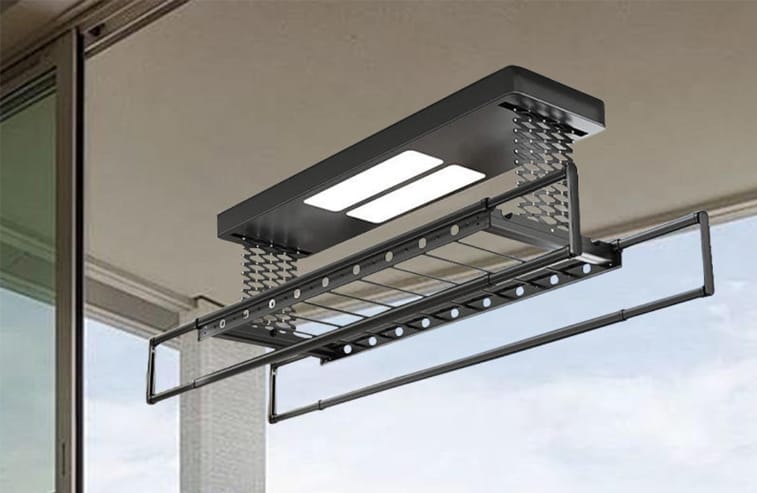
A fold down drying rack demonstrates an important principle of small-space design: an object does not need to disappear completely to stop occupying useful space.
When closed, the rack can remain attached to the wall while releasing most of the room volume it temporarily used for drying. The floor stays free, no separate storage location is required, and the structure remains ready for the next laundry cycle.
This is different from making everything portable.
Sometimes the most efficient object is the one that stays exactly where it belongs but changes shape according to whether it is needed.
For household laundry, that can be more convenient than repeatedly moving equipment between storage and use.
Conclusion
A fold down drying rack turns a vertical surface into temporary laundry capacity. Its main value comes from creating a permanent drying location without requiring that location to remain fully occupied when no clothes are present.
That benefit depends on much more than a folding hinge. The supporting wall, mounting points, projection depth, wet-load forces, installation height, garment clearance, surrounding doors and cabinets, joint behavior, and closed profile all influence whether the rack works naturally in daily life.
Unlike a portable folding rack, a wall-mounted fold-down design does not solve space problems by moving somewhere else. It solves them by changing form in the same location.
For laundry rooms, balconies, and compact utility areas with a suitable open wall, this can create an effective balance between permanent readiness and temporary space use.
The best fold down drying rack is therefore not simply the one that sits closest to the wall when closed. It is the one that opens into genuinely useful drying space, supports real wet laundry confidently, and then allows the room to return to normal as soon as the clothes are removed.
FAQ
What is a fold down drying rack?
A fold down drying rack is a drying structure, commonly wall-mounted, that remains compact against a supporting surface when unused and opens outward or downward to provide hanging space for wet clothing.
Does a fold down drying rack save floor space?
Yes, wall-mounted versions can preserve floor area because the main supporting structure is attached to the wall rather than standing on legs. The open rack and hanging garments still require sufficient room in front of the wall.
What should be checked before installing a wall-mounted drying rack?
Check the supporting wall, intended mounting method, open projection, installation height, wet-laundry load, nearby cabinets, windows, appliances, doors, and the additional space occupied by hanging garments.
Can a fold down drying rack hold wet towels?
A rack should only be loaded within its intended capacity. Wet towels can place substantial loads on outer rails and supporting brackets, so structural design and wall mounting are particularly important.
Is a fold down drying rack better than a portable folding rack?
Neither is universally better. A fold-down wall rack provides a permanent drying position without requiring separate storage, while a portable folding rack can move between rooms and does not depend on permanent wall installation.
Need Help Choosing the Right Fold Down Drying Rack?
If you’re evaluating a fold down drying rack for a laundry room, balcony, apartment, or other compact residential space, consider the wall as part of the complete drying system. Mounting conditions, open projection, garment clearance, loading height, and normal household movement should all work together. A well-planned solution can create useful drying capacity when laundry is present while returning the floor and surrounding room to everyday use once the rack is folded away.





