Table of Contents
Introduction
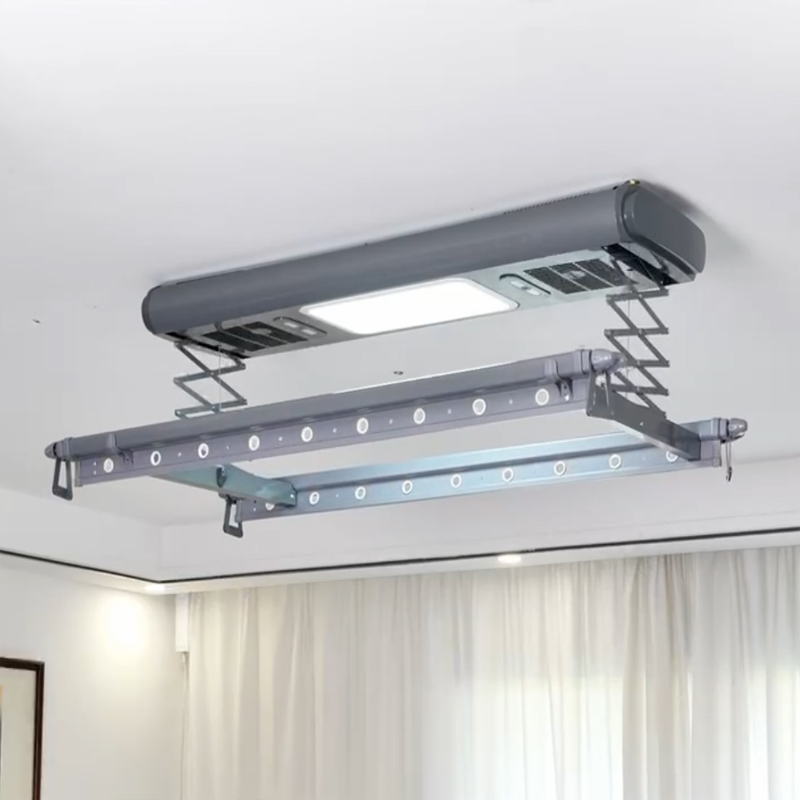
A drying rack usually becomes a space problem at exactly the moment you need your laundry area most. Wet clothes are hanging, appliance doors need to open, baskets need somewhere to sit, cabinets still need to remain accessible, and people need enough room to move through the space comfortably.
That is where a foldable drying rack laundry setup can make a meaningful difference.
The basic idea is simple: create enough hanging area when clothes need to dry, then reduce the structure when the drying cycle is finished. But a genuinely useful foldable rack needs to do more than look compact when stored. It should also remain stable when fully opened, provide appropriate spacing between garments, accommodate different laundry loads, and avoid disrupting the room while clothes are actually drying.
This distinction matters because the rack normally spends far more time loaded and open than it does being folded.
If a rack becomes extremely slim after storage but blocks a walkway for several hours during every laundry cycle, its space-saving benefit is limited. Similarly, a rack with many rails may appear highly efficient but provide poor practical drying capacity if wet garments have to be packed tightly together.
Choosing the right foldable drying rack therefore requires you to evaluate the complete laundry process—from opening and loading to drying, unloading, folding, and storage.
Why Flexible Drying Space Matters
Laundry is not a single activity.
The complete process can involve sorting, washing, hanging, drying, removing garments, folding, ironing, and storing. A room that supports all of these activities needs flexible rather than permanently occupied space.
Traditional fixed racks allocate part of the room to drying even when no laundry is hanging.
Foldable designs take a different approach.
They create temporary capacity.
When wet clothes need to dry, the rack expands into its working configuration. When the laundry is finished, the structure can fold, retract, collapse, or move away from the main working area.
This makes foldability particularly useful when the laundry area is also used for storage, garment care, household organization, or other everyday tasks.
The concept fits naturally within the broader process of laundry, which includes not only washing textiles but also drying and other stages of garment care.
The best rack therefore should not be considered an isolated product. It should support the entire laundry workflow without making the surrounding tasks more difficult.
Foldable Does Not Always Mean Floor-Standing
When people hear “foldable drying rack,” they often picture a portable metal frame with folding legs.
That is only one configuration.
Modern folding and adjustable drying structures can use the floor, wall, or ceiling.
A freestanding rack folds inward for storage.
A wall-mounted model rotates toward the wall when not in use.
A retractable rack slides back into a smaller footprint.
Telescopic rails increase and decrease usable hanging length.
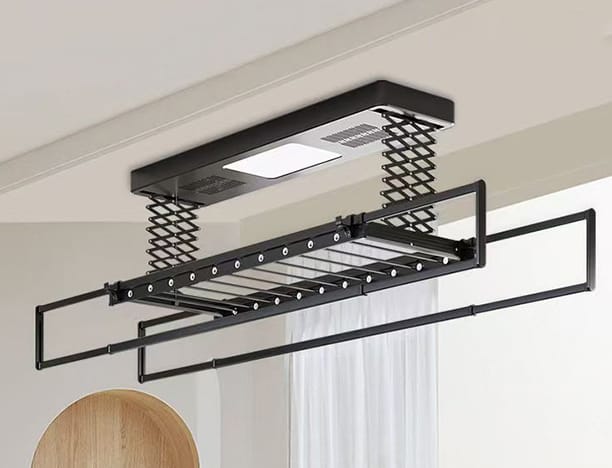
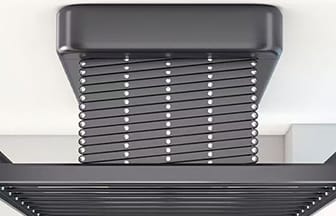
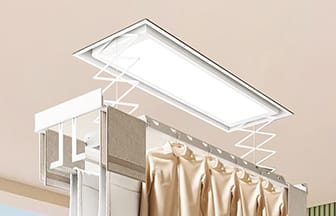
An overhead system may raise the complete drying frame toward the ceiling while extendable sections provide additional capacity only when required.
These designs all follow the same underlying principle: maximum drying capacity does not need to occupy maximum space permanently.
YIHUI’s automated clothes rack systems use vertical movement and expandable structures to take this concept beyond the conventional folding floor rack.
This means the right foldable drying rack laundry solution should be chosen according to where your unused space actually exists.
If the floor is available, portable folding may work.
If the floor is crowded but a wall is open, wall mounting may be more efficient.
If both floor and wall areas already perform important functions, the ceiling may offer the strongest opportunity.
Storage Footprint vs Working Footprint
One of the most useful distinctions when evaluating foldable drying racks is the difference between storage footprint and working footprint.
Storage footprint describes how much room the rack occupies after folding.
Working footprint describes how much space it uses when fully opened.
There is also a third measurement that is often overlooked: loaded footprint.
Loaded footprint includes the rack plus the clothing hanging from it.
A long shirt may extend below the frame. Towels can project outward. Bedding can occupy several rails and increase the effective width of the drying zone.
This means the smallest folded rack is not necessarily the most space-efficient product during actual use.
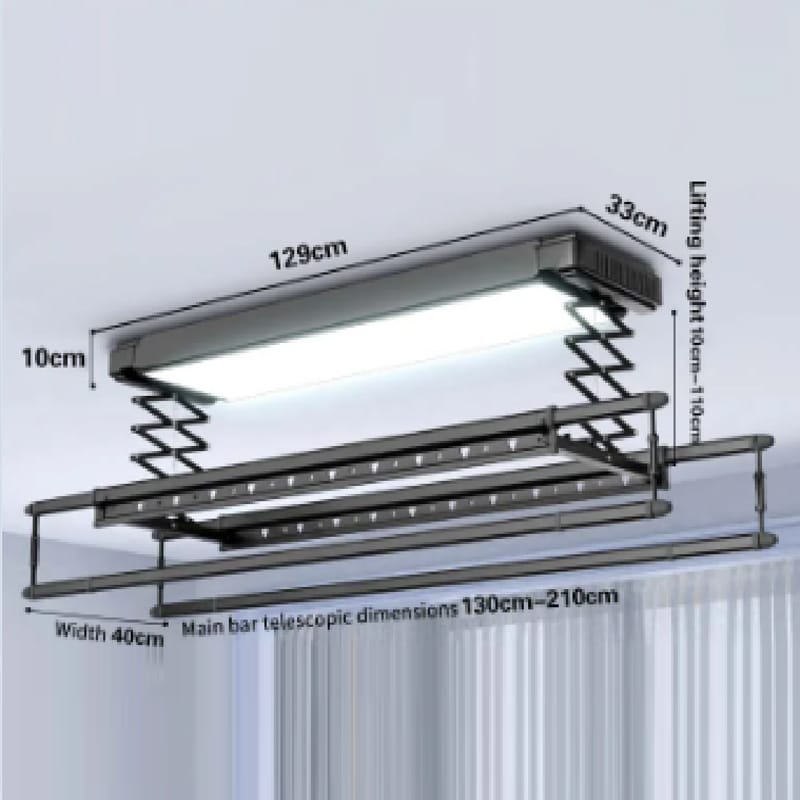
| Measurement | What to Measure | Why It Matters |
|---|---|---|
| Folded footprint | Width, depth and height when stored | Determines storage convenience |
| Open footprint | Maximum rack dimensions | Shows required operating space |
| Loaded footprint | Rack plus hanging garments | Represents real drying conditions |
| Rail length | Total usable hanging area | Affects garment capacity |
| Rail spacing | Distance between hanging positions | Influences airflow |
| Vertical clearance | Space below the rails | Important for long garments |
| Maximum extension | Fully expanded dimensions | Important for telescopic structures |
For daily use, loaded footprint is often the most meaningful number.
Before choosing a rack, imagine the product fully open with wet clothes hanging from every relevant section. Then consider whether appliances, doors, cabinets, and walkways still function normally.
That exercise tells you much more than folded dimensions alone.
Freestanding Foldable Drying Racks
Freestanding folding racks provide one major advantage: they do not permanently belong to one location.
They can be moved according to room layout, ventilation, sunlight, laundry quantity, or temporary household needs.
When drying is finished, the rack can normally be collapsed and stored elsewhere.
This makes the design especially useful when air drying is occasional rather than continuous.
Another advantage is installation simplicity. There are no wall brackets or ceiling mounting points to plan.
However, portability creates a tradeoff.
The rack needs floor space every time it is used.
A large model may provide substantial drying capacity but can also interrupt movement through a compact laundry room.
For that reason, freestanding foldable racks are usually strongest when two conditions exist: sufficient temporary floor space and a suitable storage location after folding.
Without both, the rack may simply move the space problem from one part of the room to another.
Wall-Mounted Folding Racks
Wall-mounted drying racks use vertical surfaces instead of floors.
A supporting frame remains attached to the wall, while drying rails open outward when needed and return toward the wall afterward.
This can create an efficient dedicated drying zone without requiring a freestanding frame.
Accessibility is usually good because the installation height can be selected around normal loading requirements.
The challenge is extension clearance.
A wall-mounted rack may be shallow when closed but extend significantly into the room after opening.
Clothing adds even more depth.
Before installation, check nearby cabinets, doors, shelves, appliance openings, switches, and normal walking routes.
The best wall position is not simply the widest empty surface. It is the wall where the rack can operate fully without interfering with other functions.
For users who regularly dry a moderate quantity of clothing and have a suitable open wall, this configuration can provide an excellent balance between accessibility and compact storage.
Ceiling-Mounted Folding and Lifting Systems
Ceiling-mounted drying systems solve the same space problem from a different direction.
Instead of making the entire rack smaller after use, they move the drying structure upward.
This distinction is important.
A freestanding foldable rack changes size.
A wall rack changes projection.
A ceiling rack changes height.
For compact laundry spaces, vertical movement can sometimes preserve more useful space than conventional folding.
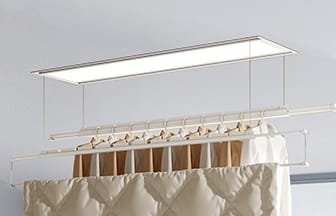
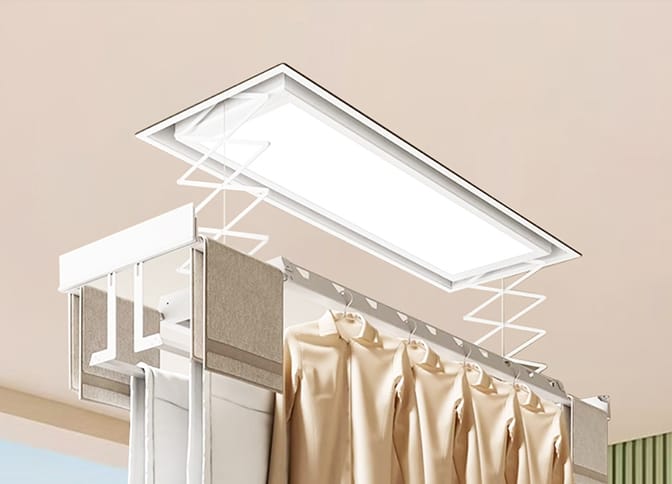
A ceiling clothes drying rack can lower toward a practical loading position and move upward once clothing has been arranged, reducing interference with the working area below.
This can be particularly useful when cabinets and storage already occupy the walls.
Some overhead structures also use telescopic drying rails, combining vertical adjustment with variable horizontal capacity.
The result is a drying zone that changes according to both laundry quantity and the current stage of the task.
Ceiling installation does require careful planning. Mounting structure, ceiling height, lighting fixtures, ventilation points, cabinets, garment length, and the rack’s full movement path all need to be considered.
When those factors are managed correctly, overhead drying can turn otherwise unused space into practical laundry capacity.
Why Folding Mechanism Quality Matters
A foldable rack contains components that a fixed rack may not need.
Hinges rotate.
Telescopic rails slide.
Support arms open and close.
Locking mechanisms move between positions.
These parts experience repeated operating cycles and therefore deserve as much attention as the main drying rails.
A strong-looking metal frame can still feel unstable if its hinges develop excessive movement.
Similarly, an extendable rail may provide impressive length but become less useful if the outer section bends noticeably when loaded.
When evaluating a foldable drying rack laundry design, think about the movement path of the load.
Wet clothing places force on the drying rail.
That force transfers into joints or extension mechanisms.
From there it moves into the main frame and finally into the legs, wall, or ceiling.
Every connection in this path contributes to overall stability.
For foldable designs, the moving connection is often the point that deserves the closest inspection.
Wet Laundry Is Heavier Than It Looks
A drying rack is rarely loaded with dry clothing during normal use.
That sounds obvious, but it has an important structural consequence.
Fabric retains water after washing.
A group of wet towels, denim garments, or bedding can create a much more demanding load than the same textiles after drying.
The way that weight is distributed also matters.
Placing several heavy items on one outer folding wing can create different forces from spreading them evenly across the frame.
Freestanding racks must remain balanced.
Wall-mounted racks transfer loads through brackets and mounting points.
Ceiling systems depend on suspension components and secure installation.
Telescopic rails need sufficient stiffness at greater extension lengths.
For practical use, load distribution can therefore matter almost as much as total capacity.
A stable rack should encourage users to spread heavy garments across the available structure instead of concentrating them in one small area.
Materials for a Foldable Drying Rack Laundry Setup
Metal is commonly used for folding drying racks because it can provide useful structural rigidity with relatively slim components.
Aluminum is particularly attractive for structures that move frequently because its relatively low weight can make folding, extending, or lifting easier.
Its corrosion resistance also suits environments where damp fabrics regularly contact the rack.
Stainless steel can provide strong resistance to moisture and useful structural performance.
Coated steel can also be effective when its protective finish and construction are appropriate for repeated laundry use.
But material labels alone do not determine quality.
The drying rail may use one material while the bracket, fastener, hinge, cable, locking mechanism, or sliding component uses another.
Those smaller parts can strongly influence long-term stability.
For folding racks, surface wear also deserves consideration.
Two metal sections that repeatedly slide against each other experience different conditions from a fixed rail that rarely moves.
The best structure therefore uses materials according to the mechanical requirements of each component instead of relying on one material name as the main indicator of quality.
Rail Spacing and Real Drying Capacity
Drying capacity is often presented as a simple number.
In reality, it depends on what you are drying.
A lightweight shirt on a hanger occupies relatively little rail length.
A thick towel needs more exposed surface.
Long trousers require vertical clearance.
Bedding may use several rails simultaneously.
This is why the number of rails does not directly equal useful capacity.
Imagine one folding rack with many closely spaced rods and another with fewer rods but more flexible hanging positions.
The first may technically hold more garments.
The second may provide better conditions for thick fabrics because clothes can be separated more effectively.
Air drying depends on moisture moving from fabric into surrounding air. When wet textiles overlap heavily, some surfaces receive less airflow.
Good rack design therefore balances hanging density with garment exposure.
Instead of asking how many pieces of clothing can physically fit, consider how many can be arranged appropriately.
That is practical drying capacity.
Why Airflow Should Influence Rack Placement
A foldable drying rack laundry setup cannot be evaluated without considering the room around it.
The rack provides support.
The environment provides the conditions for evaporation.
As moisture leaves wet clothing, it enters the surrounding air. Adequate air exchange helps move that moisture away from the fabric.
This makes rack location important.
A rack tightly enclosed between furniture and walls may receive less natural air movement than one positioned in a more open area.
Garment spacing also matters.
Packing every rail closely can reduce the exposed fabric surface and create areas where damp textiles remain in contact.
Different fabrics require different spacing.
Light garments may dry effectively with moderate separation.
Thick towels, layered clothing, and bedding often benefit from more room.
This means expandable drying capacity can serve two purposes: holding more laundry or creating better spacing for the same laundry.
The second benefit is often overlooked.
Single-Level or Multi-Tier Foldable Rack?
Multi-tier drying racks use vertical stacking to increase rail area without dramatically increasing floor footprint.
For smaller garments, towels, socks, and lightweight items, this can be highly effective.
However, every additional tier changes how the rack can accommodate longer clothing.
Dresses and trousers may extend into the drying area below.
Closely stacked levels can also limit space around thicker textiles.
A single-level rack provides less rail area within the same footprint but often creates greater flexibility for long items and mixed garment loads.
The right choice depends on the textiles you regularly air-dry.
If laundry contains many small garments, multi-tier structures may use space efficiently.
If loads contain a wide range of shirts, trousers, towels, and larger items, more open rail arrangements can make organization easier.
The most efficient rack is therefore not necessarily the one with the greatest number of levels.
Fixed Capacity or Expandable Capacity?
Foldability and expandability solve slightly different problems.
Foldability reduces the structure after use.
Expandability changes capacity during use.
A rack with telescopic rails can remain compact during smaller laundry cycles and extend when more hanging length is required.
This can be particularly useful when bedding or larger weekly loads create occasional capacity peaks.
Instead of buying a permanently oversized rack, users gain additional hanging area only when necessary.
Expandable structures should still be checked for stability at maximum extension.
Longer rails create greater leverage on supporting components.
Connections that feel extremely rigid when retracted may behave differently after full extension.
For this reason, evaluate adjustable racks in every major operating configuration rather than only in their most compact position.
Choosing the Right Rack for Your Laundry Frequency
How often you air-dry clothing should influence how much you value folding.
If the rack is used only occasionally, compact storage can be a major advantage.
You can open it for specific garments and return the room to its normal layout afterward.
If you air-dry clothing nearly every day, the rack may remain open most of the time.
In that situation, repeatedly folding the structure provides less practical value.
A permanent wall system or height-adjustable ceiling rack may create a smoother daily workflow.
This is an important selection insight because foldability is often treated as universally beneficial.
It is most valuable when there is actually time between drying cycles for the space to be reclaimed.
If one laundry load replaces another immediately, permanent space efficiency can matter more than storage compactness.
How to Plan the Rack Around Your Laundry Workflow
A good laundry layout should follow the sequence of tasks.
Think about where wet clothing comes from.
Where will the basket sit?
Can the rack be loaded without blocking the appliance?
Can you reach every rail comfortably?
Can cabinets still open while laundry is hanging?
Where will clothes go after drying?
These questions expose problems that simple product dimensions cannot.
For example, a wall-mounted rack may fit perfectly but force you to stand directly in front of an appliance while loading it.
A floor rack may provide plenty of capacity but block the route between washing and folding areas.
A ceiling rack may preserve the floor but descend into a cabinet-opening zone.
The strongest foldable drying rack laundry setup minimizes these conflicts.
It should feel like part of the workflow rather than an object that has to be constantly worked around.
Common Selection Mistakes
The first mistake is evaluating only the folded size.
A drying rack should primarily be judged in the condition where it performs its main job: fully open and loaded.
The second is assuming more rails automatically mean better drying.
Closely packed clothing can reduce airflow and make some rails less useful in practice.
The third is ignoring joints.
On a foldable structure, moving components can be more important to long-term stability than the main tubes.
Another mistake is choosing maximum capacity without considering normal laundry volume.
An oversized rack can become a permanent space burden when most loads use only part of the structure.
Placement errors are equally common.
A rack should not obstruct appliance doors, storage, work surfaces, or main movement routes during every drying cycle.
Finally, users sometimes choose foldability even when they rarely fold the rack.
Features should solve a real usage problem rather than simply add mechanical complexity.
A Practical Selection Framework
A simple way to choose a foldable drying rack is to begin with the space you want to protect.
If floor area is the priority, move toward wall-mounted or overhead drying.
If wall space is valuable but floor area is flexible, a portable folding rack may work well.
If both floor and walls need to remain functional, ceiling space becomes more attractive.
Next, determine how much drying capacity you actually use during a normal cycle.
Then consider your largest common garments.
Measure vertical clearance for trousers and dresses, rail length for towels, and usable width for bedding.
After that, inspect the movement system.
For freestanding racks, examine hinges and leg stability.
For wall racks, examine mounting brackets and folding arms.
For telescopic structures, consider stability at maximum extension.
For overhead systems, evaluate suspension, movement control, and installation conditions.
Finally, think about storage.
A foldable rack is only genuinely convenient if its folded configuration has a practical place to go.
This approach keeps the decision focused on daily use rather than individual features.
Why Foldable Drying Racks Fit Modern Laundry Spaces
The strongest advantage of foldable drying equipment is adaptability.
Laundry rooms and utility areas increasingly need to perform several jobs in the same physical space. Drying equipment that can fold, retract, extend, or move vertically allows the room to change with those tasks rather than remain permanently configured around one function.
That does not mean every future rack needs more hinges or more technology.
The more useful direction is intelligent flexibility.
A folding mechanism should reduce real obstruction.
An extension rail should provide useful additional capacity.
A lifting system should improve access to otherwise unused vertical space.
A compact structure should remain stable under wet laundry loads.
When these goals are achieved together, foldability becomes more than a storage feature.
It becomes part of better laundry-space planning.
Conclusion
A foldable drying rack laundry setup is most effective when it saves space during actual use, not only after the rack has been put away.
Freestanding racks provide excellent portability and compact storage, but they still need floor area during drying.
Wall-mounted racks preserve the floor while creating temporary capacity from vertical surfaces.
Expandable rails allow drying space to change with laundry volume.
Ceiling-mounted and lifting systems take the idea further by moving the drying zone away from both the floor and working-height walls.
Whatever configuration you choose, evaluate the rack as a complete structure.
Consider open dimensions, loaded footprint, rail spacing, wet-laundry weight, joints, materials, airflow, garment type, frequency of use, and the way the rack interacts with appliances and storage.
Foldability is valuable when it solves a genuine space problem.
The best design is therefore not simply the rack that folds into the smallest package. It is the one that provides enough drying capacity when needed and gives the surrounding space back when that capacity is no longer required.
FAQ
Is a foldable drying rack laundry setup suitable for small spaces?
Yes. Foldable racks can reduce permanent space occupation, especially when wall-mounted, retractable, or ceiling-based designs are used. However, always measure the fully opened and loaded configuration. A rack that stores compactly may still occupy significant space while clothes are actually drying.
What is the best material for a foldable laundry drying rack?
Aluminum, stainless steel, and coated steel can all be suitable. Aluminum offers relatively low weight and corrosion resistance, while stainless steel provides strong moisture resistance. Overall durability also depends on hinges, fasteners, brackets, telescopic sections, surface treatment, and structural design.
Is a foldable drying rack better than a fixed drying rack?
It depends on laundry frequency and available space. Foldable racks are useful when the room needs to serve different functions between drying cycles. Fixed racks may be more practical when clothes are air-dried continuously. The better option is the one that creates the least disruption during normal use.
How much laundry can a foldable drying rack hold?
Capacity varies by frame size, rail length, structure, mounting method, and load rating. Practical capacity also depends on garment type and spacing. Thick towels and bedding require more room than lightweight shirts, so usable drying capacity should be evaluated rather than simply counting the number of rails.
What should I measure before choosing a foldable drying rack?
Measure folded dimensions, fully opened size, garment overhang, rail height, maximum extension, appliance clearance, cabinet and door movement, and walking space. Also consider where the rack will be stored after use. These measurements provide a more realistic picture than product width and height alone.