
Table of Contents
Introduction
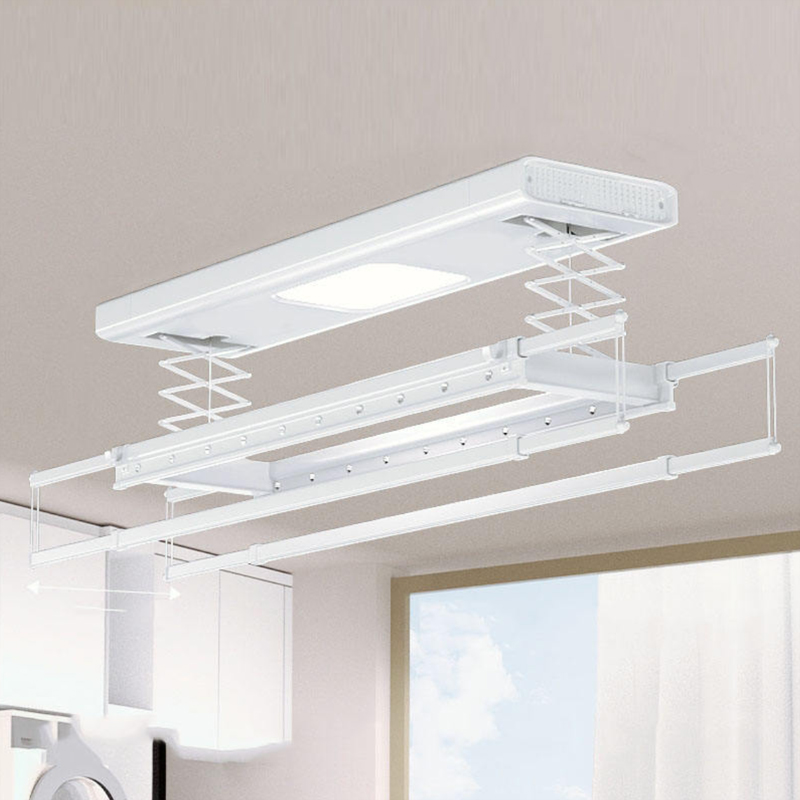
A laundry area works best when washing, drying, sorting, and storing clothes happen as one connected process. In compact homes, however, these activities often compete for the same few square meters. A washing machine occupies the floor, cabinets take over the walls, baskets need somewhere to stand, and a conventional drying rack can suddenly block the remaining walkway.
A fold down drying rack laundry setup approaches the problem by making the drying area temporary while keeping its location predictable. The rack remains attached to a wall or another fixed surface, folds outward when wet garments need support, and returns toward the wall after drying is complete. Instead of carrying a separate rack into the room every laundry day, users create drying capacity exactly where it is needed and then reduce it again.
The real advantage is not simply compact storage. A well-positioned fold-down rack can shorten the journey between washing machine and drying area, separate wet laundry from folding surfaces, keep the floor clearer, and turn an ordinary utility wall into part of the laundry workflow.
To achieve that result, the drying rack needs to be planned around the entire laundry cycle rather than treated as an isolated household accessory.
Start with the Laundry Route, Not the Empty Wall
When planning a wall-mounted drying rack, it is tempting to begin by finding the widest unused wall. A better starting point is the route wet laundry follows through the room.
Clothes leave the washing machine heavier than when they went in. They may move into a basket, onto hangers, across drying rails, and eventually toward a folding counter or wardrobe. Every unnecessary step adds handling to a task repeated several times each week.
The most useful rack position is therefore often close to the washing machine without interfering with the appliance itself.
A user should be able to open the machine, remove several garments, and transfer them directly to the drying area. If the rack sits on the opposite side of the room simply because that wall looked empty, every laundry cycle includes repeated carrying through the space.
This is why a fold down drying rack laundry layout should be designed as a workflow rather than a collection of separate products.
A Laundry Room Has More Than One Working Zone
A modern laundry room may combine washing equipment, drying functions, storage cabinets, folding surfaces, sinks, ironing equipment, and household supplies within the same space.
That creates several overlapping working zones.
The washing zone needs access to the appliance door or lid. The drying zone needs room for wet garments. The sorting zone needs a basket or open surface. Storage cabinets need clearance to open, while the walkway needs to remain usable throughout the process.
A fold-down rack can help these zones coexist because its drying footprint changes according to whether laundry is present.
When closed, the wall can remain relatively unobtrusive. When opened, the same location becomes an active drying zone. Once the garments are removed, the room returns to washing, folding, storage, or general utility use.
This flexibility is particularly useful when one room performs several household functions instead of serving exclusively as a drying room.
Put the Drying Rack Close Enough to Reduce Wet-Laundry Handling
Wet clothing is less convenient to move than dry clothing.
A basket containing several towels, trousers, and shirts can become noticeably heavier after washing. Carrying that load unnecessarily across a room or through another part of the home adds effort without improving the drying process.
A fold-down rack positioned near the washing machine can reduce this movement.
The ideal relationship is close but not conflicting. The rack should remain near enough for easy transfer while still allowing the appliance door, detergent drawer, cabinet, or work surface to operate normally.
This balance can be tested by imagining the room during its busiest moment: the washing machine is open, the rack is extended, a basket is on the floor, and several garments are already hanging.
If the user can still move naturally through the space, the layout is working.
Opening the Rack Should Be the Beginning of the Drying Process
With portable racks, setup usually starts before laundry can be handled. The rack needs to be retrieved from storage, carried into position, unfolded, and stabilized.
A permanently installed fold-down rack changes that sequence.
The user opens the drying surface where it already belongs and can begin transferring clothing almost immediately. This reduces the setup stage and makes the drying location consistent from one laundry cycle to the next.
Consistency matters because household routines become easier when repeated actions happen in predictable places.
A basket has its position. The washing machine has its position. The drying rack has its position. The household does not need to decide where to create a temporary laundry zone every time clothes are washed.
For frequent air drying, that predictability can matter more than maximum portability.
The Rack Should Not Occupy the Folding Area
Drying and folding happen at different stages of the laundry cycle, but poorly planned rooms often force both tasks into the same space.
Imagine a wall-mounted rack positioned directly over the only useful countertop. While wet clothing hangs from the outer rails, the work surface below may become difficult to reach. Once the clothes are dry, users first need to empty the rack before gaining enough room to begin folding them.
A better layout separates these activities where possible.
The drying zone can sit beside the work surface instead of directly over it, or the rack can be mounted high enough that shorter garments do not interfere with the counter.
The objective is to allow one stage of laundry to transition naturally into the next rather than creating a room where every function must stop before another can begin.
Fold-Down Laundry Space Should Match Real Load Sizes
Laundry volume changes throughout the week.
One cycle may contain several shirts and lightweight garments. Another may include bath towels, jeans, children’s clothing, and household textiles. Designing the drying zone around only one of these loads can make the rack either unnecessarily large or consistently insufficient.
A useful fold down drying rack laundry setup considers several common load types.
| Laundry Load | Main Space Requirement | Useful Rack Characteristic |
|---|---|---|
| Daily shirts | Separated hanging positions | Accessible rail or hanger spacing |
| Children’s clothing | Many small items | Organized compact drying zones |
| Bath towels | Broad exposed area | Strong, well-spaced rails |
| Jeans and trousers | Higher wet weight | Stable outer support |
| Mixed family load | Different garment sizes | Flexible rail arrangement |
| Small weekday load | Limited capacity | Ability to use only necessary sections |
This type of planning is more useful than simply asking how many garments can theoretically fit onto the structure.
The Wall Should Become Part of the Laundry Workflow
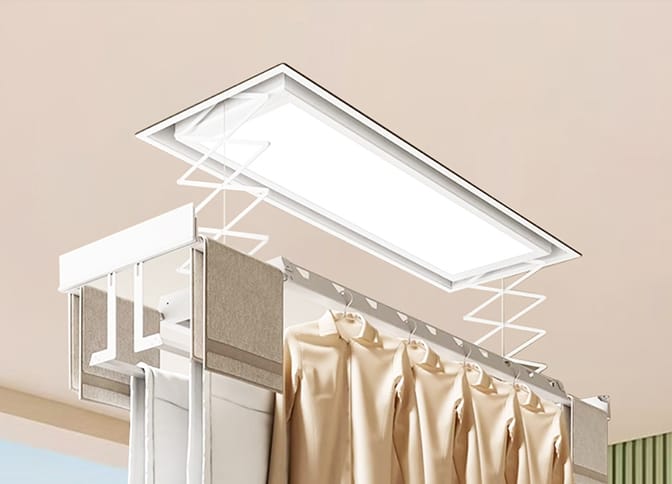
Wall-mounted drying works particularly well when the wall is already connected to laundry activities.
For example, one section might contain the washing machine below, storage at one side, and a fold-down drying area positioned where wet clothes can be transferred easily without blocking the main walkway.
This creates a vertical laundry station.
The floor performs one function, the middle wall another, and storage can occupy selected sections above or beside them.
A broader foldable drying rack laundry layout can use walls, floors, or overhead areas differently depending on where the room has available space. The key is choosing the surface that can support drying without interfering with the other jobs the laundry area already performs.
For a fold-down configuration, the wall is not simply the installation surface. It becomes part of the working sequence.
Open Projection Matters During the Entire Drying Period
A folded rack can look extremely compact against the wall.
That measurement describes only the inactive product.
Once the drying section opens, rails extend into the room and clothing extends even farther. Shirts add sleeve width, towels create broad hanging surfaces, and trousers increase the vertical area occupied below the frame.
This complete loaded depth is what matters during everyday use.
If the outer garments extend into the main walkway, the room may become difficult to use for several hours. If they interfere with cabinet doors, household storage becomes temporarily inaccessible.
A good laundry layout therefore measures the rack in its most demanding condition: fully open and carrying realistic clothing.
Walkways Should Stay Walkways
Drying equipment often becomes frustrating because it changes how people move through the home.
A portable floor rack can create a large obstacle at foot level. A wall-mounted fold-down design avoids supporting legs in the walkway, but clothing can still extend into the route if the rack is mounted in the wrong place.
Narrow utility rooms deserve particular attention.
A person carrying a laundry basket needs more width than someone simply walking through the room. Cabinet doors may also temporarily reduce the passage width.
The drying zone should therefore preserve enough practical circulation for normal household movement instead of using every available centimeter.
Space efficiency is not the same as filling all empty space.
Sort Wet Laundry Before the Rack Becomes Crowded
A larger load becomes easier to manage when clothing is organized before every rail is full.
Lightweight shirts can occupy one section, towels another, while trousers or heavier garments can be positioned where the structure provides appropriate support.
This makes unloading easier later because garments are already grouped rather than randomly distributed.
Families can also create simple household zones. Children’s clothing might occupy one side while adult garments use another. Laundry heading toward a particular bedroom can remain together.
A fold-down rack becomes more useful when it supports organization as well as drying.
The goal is not to turn laundry into a complicated sorting system. It is simply to avoid creating a mixed wall of wet clothing that needs to be reorganized again as soon as it dries.
Different Fabrics Should Not Compete for Identical Rail Space
A lightweight shirt and a thick bath towel use a drying rack very differently.
The shirt can hang vertically from a hanger and requires relatively little rail width. A towel needs a much broader exposed surface. Denim adds more weight, while large textiles can occupy several rails at once.
A uniform arrangement of closely spaced rods may therefore provide impressive theoretical capacity while working less effectively with mixed laundry.
The rack should allow users to vary spacing according to garment type.
Leaving one rail unused between thick towels can sometimes be more useful than filling every position. Shirts can be placed on hangers with enough separation to keep sleeves from pressing against neighboring garments.
Practical capacity comes from using the rack intelligently rather than filling every available centimeter.
A Laundry Wall Needs to Work When the Rack Is Closed Too
The rack may be open for several hours, but it can remain closed for much longer periods.
Its inactive state therefore affects the room almost every day.
When folded back, the structure should not prevent access to wall switches, cabinets, shelves, or other household equipment. If the wall is visible from a kitchen, hallway, or living area, the closed profile also becomes part of the room’s appearance.
This is where folded depth matters most.
A wall-mounted structure does not need a separate storage cupboard, but it still needs to behave like something that has been put away rather than something permanently left half-open.
Fold Down Works Best Where the Drying Location Does Not Change
Some households follow sunlight and weather by moving a portable rack between a balcony, bedroom, and utility space.
A fixed fold-down system cannot provide the same location flexibility.
Its strength appears when the household already has one logical place for air drying.
If the washing machine is permanently located in a laundry room with a suitable nearby wall, moving the rack between rooms provides little benefit. Keeping the drying zone available in the same location can actually simplify the routine.
The decision therefore depends on how stable the laundry process is.
A changing drying location favors portability. A predictable laundry zone favors permanent readiness.
Small Loads Should Not Require a Large Working Footprint
A wall-mounted drying rack can still occupy unnecessary room if the entire structure must open for every load.
Where the design provides independent sections or adjustable drying areas, users can match the working footprint more closely to the laundry.
A small weekday load may need only one section. Towels or family laundry may justify opening the complete structure.
This creates a useful hierarchy of capacity.
Instead of choosing between closed and maximum size, the rack can respond to several levels of demand. That adaptability becomes especially valuable in compact laundry rooms because the drying area occupies only as much room as the current task requires.
Stability Should Be Judged with Wet Laundry
Wet garments are the real structural test.
Several shirts create relatively little load, while bath towels, jeans, sweatshirts, and other dense fabrics can add considerably more weight to the outer portions of the drying frame.
Wall-mounted designs also experience leverage because laundry sits away from the mounting surface.
This means the structure should be evaluated under the type of loading households actually create.
Perfectly symmetrical distribution is unrealistic. Users commonly fill one section first and another later. Several heavy items may therefore occupy one side while the opposite side contains lightweight clothing.
A good design should remain predictable under ordinary uneven loading within its intended working conditions.
Cabinet Doors Need to Open While Clothes Are Drying
Storage is a major part of many laundry rooms.
Detergents, cleaning products, spare linens, baskets, and household supplies often occupy cabinets beside or below the drying area.
These cabinets should remain usable when the rack is extended.
An empty rack may clear the door perfectly while a row of hanging shirts prevents it from opening fully. Long towels can create the same problem with drawers or work surfaces below.
The entire clothing volume needs to be included during layout planning.
This is one of the reasons a fold-down rack should be tested conceptually with actual laundry rather than only measured as a metal frame.
Laundry Baskets Need a Parking Position
A small but important part of the workflow is what happens to the basket while clothing is being hung.
If the basket blocks the walkway because there is nowhere else to put it, the drying layout is incomplete.
A practical laundry area provides a temporary basket position close to both washing machine and rack. This might be a section of floor beside the user, a low shelf, or a dedicated pull-out area depending on the room.
The objective is to avoid repeated bending, carrying, and repositioning while individual garments are transferred.
Good laundry design is often determined by these ordinary actions rather than major product features.
Think About Unloading Before the Clothes Are Wet
The drying process ends with another workflow.
Dry clothes need to come off the rack and move toward folding, ironing, or wardrobe storage. If the rack is located beside a useful countertop, users can remove several garments and place them directly onto the work surface.
If garments are already on hangers, shirts and dresses may move toward storage with less rearrangement.
This is why the best rack position supports both directions of movement: washing machine to drying area when wet, and drying area to folding or storage when dry.
Planning only the first half of the cycle misses much of the benefit.
A Metal Drying Structure Should Be Evaluated as a Complete System
Wall-mounted laundry equipment depends on more than the visible rods.
Mounting sections, joints, folding points, supporting arms, rail geometry, and the way loads travel back toward the wall all influence the working behavior.
The relationship between freestanding, wall-mounted, and overhead metal drying rack configurations is therefore largely a question of which surface of the room carries the drying structure. A floor rack sends its load through legs, while wall-mounted equipment depends on its fixed vertical support.
For laundry-room planning, this distinction matters because it determines which part of the space remains available for other household functions.
A Fold-Down Rack Can Separate Washing and Drying Without Creating Another Room
Many homes do not have enough space for a dedicated drying room.
A wall-mounted rack can create a defined drying zone within the existing laundry area instead.
This is useful because drying needs physical space for several hours but does not necessarily require a completely separate room. By assigning one wall to temporary drying, households can create functional separation without adding another permanent floor-based structure.
The rack becomes active only when clothing needs it.
Once the garments are removed and the frame closes, the same room can return to washing, storage, cleaning, folding, or other household activities.
Bathrooms Need a Different Laundry Workflow
A bathroom can sometimes serve as an occasional laundry drying area, but its normal functions should remain the priority.
A fold-down rack should not block mirrors, cabinets, towel storage, shower access, or door movement. Clothing also needs enough clearance from other surfaces rather than hanging directly against walls or fixtures.
If the bathroom is the main drying location, the rack position should be chosen according to where users can actually stand while loading it.
The theoretical availability of one wall is less important than whether the room can continue functioning once the rack and garments are fully extended.
Balcony Laundry Stations Need Window Planning
Balconies often create a natural relationship between washing and air drying, particularly when a washing machine is already installed there.
A fold-down rack can work effectively on a side wall because it keeps the main floor area clearer than a freestanding frame.
Windows remain the main planning variable.
The open drying structure should not block handles or moving panels, while hanging garments should remain clear enough for the window system to operate normally.
This should be tested with the longest expected clothing rather than only small shirts.
A rack that works with five empty hangers can behave completely differently once towels and trousers occupy its outer rails.
Do Not Put Every Laundry Function on the Same Wall
Vertical organization can save space, but excessive stacking creates conflicts.
A wall might theoretically hold upper cabinets, a drying rack, shelves, switches, and a worktop. In practice, each function requires its own operating area.
Cabinet doors need swing clearance. Clothing needs hanging depth. Users need access to shelves. A work surface requires open space above it.
The most efficient laundry wall is therefore not the wall containing the greatest number of products.
It is the one where several functions can operate without repeatedly blocking one another.
Fold-Down Drying Is Useful for Predictable Weekly Laundry
The value of permanent readiness increases with frequency.
If a household air-dries clothing several times each week, repeatedly retrieving and unfolding a portable rack becomes part of every laundry cycle. A fixed wall-mounted system removes that step.
The rack is already where it needs to be.
Users simply open the drying section, transfer clothing, and close it again later.
For occasional drying, portability may remain more valuable. For frequent drying in one consistent location, eliminating repeated setup can create a smoother routine.
The better configuration therefore depends on behavior rather than only room size.
What Should Be Checked Before Creating a Fold-Down Laundry Zone?
The room should be evaluated during a complete laundry cycle rather than while empty.
First, open the washing machine and imagine a basket filled with wet clothes beside it. Then extend the drying area and consider where the user stands during loading. Add the volume of shirts, towels, and trousers around the frame.
Next, operate nearby cabinets and doors. Check the walkway and the route toward the folding or storage area.
Finally, imagine the laundry removed and the rack folded back against the wall.
If the room works naturally during both active and inactive states, the drying zone is using space effectively.
A Practical Laundry-Workflow Check
Before settling on a fold down drying rack laundry layout, the following situations should all work together:
| Laundry Stage | Practical Question |
|---|---|
| Washing finishes | Can the appliance open fully? |
| Wet clothes are removed | Is there a convenient basket position? |
| Rack is opened | Can the user stand comfortably beside it? |
| Clothes are hung | Do garments clear appliances and cabinets? |
| Laundry is drying | Does the main walkway remain usable? |
| Clothes are removed | Is there a nearby folding or sorting area? |
| Rack is closed | Does the room return to normal use? |
This workflow-based check is often more informative than comparing folded dimensions alone.
The Best Laundry Rack Reduces Repeated Decisions
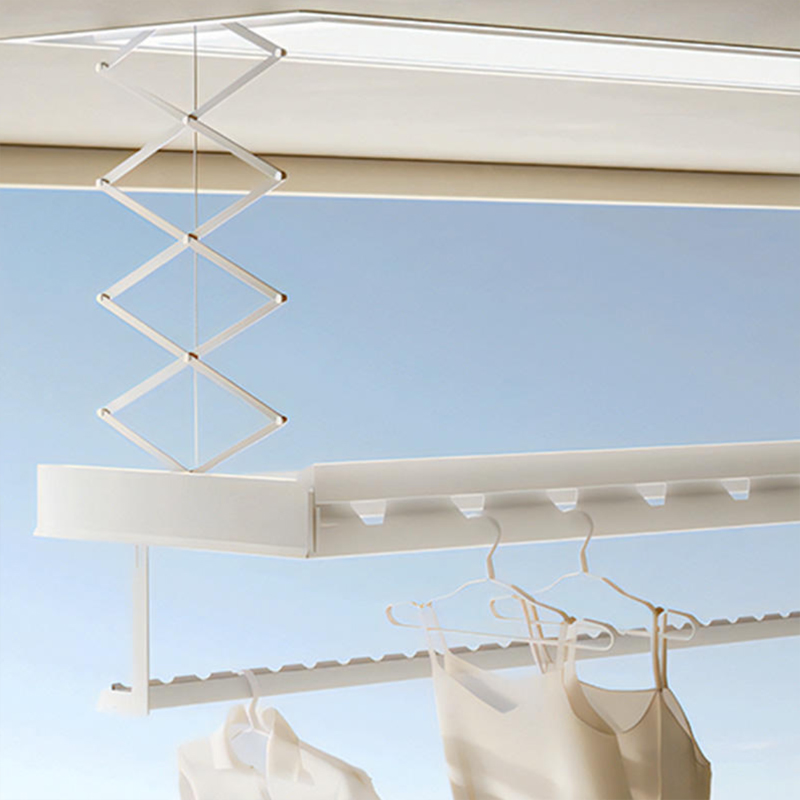
Good household design removes small points of friction.
When the drying location is always available, users do not need to decide where to place a portable rack. When garment zones are predictable, sorting becomes easier. When the rack sits near the washing machine, wet clothes travel a shorter distance. When it closes back against the wall, separate rack storage disappears from the routine.
None of these improvements is dramatic by itself.
Together, they can make laundry noticeably easier because the room begins supporting the sequence of tasks rather than forcing the user to reorganize the room during every cycle.
Conclusion
A fold down drying rack laundry setup is most useful when it becomes part of the entire washing and drying workflow rather than simply occupying an empty wall.
Its location should shorten wet-laundry handling, preserve access to appliances and cabinets, maintain a practical walkway, and connect naturally with sorting, folding, and storage. The rack should create enough temporary drying capacity for realistic household loads while returning toward the wall once that capacity is no longer required.
This makes the design especially suitable for compact laundry rooms, utility areas, and balconies where floor space performs several jobs throughout the day.
The central idea is simple: drying space does not have to be permanent, but the place where drying happens can be.
When the washing machine, rack, basket, working surface, and surrounding storage operate as one coordinated area, a fold-down system becomes more than a space-saving product. It becomes part of a more efficient laundry routine.
FAQ
What is a fold down drying rack laundry setup?
It is a laundry arrangement in which a drying rack is fixed to a wall or similar surface and opens outward when wet garments need drying. After the clothes are removed, the structure folds back to reduce its impact on the room and keep the floor area more accessible.
Where should a fold-down drying rack be positioned in a laundry room?
A practical position is usually close enough to the washing machine for easy wet-clothing transfer while remaining clear of appliance doors, cabinets, windows, work surfaces, and the main walkway. The loaded rack, not only the empty frame, should be considered.
Is a wall-mounted drying rack suitable for family laundry?
It can be, provided the structure offers enough usable rail area and is appropriate for the intended laundry load. Families should consider towels, jeans, children’s clothing, shirts, and other common textiles rather than evaluating capacity using lightweight garments alone.
Does a fold-down rack need a separate storage location?
A wall-mounted design generally remains installed and folds toward the wall when unused, so a separate floor or cupboard storage location is normally unnecessary. The folded profile should still remain compatible with switches, cabinets, shelving, and other wall functions.
What is the main advantage of a fold-down rack compared with a portable drying rack?
A fold-down rack creates a predictable drying position without requiring users to retrieve, carry, unfold, and later store a separate frame. Portable racks provide greater location flexibility, while wall-mounted systems can make frequent drying in one fixed laundry area more efficient.
Need Help Planning a Fold Down Drying Rack Laundry Area?
If you’re planning a fold down drying rack laundry area for a compact utility room, balcony, apartment, or family laundry space, consider the complete journey from washing machine to drying rack and from dry clothing to folding or storage. The strongest layout is one that provides enough temporary drying capacity while keeping appliances, cabinets, walkways, and everyday household tasks easy to use.





