
Table of Contents
Introduction
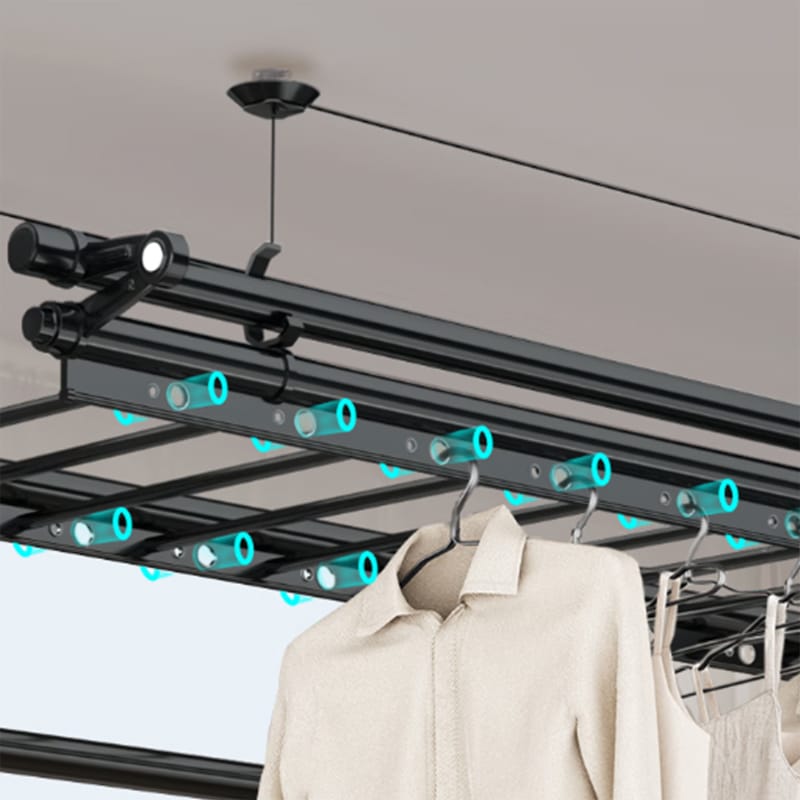
A drying rack and a clothes hanger may seem like two simple household items, but the way they work together can significantly affect how efficiently wet garments are organized. Shirts, dresses, uniforms, jackets, trousers, towels, and small laundry items do not all need the same type of support, which is why a useful drying rack laundry hanger setup should provide more than a collection of horizontal rods.
For garments that are normally stored on hangers, keeping them suspended during drying can simplify the journey from washing machine to wardrobe. The drying rack provides the main structure, while individual hangers support each garment in a more natural vertical position. When the rail layout, hanger spacing, working height, and available room are properly coordinated, the result can be a more organized drying area without unnecessarily increasing the size of the rack.
The important question is therefore not how many hangers can physically fit onto one rail. A better drying system considers which garments benefit from hangers, how much separation they need, where heavier textiles should be positioned, and how the complete rack fits into the household laundry routine.
The Rack and the Hanger Perform Different Jobs
A laundry drying rack provides the structural framework, but the hanger determines how an individual garment is supported. Understanding this distinction makes it easier to organize mixed laundry.
A horizontal rail works naturally for towels, small textiles, and fabrics that can be draped across a broad surface. Shirts and dresses behave differently because folding them across a rail creates another contact point through the middle of the garment. Using a hanger allows suitable clothing to remain suspended from the shoulder area instead.
The familiar clothes hanger is shaped around the general form of the human shoulders so garments such as shirts, coats, dresses, and blouses can remain suspended rather than folded. When this principle is incorporated into a drying rack, the rack becomes a platform for several different methods of supporting laundry rather than one uniform grid of bars.
This combination is particularly useful in households where a large percentage of clothing normally returns to the wardrobe on hangers after drying.
Shirts Are a Good Starting Point for Hanger-Based Drying
A freshly washed shirt illustrates why rack and hanger design need to work together. If the shirt is folded over a narrow rail, the fabric bends through the center while sleeves hang to either side. Once dry, that fold may remain visible and the shirt still needs to be transferred onto a hanger before going into the wardrobe.
Placing an appropriate shirt onto a hanger earlier in the process changes the sequence. The shoulders are supported, the sleeves can hang naturally, and the garment remains in a vertical orientation throughout drying.
This does not eliminate every wrinkle or remove the need for normal garment care, but it can reduce unnecessary rearrangement. Once the shirt is dry, it is already in a form that can move more directly toward wardrobe storage.
For households that wash work shirts, school uniforms, or similar garments frequently, this small workflow improvement can become meaningful over time.
Hanger Spacing Matters More Than Maximum Hanger Count
A rail may physically accommodate many hangers if they are pushed tightly together. That does not mean the full number represents useful drying capacity.
Wet garments need room around them. When several shirts are compressed into one dense row, sleeves touch neighboring garments and fabric surfaces overlap. The drying rack may appear full, but much of the available space is no longer being used effectively.
A better arrangement leaves practical gaps according to garment thickness. Lightweight shirts can usually sit closer together than jackets or hoodies, while wider garments naturally require more space around their shoulders.
This means hanger capacity should be thought of as adjustable rather than fixed. The same rail may hold more lightweight garments during one laundry cycle and fewer thicker items during another.
Shoulder Width Changes How Much Rail Space a Garment Uses
Two hangers can occupy the same hook position while supporting garments of very different widths.
A children’s shirt may use relatively little horizontal space, while a broad jacket can extend far beyond the hanger itself. If rack capacity is calculated only according to the number of hanger holes or attachment positions, the result can be misleading.
Real drying capacity should include garment width.
This becomes particularly important in mixed family laundry. Adult shirts, children’s clothing, school uniforms, jackets, and dresses may all share the same drying structure, but they need different amounts of surrounding space.
A well-designed drying rack laundry hanger arrangement gives users enough freedom to skip positions when larger garments require more separation.
Not Every Garment Should Automatically Go on a Hanger
Hangers are extremely useful, but they are not the correct drying method for every textile.
Heavy knitwear is a clear example. When saturated with water, some knitted garments can stretch under their own weight if suspended from the shoulders. Other delicate garments may have specific care instructions that recommend flat drying or another method.
The rack therefore needs more than hanger capacity.
Horizontal surfaces, broader rails, or other drying areas allow households to match the method to the textile. This is one reason mixed drying structures are generally more versatile than systems that rely entirely on either hangers or horizontal bars.
Garment care instructions should always guide the final decision.
Towels Should Not Consume Every Hanger Rail
Towels create a different drying challenge because they need broad exposed surfaces rather than shoulder support.
Using valuable hanger positions for towels can reduce the capacity available for clothing that actually benefits from hanging. A more efficient drying layout provides separate horizontal rods where towels can be spread more naturally.
This separation also improves organization. Shirts remain grouped around hanger positions, while towels occupy wider drying rails without pressing directly against the clothing.
For family laundry, dedicated zones can make a large rack feel considerably easier to use because each type of textile has an obvious place.
Mixed Loads Need More Than One Drying Zone
Most household laundry cycles contain several garment types rather than one uniform category. A practical drying rack needs to manage this mixture without forcing every item into the same arrangement.
| Laundry Type | Better Support Method | Main Consideration |
|---|---|---|
| Shirts and blouses | Clothes hangers | Shoulder support and spacing |
| Dresses | Hangers | Vertical clearance |
| Jackets | Broader hangers | Wet weight and garment width |
| Trousers | Hangers or suitable rails | Length and secure support |
| Towels | Horizontal rods | Broad exposed surface |
| Small garments | Dedicated compact areas | Organization and efficient rail use |
| Heavy knitwear | Appropriate alternative method | Avoid unwanted stretching |
| Bedding | Long drying rods | Continuous span |
The most useful rack creates several drying possibilities within one structure rather than maximizing only one type of capacity.
Hanger Holes Can Improve Organization

Some drying racks include dedicated openings or positions designed to keep hangers separated.
This can provide more control than placing hooks anywhere along a smooth rail. Individual positions reduce the tendency for several hangers to slide together, particularly when the rack moves or when garments are added and removed.
The benefit is simple: spacing becomes easier to maintain.
However, fixed hanger holes should still provide enough flexibility. If every position is extremely close to the next, larger garments may still need users to leave some openings empty.
The ideal layout supports both organization and choice.
A Moving Rack Needs Stable Hanger Positions
Height-adjustable drying systems introduce another issue: the entire rack moves while clothing is already attached.
During lifting or lowering, hangers should remain reasonably stable instead of sliding suddenly toward one side. Smooth movement helps, but rail and hanger design also influence what happens to the garments.
A motorized electric hanger can bring the drying area to a more accessible loading height and then move it upward after garments have been arranged. In this type of system, controlled movement is particularly useful because the rack may carry many separately hung garments at the same time.
The purpose of height adjustment is not simply automation. It allows users to arrange hangers carefully at a comfortable level before moving the complete drying zone overhead.
Loading Height Changes How Well Clothes Are Organized
Fixed high-level rails can encourage rushed garment placement because users are repeatedly reaching above shoulder height. It becomes harder to see whether sleeves are tangled, whether two shirts are pressed together, or whether heavier garments are all concentrated on one side.
Lowering the rack creates a different working environment.
Users can see the complete rail, select appropriate hanger positions, separate garments more deliberately, and straighten clothing before the structure returns upward. The drying process then begins with a more organized arrangement.
This demonstrates why accessibility and drying quality are connected. A rack that is easier to load is also easier to load well.
The Laundry Hanger Can Reduce Rearrangement After Drying
Garments often pass through several temporary states during a normal laundry cycle. They leave the washing machine, enter a basket, move onto a drying rack, and are later transferred onto wardrobe hangers.
For suitable garments, using a hanger during drying can eliminate one of those transitions.
A shirt can move from washing machine to hanger, from hanger to drying rack, and later remain on the same basic support as it moves toward storage. The exact routine varies by household, but fewer unnecessary transfers can make laundry more efficient.
This is particularly useful for clothing that is rarely folded after drying.
The drying rack becomes part of a continuous garment-management process rather than an isolated stage between washing and storage.
Long Garments Need More Than Hanger Positions
A rack may provide excellent hanger organization and still perform poorly with long dresses or trousers.
The problem is vertical clearance.
If the rail sits too low, longer garments can touch lower rods, appliances, furniture, or the floor. A suitable drying rack laundry hanger setup therefore needs to consider the distance beneath each hanger position, not simply the number of positions available.
Ceiling-mounted structures can be useful because the rack can rise after loading, creating more space below longer clothing. Portable racks may also work when their main hanging bar is sufficiently high.
Users who frequently dry dresses, long shirts, or trousers should include garment length when evaluating rack dimensions.
Children’s Clothing Creates the Opposite Problem
Children’s garments are shorter and lighter, which means they do not need the same large vertical zone as adult clothing.
Placing every small garment on a full-size hanging rail may use space inefficiently. Dedicated lower sections or compact drying zones can allow small clothing to occupy a smaller part of the rack while adult garments use the areas that require greater clearance.
For families, this type of zoning can substantially increase practical capacity.
The rack does not need to become physically larger. It simply needs to assign its available space according to different garment sizes.
Jackets Require Both Strong Support and More Separation
Wet jackets place greater demands on hangers and racks than lightweight shirts.
Their fabric is often thicker, their wet weight can be substantially higher, and their shoulder width requires more rail space. Placing several jackets tightly together can also create a dense drying zone where little space remains between the garments.
A rack intended for mixed clothing therefore needs enough structural support and enough flexibility in hanger spacing.
This is another reason maximum hanger count should not be treated as a target. A rail rated for many lightweight shirts may naturally hold fewer heavy jackets while remaining much more practical.
Capacity changes with the laundry.
Small Garments Should Have Their Own Strategy
Socks, underwear, scarves, children’s accessories, and other small textiles can consume surprising amounts of prime rail space if they are handled individually.
Using an entire full-length rod for several small items often reduces the area available for shirts and towels.
A well-organized rack separates small items into compact zones where possible. This might involve dedicated clips, smaller hanging sections, or another suitable arrangement depending on the structure.
The objective is to prevent the smallest garments from controlling the layout of the largest rails.
This becomes especially important in family laundry, where one washing cycle may contain dozens of small pieces.
The Rack Should Match the Household Wardrobe
Different households own very different kinds of clothing.
A family with school uniforms and office shirts may use hanger positions constantly. Another household dominated by sportswear, towels, and casual knitwear may need more horizontal drying area. Someone who frequently wears dresses may prioritize vertical clearance over maximum rail count.
This is why the wardrobe itself is a useful starting point for choosing a drying rack.
Instead of asking how many clothes the rack can hold, households can look at several normal washing cycles and identify how many items naturally belong on hangers, how many need horizontal rods, and how frequently large textiles appear.
The best rack mirrors these proportions.
Overhead Systems Can Separate Hanging Capacity from Floor Space
Increasing hanger capacity on a freestanding rack often increases the amount of floor occupied by the structure. Overhead systems approach the same problem differently.
By suspending the main drying frame from the ceiling, the hanger zone can use vertical room space while leaving more of the floor available for normal household activities.
This can be particularly useful on balconies where the washing machine, storage, and walking route already compete for limited width.
An automatic ceiling clothes hanger can lower the hanging structure during loading and return it overhead afterward, allowing vertical garment organization without requiring a large permanent floor frame.
The approach works best when ceiling conditions and the room layout are suitable for permanent overhead installation.
A Drying Rack Should Not Turn Hangers into a Wall of Fabric
One of the easiest mistakes is assuming that if every hanger position is occupied, the rack is being used efficiently.
A completely filled rail can create a continuous wall of wet garments. Shirts touch each other, jacket sleeves overlap, and the outer clothing may reduce the open space around garments toward the center.
Better organization sometimes means deliberately leaving positions empty.
The exact amount of spacing depends on fabric thickness, garment shape, room conditions, and the type of drying system. A thin blouse and a heavy jacket should not necessarily receive identical spacing.
A good rack gives users enough room to make these decisions instead of forcing the maximum number of garments into a fixed pattern.
Hanger Orientation Can Affect Available Space
Hangers are normally arranged parallel to one another along a rail, but the relationship between the hanger hook and the rack can influence how garments occupy the surrounding area.
If a rack provides dedicated hanger holes, their direction should allow clothing to hang naturally without twisting around neighboring rails. If hangers are placed directly over broad horizontal rods, hooks should remain stable enough that garments do not rotate unnecessarily.
This detail becomes more important when clothes are suspended overhead because users may not constantly adjust the garments during drying.
Once loaded, the arrangement should remain reasonably organized.
The Rack Should Be Easy to Load from One Position
A large drying system may provide significant capacity while forcing users to walk around several sides during loading.
That is not always a problem in a spacious utility room, but it can become inconvenient on a narrow balcony.
For hanger-heavy laundry, the main attachment points should remain accessible from a practical working position. Users should be able to place and remove shirts without reaching across several other garments.
This is another area where lowering systems can help because they bring the full drying frame closer to the user’s normal working zone.
Accessible capacity is more valuable than capacity hidden behind other clothing.
The Washing Machine and Hanger Storage Should Be Connected
A smooth laundry routine begins before the first wet shirt reaches the rack.
If clothes hangers are stored in another bedroom, users need to collect them before every laundry cycle. Keeping a reasonable number near the drying area can simplify the process.
The same applies to the washing machine.
Ideally, wet garments should move only a short distance from the appliance to the drying rack. Hangers should be available within that same zone, allowing users to prepare each suitable garment without carrying a basket through several rooms.
This creates a compact workflow: wash, remove, hang, dry, and later move the garment toward storage.
Small improvements in layout can matter because the same sequence is repeated so frequently.
A Hanger-Based System Still Needs Space for Towels and Bedding
Even households that primarily use hangers will eventually wash large household textiles.
A rack dedicated entirely to hanger positions may perform poorly when bath towels, pillowcases, sheets, or duvet covers appear. For this reason, mixed rail structures often provide more flexibility than pure hanger systems.
Long horizontal rods can handle towels and bedding, while dedicated hanger positions organize clothing.
The ratio between these areas should match actual laundry behavior.
A household that air-dries bedding every week should give long-span capacity greater importance than one that rarely places large textiles on the rack.
Rack Height Should Match the User, Not Just the Ceiling
Ceiling height can encourage installations that maximize overhead clearance but make normal loading uncomfortable.
The best working height is the one that allows users to attach hangers without repeated stretching. If the rack is adjustable, it can descend during loading and return upward afterward.
For fixed structures, the installation needs a more careful compromise because one height must serve both access and garment clearance.
The human body should therefore be included in the dimensions.
A rack that fits the architecture but not the user is not genuinely well designed.
Mixed Family Laundry Benefits from Simple Zones
A family rack does not need complicated labeling to become organized.
One section can hold adult shirts, another children’s garments, while broader rods remain available for towels. Clothing already placed on hangers can stay grouped according to family member or destination wardrobe.
This reduces sorting after drying.
The system works because the rack provides enough distinct areas to make organization possible. If every garment is forced onto one continuous rail, the household loses that opportunity.
Large capacity becomes more valuable when it produces order rather than simply more crowded clothing.
Think About Removing Clothes Before You Hang Them
Drying is temporary, so unloading matters too.
If every hanger is tightly packed, removing a shirt from the center can disturb several neighboring garments. If the rack sits too high, users repeat the same overhead reaching when laundry is dry.
Good layout makes unloading as straightforward as loading.
Garments on hangers should be easy to remove individually, while towels and other horizontal textiles should remain accessible without requiring users to reorganize the entire rack.
The complete laundry cycle includes both directions.
The Hanger Should Not Create Unnecessary Garment Stress
A hanger needs to suit the garment it supports.
Very narrow hangers can create concentrated pressure around the shoulders of heavier clothing, while inappropriate hanger shapes may distort certain fabrics. Heavy wet garments require particular care because the additional moisture increases the load supported by the hanger.
The drying rack cannot compensate for an unsuitable hanger.
Users should therefore treat the rack and hanger as two connected choices. The rack provides the structural capacity and spacing, while the individual hanger needs to match the clothing placed on it.
This distinction is especially important for jackets, delicate garments, and heavier textiles.
Airflow Assistance Cannot Replace Good Hanger Spacing
Some modern drying systems provide powered airflow or other assisted drying functions.
These features can support indoor drying conditions, but they do not eliminate the need for sensible garment arrangement. If several shirts are pressed tightly together, air has less open space through which to move around their surfaces.
Technology works better when the physical drying layout already makes sense.
This means rack geometry, hanger spacing, and fabric separation remain fundamental even when additional functions are available.
A good drying system starts with garment organization and then uses additional functions where they provide genuine value.
The Best Layout Depends on Laundry Frequency
A household that air-dries shirts once per week has different requirements from one that uses the rack every day.
Frequent laundry increases the importance of convenient loading height, permanent hanger storage, simple controls, and a predictable drying location. Occasional users may place greater value on a portable rack that can disappear completely between cycles.
The rack should fit the rhythm of the household.
Features that save a few movements during every laundry cycle become more valuable when those cycles occur repeatedly throughout the week.
A Practical Drying Rack Laundry Hanger Checklist
Before choosing or organizing a rack, it helps to evaluate the complete garment mix.
| Question | Why It Matters |
|---|---|
| How many normal garments use hangers? | Determines hanger capacity |
| Are jackets or heavy garments common? | Affects spacing and support |
| Are dresses or long trousers frequent? | Determines vertical clearance |
| Are towels included in most loads? | Requires horizontal rail space |
| Is bedding air-dried regularly? | Requires longer uninterrupted span |
| Are children’s clothes common? | Favors smaller organized zones |
| Can the rack lower for loading? | Influences accessibility |
| Can hangers remain separated? | Prevents excessive garment crowding |
| Is the rack near the washing machine? | Reduces wet-laundry handling |
| Is there a clear unloading route? | Improves the complete laundry workflow |
These questions provide a more realistic picture of performance than hanger count alone.
When Does a Hanger-Focused Drying Rack Make the Most Sense?
A hanger-focused drying system works particularly well in households with many shirts, uniforms, dresses, blouses, jackets, and other garments that normally remain on hangers after drying.
It is less important when most laundry consists of towels, bedding, sportswear, knitwear, or textiles better suited to horizontal support.
Many households fall somewhere between these extremes, which is why mixed drying structures are so useful.
The best rack gives hanger-based garments an organized vertical area without sacrificing the rails required by other laundry.
The Real Goal Is Fewer Unnecessary Laundry Steps
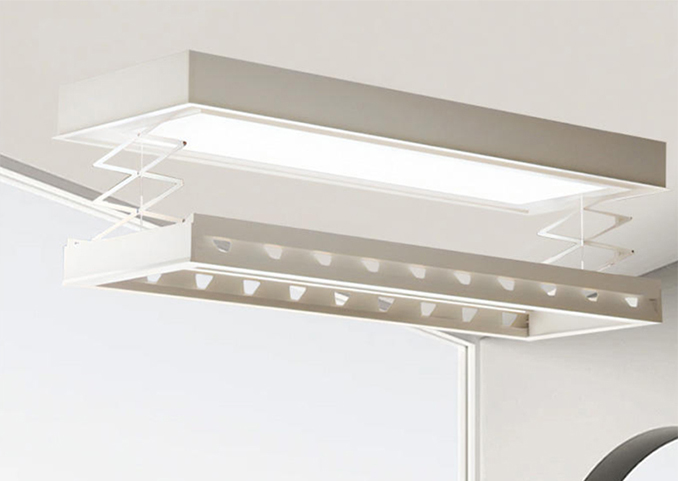
A drying rack laundry hanger system should ultimately make the laundry process simpler.
The benefit is not simply being able to hang more shirts. It comes from supporting garments appropriately, organizing mixed loads, reducing repeated transfers between rack and wardrobe hanger, making wet clothing easier to arrange, and using the available room more efficiently.
When rack height, hanger spacing, horizontal rods, and household workflow are coordinated, drying becomes less about finding any available place for wet clothes and more about giving each garment a suitable position from the beginning.
That makes the rack useful beyond the hours when clothing is actually wet.
Conclusion
A drying rack laundry hanger setup works best when the rack and individual hangers are treated as parts of the same garment-care system.
The rack provides stability, working height, horizontal drying areas, and overall capacity. Hangers provide individual support for shirts, dresses, jackets, uniforms, and other suitable garments. The effectiveness of the combination then depends on spacing, vertical clearance, textile type, wet weight, household laundry volume, and the location of the drying area.
Maximum hanger count should not be the main objective. Practical capacity comes from giving garments enough room to hang naturally while preserving separate areas for towels, small items, and larger textiles.
For hanger-heavy wardrobes, an adjustable overhead system can also make the arrangement easier to access without permanently consuming valuable floor space. For other households, a mixed rack with both hanger positions and broad horizontal rails may provide the better balance.
The right drying system does not force every garment to use the same method. It gives different types of laundry the kind of support they actually need.
FAQ
What is a drying rack laundry hanger setup?
A drying rack laundry hanger setup combines a supporting drying structure with individual clothes hangers so suitable garments such as shirts, dresses, jackets, and uniforms can remain suspended while drying.
How many hangers should be placed on a drying rack?
There is no universal number because garment width and fabric thickness vary. Hangers should be spaced so wet clothing does not become unnecessarily compressed, with thicker or wider garments generally requiring more room.
Can all wet clothes be dried on hangers?
No. Some garments, particularly certain heavy knitwear and delicate textiles, may require other drying methods. Garment-care instructions should be followed when deciding whether hanging is appropriate.
Is a hanger drying rack useful for family laundry?
Yes, particularly when the family dries many shirts, uniforms, dresses, or children’s garments. A mixed structure with hanger positions and horizontal rods is often more practical because towels, bedding, and other textiles require different support.
Why is adjustable height useful for a laundry hanger rack?
Adjustable height can bring hanger positions to a more comfortable loading level, making it easier to organize and separate garments. The rack can then move upward to free more of the space underneath during drying.
Need Help Choosing the Right Drying Rack Laundry Hanger?
If you’re evaluating a drying rack laundry hanger for a balcony, family laundry area, apartment, or other residential space, begin with the clothing you actually wash. Consider how many garments normally use hangers, how much vertical clearance longer clothing needs, how towels and bedding will be handled, and whether the drying area should move overhead after loading. A well-planned system should make garment organization easier without forcing every type of laundry into the same drying arrangement.




