
Table of Contents
An automatic clothes hanger purchase should begin with the actual laundry routine and room constraints. A distributor preparing an offline-control demonstration should unplug the router while leaving the rack powered through its normal approved connection. This guide helps buyers, distributors and project teams evaluate the automatic clothes hanger through room fit, a representative sample and written acceptance criteria. Use the current configuration and instructions for any final product decision.
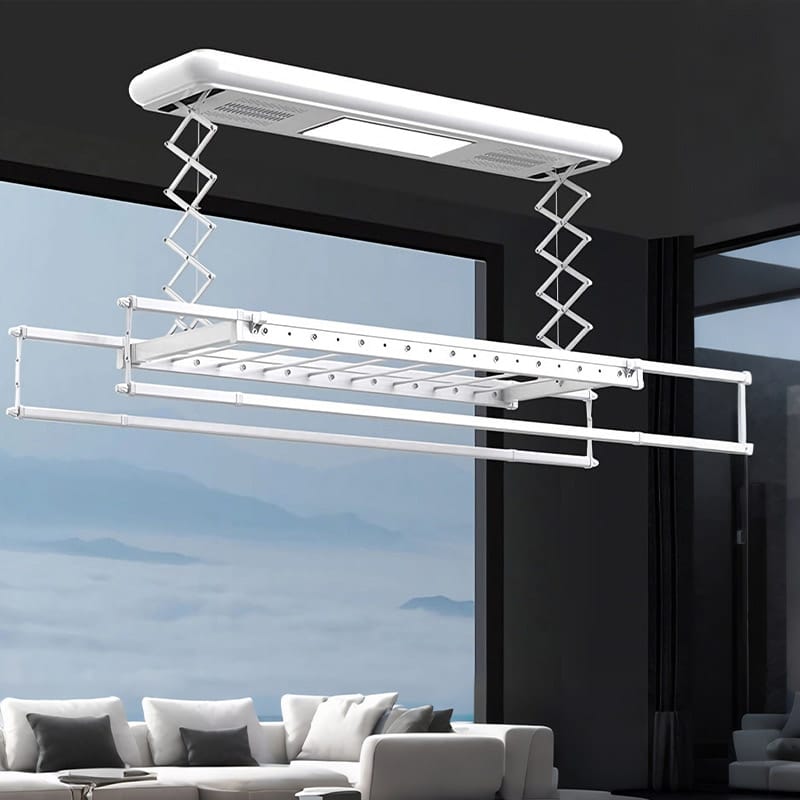
Offline Control Checklist in practice
A distributor preparing an offline-control demonstration should unplug the router while leaving the rack powered through its normal approved connection. Demonstrate the functions that are explicitly listed as local, then restore the network and check normal operation again. This is an illustrative evaluation sequence, not a claim that every model offers network independence. Keep the exact receiver and controller versions in the report. The purchase decision is whether customers can complete essential lifting commands using the supplied local controls.
The decision for this automatic clothes hanger should be recorded against three specific points: functions available without a router; receiver and remote revision match; written recovery after network restoration. Keep the observation, the document reference and the person responsible for resolving any exception together. This turns a broad product enquiry into a review that another buyer or installer can follow.
Automatic Clothes Hanger: separate local control from connected features
An automatic clothes hanger can offer several control paths, but the buyer should specify what each path actually does. A handheld transmitter, a wall control and a phone interface are different items in a quotation. Ask which functions work without a router, which need pairing and whether a replacement controller is available for the exact revision. Demonstrate a normal lift and stop command with the network unavailable before presenting offline operation as a selling point.
For an automatic clothes hanger, the practical acceptance record is a function matrix. Put lifting, lighting and any optional airflow function on separate lines, then identify the supported controller for each. A screenshot of an app does not establish compatibility with the supplied hardware. Keep optional connected features separate from the essential local controls so a change in a phone platform does not obscure the basic product specification.
Test commands from the places people actually stand
Assess an automatic clothes hanger from the laundry doorway, the loading position and the normal storage location of its controller. Furniture, walls and adjacent equipment can change the user experience. Record whether a command is acknowledged and whether the moving rails remain in view. A successful demonstration beside an unpacked sample gives little information about the finished apartment.
The test for an automatic clothes hanger should include short, deliberate commands as well as stopping partway through travel. Use the manufacturer's procedure and keep the travel area clear. Do not rely on an advertised maximum radio range to decide where a user can safely operate the rack. A clear view of the laundry and predictable response are more useful purchasing criteria than a distance figure detached from its test conditions.
Specify a realistic wet load
Assess the automatic clothes hanger with the mass of washed laundry rather than the dry weight on a shopping label. Water retained after spinning varies by fabric and programme. Weigh a representative load in a suitable container and subtract the container weight. Keep the garment mix with the measurement so the result can be repeated.
For the automatic clothes hanger, compare that observation with the manufacturer's limit and any conditions on distribution. Include hangers or other accessories if the instructions require them to be counted. Do not infer an allowance for overloading from a successful short demonstration. Where the planned routine exceeds the documented limit, divide the load or select a supported alternative before placing an order.
Leave space for air between garments
Useful capacity on an automatic clothes hanger is affected by the way garments are arranged. Layers pressed together create damp contact areas and make checking completion difficult. Spread items so air can reach both sides, and separate thick folded sections from adjacent laundry where the fabric-care instructions allow it.
During the automatic clothes hanger sample trial, record the number and type of garments that fit with usable spacing. This gives a retailer a more helpful demonstration than filling every possible hanger position. If drying performance is disappointing, review spacing and room conditions before concluding that a longer rail or more hangers will solve the problem.
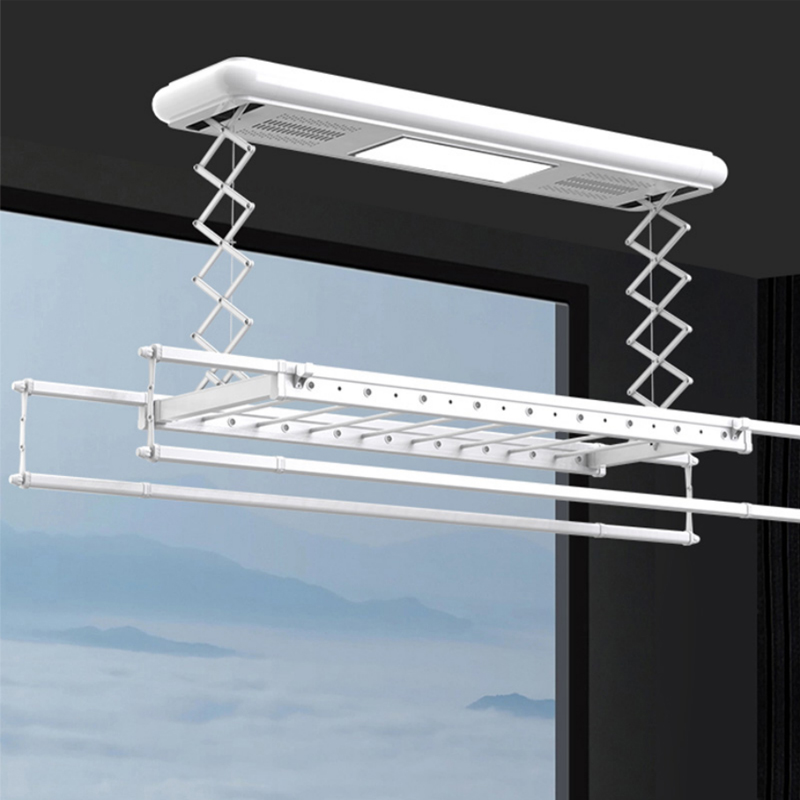
Set a loading height around the user
Choose an automatic clothes hanger around a comfortable loading position, not only a ceiling photograph. The user should be able to place a hanger and remove a shirt without standing on a chair or reaching across a barrier. Test the intended hanger type, including its hook height, because that changes the usable reach. Account for the basket position and the space needed to turn.
An automatic clothes hanger is useful only when its travel range fits the room and the person using it. Check the lowest rail position against counters, washing machines and long garments. Ask whether intermediate stopping is supported in the ordered version. Record the practical setting in the handover instructions so the household does not need to rediscover a suitable position each time.
Include long garments in the room trial
Trial an automatic clothes hanger with the longest garment that will regularly hang there. A compact mechanism can still need considerable clear space below its rails once a coat or dress is added. Measure from the finished floor and check the full motion path. A rail that clears a cabinet when empty may pull fabric across it when loaded.
The room trial for an automatic clothes hanger should also include a door opening, a person walking past and access to nearby appliances. Mark conflicts on the room sketch rather than solving them with a verbal promise to keep the door closed. Where laundry and circulation compete for the same space, change the location, garment arrangement or product choice before approving installation.
Protect garment shape during drying
An automatic clothes hanger supports garments, but the garment label determines the appropriate drying method. Some knitwear needs flat support and can stretch when hung wet. Use a separate suitable surface where required and avoid describing a hanging rack as appropriate for every fabric. Trial the hangers and clips with representative items.
When presenting the automatic clothes hanger, explain which part of the routine it supports and which items need another arrangement. Look for sharp edges, rough joints or concentrated contact marks on the sample. A purchasing team can reduce customer disappointment by showing a realistic mixed-load routine instead of implying that every textile can be treated in the same way.
Distinguish indoor shelter from outdoor exposure
Specify the environment for the automatic clothes hanger: enclosed utility room, covered balcony or open exterior. These conditions differ in rain, wind, sunlight and temperature. Ask the supplier which are supported and what evidence or instructions define the limit. An installation photograph under a roof does not establish all-weather suitability.
For the automatic clothes hanger, record any exposure restrictions in the product listing and installer brief. If wind can move garments or rain can reach electrical parts, reassess the location with the supplier and installer. Do not borrow an outdoor claim from a superficially similar model. Matching the product to the intended environment is part of selection, not an afterthought after installation.
Decision checklist and comparison
Use the following comparison for the automatic clothes hanger evaluation. The alternatives describe evidence quality, not a claim that one brand always performs better. Resolve missing information before accepting an equivalent product or releasing the batch.
| Approach | When it may fit | Confirm before choosing |
|---|---|---|
| Handheld local control | Routine operation within view of the rack | Compatible receiver, supported functions and pairing instructions |
| Wall control | A consistent operating location near the loading area | Installation requirements and the supplied control version |
| Phone interface, if offered | A buyer who needs the confirmed connected functions | Supported app, account requirements and offline behavior |
Product configuration to discuss
For a relevant starting point, review YIHUI Automatic Clothes Hanger 829 with YIHUI. Treat the listed product as a candidate for the automatic clothes hanger brief and confirm the current drawing, included controls, finish and installation or assembly requirements. Product-family photographs do not establish that every option is supplied together.
Compare the relevant YIHUI product category and ask about configuration and supply services. Keep requested features separate from those already confirmed for the selected model.
Independent reading
For independent background, read Wikipedia overview of drying-rack designs. Use this background to understand the names used for different rack arrangements. Confirm specifications from the supplier rather than treating a general overview as a model test.
Request a configuration review
Send YIHUI your automatic clothes hanger brief with the intended market, room or storage dimensions, routine laundry type and planned order quantity. Include functions available without a router as a specific review item. Ask for a configuration proposal and sample plan before committing to a bulk order. Use the enquiry form below or the contact page to start the discussion.
Frequently asked questions
What should I check first for an automatic clothes hanger?
Begin with functions available without a router. Match it to the actual room or sales brief, then confirm the current configuration and instructions. A sample should demonstrate the feature that determines your purchase decision.
Which documents should accompany an automatic clothes hanger quote?
Request a current drawing, feature list, packing list and installation or assembly instructions. For this brief, also document receiver and remote revision match. Ask the supplier to identify options and any unresolved differences.
How should I evaluate an automatic clothes hanger sample?
Use the intended garments, hangers and room or display conditions. Record the setup and observations so another person can repeat the review. Include written recovery after network restoration in the acceptance record.
Can a similar-looking automatic clothes hanger be substituted?
Review the supplied revision, dimensions, components and instructions before approving a substitute. Similar appearance does not establish compatible controls, an equivalent mechanism or the same permitted loading conditions.
What information helps YIHUI review my automatic clothes hanger enquiry?
Supply the destination market, quantity, intended use, useful dimensions and required functions. State that the main topic is offline control checklist and include photographs or a sketch where these clarify the practical constraint.





