
Table of Contents
Introduction
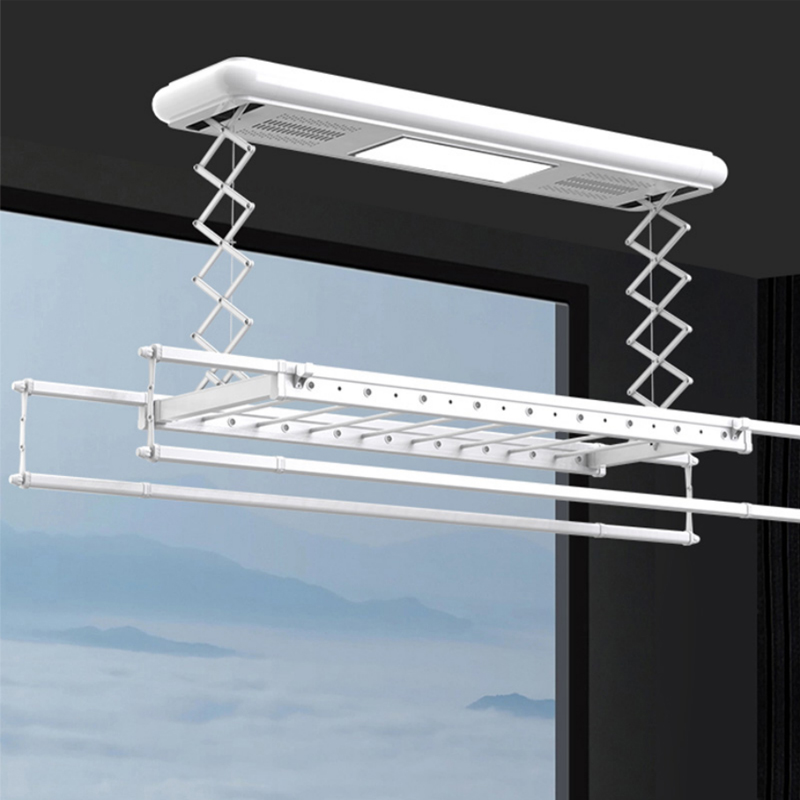
Most homes have a surprising amount of space that is rarely considered usable: the area above people’s heads.
Floors are occupied by furniture, appliances, storage boxes, and walking routes. Walls carry cabinets, windows, and shelves. Yet the upper part of a balcony or laundry room often remains relatively empty. Ceiling clothes drying racks turn that overlooked area into a practical part of the laundry routine.
This is particularly valuable in apartments where a drying rack cannot simply take over the balcony every time clothes are washed. Floor-standing racks may be convenient, but once opened they can block doors, reduce walking space, and make already narrow areas difficult to use. Moving the drying structure upward changes the relationship between laundry and the room.
The idea sounds straightforward, but successful overhead drying depends on more than attaching several rods to the ceiling. Height, accessibility, ventilation, laundry size, lifting method, window clearance, and the way the room is used all influence whether a ceiling system feels genuinely convenient.
The Ceiling Is Often the Largest Unused Surface in a Laundry Area
Walk into a compact balcony and look at where everyday objects are located.
The washing machine may occupy one corner. A utility cabinet may cover part of a wall. Plants or household storage may take another section. Windows need clearance to open, and people still need enough room to move through the space.
Now look upward.
In many homes, a significant volume above these objects is unused. Ceiling clothes drying racks take advantage of that volume without permanently sacrificing the floor beneath it.
This is different from simply making a conventional rack smaller. A floor rack, even a compact one, still establishes a boundary around itself while clothes are drying. People walk around it rather than through the space it occupies.
An overhead system allows the laundry to occupy vertical volume while leaving much of the floor available.
For small residential layouts, that difference can determine whether a balcony remains useful during laundry day or becomes temporarily inaccessible.
A Balcony Does Not Have to Choose Between Laundry and Daily Life
Balconies are increasingly multifunctional.
They may contain a washing machine, storage cabinet, plants, seating, cleaning equipment, or access to outdoor ventilation. In some apartments, the balcony is visually connected to the living room and effectively becomes part of the interior.
A permanent floor drying rack can conflict with almost every one of those functions.
Ceiling clothes drying racks allow the drying area to change according to what is happening in the room. Laundry can occupy the upper zone while people continue using the lower area. Once the clothes are removed, the rack can remain high and visually less intrusive.
This does not mean every ceiling rack disappears completely. The actual effect depends on its body size, rods, installation height, and whether the structure can lift or retract.
The principle, however, is important: laundry no longer has to claim the entire balcony from floor to ceiling.
The Useful Height Is Not Simply “As High As Possible”
When people first consider ceiling drying systems, installing the rack at the highest possible point may seem logical. Higher placement appears to create more space underneath.
In practice, useful height is more complicated.
The rack must remain clear of lighting fixtures, ceiling beams, cabinets, windows, curtains, and other structures. Garments themselves also add vertical length. A long dress hanging from a rack near a balcony window may interfere with the window even if the rack body does not.
The loading position needs equal attention.
If users still need to stretch upward every time they hang a shirt, the rack may be using ceiling space efficiently while creating an ergonomic problem.
A better system connects two useful positions: one that is comfortable for loading and another that keeps the drying area out of the way.
This is why lifting mechanisms matter so much in ceiling systems.
Manual and Electric Ceiling Racks Solve the Same Problem Differently
Not every ceiling rack needs a motor.
Manual lifting systems use mechanical components such as wires, pulleys, or crank mechanisms to raise and lower the drying structure. They can be attractive where users want vertical adjustment without relying on electrical operation.
YIHUI’s hand ceiling drying racks use a crank handle and steel-wire lifting arrangement, illustrating how an overhead rack can remain adjustable without an electric motor.
Electric systems move the same basic idea in another direction. Powered lifting allows users to change rack height through a control system instead of turning a mechanical handle.
Neither method automatically produces a better drying result. The difference primarily affects operation, installation requirements, user preference, and the functions that can be integrated into the system.
| Ceiling Rack Type | Main Strength | Practical Consideration |
|---|---|---|
| Fixed overhead rack | Simple structure | User must be able to reach the hanging area |
| Manual lifting rack | Adjustable without powered lifting | Requires manual operation |
| Electric lifting rack | Easy height adjustment | Requires electrical integration |
| Retractable electric rack | Height and width can adapt | More moving components need coordinated design |
For product developers and distributors, identifying the intended user scenario is more useful than assuming one mechanism should replace all others.
Bedding Reveals Whether a Ceiling Rack Has Enough Real Capacity
Shirts are easy.
They hang vertically, occupy relatively little width, and can be arranged with hangers. Product demonstrations filled with shirts often make almost any rack look spacious.
Sheets, duvet covers, and large towels are much better tests.
Large textiles need uninterrupted width. They can become heavy when wet, and folding them repeatedly over short rods reduces the amount of exposed fabric. They may also hang much farther below the rack than ordinary clothing.
For households that regularly air-dry bedding, usable rod length can matter more than the total number of hanger positions.
Expandable designs offer one possible solution. YIHUI’s Electric Ceiling Drying Rack 8828 uses retractable poles that extend outward when additional drying width is required and return inward when a smaller footprint is sufficient.
This illustrates an important distinction between capacity and permanent size.
A rack does not necessarily need to remain at its maximum dimensions every day. It can become larger when the laundry requires it.
Air Still Has to Reach the Clothes
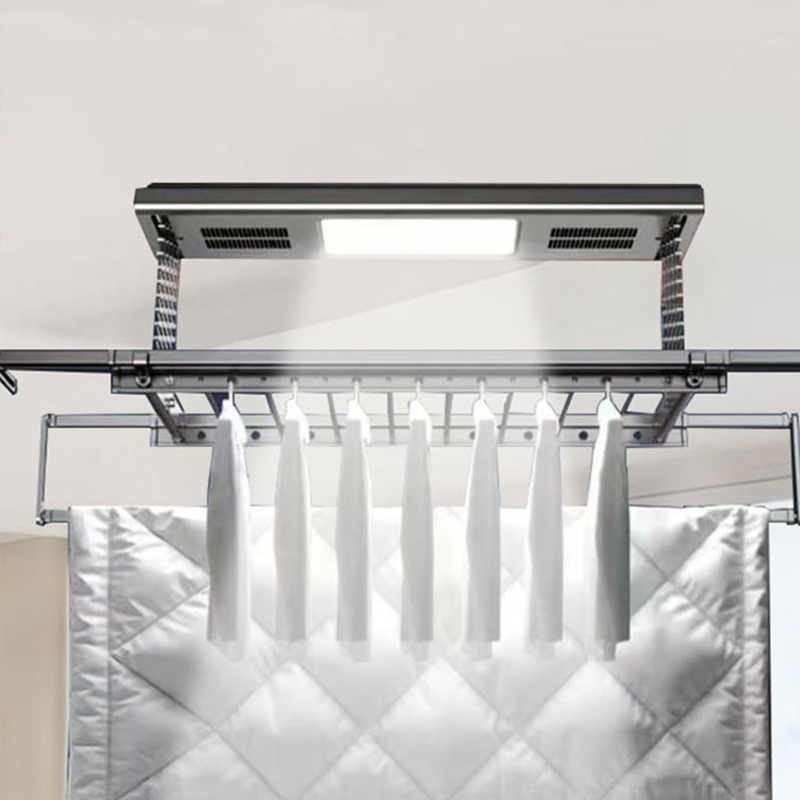
Moving laundry upward saves floor space, but it does not remove the basic requirements of air drying.
Moisture needs to leave the fabric and move into the surrounding air. If garments are packed tightly together, hanging them near the ceiling will not automatically make them dry efficiently.
Room ventilation therefore remains important.
Natural ventilation relies on the movement of outdoor air through openings such as windows and doors rather than mechanical fans. A useful background explanation can be found in Wikipedia’s ventilation overview.
For balcony drying, the practical lesson is straightforward: rack position and clothing arrangement should allow air to circulate around the laundry rather than creating a dense wall of wet fabric.
The number of available rods should not become an invitation to fill every centimeter.
Thicker towels may need greater separation. Shirts can hang efficiently from dedicated hanger positions. Larger fabrics benefit from being spread across longer sections rather than compressed into several layers.
The rack provides the space; the way that space is organized determines how useful it becomes.
Windows Can Turn a Good Ceiling Layout Into a Bad One
One of the easiest installation mistakes is focusing on the ceiling while ignoring the windows below it.
Balcony windows may slide, swing inward, tilt, or open across a substantial area. A drying rack that appears perfectly positioned while empty may interfere once long garments are hanging from it.
This is why installation planning should consider the entire volume occupied by laundry rather than only the rack dimensions.
Imagine a rack installed directly in front of an inward-opening window. Raising the rack may free the floor, but trousers and towels could still block the window from opening completely.
A different placement only a short distance away might solve the problem.
Curtains, blinds, cabinets, air-conditioning equipment, and balcony doors create similar conflicts.
Good ceiling planning is therefore three-dimensional. Length and width alone are not enough; vertical garment clearance also needs to be considered.
The Washing Machine Should Influence Where the Rack Goes
Laundry has a route through the home.
Clothes move from storage to the washing machine, from the washing machine to the drying area, and eventually back to wardrobes or drawers.
A ceiling rack can improve this route when it is positioned logically.
If the washing machine sits directly beneath or close to the drying area, transferring wet garments requires less movement. Users can take clothing from the drum, place it on the rack at a lowered height, and continue until the basket is empty.
If the drying rack is located at the opposite side of the home simply because there happened to be ceiling space available, every load creates unnecessary carrying.
This becomes particularly noticeable with towels and bedding because wet fabrics are heavier than dry ones.
For new residential projects, ceiling clothes drying racks therefore work best when considered during laundry-area planning rather than added after every other element has already been positioned.
Narrow Rooms Need Longitudinal Thinking
A small balcony is not always square. Many are long and narrow.
In these layouts, the orientation of the drying rods can strongly influence usability.
A wide rack mounted across the narrow dimension may interfere with walls or windows. Running the drying structure along the length of the balcony may preserve a clearer route beneath it.
The same idea applies to narrow laundry rooms.
Designers should think about the direction in which garments extend, where users stand while loading, and how the rack interacts with the longest dimension of the room.
This is another reason why simply comparing product width and length on a specification sheet is not enough.
The same ceiling clothes drying racks can feel spacious in one orientation and restrictive in another.
Uneven Laundry Loads Are Normal, Not Exceptional
Real households rarely distribute clothes with engineering precision.
Several wet towels may end up on one side of the rack because that is where the user happened to begin. A duvet cover may occupy most of one rod. Heavy jeans may hang together while lightweight shirts fill another section.
A ceiling system should be designed with this imperfect behavior in mind.
Balance, structural stiffness, lifting components, and connection points all affect how the rack responds to uneven loads. Users should not need to carefully calculate the position of every garment to keep the product behaving normally.
For electric systems, stable lifting under ordinary household loading patterns is particularly important because movement occurs while the rack itself is carrying weight.
This is the type of product quality that is difficult to communicate through appearance alone but becomes immediately obvious during repeated use.
Lighting Is More Relevant to Ceiling Racks Than It Seems
Moving laundry equipment onto the ceiling creates an unexpected question: what happens to the ceiling light?
In some balconies or utility rooms, the most useful position for the drying rack is also the most useful position for illumination.
Installing the rack around an existing light can complicate the layout. Moving the light elsewhere may create shadows or require changes to the ceiling plan.
This is one reason multifunctional electric ceiling systems sometimes integrate lighting directly into the rack body.
The benefit is not simply adding another specification. It allows one ceiling position to serve two functions without requiring the drying structure and light fixture to compete for space.
This is a good example of how ceiling-mounted products need to respond to the room as a whole rather than operating as isolated equipment.
Should the Rack Stay Visible When It Is Empty?
A drying rack spends a significant amount of its life without laundry.
That makes its empty appearance surprisingly important.
A bulky overhead structure may save floor area but still make a small room feel visually crowded. Slim profiles, restrained finishes, retractable rods, and appropriate installation height can reduce this effect.
The question becomes especially important when the balcony is visible from the living room.
In such homes, ceiling clothes drying racks are effectively part of the interior even though their primary purpose is practical.
Good design therefore considers two visual conditions: fully loaded and completely empty.
The rack needs to perform during the first while becoming relatively unobtrusive during the second.
Ceiling Drying Works Differently in a Dedicated Laundry Room
Not every installation is about hiding the rack.
In a dedicated utility room, functionality can take priority over visual integration. The rack may remain accessible throughout the day because the space exists specifically for household work.
Here, other considerations become more important.
The rack should not block cabinet doors. The lowered position should remain clear of the washing machine lid or dryer door. Hanging clothes should not interfere with shelving. The route between appliances, sink, worktop, and drying area should remain practical.
A ceiling rack can perform particularly well in this environment because the upper volume often has little competing use.
Instead of thinking about hiding laundry equipment, the room can be designed around an efficient washing-to-drying workflow.
Ceiling Racks and Floor Racks Should Not Be Treated as Rivals
Floor-standing folding racks remain useful for good reasons.
They can move between rooms, require no ceiling installation, and disappear entirely into storage. A household that dries clothes only occasionally may find this flexibility ideal.
Ceiling clothes drying racks solve a different set of problems.
They become attractive when laundry is frequent, floor area is limited, reaching overhead rails is inconvenient, or repeatedly opening and storing portable equipment has become unnecessary work.
The distinction can be summarized simply:
A floor rack moves between places.
A ceiling rack changes height within one place.
Understanding that difference helps households select equipment according to behavior rather than assuming that one design category is universally superior.
What Should Be Measured Before Choosing a Ceiling Rack?
Room width is only the beginning.
Before installation, useful measurements include ceiling dimensions, distance to walls, window height, cabinet clearance, available lowering distance, position of lights, and the length of garments likely to be dried.
The drying rack should also be evaluated at its largest usable configuration.
If rods extend, measure the expanded width. If the rack lowers substantially, consider what furniture or appliances occupy the space underneath. If bedding will be used frequently, consider the width and hanging depth required by larger fabrics.
A practical measurement process should answer four questions:
Where will the empty rack sit?
Where will the lowered rack sit?
Where will the clothes themselves sit?
Can people still use the room in both situations?
If all four answers work, the installation is much more likely to feel natural in everyday use.
What Makes a Ceiling Drying Rack Feel Well Designed?
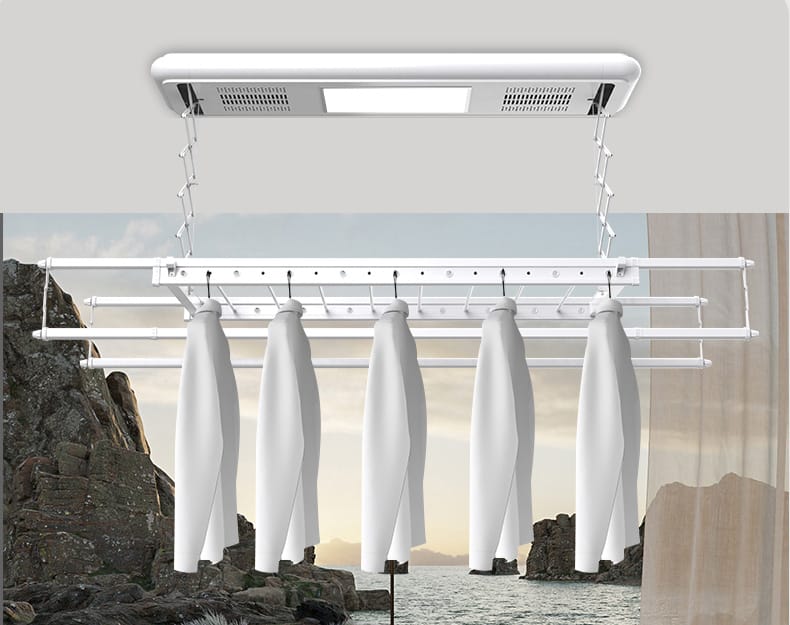
The strongest designs often succeed through details that receive little attention in product descriptions.
Movement should be predictable. The structure should not sway unnecessarily. Loading positions should feel comfortable. Rod spacing should suit real garments. Extended components should not feel like temporary additions. Controls should be understandable without repeated instructions.
For manual systems, lifting should feel controlled rather than physically demanding.
For electric systems, the motor should provide smooth movement instead of abrupt starts and stops.
The product should also respect the room. A rack that technically functions but prevents windows from opening or permanently crowds the ceiling has solved one problem by creating another.
Well-designed ceiling clothes drying racks feel less like equipment attached to a room and more like a function the room was always supposed to have.
Conclusion
Ceiling clothes drying racks make use of something most homes already possess but rarely exploit efficiently: overhead space.
Their greatest advantage is not simply that they keep laundry off the floor. It is that they allow the drying area to occupy a different layer of the room, leaving balconies, laundry rooms, and compact residential spaces more flexible during everyday use.
The best results depend on thoughtful planning. Loading height, window clearance, large garments, ventilation, lifting method, lighting, and the relationship with the washing machine all matter.
Manual lifting may be sufficient for some households. Electric adjustment can make frequent operation easier for others. Expandable rods may matter more than advanced controls when bedding is the main challenge.
A successful ceiling drying system therefore begins with the space and the laundry routine rather than with a list of product features.
When those elements are considered together, the ceiling stops being empty space and becomes one of the most useful parts of the laundry area.
FAQ
Are ceiling clothes drying racks suitable for small balconies?
Yes. They can be particularly useful in narrow balconies because the supporting structure occupies overhead space rather than permanently using the floor. Window clearance and garment length should still be considered before installation.
What is the difference between manual and electric ceiling drying racks?
Manual systems use mechanical operation such as a crank or pulley arrangement, while electric systems use powered lifting. Both can provide adjustable height, but their operation and installation requirements differ.
Can ceiling drying racks be used for bedding?
Yes, provided the rack offers adequate rod length, structural support, and surrounding clearance. Retractable or expandable rods can provide additional flexibility for larger fabrics.
How high should a ceiling drying rack be installed?
There is no universal height. The correct position depends on ceiling height, lowering range, user accessibility, windows, surrounding fixtures, and the length of garments being dried.
Do ceiling drying racks need good ventilation?
Yes. Ceiling placement creates drying space but does not replace airflow. Adequate garment separation and appropriate room ventilation remain important for indoor air drying.
Need Help Choosing the Right Ceiling Clothes Drying Racks?
If you’re evaluating ceiling clothes drying racks for balconies, apartments, laundry rooms, or residential projects, our team can help you assess available ceiling space, lifting options, drying capacity, expandable structures, and installation requirements. Contact us today to discuss a drying solution that makes better use of overhead space while keeping everyday laundry practical and organized.





