
Table of Contents
An electric hanger purchase should begin with the actual laundry routine and room constraints. Consider a household where two adults have different comfortable reaching heights. This guide helps buyers, distributors and project teams evaluate the electric hanger through room fit, a representative sample and written acceptance criteria. Use the current configuration and instructions for any final product decision.

Loading Height for Mixed Users in practice
Consider a household where two adults have different comfortable reaching heights. During a room trial, ask each person to place and remove the usual hangers while standing normally beside the basket. Identify a loading position that works within the documented travel range. If no common position works, compare another configuration rather than promising that motorization alone solves the problem. Keep the operating position clear of a washing-machine door and a nearby cupboard.
The decision for this electric hanger should be recorded against three specific points: comfortable hanger reach; intermediate position supported; clear space beside the basket. Keep the observation, the document reference and the person responsible for resolving any exception together. This turns a broad product enquiry into a review that another buyer or installer can follow.
Electric Hanger: set a loading height around the user
Choose an electric hanger around a comfortable loading position, not only a ceiling photograph. The user should be able to place a hanger and remove a shirt without standing on a chair or reaching across a barrier. Test the intended hanger type, including its hook height, because that changes the usable reach. Account for the basket position and the space needed to turn.
An electric hanger is useful only when its travel range fits the room and the person using it. Check the lowest rail position against counters, washing machines and long garments. Ask whether intermediate stopping is supported in the ordered version. Record the practical setting in the handover instructions so the household does not need to rediscover a suitable position each time.
Write a handover that people can repeat
Hand over an electric hanger with a short sequence: inspect the path, lower to the agreed position, load evenly, operate within the stated limit and return the controller to its holder. Show how to stop movement and whom to contact if the rails tilt, a cable frays or the drive behaves differently. Make the sequence available in the user's language.
An electric hanger demonstration should end with the customer repeating the normal procedure. Ask them to explain the load limit and identify the model label. This confirms that the instructions are understandable and gives the service team the information needed for later support. Avoid describing motorized operation as universally accessible; suitability depends on the individual's reach, grip, vision and room layout.
Inspect edges, joints and clothing contact surfaces
Review the electric hanger where hands and garments make contact. Run the prescribed sample checks for burrs, rough coating, exposed ends and poorly seated caps. Pay attention to telescopic joins and removable accessories, where a snag can be less obvious in a catalogue photograph. Use safe inspection methods rather than bare-hand force on suspect edges.
The electric hanger inspection record should show the location of a defect and the condition in which it appears. Distinguish a cosmetic mark from a contact point that can damage fabric or interfere with operation. Agree the acceptable finish with the supplier before production so the inspector has a concrete reference for the batch.
Read material descriptions component by component
A material label for the electric hanger may describe only the main rail or casing. Ask for the materials of fasteners, supports, arms and moving components relevant to your use. Different parts can have different coatings and exposure limitations. Do not translate a broad phrase such as premium metal into a specific alloy or test result.
For the electric hanger, connect material information to the practical concern: weight, stiffness, surface durability, cleaning or corrosion exposure. Request evidence where a claim matters to your market. A clear component description helps buyers compare two offers with similar appearances and prevents a distributor from promising properties the supplier has not documented.
Separate local control from connected features
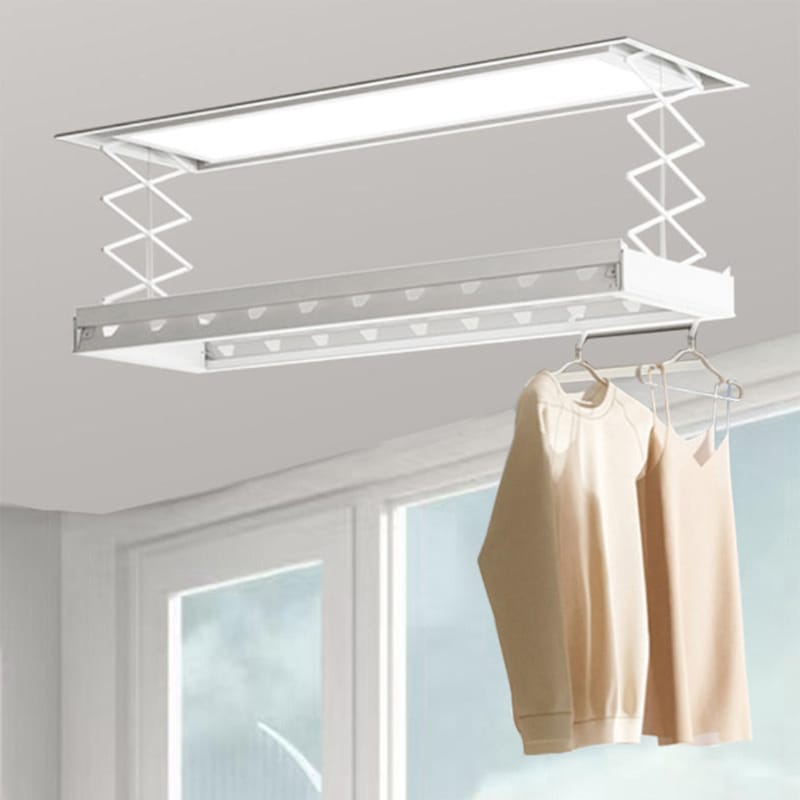
An electric hanger can offer several control paths, but the buyer should specify what each path actually does. A handheld transmitter, a wall control and a phone interface are different items in a quotation. Ask which functions work without a router, which need pairing and whether a replacement controller is available for the exact revision. Demonstrate a normal lift and stop command with the network unavailable before presenting offline operation as a selling point.
For an electric hanger, the practical acceptance record is a function matrix. Put lifting, lighting and any optional airflow function on separate lines, then identify the supported controller for each. A screenshot of an app does not establish compatibility with the supplied hardware. Keep optional connected features separate from the essential local controls so a change in a phone platform does not obscure the basic product specification.
Document pairing and controller replacement
An electric hanger needs a recoverable setup process. Ask for the exact pairing sequence, the indication of successful pairing and the method for removing an old controller. Confirm whether the procedure belongs to the current receiver revision. Dealers should be able to identify a compatible replacement from the model label rather than relying on the appearance of a remote.
Keep the instructions for an electric hanger with its order record and customer handover material. During sample evaluation, have a second staff member follow the written steps without coaching from the demonstrator. If the process depends on undocumented timing or an unlabeled button, request clearer instructions before launch. This small exercise can reveal support problems that a polished product demonstration conceals.
Keep the product and carton measurements separate
Record the electric hanger dimensions in three states where relevant: deployed product, folded or parked product and shipping carton. Include the units and the drawing reference. These measurements answer different questions about room fit, storage and freight. A carton can be much larger than the assembled mechanism or narrower than the deployed base.
Before approving the electric hanger listing, compare each published measurement with the intended field. Ask the warehouse to measure a packed sample and the evaluator to measure the deployed unit. Keep tolerances or configuration differences visible. This simple distinction prevents costly misunderstandings when a buyer uses a shipping dimension to plan a finished room.
Confirm the included installation and assembly hardware
The electric hanger packing list should identify the supplied brackets, caps, fasteners and tools, where applicable. Ask which parts suit only a particular substrate or assembly configuration and which the installer must source locally. A generic bag of screws is not evidence that every installation surface is supported.
Check the electric hanger sample against the list before installation. Photograph and label small parts so missing components can be reported accurately. Keep the approved list attached to the order revision. If the supplier changes a bracket or fixing package, review the instructions and downstream listing instead of treating the change as an invisible packing detail.
Decision checklist and comparison
Use the following comparison for the electric hanger evaluation. The alternatives describe evidence quality, not a claim that one brand always performs better. Resolve missing information before accepting an equivalent product or releasing the batch.
| Approach | When it may fit | Confirm before choosing |
|---|---|---|
| Fixed-height rails | A room where the loading position is already comfortable | Reach, longest garment drop and clear floor space |
| Manual lifting | A user who can comfortably operate the approved mechanism | Crank position, effort and controlled lowering |
| Motorized lifting | A project that benefits from powered height adjustment | Travel range, visible operation and stopping procedure |
Product configuration to discuss
For a relevant starting point, review YIHUI Auto Clothes Rack 8366 with YIHUI. Treat the listed product as a candidate for the electric hanger brief and confirm the current drawing, included controls, finish and installation or assembly requirements. Product-family photographs do not establish that every option is supplied together.
Compare the relevant YIHUI product category and ask about configuration and supply services. Keep requested features separate from those already confirmed for the selected model.
Independent reading
For independent background, read Wikipedia overview of garment care symbols. Use this background when explaining garment-care decisions. Product instructions and the label on each garment serve different purposes.
Request a configuration review
Send YIHUI your electric hanger brief with the intended market, room or storage dimensions, routine laundry type and planned order quantity. Include comfortable hanger reach as a specific review item. Ask for a configuration proposal and sample plan before committing to a bulk order. Use the enquiry form below or the contact page to start the discussion.
Frequently asked questions
What should I check first for an electric hanger?
Begin with comfortable hanger reach. Match it to the actual room or sales brief, then confirm the current configuration and instructions. A sample should demonstrate the feature that determines your purchase decision.
Which documents should accompany an electric hanger quote?
Request a current drawing, feature list, packing list and installation or assembly instructions. For this brief, also document intermediate position supported. Ask the supplier to identify options and any unresolved differences.
How should I evaluate an electric hanger sample?
Use the intended garments, hangers and room or display conditions. Record the setup and observations so another person can repeat the review. Include clear space beside the basket in the acceptance record.
Can a similar-looking electric hanger be substituted?
Review the supplied revision, dimensions, components and instructions before approving a substitute. Similar appearance does not establish compatible controls, an equivalent mechanism or the same permitted loading conditions.
What information helps YIHUI review my electric hanger enquiry?
Supply the destination market, quantity, intended use, useful dimensions and required functions. State that the main topic is loading height for mixed users and include photographs or a sketch where these clarify the practical constraint.





