Table of Contents
A ceiling mounted airer purchase should begin with the actual laundry routine and room constraints. A compact-room mock-up can use temporary floor and wall markers to represent the parked casing, loading rails and standing area. This guide helps buyers, distributors and project teams evaluate the ceiling mounted airer through room fit, a representative sample and written acceptance criteria. Use the current configuration and instructions for any final product decision.
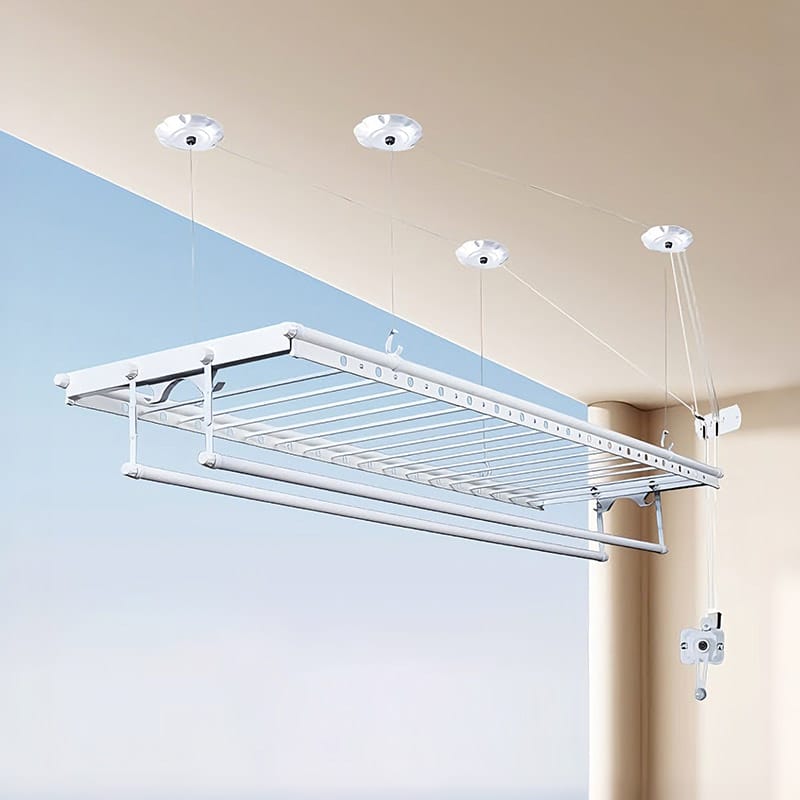
Compact Room Mock-Up in practice
A compact-room mock-up can use temporary floor and wall markers to represent the parked casing, loading rails and standing area. Complete the sequence with the basket and representative garments. Check appliance access before, during and after loading. If circulation becomes awkward, revise the arrangement before ordering. The point is to test a normal routine at full scale, not simply to prove that a mechanism fits between two walls.
The decision for this ceiling mounted airer should be recorded against three specific points: full-size room trial; basket and appliance access included; normal circulation remains usable. Keep the observation, the document reference and the person responsible for resolving any exception together. This turns a broad product enquiry into a review that another buyer or installer can follow.
Ceiling Mounted Airer: use a mock-up to check compact rooms
A ceiling mounted airer for a compact room deserves a full-size layout check. Mark its rail footprint and travel path with non-damaging temporary guides, then simulate loading with the intended garments. This reveals whether the apparent free space remains usable when the rack is down and a person stands beside it.
Trial the ceiling mounted airer with the room in its normal state, including the laundry basket, appliance doors and stored items. Ask the intended user to complete the sequence from washing to hanging to collecting. Record conflicts rather than relying on a tidy empty-room photograph. The best result is a practical routine that fits the actual room, even if that requires choosing a smaller or differently arranged rack.
Coordinate the rack with joinery drawings
Include a ceiling mounted airer in the room drawings early enough to coordinate cupboards, bulkheads and finishing details. Show where the casing opens and how an installer reaches fasteners. Concealing a mechanism behind trim without preserving the service access can turn a minor repair into removal of finished work.
The drawing package for a ceiling mounted airer should distinguish fixed building elements from moving rails and removable covers. Obtain the current installation drawing and agree responsibility for supporting structure. When room dimensions change during construction, revisit the rack location before fabrication. A signed finish sample does not resolve a conflict between a cabinet door and a lowered rail.
Specify a realistic wet load
Assess the ceiling mounted airer with the mass of washed laundry rather than the dry weight on a shopping label. Water retained after spinning varies by fabric and programme. Weigh a representative load in a suitable container and subtract the container weight. Keep the garment mix with the measurement so the result can be repeated.
For the ceiling mounted airer, compare that observation with the manufacturer's limit and any conditions on distribution. Include hangers or other accessories if the instructions require them to be counted. Do not infer an allowance for overloading from a successful short demonstration. Where the planned routine exceeds the documented limit, divide the load or select a supported alternative before placing an order.
Confirm the included installation and assembly hardware
The ceiling mounted airer packing list should identify the supplied brackets, caps, fasteners and tools, where applicable. Ask which parts suit only a particular substrate or assembly configuration and which the installer must source locally. A generic bag of screws is not evidence that every installation surface is supported.
Check the ceiling mounted airer sample against the list before installation. Photograph and label small parts so missing components can be reported accurately. Keep the approved list attached to the order revision. If the supplier changes a bracket or fixing package, review the instructions and downstream listing instead of treating the change as an invisible packing detail.

Understand the complete cable route
For a manual ceiling mounted airer, the handle, guides, pulleys and rails form one system. Ask for a drawing that shows the intended cable path and the correct relationship between components. Smooth movement depends on alignment and installation, not merely the quality of an individual pulley.
Inspect a ceiling mounted airer for visible rubbing, crossed cable runs or contact with adjacent surfaces using the manufacturer's guidance. Do not improvise a different route to avoid an inconvenient corner. If the planned room cannot accommodate the approved layout, request a supported alternative. Record cable-related observations at commissioning so later wear can be compared with the original condition.
Plan support without electrical dependency
A manual ceiling mounted airer can suit a room where powered lifting is unnecessary or an electrical installation is impractical. Evaluate that advantage alongside the space required by the handle and cable system. Compare the full installation and the user's daily routine, rather than comparing only an electric unit with an uninstalled set of rails.
For a ceiling mounted airer, ask about replacement handles, pulleys, cables and compatible rail lengths. Keep the supplied model details because a similar-looking spare may differ in geometry or load rating. Power-free operation removes some components from the service plan, but visible wear and secure mounting still require attention. Choose the design that the household and local service channel can operate and maintain properly.
Write acceptance criteria before receiving the batch
Agree how the ceiling mounted airer will be inspected before the bulk shipment arrives. Define the reference sample, the functions to demonstrate, the documents to check and the method for reporting defects. Use an agreed sampling plan appropriate to the commercial arrangement rather than assuming a single opened carton represents the whole shipment.
The ceiling mounted airer inspection report should connect each result to a unit or carton identifier. Include photographs, observed conditions and the disposition of failed items. Resolve discrepancies with the supplier before release to customers. A clear acceptance plan turns inspection into a repeatable purchasing control rather than an improvised search for obvious damage.
Review the product after the room is furnished
Revisit the ceiling mounted airer layout after cupboards, appliances and everyday storage are in their final positions. A product approved in an empty room can lose clearance as the project develops. Repeat the operating or folding sequence and check access to windows, doors and maintenance areas.
Keep the final ceiling mounted airer arrangement with the handover photographs. If furniture changes later, reassess the path before normal use continues. This is particularly useful for managed apartments and retail displays, where the person altering the room may not know the original installation assumptions. A visible room plan helps preserve the clearance that the product needs.
Decision checklist and comparison
Use the following comparison for the ceiling mounted airer evaluation. The alternatives describe evidence quality, not a claim that one brand always performs better. Resolve missing information before accepting an equivalent product or releasing the batch.
| Approach | When it may fit | Confirm before choosing |
|---|---|---|
| Fixed rail arrangement | The usual load fits a stable, known footprint | Room clearances and usable garment spacing |
| Retractable rail arrangement | The room benefits from changing rail length | Both dimensional states and extension-specific loading conditions |
| Separate secondary drying area | Occasional loads exceed the core arrangement | Garment-care needs, circulation and storage of additional equipment |
Product configuration to discuss
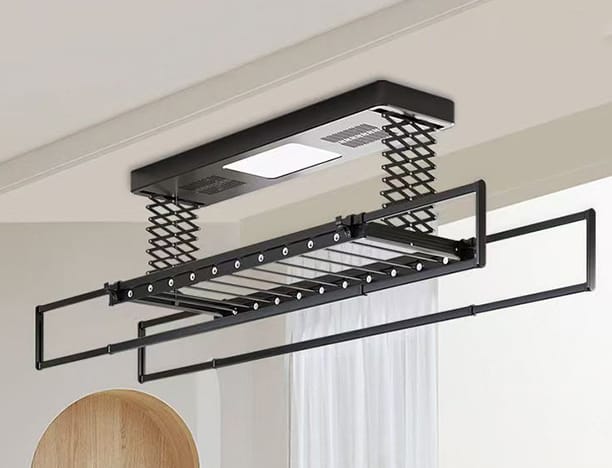
For a relevant starting point, review YIHUI Hand Ceiling Laundry Drying Rack with YIHUI. Treat the listed product as a candidate for the ceiling mounted airer brief and confirm the current drawing, included components, finish and installation or assembly requirements. Product-family photographs do not establish that every option is supplied together.
Compare the relevant YIHUI product category and ask about configuration and supply services. Keep requested features separate from those already confirmed for the selected model.
Independent reading
For independent background, read EPA guidance on moisture control. Use this background when reviewing the room environment. It does not certify a particular rack or replace a project-specific ventilation assessment.
Request a configuration review
Send YIHUI your ceiling mounted airer brief with the intended market, room or storage dimensions, routine laundry type and planned order quantity. Include full-size room trial as a specific review item. Ask for a configuration proposal and sample plan before committing to a bulk order. Use the enquiry form below or the contact page to start the discussion.
Frequently asked questions
What should I check first for a ceiling mounted airer?
Begin with full-size room trial. Match it to the actual room or sales brief, then confirm the current configuration and instructions. A sample should demonstrate the feature that determines your purchase decision.
Which documents should accompany a ceiling mounted airer quote?
Request a current drawing, feature list, packing list and installation or assembly instructions. For this brief, also document basket and appliance access included. Ask the supplier to identify options and any unresolved differences.
How should I evaluate a ceiling mounted airer sample?
Use the intended garments, hangers and room or display conditions. Record the setup and observations so another person can repeat the review. Include normal circulation remains usable in the acceptance record.
Can a similar-looking ceiling mounted airer be substituted?
Review the supplied revision, dimensions, components and instructions before approving a substitute. Similar appearance does not establish compatible controls, an equivalent mechanism or the same permitted loading conditions.
What information helps YIHUI review my ceiling mounted airer enquiry?
Supply the destination market, quantity, intended use, useful dimensions and required functions. State that the main topic is compact room mock-up and include photographs or a sketch where these clarify the practical constraint.