Table of Contents
Introduction
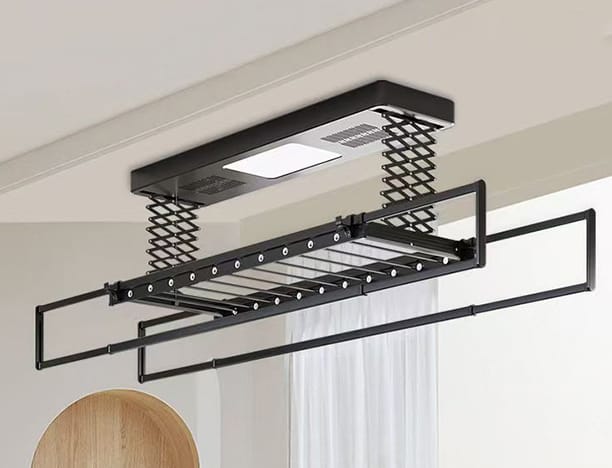
Large drying racks for laundry are useful when ordinary drying space is no longer enough for the garments you regularly handle. Towels, trousers, shirts, bedding, and other bulky textiles can quickly consume available rail length, especially when they need enough separation to hang naturally rather than being layered tightly together. In these situations, choosing a larger rack can improve laundry organization, but only when the additional capacity is designed around practical use.
Simply making a rack wider or adding more bars does not automatically create a better drying system. A large structure can occupy too much floor space, become unstable when wet laundry is distributed unevenly, or provide impressive theoretical capacity while leaving too little room between garments. For this reason, the best large drying racks for laundry balance usable rail length with structural stability, flexible dimensions, garment clearance, and efficient use of the surrounding room.
Ceiling-mounted and expandable drying systems can be particularly relevant when greater capacity is required without permanently dedicating more floor area to the rack. By combining longer rails with vertical installation or retractable sections, a drying system can support larger laundry loads while remaining more compatible with multipurpose laundry spaces.
What Makes a Drying Rack Truly Large?
A large drying rack should not be defined by frame dimensions alone. Overall width and length matter, but practical capacity is determined by how much usable rail space the structure provides and whether that space can accommodate the types of textiles normally being dried.
For example, a rack with many short bars may perform well for smaller garments while becoming inefficient when bedding or long towels are added. A structure with fewer but longer rails can sometimes provide greater flexibility because larger textiles can be spread across the rack without excessive folding. The relationship between rail length, spacing, and vertical clearance therefore matters more than the external dimensions alone.
A useful large drying rack also needs to remain manageable when the laundry load is smaller. Permanently maintaining maximum dimensions can waste space during normal cycles, which is why telescopic or retractable designs can provide an advantage. They allow the structure to expand for larger loads while remaining more compact when full capacity is unnecessary.
Why Bigger Laundry Loads Need More Than Extra Rails
Larger laundry loads create both a capacity problem and an organization problem. If additional garments are simply placed on more closely spaced bars, the rack may technically support the load while making it difficult to arrange wet fabrics effectively. Towels may overlap, shirts can become crowded, and larger textiles may need to be folded several times across the same structure.
A better large-rack design creates additional usable length rather than only increasing rail density. This gives users more freedom to distribute garments according to size and fabric thickness. Lightweight shirts can remain relatively close together, while heavy towels and bedding can use more open rail space.
This distinction is particularly important because wet laundry is not uniform. Ten lightweight garments can require less useful drying area than a much smaller number of large towels or bedding pieces. Large drying racks for laundry should therefore be selected according to the textiles that consume the most space rather than simply the largest number of garments expected in one cycle.
Large Drying Rack Types Compared
Different large drying racks create capacity in different ways. Some expand across the floor, others increase height through multiple tiers, while wall and ceiling systems use vertical space to avoid increasing the permanent floor footprint.
| Drying Rack Type | Capacity Approach | Floor Use | Flexibility | Strongest Application |
|---|---|---|---|---|
| Large freestanding rack | Wide frame and multiple rails | High | High | Open laundry areas |
| Multi-tier drying rack | Vertical stacked levels | Moderate | Moderate | Many smaller garments |
| Foldable large rack | Wide frame that collapses | High during use | High | Occasional large loads |
| Wall-mounted rack | Extended wall rails | Low | Moderate | Clear wall areas |
| Ceiling-mounted rack | Long overhead rails | Very low | Moderate | Preserving floor space |
| Expandable ceiling rack | Retractable overhead rails | Very low | High | Changing laundry volumes |
| Electric ceiling rack | Adjustable height and capacity | Very low | High | Frequent large-load drying |
A larger floor rack can offer substantial capacity with relatively simple operation, but it requires enough open area during the entire drying period. Ceiling and wall systems use the room differently, allowing greater hanging length to be created without putting the complete structure in the main circulation area.
Large Freestanding Drying Racks and Their Space Requirements
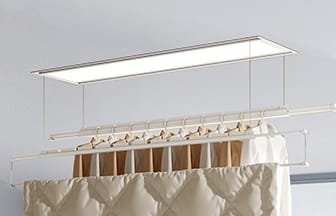
A large freestanding rack is often the most straightforward choice when enough floor area is available. It requires no permanent mounting, can be repositioned according to room conditions, and may include folding wings or multiple levels that provide substantial hanging length.
The main limitation becomes more noticeable as capacity increases. A large rack carrying a full load can occupy a significant section of the room for several hours, and garments hanging beyond the outer rails can make the effective footprint larger than the frame itself. This can create problems around appliance doors, cabinets, baskets, or frequently used walking routes.
For this reason, the storage dimensions of a folding rack should not be the main selection criterion. A large model can become compact after use while still dominating the room whenever laundry is actually drying. The fully loaded footprint provides a much more realistic indication of whether the structure fits the available space.
When Ceiling-Mounted Capacity Makes More Sense
Increasing drying capacity does not always require increasing the amount of floor used. A ceiling-mounted system creates another option by shifting longer rails and larger loads into overhead space.
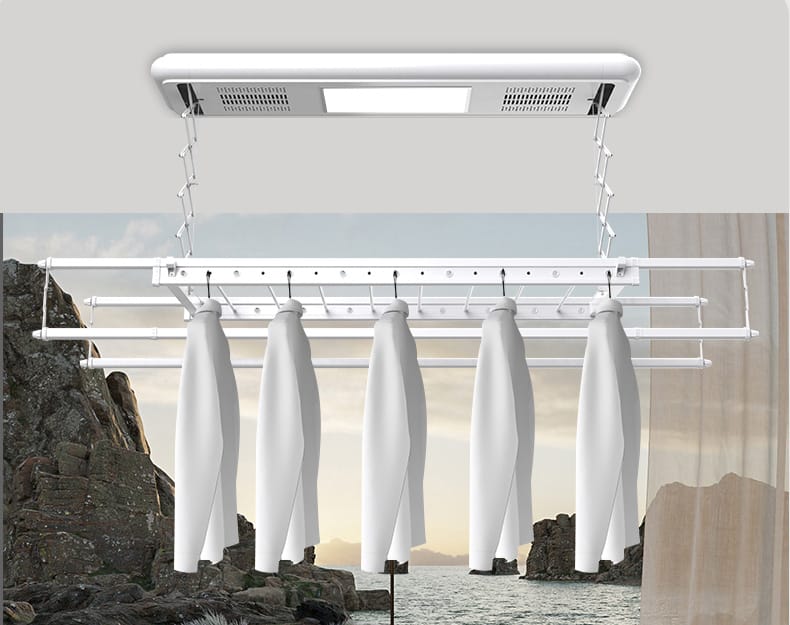
This approach becomes particularly useful when the laundry room needs both substantial drying capacity and clear working areas. Appliances can remain accessible below, while cabinets and other wall storage do not have to compete directly with a large freestanding frame. The principle follows the long-established concept of the overhead clothes airer, but modern structures can add adjustable height and expandable drying sections.
YIHUI’s automated clothes rack range uses this vertical-space approach by positioning the drying structure overhead rather than permanently within the main floor area. For users who regularly need greater capacity, this can create a more predictable drying zone without requiring a large rack to be unfolded and stored during every cycle.
Expandable Rails Can Be Better Than a Permanently Oversized Rack
Laundry volume changes from one cycle to another, so the maximum drying requirement does not always need to determine the permanent size of the rack. This is one of the main reasons expandable designs are useful for larger laundry loads.
Retractable or telescopic rails allow the hanging area to increase when bedding, towels, or additional garments need more room. During lighter cycles, the same structure can return to a smaller configuration. This approach avoids permanently dedicating room space to a capacity level that may only be needed occasionally.
An electric ceiling drying rack with retractable poles illustrates how expandable drying length can be incorporated into an overhead structure. The practical advantage is not simply that more clothing can be added. Extra rail length can also give large textiles more room and allow a normal load to be spread more effectively.
For a large drying rack, this adaptability can be more useful than choosing the greatest possible fixed dimensions.
Practical Capacity vs Maximum Capacity
Large drying racks for laundry should be evaluated according to usable capacity rather than a single maximum figure. Structural capacity describes the amount of weight the complete rack and supporting system are designed to handle, while available rail length determines how much hanging space exists. Practical capacity combines these factors with the spacing and clearance needed for real garments.
A rack may be strong enough to support a large quantity of wet laundry but still provide poor practical capacity if every rail must be filled tightly. Thick towels, layered garments, and bedding occupy more space than lightweight shirts, so the same structural load can create very different drying arrangements.
For everyday use, the most valuable large rack is therefore one that provides enough room to distribute the normal load comfortably. Additional rail length should make garment organization easier rather than simply increasing the number of items that can be placed on the structure.
Large Bedding Changes the Way Capacity Should Be Measured
Bedding is one of the strongest reasons to consider a larger drying rack because it behaves very differently from ordinary garments. A large textile surface can occupy several rails, and excessive folding reduces the amount of fabric exposed to surrounding air. The rack therefore needs both sufficient length and an arrangement that allows bedding to be positioned without overwhelming the rest of the drying area.
Rail width is not the only consideration. Vertical clearance also matters because large textiles can hang far below the structure, particularly when they are folded over a single rail. A ceiling rack positioned above furniture or appliances should therefore be planned with the lowest point of the bedding in mind rather than only the height of the empty frame.
Expandable rails can be especially helpful when bedding is an occasional rather than daily requirement. The rack can provide additional space when larger textiles are being dried without forcing every normal laundry cycle to use an oversized configuration.
Why Wet-Laundry Weight Matters More on a Large Rack
Greater drying capacity generally means the structure may carry more wet textile weight at the same time. This makes frame design, supporting connections, and load distribution increasingly important as rack dimensions grow.
Wet towels and bedding can create concentrated loads when several heavy items are placed on the same section. On a freestanding rack, this can influence balance and stability. On a wall-mounted system, the load moves through support arms and brackets, while a ceiling rack transfers it through suspension components and mounting points.
Users should therefore avoid treating maximum capacity as permission to concentrate all heavy items on one side. A well-designed rack should accommodate normal differences in loading, but spreading heavier textiles across the structure can reduce unnecessary stress. For large drying racks, the way weight is distributed can be as relevant as the total amount being carried.
Rail Spacing Becomes More Important as Capacity Increases
It can be tempting to increase the capacity of a large rack by simply adding more rails within the same overall dimensions. This creates more hanging positions, but it can also make it harder to organize wet garments with appropriate separation.
Practical spacing should reflect the type of laundry being dried. Shirts and lightweight clothing can often use the available rails more densely, while towels, denim, and bedding benefit from greater separation. A rack with flexible or expandable hanging areas allows users to adjust this arrangement according to each load.
This is particularly useful when the objective is to handle large quantities without creating an overcrowded drying zone. Greater capacity should provide more options for arranging clothes, not pressure users to fill every available gap. A large rack is most effective when its additional size improves both volume and organization.
Airflow Around Large Laundry Loads
A large drying rack can hold more wet fabric, which also means a greater amount of moisture is being released into the surrounding air during drying. Good garment arrangement and room ventilation therefore become increasingly important as load size grows.
The rack should provide enough open space for different textile surfaces to remain exposed rather than pressed tightly together. Bedding and large towels are especially relevant because their size can create multiple layers if they are folded repeatedly over short rails.
Placement also matters. A large rack fitted tightly into an enclosed corner may provide excellent theoretical capacity but create a crowded drying area. Positioning the system where surrounding air can move more freely makes the available rail length more useful and can help the drying zone remain better organized.
The goal is not maximum separation between every garment, but enough flexibility to prevent the largest and thickest items from turning the full load into one dense mass of wet fabric.
Large Floor Racks vs Large Ceiling Racks
The main difference between large floor and ceiling racks is not necessarily capacity but how that capacity affects the room. A freestanding structure can provide substantial drying length without permanent installation, which makes it easy to move or store when conditions change. The tradeoff is that all of this capacity exists at floor level while the rack is being used.
A ceiling system can provide long rails while preserving the area underneath, making it more appropriate when laundry drying is frequent and floor space remains important for other tasks. Height-adjustable versions also allow users to bring the large drying surface toward them during loading before moving it upward.
Installation requirements are greater for ceiling systems, while freestanding racks require enough temporary room and storage. The better choice therefore depends on whether portability or permanent space efficiency provides more value within the normal laundry routine.
Multi-Tier Large Drying Racks Are Not Ideal for Every Garment
Multi-tier designs increase total rail length by stacking drying levels vertically. This can create substantial capacity within a relatively modest floor footprint and may work particularly well for smaller garments, socks, towels, and clothing that does not require significant hanging height.
The limitation appears when loads contain longer garments or larger textiles. Dresses and trousers may extend into the lower levels, while bedding cannot always make efficient use of several closely stacked tiers. Dense vertical layouts can also make it harder to create open spacing around thick textiles.
For mixed laundry, a combination of long open rails and adjustable capacity may therefore provide greater flexibility than maximizing the number of levels. Large drying racks should be chosen according to what occupies the most space in real loads rather than which structure offers the largest numerical rail count.
Materials and Structural Design for Large Drying Racks
Larger rack dimensions place greater importance on structural design because longer rails and wider frames can behave differently under load. Aluminum is useful in many expandable or overhead structures because its relatively low weight can reduce the mass of moving components while still providing useful corrosion resistance. Stainless steel and appropriately protected steel can also serve different structural functions depending on the rack design.
The connections between these components matter just as much as the materials themselves. Hinges, telescopic joints, wall brackets, suspension cables, fasteners, and mounting points all contribute to the path through which laundry weight reaches the main support structure.
This is particularly important for expandable racks. A long telescopic section may appear strong when retracted but experiences greater leverage as it extends farther from the central support. Structural quality should therefore be evaluated in the rack’s largest usable configuration rather than only when it is compact.
How to Choose the Right Size for Normal Laundry
The best way to size a large drying rack is to begin with the laundry loads that occur regularly rather than the largest load imaginable. If most cycles involve shirts and smaller garments but bedding appears occasionally, an expandable rack may provide a better balance than a permanently oversized fixed structure.
Users who frequently dry towels or larger textiles should prioritize longer open rail areas and appropriate load support. Households that handle many smaller garments may benefit more from additional hanger positions or multiple drying sections than from one extremely long bar.
Available space should then refine the decision. The rack should be evaluated while fully extended and loaded, including garment overhang and access to nearby cabinets or appliances. A large rack that technically fits but repeatedly blocks normal movement is larger than the room can use effectively.
Common Mistakes When Choosing Large Drying Racks for Laundry
One common mistake is assuming that a larger frame always provides greater useful capacity. Additional dimensions only create value when they improve garment arrangement, rail length, or load flexibility. A bulky structure with poorly positioned rails can provide less practical drying space than a more intelligently designed expandable rack.
Another mistake is choosing according to maximum load alone. High structural capacity is important, but large wet textiles still need enough rail area and spacing to be arranged effectively. Load distribution also matters, especially when towels or bedding create concentrated weight on outer sections.
Users may also underestimate the working footprint of a large foldable rack. The structure may be easy to store afterward, but its full dimensions can dominate a room during drying. For large-capacity systems, evaluating the loaded configuration is much more important than comparing folded size.
Planning a Large Drying Rack Into the Laundry Workflow
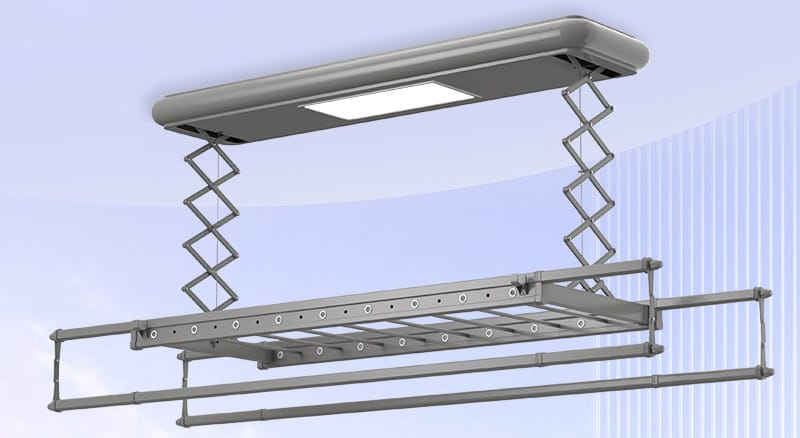
A large rack should make it easier to handle larger loads rather than create additional steps. Wet garments should move from the washing area to the drying zone without requiring repeated rearrangement of furniture or storage, and there should be enough room to position a basket while the rack is being loaded.
Once the laundry is hanging, frequently used appliances and cabinets should remain accessible. This is where overhead systems can provide an advantage because the drying load can remain above the main working area rather than directly within it.
The same logic applies when clothes are dry. A large rack should allow garments to be removed in an organized way and transferred toward folding or storage without forcing users to dismantle the drying zone just to move through the room. Capacity has the greatest value when it supports the entire laundry workflow rather than only the hanging stage.
Conclusion
Large drying racks for laundry are most useful when greater capacity is created without making the surrounding space unnecessarily difficult to use. Wider floor racks, multi-tier structures, ceiling-mounted systems, and expandable rails can all provide additional hanging area, but they solve the capacity problem in different ways.
The right design should match the garments that create the greatest demand. Towels and bedding need longer and more open drying areas, while large groups of lightweight clothing may benefit from additional hanger positions. Practical capacity therefore depends on usable rail length, garment spacing, wet weight, and structural stability rather than overall dimensions alone.
Expandable systems offer a particularly useful balance when laundry loads vary because they allow additional capacity to appear only when it is needed. Ceiling mounting can take this idea further by providing longer drying structures without permanently sacrificing floor space.
A successful large rack should ultimately make bigger laundry loads easier to organize. When capacity, structural design, space use, airflow, and daily workflow are considered together, greater size becomes a practical advantage rather than simply a larger object taking up more room.
FAQ
What are large drying racks for laundry best used for?
Large drying racks for laundry are useful for bigger regular loads and textiles that require more hanging area, including towels, trousers, shirts, and bedding. Their main advantage is additional usable rail length, but the rack should still provide enough garment spacing, structural stability, and room clearance for the full loaded configuration.
Are large drying racks suitable for small laundry spaces?
They can be when capacity is created vertically rather than entirely across the floor. Ceiling-mounted, wall-mounted, and expandable systems can provide substantial hanging length while preserving important working areas. A large freestanding rack may be less suitable if its fully loaded footprint blocks appliances, storage, or normal movement.
How should I choose the capacity of a large laundry drying rack?
Base capacity on normal laundry volume and the textiles that occupy the most drying space. Bedding and thick towels generally require more open rail area than lightweight garments. Consider usable rail length, structural load capacity, garment spacing, vertical clearance, and whether expandable sections can accommodate occasional larger loads.
Are expandable drying racks better for large laundry loads?
Expandable racks can be particularly practical when laundry volume changes between cycles. Additional rails can provide more space for bedding or larger loads and retract when the extra capacity is unnecessary. The extension mechanism should remain stable at maximum length, especially when heavier wet garments are positioned on outer sections.
What should I check before using a large drying rack for bedding?
Check usable rail length, wet-load capacity, structural stability, vertical clearance, and the way bedding can be distributed across the rack. Avoid concentrating a heavy wet textile entirely on one weak extension or outer section. Enough open space should remain for the bedding to hang without excessive folding or crowding.