Table of Contents
Introduction
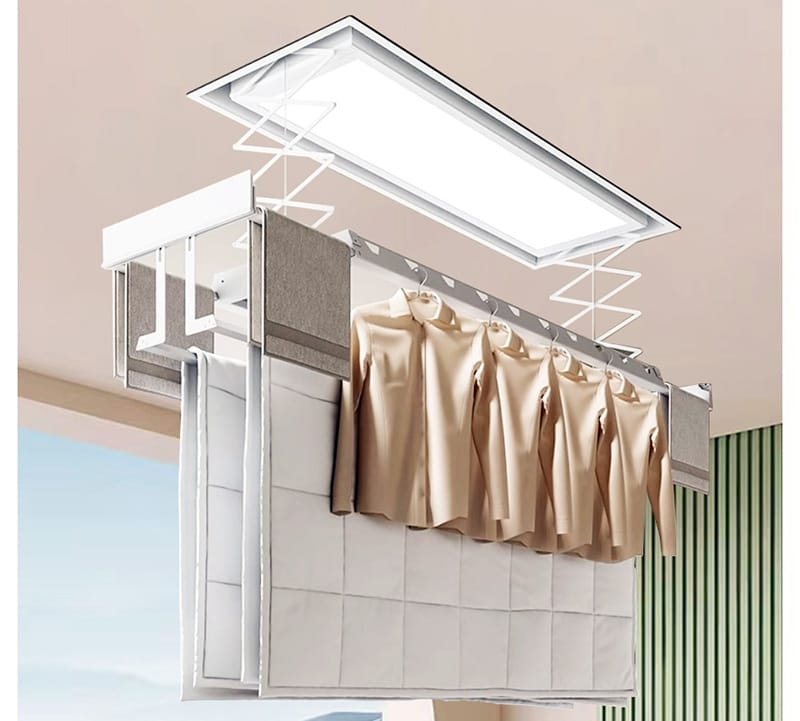
A laundry room dry rack should make the room easier to use, not simply add another place to hang wet clothing. This distinction becomes especially important when the laundry area already contains appliances, cabinets, baskets, work surfaces, and storage. If the rack blocks movement, limits access to a washing machine, or occupies a large part of the room for hours at a time, even a high-capacity design can become inconvenient in everyday use.
The most practical drying setup begins with the available space and the way laundry moves through the room. Floor-standing racks offer flexibility, wall-mounted models can preserve walking space, and ceiling systems move the drying zone above the main working area. Folding and retractable structures provide another option by reducing their footprint after use, while height-adjustable systems allow the drying surface to change position between loading and drying.
This means selecting a laundry room dry rack should involve much more than comparing size or rail count. The rack needs to provide appropriate garment spacing, support wet-laundry loads, remain accessible during loading, and fit around the other functions of the room. When these factors are balanced correctly, the drying area becomes part of a more organized laundry workflow rather than temporary equipment that repeatedly gets in the way.
Start With the Laundry Room Instead of the Rack
The most reliable way to choose a drying rack is to evaluate the room before deciding which product style you prefer. A small laundry area may have almost no free floor space but a large unused ceiling, while another room may have a wide open wall that makes ceiling installation unnecessary. The best drying solution depends on where useful space actually exists after appliances, doors, cabinets, and circulation routes are taken into account.
This is why total room dimensions can be misleading. A laundry room may appear relatively spacious on a floor plan while providing very little usable drying area once appliance doors are opened and people begin moving baskets through the space. Conversely, a compact room can support considerable drying capacity when vertical and overhead areas are planned effectively.
A useful layout therefore divides the room according to function. The floor needs to support movement and appliances, walls may be valuable for cabinets and storage, while the ceiling can become a drying zone when its height and structure are suitable. Looking at the room in three dimensions makes it easier to identify which type of laundry room dry rack will create the least disruption.
Floor, Wall, or Ceiling: Where Should the Drying Zone Go?
Freestanding racks are the simplest option when temporary floor space is readily available. They can be repositioned according to the laundry load and usually require no permanent installation. Their main limitation is that the floor remains occupied throughout the drying period, which can become inconvenient when the room is narrow or frequently used.
Wall-mounted racks transfer the drying function away from the floor and can work particularly well when one clear wall is available. Folding or retractable versions reduce their projection after clothes are removed, allowing the same area to serve another purpose between laundry cycles. The main challenge is making sure the rack remains clear of cabinets, switches, windows, shelves, and appliance doors when fully extended.
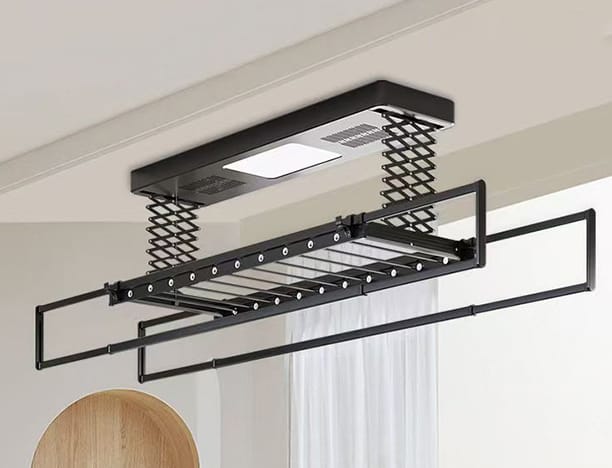
Ceiling-mounted systems use overhead volume instead of competing for floor or working-height wall space. This principle develops the traditional idea of laundry drying by creating a permanent hanging zone above the main working area. Ceiling installation becomes particularly useful when wall storage is already important and the floor needs to remain open throughout the drying period.
Comparing Laundry Room Dry Rack Designs
Different rack designs solve different layout problems, so choosing according to room conditions is more useful than looking for one universally superior type. A portable rack provides excellent location flexibility, while wall and ceiling systems create a predictable drying area. Adjustable racks add another advantage by changing size or height according to the stage of the laundry cycle.
| Dry Rack Type | Main Space Used | Floor Impact | Accessibility | Storage After Use | Best Application |
|---|---|---|---|---|---|
| Freestanding rack | Floor | High during drying | Easy | Separate storage needed | Flexible occasional use |
| Foldable floor rack | Floor | Moderate to high | Easy | Compact when folded | Multipurpose laundry spaces |
| Wall-mounted rack | Wall | Low | Easy | Remains installed | Rooms with unused wall area |
| Retractable wall rack | Wall | Low | Easy | Folds or retracts | Compact drying zones |
| Manual ceiling rack | Ceiling | Very low | Adjustable | Remains overhead | Regular air drying |
| Electric ceiling rack | Ceiling | Very low | Highly adjustable | Remains overhead | Frequent laundry routines |
| Expandable ceiling rack | Ceiling | Very low | Adjustable | Capacity can change | Variable garment loads |
The comparison makes it clear that the best rack depends on which type of space is most valuable in the room. If portability matters more than permanent organization, a freestanding design can remain entirely practical. When the floor needs to stay open, however, a wall-mounted or overhead structure can prevent the drying process from taking over the room.
Why the Working Footprint Matters More Than the Stored Size
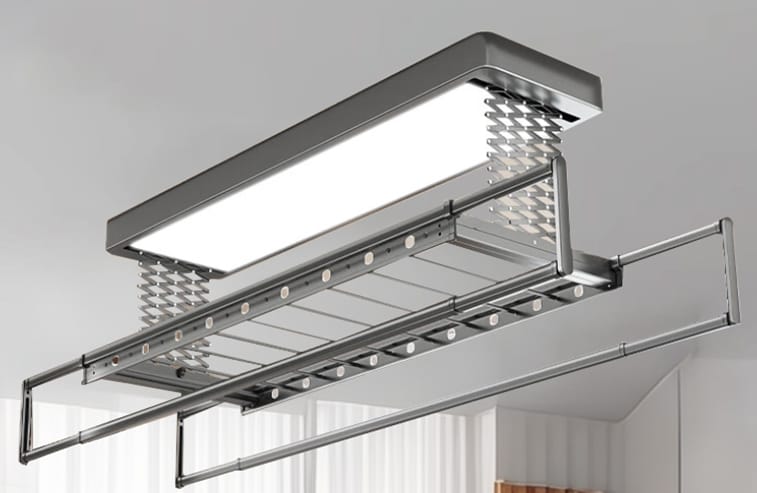
A drying rack is often evaluated according to how compact it becomes when folded, but that is not the condition in which it performs its main function. Wet clothing may remain on the rack for a considerable period, which means the open and loaded footprint has a much greater effect on everyday room use.
A foldable floor rack may become extremely thin in storage while occupying a large area after its legs and side wings are opened. Wall-mounted racks create a similar situation because the structure may sit close to the wall when closed but project significantly into the room with clothing hanging from the outer rails. Even ceiling systems need sufficient vertical clearance once trousers, towels, and other garments are added.
For this reason, the laundry room dry rack should be measured together with the clothes it will normally support. Garment overhang, vertical clearance, maximum extension, appliance access, and walking routes all contribute to the real drying footprint. A rack can only be considered space-efficient when it remains practical in its fully loaded position.
How Ceiling Drying Can Free the Main Working Area
Ceiling drying is particularly effective when the lower part of the laundry room already performs several important tasks. Instead of adding another object beside the appliances, an overhead system places wet garments above the area where people normally move, sort clothing, or carry baskets.
The strongest advantage appears when the rack can change height. A fixed overhead rail may provide excellent space efficiency but become uncomfortable if it remains beyond easy reach. An adjustable system can lower toward the user while garments are being arranged and return upward afterward, allowing loading height and drying height to serve different purposes.
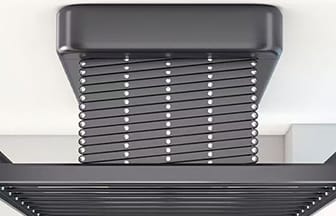
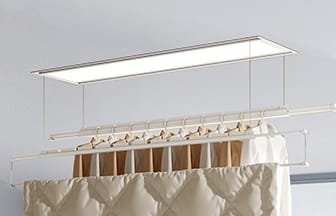
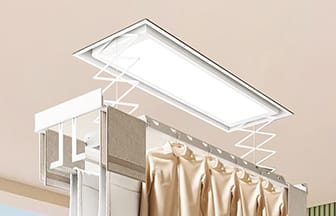
YIHUI’s automatic clothes rack systems use this vertical approach to create drying capacity without permanently occupying the main floor area. For a laundry room where wall storage and appliance access are both important, this arrangement can make overhead space more useful without requiring a conventional floor rack to remain open during every drying cycle.
Loading Height Is an Important Part of Rack Selection
A drying rack may fit the room perfectly and still be inconvenient if users cannot comfortably reach the rails. This becomes particularly noticeable with wet towels, trousers, bedding, or other garments that require more control while being positioned. Repeatedly stretching upward while handling wet fabric can make an otherwise efficient overhead installation difficult to use.
Fixed wall racks usually provide straightforward accessibility because the mounting height can be selected around normal reach. Freestanding systems also place most rails within comfortable working range. Ceiling systems require more careful planning because the best position for drying may be higher than the best position for loading.
Height-adjustable systems solve this by allowing the rack to move between two practical positions. A ceiling clothes drying rack can create an accessible loading zone before moving the garments upward, allowing the lower portion of the laundry room to return to normal use. When air drying is frequent, this change in height can influence everyday convenience more than simply adding additional rails.
Practical Capacity Is More Useful Than Maximum Capacity
A laundry room dry rack can be described through structural load, total rail length, or the number of available hanging positions, but these specifications do not completely describe how much laundry can be dried comfortably. Practical capacity depends on whether real garments can be arranged without excessive crowding while the rack remains stable and accessible.
A structure may be strong enough to support a large amount of wet clothing, yet filling every available rail can make the drying zone less effective. Thick towels, denim, bedding, and layered garments require more open space than lightweight shirts, while dresses and trousers need enough vertical clearance to hang naturally. The same rack can therefore provide very different practical capacity depending on the textiles being dried.
For everyday selection, it is more useful to think about a normal laundry load than the largest possible one. A rack that provides flexible rail spacing for the garments used most frequently will generally fit the routine better than an oversized structure chosen mainly for an exceptional load.
Rail Layout Should Match the Clothes You Actually Dry
Rail design affects how easily different garments can be organized. Shirts can often use hanger positions efficiently because they remain suspended vertically without occupying several bars. Towels need more exposed rail area, while long garments require enough clearance underneath. Bedding can consume several sections of a rack and may need a wider arrangement than normal clothing.
This makes adaptable layouts particularly useful for mixed laundry. A fixed dense grid of rails may provide impressive theoretical capacity, but users can struggle to arrange larger textiles without overlapping them. Longer or expandable rails allow the available space to change according to the garment load rather than forcing every cycle into the same configuration.
A well-planned laundry room dry rack should therefore support variation. The goal is not to use every rail during every load, but to create enough options for shirts, towels, trousers, and occasional larger textiles to be placed naturally.
Why Airflow Should Influence Rack Position
Air drying depends on moisture leaving wet fabric and moving into the surrounding environment, so the position and loading of a drying rack influence how effectively its space can be used. Garments that remain tightly pressed together expose less fabric surface to surrounding air, especially when the load contains thick towels or layered clothing.
Rack placement can also make the drying zone more or less enclosed. A wall rack fitted tightly between tall cabinets may offer excellent space efficiency but provide little room around larger garments when fully loaded. Ceiling installations can create a more open drying area, although tightly packing every available rail can still reduce the benefit.
The practical solution is to leave enough flexibility in the layout to spread heavier garments when necessary. Expandable rails are useful partly because they allow additional laundry to be added, but they can also be used to give the same amount of clothing more room. Practical drying therefore depends on the relationship between rail length, garment spacing, and room airflow rather than rail quantity alone.
Folding and Retractable Racks for Multipurpose Laundry Rooms
A laundry room often needs to switch between drying, sorting, storage, and general household tasks. Folding and retractable drying systems are useful because they allow the physical layout to change with those activities instead of permanently dedicating maximum space to the drying function.
A wall-mounted folding rack can extend when garments need support and return toward the wall after they are removed. A freestanding folding rack can be stored elsewhere after use, while telescopic rails can increase hanging length only during larger laundry cycles. These structures are particularly practical when air drying is regular but not continuous.
The most important consideration is whether the moving components remain stable in their fully open position. Hinges, sliding rails, locking mechanisms, and support arms experience repeated movement, so a folding rack should be judged according to how securely it supports wet clothing rather than simply how easily it collapses.
Materials and Construction Quality in a Laundry Room Environment
Drying racks regularly come into contact with damp textiles and humid air, making material and construction quality important for long-term use. Aluminum can be useful because it combines relatively low weight with corrosion resistance, particularly in folding, retractable, and lifting structures. Stainless steel and properly protected steel can also provide suitable structural performance when used appropriately.
The main rails are only one part of the system. Hinges, fasteners, brackets, telescopic sections, suspension components, and mounting points transfer loads throughout the structure, so their quality directly affects stability. A durable-looking main rail cannot compensate for a weak joint or poorly supported extension.
This becomes particularly important with moving racks. A laundry room dry rack that is opened, folded, extended, raised, or lowered frequently should continue to operate smoothly after repeated cycles. Construction should therefore be evaluated according to the complete structure rather than one visible material specification.
Wet-Laundry Weight and Load Distribution
Wet fabrics create more demanding loads than dry clothes, and that weight is rarely distributed perfectly across a rack. A group of wet towels may occupy one side while lightweight shirts remain on the other, or bedding may concentrate load across a limited number of rails. These normal laundry patterns affect different rack designs in different ways.
A freestanding rack needs enough frame stability to remain balanced when one section carries more weight. Wall-mounted racks transfer the load through brackets and support arms, while ceiling systems depend on suspension and secure mounting. Expandable rails require particular attention because weight placed farther from the main structure can increase stress on their connections.
Users can improve stability by spreading heavier wet garments across the available drying area whenever practical. The rack should still be designed to handle normal variation, but capacity is better understood as a relationship between total weight and distribution than as a single maximum figure.
Small Laundry Rooms Need Vertical Planning
A limited floor area does not necessarily mean that drying capacity has to be equally limited. Small laundry rooms often have usable vertical space above appliances or working areas, and planning around this dimension can provide significantly more flexibility than adding another compact object to the floor.
Wall-mounted racks use this principle by shifting the drying zone vertically, while ceiling systems take it further by moving clothes above working-height storage. This leaves the lower room available for movement and helps preserve cabinet or shelving space when those surfaces are already needed for organization.
The key is to avoid filling every available vertical surface simply because it exists. A small room still needs clearance around doors, lighting, storage, and people. The most successful layout uses the surface that creates the fewest conflicts and allows the drying load to remain accessible without making the rest of the room feel crowded.
How Laundry Frequency Changes the Best Dry Rack Choice
Occasional and frequent air drying create very different priorities. A portable folding rack can work extremely well when only certain garments need air drying and the structure spends most of its time in storage. Its flexibility allows the drying zone to change location without committing the room to a permanent installation.
Frequent air drying increases the value of a dedicated position. If the rack is open almost every day, its folded dimensions become less important because the structure rarely returns to storage. A wall or ceiling system can create a more consistent workflow by remaining available without repeatedly occupying temporary floor space.
This is why the best laundry room dry rack should reflect how the room is actually used. Features such as folding, retractability, or electric lifting provide the greatest value when they solve a repeated inconvenience rather than simply making the rack more complex.
Planning the Rack Around the Complete Laundry Workflow
A well-organized drying area should connect naturally with washing, hanging, and garment storage. Wet clothes should move from the washing area to the rack without requiring the user to carry them around obstacles, and there should be enough room for a basket during loading. Once the rack is filled, appliances and frequently used storage should remain accessible.
The same planning should continue after drying. Garments need to be removed and transferred toward folding or storage, so the rack should not force users to rearrange the room at the end of every cycle. Permanent wall and ceiling systems are particularly dependent on good placement because their location becomes part of the long-term room structure.
Thinking through the entire sequence often reveals whether a rack is genuinely suitable. A location that looks empty may be the exact place needed for an open appliance door, while an apparently unused ceiling area may provide an excellent drying zone because it does not interfere with any other part of the workflow.
Common Laundry Room Dry Rack Selection Mistakes
One of the most common mistakes is selecting the rack according to its empty or folded dimensions. What matters more during everyday use is the complete drying footprint after rails are extended and garments are added. A compact rack can still create significant obstruction if it occupies a main circulation route for several hours at a time.
Another mistake is treating the greatest possible capacity as automatically better. Oversized racks can occupy unnecessary space, while tightly packed rails can make it harder to organize thick or large textiles. Practical capacity should be based on normal laundry rather than an exceptional maximum load.
Construction details can also be overlooked. Users may focus on frame material while paying little attention to hinges, brackets, extension mechanisms, or mounting points. These smaller components often experience repeated movement and carry important structural loads, making them central to long-term rack performance.
Choosing a Laundry Room Dry Rack That Fits Daily Use
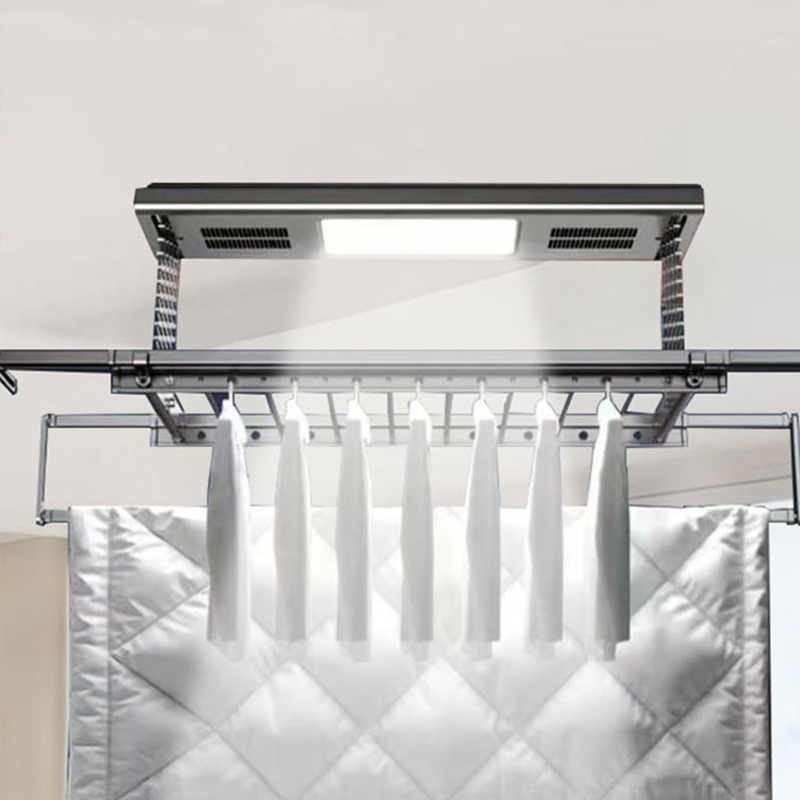
A useful selection process starts by deciding which area of the room can most easily become the drying zone. If temporary floor occupation creates no problem, a portable rack may offer all the flexibility required. When floor space needs to stay clear, an open wall can support folding or retractable drying, while ceiling space becomes increasingly valuable when both floor and walls already serve other functions.
The next step is matching the rack to normal laundry rather than theoretical maximum capacity. Garment types, typical load size, vertical clearance, and required rail spacing should determine the useful dimensions. Frequency then helps decide whether portability or permanent installation is more valuable.
Finally, construction and accessibility should confirm the decision. The rack needs to remain stable under normal wet loads and comfortable to load without interfering with cabinets or appliances. When all of these conditions work together, the drying system becomes part of the room instead of another object that has to be managed during every laundry cycle.
Conclusion
Choosing a laundry room dry rack is fundamentally a space-planning decision. Freestanding racks provide location flexibility, wall-mounted designs preserve floor area, and ceiling systems transform overhead room volume into a dedicated drying zone. Folding, retractable, manual, and electric mechanisms add flexibility when the room or laundry load changes between cycles.
The best rack should also provide practical rather than merely theoretical capacity. Rail spacing, garment length, wet weight, airflow, structural connections, and loading accessibility all determine how useful the drying area becomes in everyday conditions.
Laundry frequency is equally important. Portable structures make sense when air drying happens occasionally, while permanent wall and ceiling systems can simplify routines when wet garments regularly need dedicated drying space.
A successful laundry room dry rack should ultimately disappear into the workflow. It provides enough space when clothes need to dry, remains easy to reach when garments are being handled, and interferes as little as possible with appliances, storage, and movement during the rest of the laundry process.
FAQ
What is the best laundry room dry rack for a small space?
The best option depends on which surface is available. Wall-mounted and ceiling racks can preserve valuable floor area, while foldable floor racks work when temporary space is available. Ceiling height, wall clearance, appliance access, garment length, and normal laundry frequency should all be considered before choosing.
Is a ceiling rack good for a laundry room?
Yes, especially when floor and wall areas are already needed for appliances, storage, or movement. A ceiling rack creates a dedicated overhead drying zone, while adjustable models can lower for convenient loading and rise during drying. The ceiling structure, garment clearance, installation area, and surrounding fixtures still need careful planning.
How much drying capacity does a laundry room dry rack need?
The right capacity depends on normal laundry volume and garment type rather than the largest possible load. Lightweight shirts need less space than towels, trousers, or bedding. Choose enough usable rail length to arrange typical wet garments without excessive crowding while keeping heavier items reasonably distributed across the structure.
Is a wall-mounted or freestanding dry rack better for a laundry room?
A wall-mounted rack is useful when you want to keep the floor clear and have an open vertical surface available. A freestanding rack provides greater portability and requires no permanent installation. The better choice depends on room layout, drying frequency, storage space, garment volume, and whether temporary floor occupation causes inconvenience.
What should I check before installing a laundry room dry rack?
Check the fully loaded dimensions, appliance and cabinet clearance, normal walking routes, garment length, usable rail spacing, mounting conditions, and expected wet-laundry load. For adjustable systems, evaluate both the loading and drying positions so the rack remains comfortable to use without interfering with other parts of the laundry room.