Table of Contents
Managing laundry efficiently can feel like a daily challenge, especially when you have limited space or want to minimize clutter. If you’ve ever struggled with wet clothes taking forever to dry or racks blocking your living areas, a lifting drying rack may be the solution you need. Designed to maximize space, streamline your laundry routine, and reduce manual effort, these racks are transforming the way households handle laundry today.
In this guide, you’ll learn how lifting drying racks work, why they are ideal for modern homes, practical installation tips, real-life examples, and how to choose the right model for your space.
Why Lifting Drying Racks Are Gaining Popularity
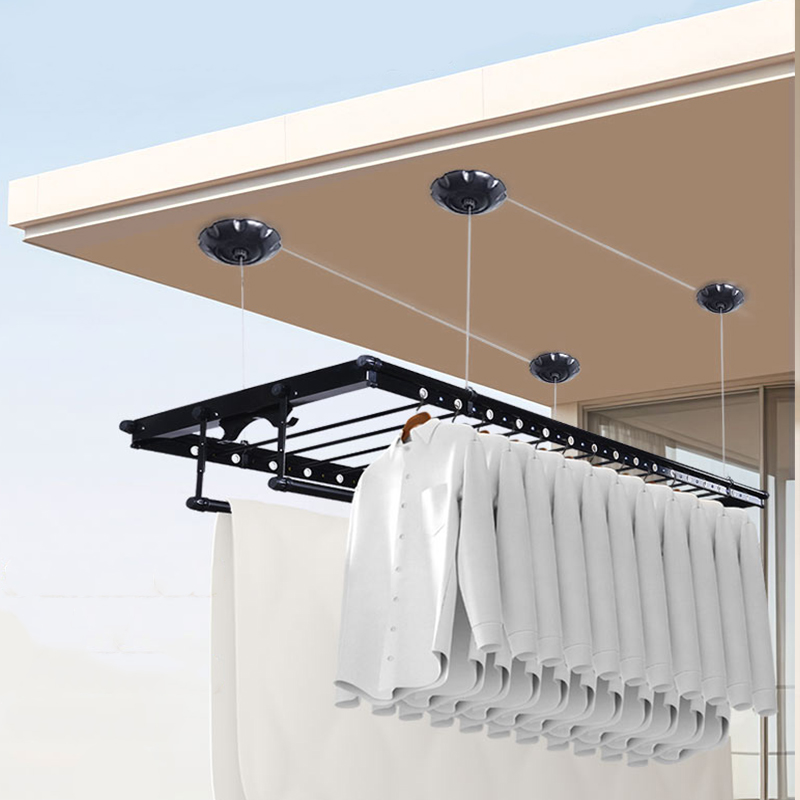
Urban living spaces are shrinking, and homeowners are looking for multifunctional solutions. According to Home Equipment Market Trends, demand for space-saving laundry solutions has increased by over 7% annually in recent years.
A lifting drying rack allows you to raise your clothes out of the way, keeping floors clear while promoting efficient airflow for faster drying. Compared to traditional floor racks, these systems are easier to use, safer, and more aesthetically pleasing.
How Lifting Drying Racks Work
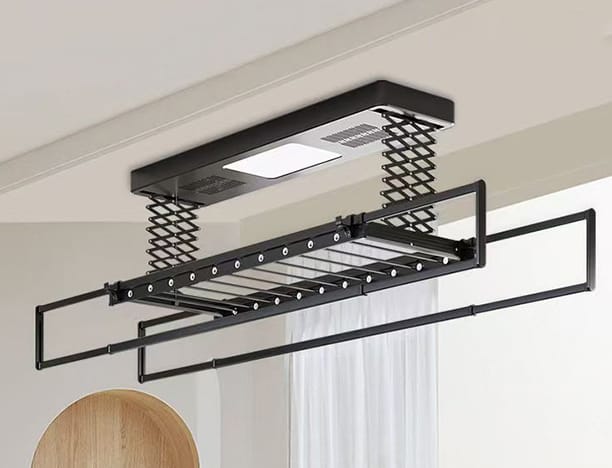
Most modern lifting racks operate on motorized or manual pulley systems. They typically include:
- Height adjustment: Easily raise or lower the rack for loading and unloading clothes.
- Durable materials: Aluminum or stainless steel ensures corrosion resistance and longevity.
- Optional features: Some models include UV sterilization, built-in fans, or smart sensors for automated drying.
By integrating these features, you can optimize drying times and reduce the physical effort required to handle laundry.
Real-Life Case Study: Small Apartment Transformation
Consider a one-bedroom apartment where the living room doubles as a laundry space. Previously, the resident relied on a floor rack that blocked access to the balcony.
After installing a ceiling-mounted lifting drying rack, the results were transformative:
| Feature | Before | After |
|---|---|---|
| Floor space used | 12 sq. ft | 0 sq. ft |
| Laundry setup time | 15 min | 5 min |
| Drying efficiency | Moderate | High |
| Risk of tripping | High | None |
The user reported not only increased convenience but also a significant improvement in the aesthetic appeal of the space.
Benefits of a Lifting Drying Rack
- Space-saving design: Free up floor space for other activities.
- Reduced physical effort: No more bending or lifting heavy wet clothes.
- Faster drying times: Elevation promotes airflow and even drying.
- Energy efficiency: Reduces reliance on electric dryers.
- Enhanced safety: Ceiling-mounted racks reduce the risk of tripping or falling garments.
Installation and Maintenance Tips
- Placement: Install near windows or ventilation points to maximize airflow.
- Weight capacity: Ensure the rack supports the intended load.
- Regular checks: Inspect pulley systems and lubricate moving parts every 3–6 months.
- Ease of use: Test height adjustments to ensure comfortable operation.
Proper installation ensures longevity and consistent performance.
Choosing the Right Lifting Drying Rack
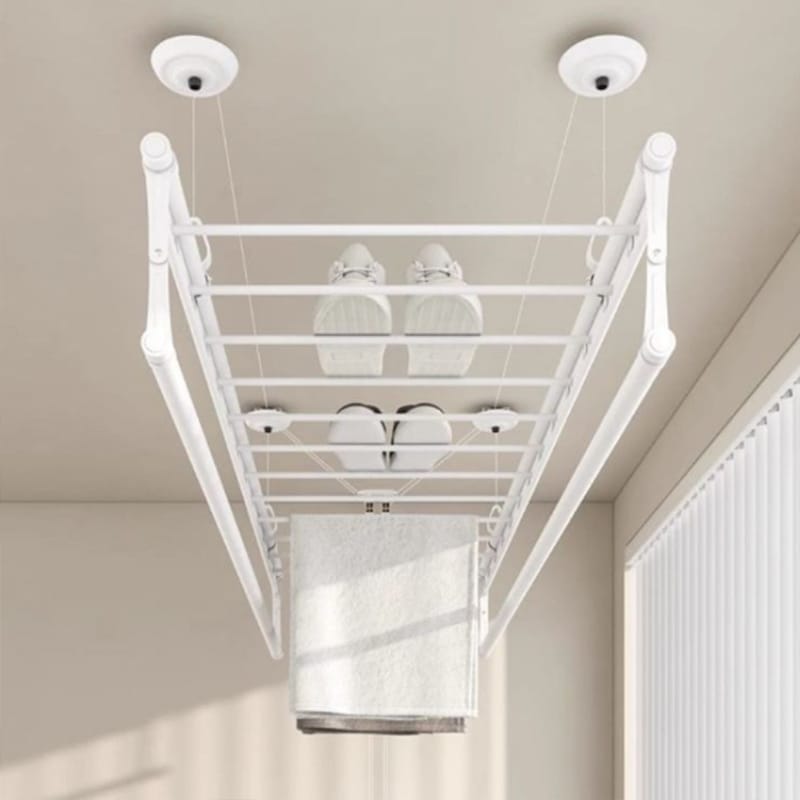
When selecting a rack, consider:
- Material: Aluminum or stainless steel is ideal for humid environments.
- Load capacity: Choose according to the number of garments you usually dry.
- Control type: Manual pulley or motorized with remote control.
- Additional features: UV sterilization, foldable rods, or smart sensors.
Table: Comparison of Laundry Drying Solutions
| Solution Type | Space Saving | Drying Speed | Convenience | Durability | Cost |
|---|---|---|---|---|---|
| Lifting Drying Rack | High | High | High | High | Medium-High |
| Floor Rack | Medium | Medium | Medium | Medium | Low |
| Ceiling Pulley Rack | High | Medium | Medium | Medium | Medium |
| Electric Dryer | Low | High | Medium | High | High |
This comparison highlights why lifting drying racks are increasingly preferred in modern homes.
Maintenance Checklist
- Wipe all rods and rails monthly to prevent dust buildup.
- Check motor or pulley system for smooth operation.
- Avoid exceeding weight limits.
- Inspect ceiling mounts to ensure stability.
Conclusion
A lifting drying rack is more than just a laundry accessory—it’s a practical investment that enhances your home’s functionality, saves space, and simplifies daily chores. By selecting the right model and following proper installation and maintenance practices, you can enjoy efficient, safe, and convenient laundry routines for years.
FAQ
How much weight can a lift drying rack support?
Most models support 20–40 kg, depending on design and mounting structure.
Can it be installed in a small apartment?
Yes, ceiling-mounted racks are ideal for compact spaces and free up floor area.
Are motorized lifting racks energy efficient?
Yes, they use minimal power for raising and lowering, unlike continuous electric dryers.
How often should I maintain the rack?
Monthly cleaning and semi-annual mechanical inspections are recommended.
Is it suitable for humid climates?
Models made with aluminum or stainless steel resist corrosion and are ideal for humid environments.