Table of Contents
Introduction
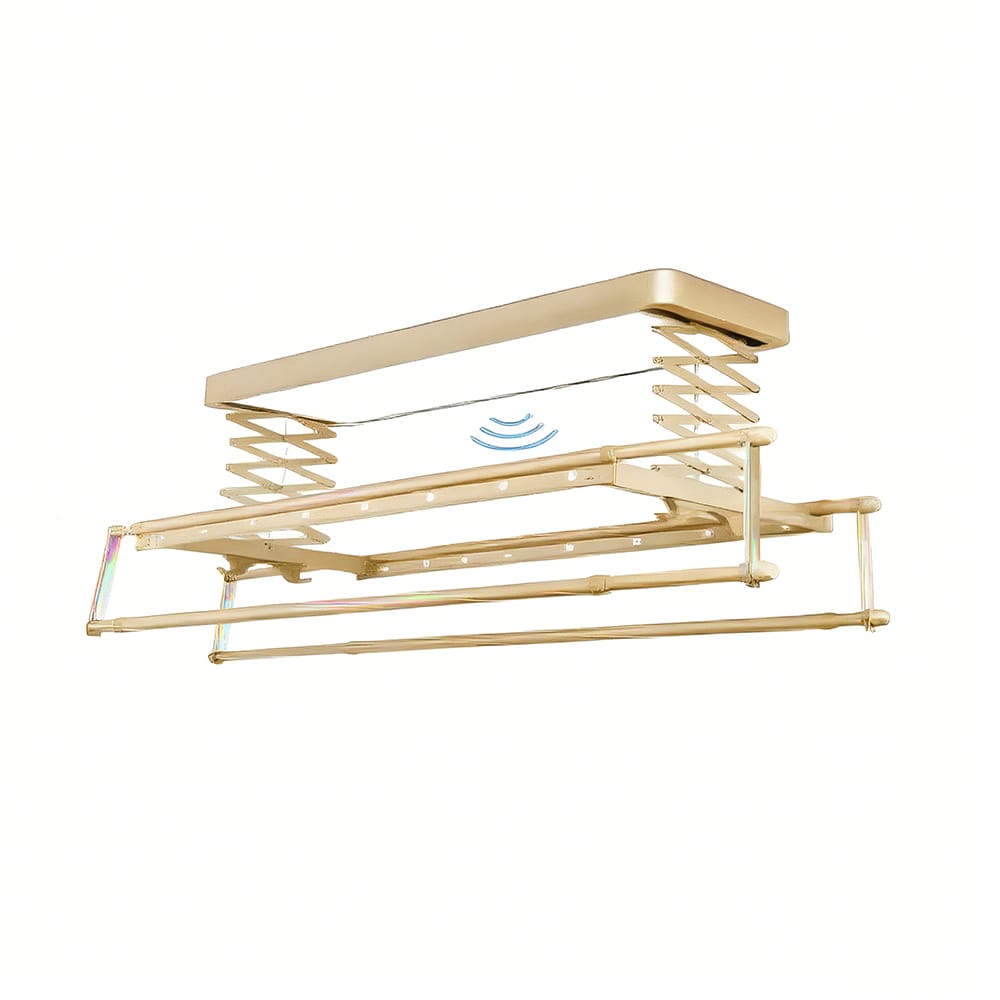
A laundry outdoor drying rack needs to do more than provide enough bars for wet clothing. Once a rack moves into an open or semi-open environment, it has to deal with changing airflow, moisture, sunlight, uneven surfaces, larger garment movement, and the practical need to move or store the structure when conditions change. These demands make outdoor drying different from simply placing an indoor rack outside for a few hours.
The best outdoor setup should provide stable support without becoming unnecessarily heavy or difficult to handle. It should give shirts, towels, trousers, bedding, and smaller garments enough room to hang naturally while keeping the complete drying area manageable. Materials also need to suit repeated exposure to moisture, while folding joints and extension mechanisms should continue operating smoothly after regular use.
Space remains just as important outdoors as it does inside a laundry room. A balcony, terrace, covered utility area, or other open drying zone may provide excellent airflow but limited usable dimensions. For this reason, choosing a laundry outdoor drying rack should begin with the location, typical laundry load, and expected exposure conditions rather than with rack size alone.
The following seven considerations provide a practical way to compare outdoor drying racks without reducing the decision to one specification.
1. Choose Materials for the Real Outdoor Environment
Material selection becomes more important when a drying rack is regularly used outside. Damp garments already introduce moisture to the structure, while outdoor placement can expose surfaces and connections to additional humidity, changing temperatures, dust, and occasional water contact. A rack that performs well in a protected indoor laundry room may therefore require more careful maintenance when used in an open area.
Stainless steel, aluminum, and appropriately coated metals can all be suitable depending on how the complete rack is designed. Aluminum is particularly useful when portability matters because it combines relatively low weight with corrosion resistance, while stainless steel can provide strong structural performance and moisture resistance. Coated steel can also work effectively when the protective surface remains intact and the rack is not left unnecessarily exposed to harsh conditions.
The important point is to look beyond the main rails. Hinges, screws, feet, brackets, telescopic connections, and locking mechanisms also encounter moisture and mechanical wear. A laundry outdoor drying rack with durable main tubes but poorly protected joints can still develop problems where components connect or move.
YIHUI’s existing outdoor laundry drying rack guide also emphasizes material durability as a central consideration for open-air use. When comparing racks, construction should therefore be evaluated as a complete system rather than according to one material name.
2. Outdoor Stability Matters More Than Indoor Stability
A rack used indoors normally operates on a predictable floor with relatively little air movement around the garments. Outdoor conditions can be different because hanging shirts, towels, and bedding create large surfaces that respond to moving air. This means a rack that feels perfectly stable when empty may behave differently after it is fully loaded.
Freestanding racks should have a footprint and frame geometry that remain stable during normal outdoor use. A very tall rack with a narrow base can be easier to move and store but may feel less secure when large textiles are concentrated near the upper rails. Wide side wings also change how weight is distributed across the supporting legs.
The laundry itself needs to be considered as part of the structure. Several heavy wet towels on one side can affect stability differently from lightweight shirts distributed evenly across the rack. Outdoor use therefore makes balanced loading especially valuable, and heavier items should be spread across the available frame instead of concentrated on a single outer section.
Wall-mounted or fixed outdoor systems solve some of the portability issue but create different structural requirements. Brackets and mounting surfaces need to support the rack in its extended position, while retractable sections should remain controlled when clothing moves in changing airflow. Stability should always be evaluated in the fully loaded working configuration rather than with an empty frame.
3. Consider the Difference Between Open Size and Usable Drying Space
A larger outdoor rack does not automatically provide better drying capacity. External dimensions describe how much space the frame occupies, but usable drying capacity depends on how much rail length can actually support the garments you normally wash.
A rack with many short rails may work efficiently for smaller items while becoming restrictive for towels or bedding. A longer open rail can provide more flexibility because users can place garments on hangers, spread larger textiles, or adjust the distance between items according to fabric thickness.
This distinction matters outdoors because good airflow is one of the main advantages of open-air drying. Packing garments closely together simply to maximize the stated capacity can reduce that advantage. Additional space is often better used to separate larger items rather than to place another garment on every available section.
| Feature | Why It Matters Outdoors | What to Evaluate |
|---|---|---|
| Total rail length | Determines available hanging area | Match it to normal laundry volume |
| Rail spacing | Influences garment separation | Allow more room for thick textiles |
| Rack height | Affects long garments | Check dresses, trousers and towels |
| Open footprint | Determines required outdoor area | Include legs and extension sections |
| Loaded footprint | Represents real working space | Include garment overhang |
| Expandable range | Provides variable capacity | Check stability when fully extended |
| Folded dimensions | Affect storage convenience | Confirm a practical storage location |
The loaded footprint is particularly important. Clothing often extends beyond the physical frame, which means a rack that appears to fit an outdoor area can become much larger once shirts, towels, or bedding are added.
4. Use Outdoor Airflow Without Overcrowding the Rack
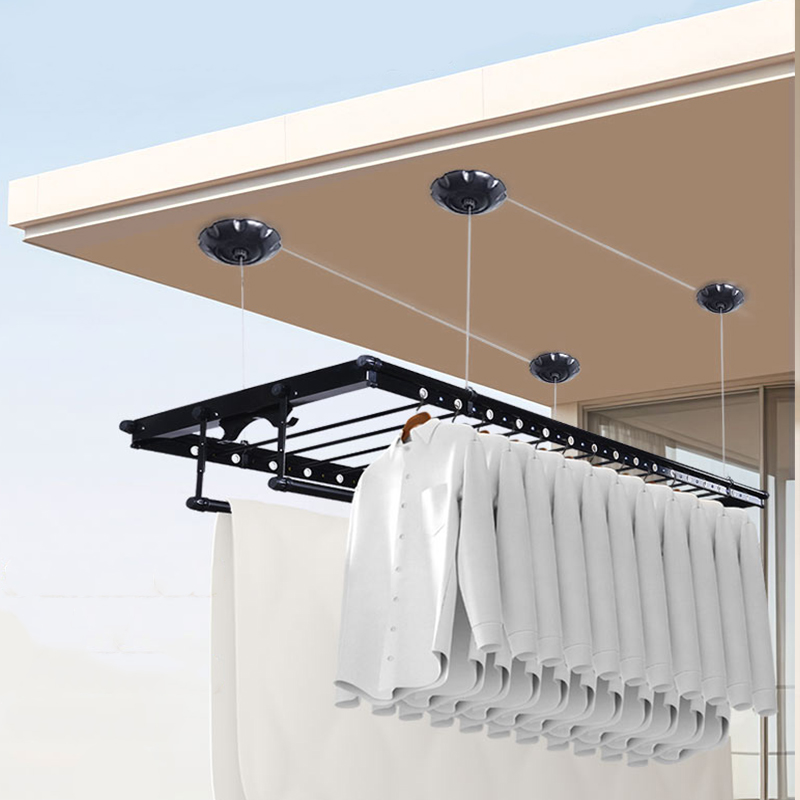
One of the strongest practical benefits of outdoor drying is access to natural air movement, but the rack still needs to be loaded intelligently. A large amount of available airflow cannot fully compensate for wet textiles pressed tightly against one another.
Lightweight shirts can usually hang relatively close together, especially when individual hangers keep the fabric separated. Thick towels, denim, bedding, and layered garments benefit from more open spacing because their damp surfaces can remain partially hidden when fabrics overlap.
Traditional outdoor drying methods such as a clothes line follow the same general principle by spreading textiles across an open hanging area rather than stacking them densely. A drying rack should provide similar flexibility even though it organizes the laundry within a smaller structural footprint.
The most practical approach is to treat rail capacity as adjustable. During a smaller load, garments can be distributed more widely. During a larger load, lighter items can be arranged more efficiently while thicker pieces continue receiving additional space. The rack should make this variation possible instead of forcing every laundry cycle into one fixed arrangement.
5. Decide Whether Portability or Permanent Installation Matters More
Outdoor drying racks generally fall into two broad approaches: movable structures and fixed installations. The best choice depends on whether the drying location remains consistent and how frequently the rack needs to be protected or stored.
A portable laundry outdoor drying rack provides considerable flexibility. It can be positioned where open space and airflow are available, then moved to a sheltered location when it is no longer required. Foldable versions add another advantage because the complete structure can become compact enough for storage between laundry cycles.
The tradeoff is repeated setup. If outdoor drying happens regularly, opening, positioning, loading, unloading, folding, and storing the same large rack can become a routine task of its own. In a dedicated outdoor laundry zone, a wall-mounted or fixed system may create a simpler workflow.
Permanent structures remove the need to find a location during every cycle, but they require greater confidence in the installation environment. The mounting area should provide enough room for the rack and hanging garments while remaining compatible with surrounding doors, windows, railings, and other structures.
The correct decision should therefore reflect frequency. Occasional outdoor drying favors portability, while a dedicated drying zone can make fixed installation more practical for regular use.
6. Folding and Expandable Designs Need Strong Moving Joints
Foldability is particularly useful for outdoor racks because the structure may not need to remain exposed when it is empty. A folding frame can provide substantial drying capacity during use and return to a smaller configuration for storage afterward.
The quality of the folding mechanism is therefore just as important as the material used for the main rails. Hinges experience repeated opening and closing, support arms carry changing loads, and telescopic components slide through multiple positions. These moving sections should remain stable when the rack reaches its full working configuration.
Expandable designs provide another useful feature for outdoor laundry because the required capacity often changes. A normal clothing load may use the basic rack, while bedding or a larger group of towels can require additional rail length. A telescopic structure allows capacity to increase temporarily without permanently creating a larger footprint.
A good design should remain structurally confident at maximum extension. If outer rails become noticeably unstable when they are fully extended and loaded, the additional capacity has limited practical value. Folding and retractability should improve flexibility without compromising the main purpose of supporting wet laundry securely.
7. Plan for Sunlight, Moisture, and Changing Conditions
Outdoor drying conditions are not constant, so a laundry outdoor drying rack should make it easy to respond when the environment changes. A portable structure can be moved toward a more suitable drying area, while a folding model can be stored in a sheltered location when it is not being used.
Direct sunlight can be useful for outdoor drying, but prolonged exposure is not necessarily ideal for every textile or rack surface. Some colored fabrics may benefit from more controlled exposure, while certain materials and surface finishes can experience greater wear when permanently left outside. A rack does not need to remain in the most exposed position simply because it is designed for outdoor use.
Moisture creates a similar consideration. Outdoor suitability should not be interpreted as a reason to leave a portable drying rack exposed continuously regardless of conditions. Allowing the rack to dry, keeping moving joints reasonably clean, and storing foldable systems under shelter when they are not required can help maintain smoother operation over time.
The most useful outdoor rack is therefore one that matches the flexibility of the environment. Instead of treating the drying location as permanent under every condition, the rack should allow users to adjust position, capacity, or storage according to the needs of the laundry and the surrounding space.
Freestanding Laundry Outdoor Drying Rack for Flexible Placement
Freestanding outdoor racks remain useful because they can be positioned without permanent structural work. A user can create a temporary drying zone and remove it after the clothes are dry, which makes this design particularly appropriate where the outdoor area also supports other activities.
Portability should be balanced with stability. A very lightweight structure is easy to move but still needs enough frame support to remain reliable under normal wet-laundry loads. The most successful designs use geometry and balanced weight distribution rather than simply adding unnecessary material mass.
Wheels can improve movement on larger racks, while folding legs make storage more practical. However, both features add moving components that need to remain stable once the rack is in its working position. Outdoor selection should therefore focus on how the rack behaves while loaded rather than only how easy it is to move when empty.
Wall-Mounted Outdoor Drying Racks for Compact Areas
Wall-mounted racks are useful when the outdoor area has limited floor dimensions but a suitable vertical mounting surface. The drying structure can extend when garments need support and return toward the wall after use, leaving more open space once the laundry cycle is complete.
The main advantage is predictable placement. Unlike a freestanding rack, the system does not need to be repositioned before each use. The main limitation is that the complete extension zone becomes permanently associated with the drying function, so surrounding objects need enough clearance whenever the rack is open.
This is particularly important for smaller outdoor utility areas where doors, railings, windows, or storage may already occupy part of the available space. The rack should be measured in its fully extended and loaded condition, including garments hanging beyond the outer rails.
Wall-mounted outdoor racks work best when one section of the space can be intentionally reserved for temporary laundry without interfering with the normal use of the area.
Octopus Drying Racks for Smaller Garments
Outdoor drying does not only involve shirts, towels, and bedding. Socks, underwear, smaller towels, and other lightweight garments can consume a surprising amount of rail space when each item is placed individually on a large rack.
A multi-arm or octopus design provides another way to organize these smaller items. The garments can be distributed around a compact central structure while the main drying rack remains available for larger textiles. YIHUI’s Octopus Drying Rack category is designed around this multi-arm approach for smaller garments.
This type of rack is most useful as part of a flexible drying system rather than as a universal replacement for longer rails. Large shirts and bedding require different support, while smaller pieces benefit from concentrated hanging positions. Using the appropriate structure for each garment type can make the entire outdoor drying area easier to organize.
Large Towels and Bedding Need Different Outdoor Capacity
Bedding and large towels often reveal whether an outdoor drying rack has genuinely useful capacity. These textiles occupy substantial rail length and can become heavy when wet, making both structural stability and open space important.
A short multi-tier rack may offer many individual bars but still require large textiles to be folded repeatedly. Longer rails allow more of the surface to remain exposed and can make it easier to distribute the weight across the structure.
Outdoor airflow can work particularly well around larger textiles when they have enough room, but the rack should remain balanced when those garments move. Bedding should not be concentrated entirely on one lightweight outer wing if the structure offers stronger central support elsewhere.
For users who regularly dry large items outside, the rack should therefore be selected according to the largest common textiles rather than the total number of garments in a typical load.
How to Prevent a Large Outdoor Rack From Becoming a Space Problem
Outdoor space can feel more generous than an indoor laundry room, but oversized racks can still create unnecessary obstruction. Balconies, terraces, and other utility areas may have doors, walking routes, furniture, plants, storage, or railings that reduce the amount of usable drying space.
Choosing maximum rack dimensions without considering these surrounding functions can create the same problem as an oversized indoor rack. The structure may technically fit while making the rest of the area difficult to use whenever laundry is drying.
Expandable designs provide one solution because the rack can remain smaller during normal loads and extend only when greater capacity is necessary. Folding structures offer another advantage by returning space after the clothes are removed.
The best laundry outdoor drying rack therefore provides the capacity that is regularly needed while allowing the outdoor area to continue supporting its other functions.
Outdoor Rack Materials Need Maintenance Too
Corrosion-resistant materials reduce maintenance requirements, but they do not make a drying rack completely maintenance-free. Dust, moisture, fabric residue, and repeated movement can gradually affect joints and surfaces even when the main metal remains in good condition.
Periodic cleaning helps prevent dirt from transferring onto freshly washed garments and gives users an opportunity to inspect the frame. Folding joints can be checked for excessive movement, telescopic rails can be examined for smooth operation, and feet or mounting components can be checked before they become obvious problems.
Portable racks also benefit from being dry before long-term storage. Folding a wet structure immediately into a confined storage area can keep moisture around joints for longer than necessary. Basic care is usually easier than dealing with mechanical movement that has become difficult after extended neglect.
Outdoor durability should therefore be viewed as the combination of suitable materials, sensible exposure, and straightforward maintenance.
When Indoor-Outdoor Flexibility Is the Better Choice
A rack does not always need to belong permanently to either an indoor or outdoor environment. Portable and folding structures can support a more flexible approach in which the drying location changes according to available space and surrounding conditions.
This is particularly useful when the same garments are not always dried in the same way. Open-air drying may work well under suitable conditions, while an indoor or sheltered drying zone provides an alternative when outdoor use becomes inconvenient.
For this type of routine, portability and storage dimensions become more important than permanent installation. The rack should be easy enough to move without sacrificing the stability required for a normal wet load.
A versatile laundry outdoor drying rack can therefore be valuable not because it stays outside continuously, but because it allows users to decide where the drying zone makes the most sense for each laundry cycle.
Common Mistakes When Choosing an Outdoor Laundry Rack
One common mistake is assuming that any metal drying rack is automatically suitable for continuous outdoor use. Different metals, coatings, joints, and fasteners respond differently to repeated moisture and environmental exposure, so outdoor suitability should be evaluated across the entire structure.
Another mistake is choosing the lightest possible rack for portability without considering stability under wet clothing and moving air. Ease of transport is useful, but the frame still needs an appropriate base and balanced structure during drying.
Users can also overestimate useful capacity by counting rails instead of considering garment size. A high number of narrow bars may work for smaller pieces while becoming inefficient for towels and bedding. Practical capacity should match the textiles normally dried.
Finally, many users evaluate storage dimensions more carefully than operating dimensions. The rack may fold compactly after use, but its open and loaded footprint determines whether it actually fits the outdoor area without unnecessary obstruction.
Choosing a Laundry Outdoor Drying Rack for Daily Use
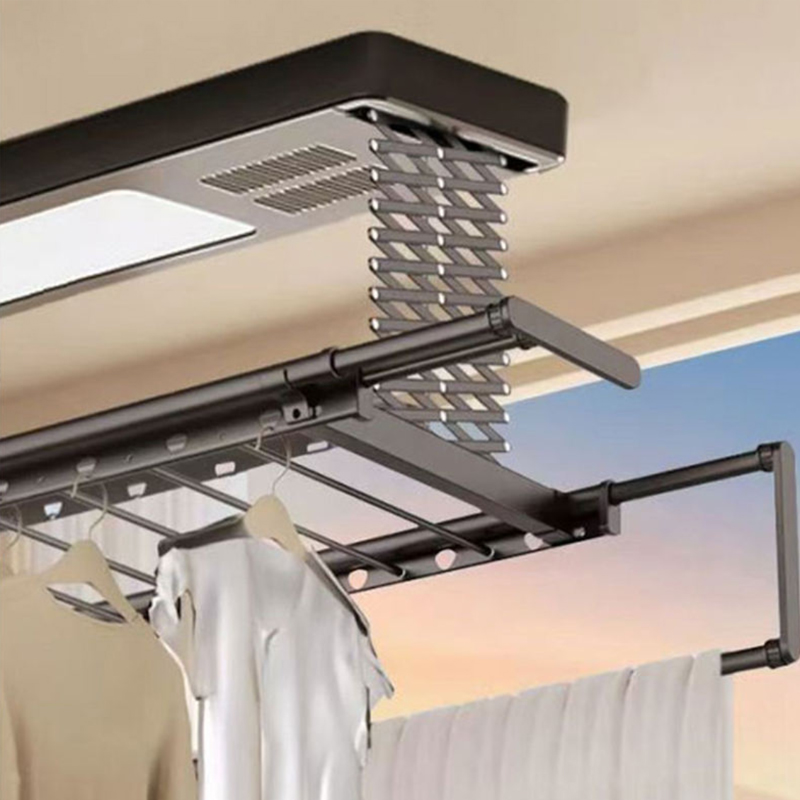
The best selection process begins with the drying location. Measure the open area and identify doors, walking routes, walls, railings, and other features that must remain usable. Then consider whether the rack needs to move regularly or whether a fixed position would make the routine easier.
Normal garment types should determine the rail layout. Smaller items may benefit from multi-arm or clip-based systems, shirts work well with longer hanger rails, and bedding requires more open length. A rack intended for mixed loads should provide enough flexibility to accommodate several of these arrangements.
Materials and structure should then confirm the choice. The rack needs appropriate resistance to moisture, stable joints, secure supports, and enough strength for normal wet loads without becoming unnecessarily difficult to move or store.
When those factors work together, outdoor drying becomes easier to organize because the rack supports the environment rather than simply occupying it.
Conclusion
A laundry outdoor drying rack should be selected according to real outdoor conditions rather than treated as an indoor rack placed in a different location. Material durability, structural stability, airflow, garment spacing, portability, and storage all become more important when the drying area is open or semi-open.
Freestanding racks provide flexible placement, wall-mounted systems preserve floor area, and folding or expandable designs allow capacity to change according to the laundry load. Smaller multi-arm racks can organize lightweight garments, while longer rails are more appropriate for towels and bedding.
The most useful outdoor rack also makes it easy to respond to changing conditions. It can be repositioned, folded, sheltered, or adjusted without making each laundry cycle unnecessarily complicated.
Greater outdoor space does not remove the need for planning. The best rack is still the one that provides enough practical capacity, remains stable when loaded, supports appropriate garment spacing, and leaves the surrounding area usable while clothes dry.
FAQ
What should I look for in a laundry outdoor drying rack?
Look for materials suitable for repeated moisture exposure, a stable frame, practical rail spacing, enough capacity for normal garments, and dimensions that fit the fully loaded drying area. If the rack will move frequently, folding and portability also matter, but these features should not reduce stability when wet laundry is hanging.
Can a laundry outdoor drying rack stay outside all the time?
That depends on the rack’s materials, surface treatment, construction, and degree of exposure. Even corrosion-resistant racks can benefit from shelter when they are not being used. Portable models are often better stored away from prolonged moisture and direct exposure, while fixed outdoor systems should use materials suitable for their installation environment.
Is a foldable outdoor drying rack better than a fixed rack?
A foldable rack is useful when the drying area needs to serve other purposes or the rack must be stored between laundry cycles. A fixed rack can provide a simpler routine when the same outdoor location is used regularly. The better option depends on space, drying frequency, required capacity, structural conditions, and storage needs.
What material is best for an outdoor laundry drying rack?
Stainless steel, aluminum, and appropriately coated metals can all be suitable depending on construction. Aluminum offers relatively low weight and corrosion resistance, while stainless steel provides strong moisture resistance. Hinges, fasteners, telescopic sections, and other connections should also be suitable for repeated outdoor use.
How can I keep an outdoor drying rack stable?
Place the rack on a suitable level surface, distribute heavier wet garments across the frame, and avoid concentrating towels or bedding on one lightweight outer section. A rack with appropriate base geometry and stable joints is especially important outdoors because hanging textiles can move with surrounding airflow and change how forces act on the structure.