
Table of Contents
Introduction
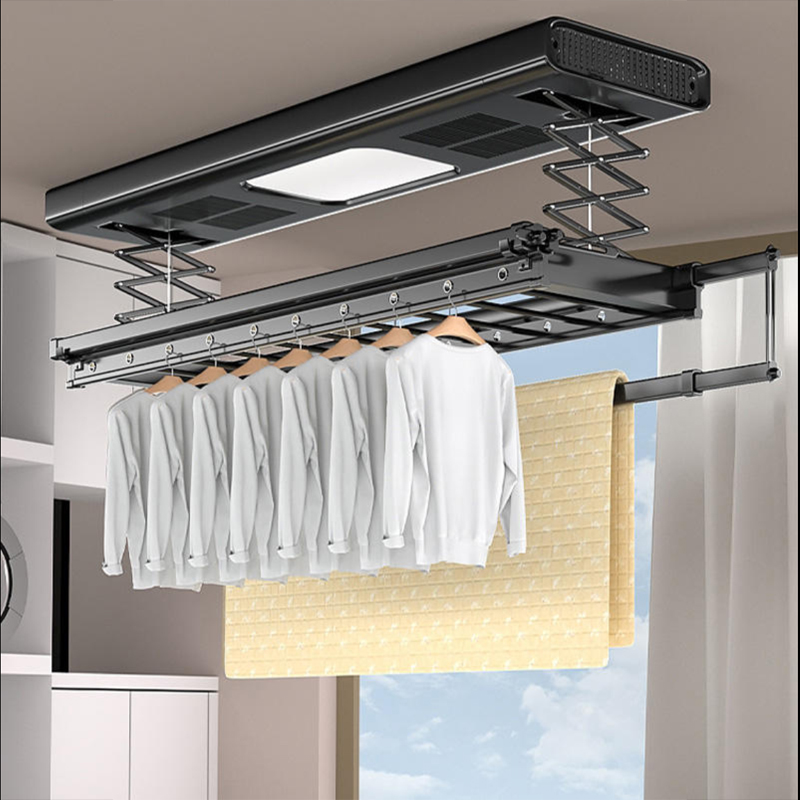
A laundry rack for drying clothes may look like one of the simplest items in a home, but the way it fits into the laundry routine can affect much more than where wet garments are placed. The rack determines how much floor or overhead space is occupied, whether shirts and towels can be separated properly, how comfortably users load wet clothing, and what happens to the drying area after the laundry is removed.
This becomes especially important in apartments and multifunctional laundry spaces. A household may need enough drying capacity for several shirts during the week, then suddenly need much more room for towels, trousers, children’s clothing, or bedding. A rack that works well for only one of these situations can quickly become inconvenient.
The most practical solution is therefore not automatically the rack with the greatest number of rods. A better laundry rack for drying clothes provides the right type of drying space for the household’s garments, room layout, laundry frequency, and normal movement through the home.
Start with What the Household Actually Dries
Choosing a drying rack becomes easier when the decision starts with clothing rather than rack dimensions. Different textiles use drying space in very different ways, so the same structure will not perform equally well for every household.
Shirts and blouses can usually be suspended from hangers and mainly need vertical clearance and separation from neighboring garments. Bath towels need broad exposed surfaces, while jeans and thick sweatshirts add more wet weight to the supporting structure. Sheets and duvet covers require long uninterrupted spans if users want to avoid folding them repeatedly over short rails.
This means capacity should be evaluated according to the normal laundry mix. A family that washes bedding frequently needs a different rack configuration from someone who mainly dries office shirts and small garments.
The rack should follow the wardrobe rather than forcing every textile into the same arrangement.
A Drying Rack Is Really a Temporary Use of Space
Laundry creates a temporary demand for space. Clothes may need several hours of drying area, yet the household usually wants that space back immediately afterward.
This is why the location and structure of a laundry rack for drying clothes matter as much as its capacity. A large freestanding rack can provide plenty of hanging area but may dominate a narrow balcony throughout the drying period. A wall-mounted structure can preserve more floor area but requires a suitable fixed location. A ceiling system uses the upper part of the room but needs appropriate installation conditions.
The right rack therefore depends partly on which part of the home can temporarily become a drying zone without disrupting other activities.
Space efficiency is not simply about making equipment smaller. It is about matching the drying equipment to the part of the room that can most easily accommodate it.
Floor, Wall and Ceiling Space Solve Different Problems
A useful way to compare drying racks is by asking which surface supports the laundry.
Floor-standing racks create drying space through legs and frames. They can usually move between rooms, making them useful when the preferred drying location changes. Their main limitation is that their footprint remains on the floor throughout the drying period.
Wall-mounted racks keep the main supporting structure away from the floor. They can create a predictable laundry zone in utility rooms or balconies where one section of wall is consistently available.
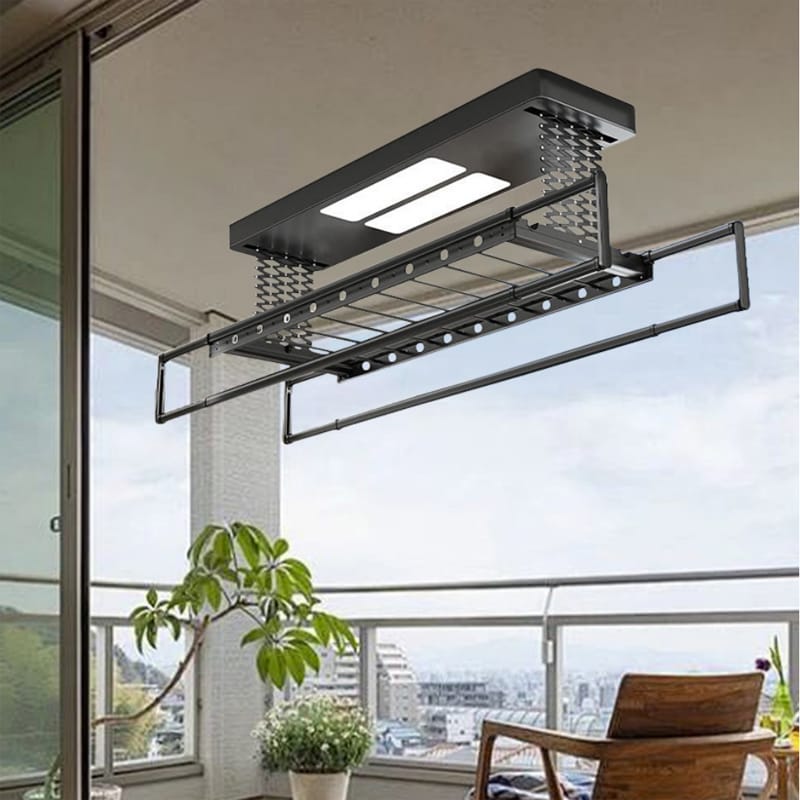
Ceiling-mounted systems approach the same problem from above. A manual ceiling drying rack can lower the drying area for loading and then move it back overhead, allowing users to keep more of the floor available while laundry remains suspended.
None of these configurations is universally better. The correct choice depends on whether the household has more usable floor, wall, or ceiling space.
Real Capacity Is Different from Maximum Garment Count
Drying racks are often described according to how many garments they can hold, but garment count does not provide a complete picture of practical capacity.
Ten lightweight shirts occupy very different space from ten large towels. A rack may technically hold numerous hangers while becoming too crowded for garments to remain separated. Similarly, a structure with many short rails may appear spacious until a large sheet needs to be dried.
Usable capacity should therefore include rail length, spacing, vertical clearance, structural stability, and access to the inner sections once the rack is partly loaded.
The objective is not to fill every available position. It is to arrange a normal laundry load without forcing wet fabrics into unnecessary overlap.
Air Needs Space Around Wet Fabrics
A drying rack supports clothes, but the surrounding environment performs much of the actual drying work. Water leaves wet textiles and moves into the surrounding air, which is why garment arrangement influences how useful the rack becomes.
Traditional clothes lines follow the same basic principle by suspending wet garments so they can remain exposed to surrounding air. A drying rack brings this idea into a more compact structure suitable for indoor or balcony use.
If towels are pressed directly against one another, or shirts are compressed into a dense row of hangers, some of the apparent rack capacity becomes less useful. Leaving appropriate gaps around thicker garments can produce a more practical drying layout than simply filling every rail.
This means empty space on a rack is not always wasted capacity. Sometimes it is part of the drying arrangement.
Laundry Density Should Change with Fabric Type
Lightweight fabrics generally need less physical space than thick textiles. A thin shirt can hang comfortably beside another lightweight garment, while a bath towel or sweatshirt may benefit from greater separation.
This makes mixed laundry more difficult than a rack filled with one garment type.
A practical approach is to create zones. Lightweight garments can occupy a denser section, while thick towels and jeans receive more open positions. Bedding should use the longest available rods rather than taking over several short sections.
The rack becomes easier to use when the household thinks in terms of fabric behavior instead of treating every rail as an identical storage position.
Towels Reveal Whether the Rack Has Useful Strength
Shirts rarely expose the structural limitations of a drying rack because they distribute relatively little weight across the frame.
Wet towels are much more demanding.
They retain substantial moisture, occupy broad areas, and are often placed together. Several towels on one outer section can reveal movement or deflection that was invisible when the rack was empty.
For this reason, a laundry rack for drying clothes should be evaluated with realistic wet household textiles rather than display clothing alone. The structure should remain predictable when users place heavier garments in ordinary, imperfect arrangements.
This is particularly important for folding, extendable, or vertically adjustable racks because additional joints and moving components also need to remain stable under load.
Bedding Needs Length More Than Rail Count
Sheets and duvet covers change the meaning of capacity.
A rack may provide many rods but still require a sheet to be folded repeatedly before it fits. Once layers of wet fabric sit against each other, much of the apparent drying area is no longer being used effectively.
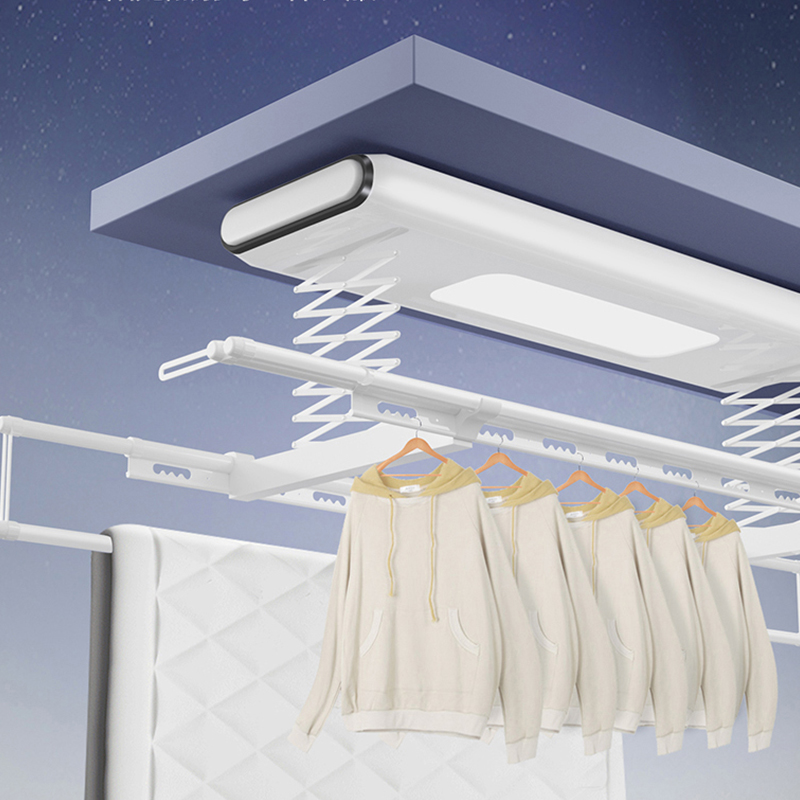
Longer rods or expandable sections can be more valuable for bedding than additional short rails. A retractable ceiling drying rack can increase its available span when larger textiles or family laundry require more room and return to a more compact configuration when that extra width is unnecessary.
This illustrates an important principle for laundry equipment: maximum capacity does not need to equal permanent size.
A rack that changes according to the load can serve both small weekday laundry and larger household textiles without dominating the room every day.
Clothing Should Remain Easy to Reach
A large drying rack loses practical value when some of its positions become difficult to access after the first garments are hung.
Multi-level racks can create this problem if long shirts on an upper section block the rails below. Very wide structures can make the center difficult to reach, while high fixed rails may require repeated overhead stretching.
Accessible capacity is therefore more important than theoretical capacity.
Users should be able to load and unload the rack without moving several garments simply to reach another position. The normal working height should also suit the people who use the laundry area most frequently.
A rack is more convenient when its capacity remains usable from the first garment to the last.
The Washing Machine Should Influence Rack Position
The drying rack is only one stage of the laundry process. Its position should make sense in relation to the washing machine.
Wet laundry is heavier and less convenient to carry than dry clothing, so reducing unnecessary movement can improve the entire routine. A rack positioned near the washing area allows garments to move directly from the machine or basket into the drying zone.
However, proximity should not create conflicts. The washing-machine door or lid still needs full clearance, and hanging trousers or towels should not interfere with controls or surrounding work surfaces.
The strongest layout creates a short route between washing and drying while keeping both functions usable at the same time.
Laundry Baskets Need Space Too
It is easy to plan a drying rack without thinking about where the basket will sit during loading.
In reality, the basket is part of the working zone.
Users need to remove wet garments, place the basket somewhere nearby, and transfer clothing onto the rack one piece at a time. If the basket blocks the doorway or main walkway, the laundry layout is incomplete even if the rack itself fits perfectly.
A practical setup provides a temporary basket position close enough to minimize repeated bending and carrying.
This small detail can make a drying area feel much more organized because the laundry process has a clear sequence rather than several objects competing for the same patch of floor.
A Small Laundry Load Should Not Require Maximum Rack Size
Laundry volume changes constantly.
Opening a very large rack for four shirts and several small garments can waste space during the entire drying period. Designs that allow partial deployment, retractable sections, or adjustable capacity can respond more closely to actual laundry volume.
This is especially useful in apartments where the drying area shares space with other activities.
For small loads, only the necessary section needs to be used. Larger laundry days can then make use of the full structure.
A laundry rack for drying clothes becomes more space-efficient when the working size follows the load rather than remaining permanently at maximum capacity.
A Large Family Needs Organization, Not Only More Rods
Family laundry often includes garments belonging to several people as well as towels, bedding, and household textiles.
Simply increasing rail count can create a larger mixed pile in suspended form. A better rack allows laundry to be organized while it dries.
One section can hold children’s clothing, another can contain adult shirts, while towels and heavier textiles use stronger or more open areas. Garments that will return directly to wardrobes can remain on hangers, reducing rearrangement after drying.
This approach turns additional drying capacity into workflow efficiency rather than just greater storage.
The rack begins helping with the next stage of laundry before the clothes are even dry.
Different Drying Racks Suit Different Laundry Habits
The following comparison shows why there is no single ideal rack for every household.
| Drying Situation | Useful Rack Type | Main Advantage |
|---|---|---|
| Drying in different rooms | Portable floor rack | Easy relocation |
| Very limited floor area | Ceiling-mounted rack | Uses overhead space |
| One permanent utility wall | Wall-mounted rack | Creates a fixed temporary drying zone |
| Small and large loads alternate | Expandable rack | Capacity changes with laundry volume |
| Frequent shirt drying | Hanger-friendly rack | Maintains vertical garment arrangement |
| Frequent bedding | Long or extendable rods | Provides broader textile support |
| Occasional indoor drying | Folding rack | Can be stored after use |
The most useful product category is therefore determined by household behavior rather than appearance alone.
A Rack Should Work When Half Empty
Drying equipment is frequently judged under maximum capacity, but it may spend much more time carrying partial loads.
A good structure should remain convenient with five garments just as it does with twenty. Users should not need to deploy unnecessary sections or adjust the entire room simply because the rack was designed for larger laundry.
This is particularly relevant for family households where washing may be divided into several smaller cycles.
A flexible rack allows the drying area to expand gradually instead of forcing every laundry day into the same configuration.
A Rack Should Also Work When Unevenly Loaded
People do not load drying racks with engineering precision.
The nearest rod is usually filled first. Towels may all end up together, while lightweight shirts occupy another section. One side can temporarily carry much more weight than the other.
This is normal household behavior.
A drying rack should therefore remain stable under reasonable uneven loading within its intended use. Folding joints, supporting legs, wall connections, or lifting mechanisms should not depend on perfectly symmetrical garment placement.
Realistic load behavior is a much better indicator of practical quality than how the empty product looks in a photograph.
Indoor Drying Changes the Role of the Room
When laundry is dried indoors, the rack becomes part of the room for several hours.
This means placement should be considered from the perspective of normal household activities. The drying structure should not unnecessarily block doors, cabinets, seating areas, or the main route through the room.
Garments also need sufficient distance from surrounding surfaces. A towel pressed against a wall is not using the available drying space particularly well, while a dress hanging into a frequently used walkway can quickly become irritating.
The rack should create a defined drying zone rather than allowing wet clothing to spread unpredictably into the rest of the room.
Balcony Drying Needs a Different Layout
Balconies often provide good drying locations because they separate laundry from the main living area, but they also contain windows, doors, storage, plants, appliances, and narrow walking routes.
A large floor rack can quickly dominate this environment.
Wall or ceiling configurations may make better use of limited balcony width, while portable racks remain useful when the household wants to move laundry according to weather conditions.
Window movement should always be checked with garments already hanging. A rack can fit perfectly while empty and still prevent an inward-opening window from operating normally once towels or shirts occupy its outer sections.
The loaded condition is what determines whether the balcony layout actually works.
Long Garments Need Vertical Planning
Trousers, dresses, coats, and long shirts introduce a requirement that rail-count specifications rarely explain: vertical clearance.
A low floor rack may have enough total rail length while allowing longer garments to touch lower sections or the floor.
Overhead or height-adjustable systems can create more vertical room by moving the entire drying zone upward after loading. Wall-mounted structures can also work if the installation height provides enough clearance underneath.
Households with many long garments should therefore measure hanging length rather than comparing horizontal capacity alone.
Drying space exists in three dimensions.
Foldability Matters Only If the Rack Is Actually Folded
A folding rack may appear extremely space-efficient in specifications, but the benefit exists only if households genuinely collapse and store it after use.
If folding requires several awkward steps, or the stored structure has no convenient location, users may eventually leave the rack permanently open.
This changes the product from temporary equipment into semi-permanent furniture.
When evaluating a folding laundry rack for drying clothes, the complete storage routine should therefore be tested. Users should know where it will go, how it will be carried there, and whether retrieving it again is simple enough to repeat every laundry cycle.
The best storage design is the one people will actually use.
Permanent Installation Can Reduce Repeated Setup
Not every household needs portability.
When washing and drying always happen in the same room, repeatedly retrieving a floor rack may add unnecessary setup. A permanent wall or ceiling system can remain ready while still reducing its impact when not actively being loaded.
This approach can be particularly useful for households that air-dry clothing several times each week.
Instead of moving the rack to the laundry, the laundry moves to an already established drying zone.
The decision between portable and permanent drying should therefore consider frequency. Occasional drying benefits more from mobility, while repeated use can make fixed accessibility increasingly valuable.
The Empty Rack Is Part of the Room Too
Drying racks are usually photographed with clothing because that clearly demonstrates their purpose.
In a home, however, the rack often spends more time empty.
Its folded shape, raised position, or stored location therefore affects the room just as much as its loaded appearance. A floor rack needs a realistic storage location. A wall rack should remain reasonably compact when closed, while a ceiling unit should return to an upper position that does not unnecessarily dominate the room.
This inactive state deserves attention during product selection.
A rack should solve the laundry problem without creating a storage problem immediately afterward.
More Features Do Not Automatically Improve Drying
Drying racks can include lifting mechanisms, expandable rods, lighting, airflow assistance, remote controls, and other functions.
These features can be useful when they solve a real household problem, but the basic drying layout still matters.
A rack with advanced controls cannot compensate for insufficient garment space. An expandable structure is useful only if the room has clearance for its expanded width. Powered lifting creates value when the rack is installed overhead and used frequently, but may offer little advantage in a low, easily accessible drying area.
Functions should therefore follow the application.
The best drying solution is not the product with the longest feature list. It is the rack whose functions remove the most friction from the household’s normal laundry routine.
What Should Be Measured Before Choosing a Rack?
Useful measurements depend on the type of drying rack, but several dimensions matter across almost every configuration.
Measure the area available while the rack is open, not only where it will be stored. Include the space required by garments extending beyond the frame. Check the length of the household’s longest commonly dried clothing and the width needed for larger towels or bedding.
For folding racks, measure the intended storage location. For wall systems, include open projection and nearby cabinet movement. For ceiling systems, measure the useful loading height and the upper drying position.
The room should be measured around the laundry rather than around an empty product.
Test the Rack with a Real Laundry Day
One of the best ways to evaluate a laundry rack for drying clothes is to recreate a realistic load.
Use shirts, trousers, several bath towels, small garments, and one larger textile. Arrange them as the household normally would rather than creating a perfectly symmetrical display.
Then evaluate the entire experience.
Can every section be reached comfortably? Do long garments touch other surfaces? Does the structure remain stable? Can people still move through the room? Can nearby windows and cabinets operate? Is there enough separation between thicker fabrics?
This type of test reveals far more about practical capacity than the empty rack dimensions alone.
The Best Rack Should Reduce Laundry Friction
Household equipment is useful when it removes unnecessary steps.
A well-chosen rack reduces carrying distance, avoids repeated overhead stretching, keeps wet garments organized, preserves useful room space, and creates a clear place for laundry until it is dry.
These improvements may appear small individually, but laundry is repetitive. A minor inconvenience experienced several times each week becomes significant over time.
The right laundry rack for drying clothes should therefore be judged by the complete routine rather than a single specification.
The rack is successful when users spend less time managing the drying equipment and more easily move clothing from washing to drying and finally back into everyday use.
Conclusion
Choosing a laundry rack for drying clothes is ultimately a space-planning and laundry-workflow decision rather than simply a question of how many rods a product provides.
Garment type determines the shape of useful drying capacity. Shirts need hanger space, towels require broad support, bedding benefits from long spans, and heavier textiles place greater demands on the structure. The room then determines whether that capacity should stand on the floor, attach to a wall, move overhead, fold away, or expand only when larger loads require it.
The best solution fits both sides of the problem.
It provides enough usable drying space when the laundry is wet while becoming less intrusive once the clothes are removed. It remains accessible during loading, stable under realistic household use, and compatible with the washing machine, windows, cabinets, walkways, and storage areas around it.
A good drying rack does not simply hold clothes.
It gives wet laundry a practical temporary place in the home without forcing the rest of the home to reorganize around it.
FAQ
What is the best type of laundry rack for drying clothes?
The best type depends on the household’s available space, laundry volume, garment types, and drying frequency. Portable racks offer location flexibility, while wall and ceiling systems can preserve more floor space in compact rooms.
How should drying rack capacity be evaluated?
Capacity should be evaluated using real garment types rather than garment count alone. Towels, jeans, shirts, bedding, and small clothing all require different amounts and shapes of drying space.
Is a ceiling drying rack useful for small apartments?
It can be particularly useful when floor area is limited and suitable overhead installation space is available. Height adjustment can also make loading easier while allowing laundry to move upward during drying.
How much space should clothes have on a drying rack?
The required spacing varies with garment thickness and surrounding conditions. Wet fabrics should generally avoid unnecessary overlap, with thicker towels, jeans, and similar items receiving more separation than lightweight clothing.
Should I choose a folding or permanently installed drying rack?
A folding rack is useful when the drying location changes or the equipment needs to disappear into storage. A permanent wall or ceiling system can be more convenient when laundry is dried frequently in one consistent location.
Need Help Choosing the Right Laundry Rack for Drying Clothes?
If you’re evaluating a laundry rack for drying clothes for a balcony, apartment, laundry room, or family home, start with the garments and the room rather than the rack alone. Consider your normal laundry volume, bedding requirements, available floor or overhead space, loading height, storage needs, and the route from the washing machine to the drying area. A well-matched drying rack should provide useful capacity when clothes are wet while allowing the surrounding space to remain practical throughout the rest of the laundry cycle.





