
Table of Contents
Introduction
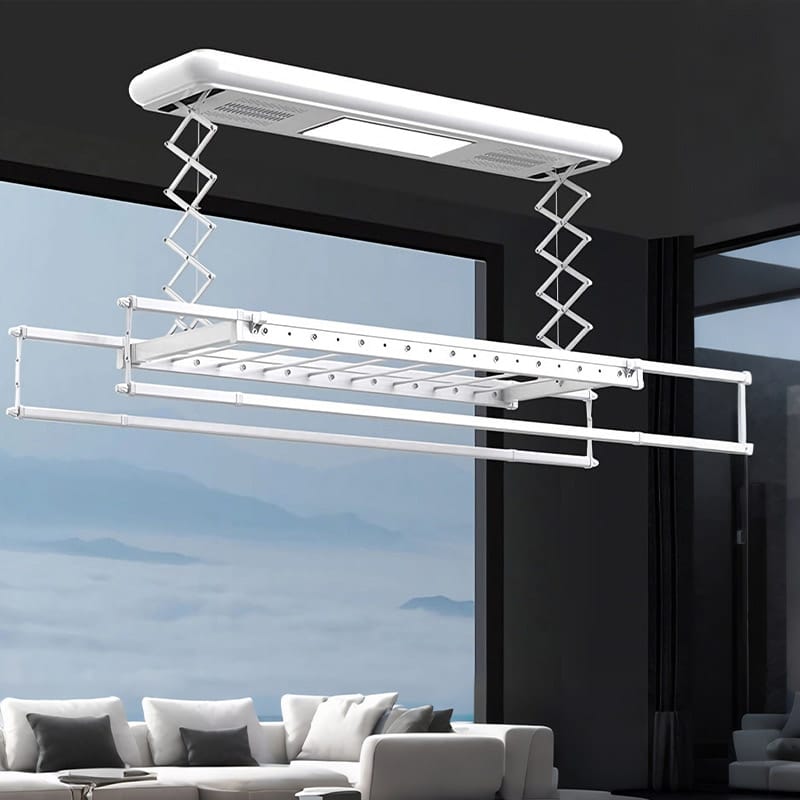
A foldable drying rack is often chosen for one simple reason: it can provide drying space when clothes are wet and reduce its physical presence when the laundry is finished. That sounds straightforward, but the difference between a rack that merely folds and one that genuinely works well in a home becomes obvious after repeated use.
The rack has to fit two very different situations. When open, it needs enough usable space for shirts, towels, trousers, small garments, and occasional larger textiles. When closed, it needs to fit naturally into storage without becoming another awkward household object. Between those two states, it also has to open smoothly, remain stable under wet clothing, and work within the actual dimensions of a balcony, laundry room, bedroom, or utility area.
For this reason, choosing a foldable drying rack should not begin with the number of rails or the smallest folded measurement. A better approach is to look at the household’s laundry habits, available room shape, normal load size, storage location, and how frequently the rack will move between open and closed positions.
Foldable Is a Space Strategy, Not Just a Product Feature
The main value of folding is that maximum drying capacity does not have to occupy maximum space permanently.
A conventional fixed structure keeps essentially the same dimensions whether it is full of clothes or completely empty. A foldable design changes according to the stage of the laundry process. It expands when wet clothing needs support and reduces when the room needs to return to normal use.
This makes folding especially relevant in multifunctional spaces. A balcony may serve as a laundry area in the morning and return to general household use later in the day. A spare room may occasionally become an indoor drying zone during bad weather. A utility room may have enough floor area for a rack only while cabinet doors are closed.
The folding function therefore has value only when it helps the room change with the laundry routine.
Do Not Choose by Folded Size Alone
A compact folded profile looks impressive in product photos because the difference between open and closed dimensions is immediately visible. Yet the rack normally spends its most demanding hours in the open position with wet clothing attached.
This means open dimensions deserve equal attention.
A rack that becomes extremely narrow in storage may still occupy most of a small balcony when deployed. A multi-tier design may create substantial capacity vertically but become difficult to access once clothing fills the outer sections. Wide wings may provide useful towel space but extend directly into a walkway.
The correct evaluation therefore compares both states.
Measure where the rack will stand while drying and where it will go afterward. If either location is unrealistic, the folding function does not completely solve the space problem.
Decide Where the Rack Will Live Before Choosing Its Size
A useful foldable drying rack needs two locations: a drying position and a storage position.
Sometimes these are almost the same place. A wall-mounted rack can remain attached to one surface and reduce toward it after use. A portable floor rack usually has a larger distance between the two locations because it may dry beside a window and then move into a cupboard or behind a door.
Thinking about storage first can prevent a common mistake. A household may select a large-capacity rack that folds neatly but later discover that the closed frame is still too tall for the utility cabinet and too wide for the gap beside the washing machine.
The stored shape should correspond to a real unused part of the home rather than an imaginary storage area that never becomes available.
A Clothes Horse Shows Why Simple Folding Designs Remain Useful
Portable folding drying racks have existed in many forms for a long time. The traditional clothes horse is essentially a frame used to hang wet laundry so moisture can evaporate, and many versions are designed to fold or collapse when they are no longer needed.
The principle remains relevant because laundry demand is temporary. Households do not necessarily need a drying structure to occupy the same amount of space throughout the day.
Modern foldable drying racks can develop this basic idea through more adaptable rail layouts, multiple sections, vertical levels, wall mounting, or other space-saving configurations. However, the fundamental advantage remains the same: create usable hanging area without permanently dedicating the same volume of the home to laundry.
The Best Rack Depends on Room Shape
Two rooms with the same floor area can require completely different drying racks.
A long narrow balcony may have enough total space but very little width. In that environment, a broad wing-style rack can interfere with movement even if the dimensions technically fit. A taller configuration may use the room more effectively.
A square laundry room creates a different opportunity. The rack may be able to open in several directions without blocking the washing machine or storage.
Bedrooms and shared living spaces introduce another factor: the rack may need to disappear more completely after use. Here, compact folding and easy carrying can become more important than maximum permanent capacity.
Choosing the rack according to room geometry produces better results than treating every small space as the same problem.
Open Footprint and Drying Capacity Are Not the Same Thing
A large footprint does not automatically create large usable capacity.
The number and position of drying rails determine how effectively the occupied area is used. A rack may stretch across a large section of floor while providing only a few widely separated bars. Another may organize drying capacity vertically and create more hanging positions within a smaller footprint.
However, increasing rail density has limits.
If garments become crowded together, theoretical capacity rises while practical drying space can become less useful. Towels may cover several nearby rails, and long clothing may block access to lower levels.
The better design balances footprint with accessible, well-organized drying positions.
Small Loads Should Not Require Full Expansion
One of the strongest advantages of a well-designed foldable drying rack is the ability to use only part of its capacity.
A household may wash four shirts and several small items during the week, while a weekend cycle includes towels, trousers, and children’s clothing. Requiring the same maximum rack size for both situations wastes room during smaller loads.
Independent wings, separately opening sections, or adjustable structures can make the working footprint follow the laundry volume.
This turns folding into more than a storage function. The rack becomes adjustable while it is actively drying clothes.
For compact homes, this can be more valuable than achieving the absolute smallest folded dimensions because the rack may remain open for many hours during each drying cycle.
Shirts Need Different Space from Towels
A useful foldable drying rack should not be evaluated as though every garment has the same dimensions.
Shirts often work naturally on hangers and mainly need vertical clearance and enough separation from neighboring clothing. Towels need broader exposed areas and place more weight onto individual rails. Jeans combine relatively high wet weight with longer drying time, while socks and underwear can consume surprising amounts of rail space when there is no dedicated area for small items.
The correct rack creates different ways to use the available structure rather than forcing all laundry onto identical bars.
| Laundry Type | Main Need | Useful Rack Characteristic |
|---|---|---|
| Shirts and blouses | Vertical hanging space | Hanger-friendly positions |
| Bath towels | Broad exposed area | Long, well-supported rails |
| Jeans and trousers | Weight support and clearance | Stable outer sections |
| Small garments | Organized compact space | Dedicated smaller drying zones |
| Children’s clothing | Numerous accessible positions | Flexible multi-zone layout |
| Bedding | Long continuous span | Wide or expandable drying area |
This is why rail count alone rarely describes real capacity.
Bedding Can Change the Entire Rack Requirement
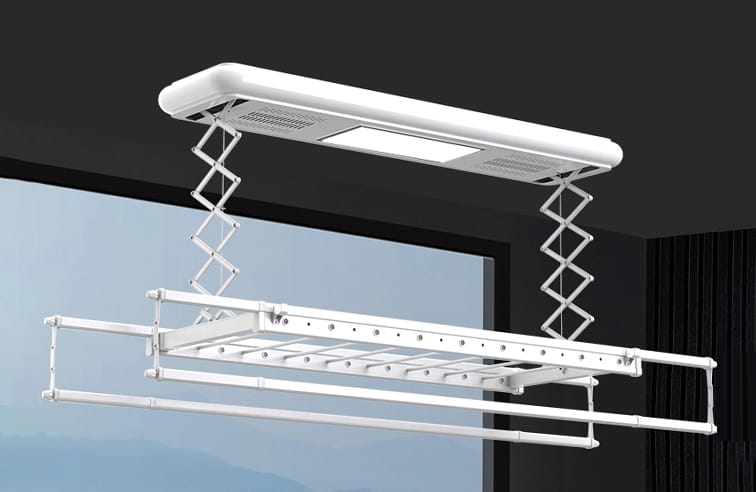
Many drying racks work perfectly until a bed sheet appears.
Large sheets and duvet covers need uninterrupted width if users want to avoid excessive folding. A rack designed mainly around short rails can have substantial total rail length while still providing very little useful space for one large textile.
This creates an important selection question: how frequently does the household air-dry bedding?
If the answer is regularly, maximum usable span becomes more important. If bedding is dried by another method, the rack can focus more heavily on clothing, towels, and smaller household textiles.
The best foldable drying rack does not need to handle every possible textile equally well. It needs to match the laundry the household actually produces.
Wet Clothes Should Determine the Stability Test
An empty folding rack tells very little about structural performance.
Once wet laundry is added, the load changes substantially. Towels retain water, jeans become heavier, and several garments placed onto one outer section can create uneven forces across the frame.
This is normal household use.
People rarely distribute laundry with perfect symmetry. They start with the nearest available rail and continue until that area is full. A rack should therefore remain predictable under reasonable uneven loading rather than depending on carefully balanced garments.
Leg position, frame stiffness, folding joints, and locking points all contribute to this behavior.
The strongest rack is not necessarily the heaviest. Good geometry and controlled connections can matter just as much as raw material quantity.
Folding Joints Influence the Whole Product
Every collapsible structure depends on moving connections.
When the rack is closed, these joints allow sections to rotate or collapse. Once the rack is open, the same areas need to contribute to a stable working structure.
This creates an important design challenge. A joint that is too loose may make the rack easy to fold but allow unwanted movement during drying. A connection that is excessively stiff may improve rigidity while making daily setup inconvenient.
Repeated use makes this balance more important.
A foldable drying rack may be opened and closed hundreds of times during its service life. Small changes at individual joints can gradually affect how the complete frame feels.
This is why long-term folding quality deserves attention alongside materials and overall dimensions.
Easy Opening Matters Because Laundry Is Already a Task
The rack should not add unnecessary setup to laundry day.
If users need to rotate several unclear locking sections, separate tangled rails, or move furniture just to open the frame, the space-saving advantage becomes less attractive.
The opening sequence should be understandable from the physical structure itself.
Users should know where to hold the rack, which parts move, and when the working configuration is secure. This is especially important in shared households where different people may use the same equipment.
Simple movement does not necessarily mean fewer components. It means the components work in an obvious sequence.
The Rack Should Not Need More Space to Open Than to Stand
Some folding structures follow a wide movement path during setup.
A side wing may swing far beyond its final position before settling into place, or legs may spread outward through an area larger than the final footprint. In a large room this may not matter, but in a compact balcony the rack can be impossible to deploy even though its final dimensions technically fit.
The opening path should therefore be considered as part of product size.
This is a particularly important detail for racks marketed for small homes. The structure should be capable of transforming within the type of restricted environment where it is intended to operate.
A Portable Rack Must Be Easy to Carry After It Folds
Foldability does not automatically create portability.
A closed rack may remain awkward if loose sections swing while it is being moved. Long protruding bars can catch against doors, while poor weight distribution makes a lightweight product surprisingly difficult to carry.
A good folded structure behaves like one controlled object.
It should stay reasonably compact while moving between the drying area and storage. Users should be able to identify a comfortable gripping area without accidentally opening the frame.
This matters most when the household regularly moves the rack between rooms or between indoor and balcony locations.
If the rack remains in one place most of the time, carrying behavior becomes less important and other characteristics may deserve greater priority.
Indoor and Balcony Use Create Different Priorities
A foldable rack used indoors needs to coexist with furniture, doors, cabinets, and normal household movement. Compact open dimensions can therefore matter just as much as folded dimensions.
Balcony use introduces different spatial relationships.
Windows may need to slide or swing, plants may occupy edges of the space, and the washing machine may already use part of the floor. A wide rack can quickly divide the balcony into separate areas that are difficult to move between.
The ideal product should be selected according to its main drying environment rather than assuming portability will automatically make it suitable everywhere.
A rack that is excellent beside a bedroom window may not be the right shape for a narrow balcony, even though both locations have enough total floor area.
Think About the Rack When It Is Fully Loaded
Product dimensions describe metal tubes and frames.
Laundry adds another layer of size.
Shirts extend outside the rail width. Towels hang below and may move outward. Dresses require much greater vertical clearance, while hangers can project beyond the edges of the frame.
This means the true drying footprint is larger than the empty product.
Before selecting a location, imagine the rack carrying the household’s normal largest load. Check doorways, cabinets, windows, furniture, and the space people use to walk past it.
A rack can fit physically and still be poorly suited to the room once clothing is added.
Multi-Tier Does Not Automatically Mean Better
Vertical levels can increase drying capacity without greatly increasing floor width, which makes multi-tier racks attractive for compact spaces.
However, vertical density can create practical conflicts.
Long garments on an upper level may block the section below. Towels can hang into lower rails, reducing accessibility. If the distance between levels is limited, users may be forced to reserve certain sections for small garments.
A multi-tier structure works best when each level has a clear purpose.
Small garments can use compact lower zones, while shirts and longer clothing remain where they have sufficient clearance.
The rack should create useful layers rather than simply maximize the number of horizontal bars.
A Foldable Drying Rack Should Fit the Household’s Largest Normal Load
Choosing according to the smallest laundry load can produce a rack that is constantly overcrowded.
Choosing according to an extremely rare load can create a structure that is unnecessarily large most of the time.
The best reference point is usually the largest normal load the household handles regularly.
For one person, that may be a week of clothing plus several towels. For a family, it may include children’s garments, adult clothing, and household textiles from several washing cycles. Another household may need additional capacity every weekend for bedding.
This creates a realistic target.
The rack should accommodate that load without requiring every garment to be compressed into the smallest possible spacing.
Foldable and Retractable Are Two Different Ways to Gain Flexibility
A conventional foldable rack changes shape through joints and moving sections. Retractable designs can change capacity through sliding or extending components.
Both approaches allow the drying structure to adapt, but they solve slightly different problems.
Folding is especially useful when the entire rack needs to become smaller for storage. Retraction can be more useful when the structure remains installed but the amount of available drying span needs to change.
For example, an expandable ceiling drying rack can provide additional hanging width for larger loads while reducing its span when that capacity is not required. In a home where floor storage is already limited, changing the size of an installed overhead system can sometimes be more practical than repeatedly storing a freestanding rack.
The choice depends on whether the household needs the drying equipment to change size, change position, or disappear from the room entirely.
Frequent Folding Changes What Quality Means
A rack that is opened once per month experiences a very different life from one that is opened after almost every washing cycle.
Frequent users should pay greater attention to the repeated interactions around the folding mechanism. The rack should open without requiring excessive force, remain stable after repeated cycles, and close without sections becoming difficult to align.
The user’s tolerance for inconvenience also changes with frequency.
An additional setup step may feel insignificant during occasional use but become frustrating when repeated several times each week.
This is why laundry frequency should influence product selection. High-use household equipment benefits from simplicity because every small advantage is multiplied through repetition.
Occasional Indoor Drying Favors Portability
Some households mainly dry clothing outdoors or through another system and use an indoor rack only during rainy weather.
For these users, permanent installation may provide little benefit.
A portable foldable drying rack can remain stored for long periods and appear only when conditions require it. The ability to move it near a suitable indoor location becomes more valuable than keeping a dedicated drying zone permanently available.
In this scenario, folded dimensions and carrying convenience deserve greater priority because storage may last much longer than active use.
The same product characteristics are not equally important for every household.
Frequent Laundry Can Change the Space-Saving Equation
At the other end of the spectrum, a household may air-dry clothing almost every day.
A portable rack that repeatedly moves between storage and the laundry area can eventually create its own routine of setup and carrying. In this situation, wall-mounted or overhead solutions may deserve consideration because they remain available without occupying the same floor space.
This does not make folding racks unsuitable for frequent laundry. It simply means portability provides less value if the rack always returns to exactly the same position.
A useful foldable drying rack selection guide should therefore be interpreted through the household’s real drying frequency, storage conditions, room layout, and garment mix rather than treating foldability as an automatic advantage.
The correct rack is the one whose flexibility solves a problem that actually occurs.
Folded Thickness Matters Most in Narrow Storage Gaps
When the intended storage area is behind a door, beside a wardrobe, or between an appliance and wall, folded thickness may become the most important dimension.
Height can remain relatively large because vertical space is available. Width may also be acceptable, but even a small increase in thickness can prevent the rack from fitting into the gap.
This is why the term “compact” needs context.
A rack that looks small overall may not fit a thin storage zone, while a tall product that folds nearly flat may disappear easily into the same location.
Storage efficiency depends on geometry rather than overall size alone.
A Utility Cupboard Creates a Different Requirement
Inside a cupboard, the situation reverses.
Depth may be relatively generous while height or width is limited by shelves. A tall flat rack that worked perfectly behind a door may not fit at all.
The storage location should therefore determine which folded dimension matters most.
This simple planning step can eliminate many unsuitable designs before other features are compared.
The rack should fit the home when it is inactive as naturally as it fits the laundry when active.
Foldable Racks Need a Clear Closing Routine
The final garment has dried and been removed. At that point, the rack should be easy to return to storage.
Closing should not require excessive force or a complicated sequence that users forget between laundry cycles. Moving sections should follow controlled paths, and common hand positions should remain clear of narrowing gaps around joints.
The objective is not necessarily to close the rack in the fewest possible seconds.
A predictable mechanism is more valuable than a fast but abrupt one because users repeat the action so often.
If closing is inconvenient, the rack may gradually stop being folded at all, which eliminates its main space-saving advantage.
Small Details Become Important After Several Months
Product selection naturally focuses on capacity and dimensions, but repeated household use tends to make smaller details more noticeable.
Do feet remain stable on the normal floor surface? Does the rack stay closed while being carried? Do rails remain aligned? Can one wing be used independently? Are garment positions still easy to reach after the outer sections are loaded?
These details shape long-term satisfaction because they appear every laundry day.
The best foldable drying rack is often not the one with the most dramatic specification. It is the one that produces the fewest small frustrations after the novelty has disappeared.
When a Foldable Drying Rack May Not Be the Best Choice
Foldability solves a specific problem: temporary drying equipment needs to become less intrusive after use.
If the rack will remain permanently open, this advantage is largely unused. A fixed structure may provide simpler support in a dedicated laundry area where there is no need to reclaim the space.
Similarly, if floor space is extremely limited but overhead space is available, a ceiling-mounted rack may preserve more usable room than a large folding floor structure.
The decision should therefore begin with what needs to change after laundry is dry.
Does the rack need to move into storage? Does it simply need to reduce its dimensions? Or does the household mainly need the drying area to move away from the floor?
Answering that question makes the correct product category much clearer.
A Practical Foldable Drying Rack Checklist
Before selecting a rack, imagine a complete normal laundry cycle and check several conditions together.
| Question | Why It Matters |
|---|---|
| Where will the rack stand while open? | Determines whether the room remains usable |
| Where will it be stored? | Defines the important folded dimensions |
| What is the largest normal laundry load? | Establishes realistic capacity |
| Are towels or bedding common? | Changes rail and span requirements |
| Does the rack need to move between rooms? | Determines the importance of portability |
| Can it be partly opened? | Helps smaller loads use less space |
| Are all rails accessible when loaded? | Separates real capacity from theoretical capacity |
| Does the open rack block windows or cabinets? | Reveals conflicts with normal room use |
| Is the folding sequence easy to repeat? | Influences whether users actually store it |
| Does the rack remain stable with uneven wet laundry? | Reflects realistic household behavior |
This type of evaluation usually reveals more than simply comparing maximum dimensions.
The Best Foldable Rack Changes with the Household
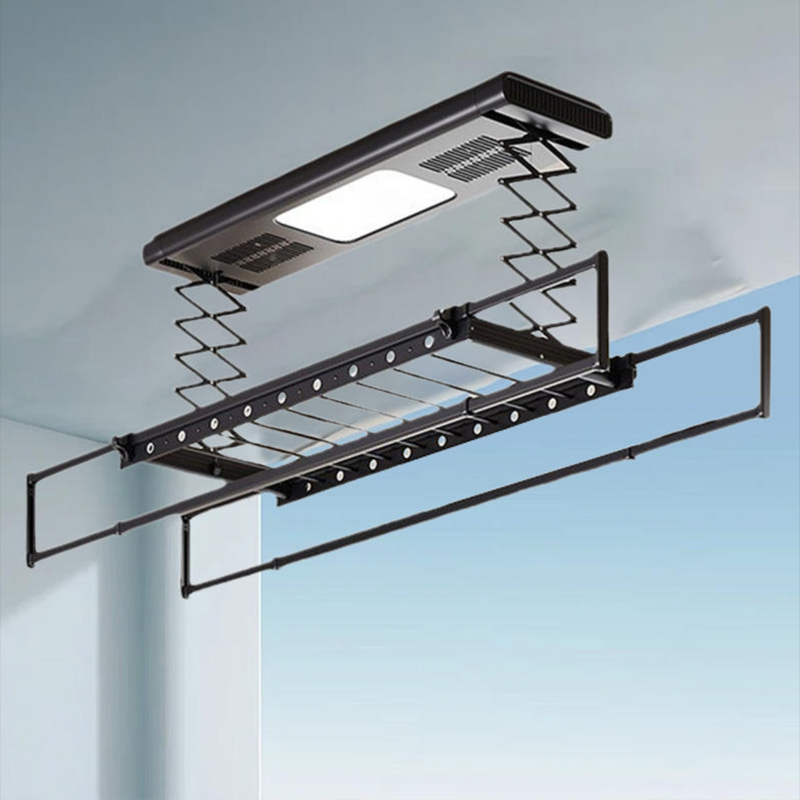
Laundry equipment works inside a routine that changes over time.
A single-person household may later need greater family capacity. A spare room may become a bedroom, removing a familiar drying location. A balcony may gain storage cabinets, reducing the floor area available for a wide rack.
Flexible drying equipment can adapt more easily to these changes when its design offers multiple useful configurations rather than only one maximum open state.
This is another reason to value practical adaptability over maximum rail count.
A rack that works well in several realistic configurations can remain useful even when the household around it changes.
Conclusion
A foldable drying rack is most useful when folding is treated as part of the complete laundry experience rather than simply a storage feature.
The rack needs to provide enough usable space for realistic garments when open, remain stable under wet and uneven loads, fit comfortably into the room throughout the drying period, and then reduce into a shape that has a genuine storage location.
The correct choice depends on the household’s clothing, room geometry, laundry frequency, bedding needs, movement between indoor and outdoor spaces, and the amount of floor area that can temporarily become a drying zone.
For occasional use, portability and compact storage may dominate the decision. For frequent family laundry, accessible capacity and partial expansion can become more important. In homes where floor storage is already scarce, an adjustable wall or overhead system may solve the same problem more effectively.
The best foldable drying rack is therefore not simply the rack that becomes smallest.
It is the rack that becomes the right size at the right time.
FAQ
What is a foldable drying rack?
A foldable drying rack is a laundry structure that can reduce its dimensions when not in use. Depending on the design, sections may rotate, collapse, retract, or fold together so the rack occupies less household space between drying cycles.
Is a foldable drying rack suitable for small apartments?
Yes, especially when the rack has a realistic storage location and its open footprint does not block important walkways, doors, cabinets, or appliances. Both open and folded dimensions should be checked before selection.
How should I choose the right size foldable drying rack?
Use the household’s largest normal laundry load as the main reference. Consider shirts, towels, jeans, children’s clothing, bedding, and other frequently dried textiles rather than relying only on a stated garment count.
Are multi-tier foldable drying racks better?
They can provide more drying area within a smaller floor footprint, but the spacing between levels needs to suit the garments being dried. Long clothing and towels should not make lower sections difficult to access.
What should I check before storing a foldable drying rack?
Check the complete folded height, width, and thickness against the intended storage area. The rack should also remain easy to carry and stay securely folded while being moved between the drying and storage locations.
Need Help Choosing the Right Foldable Drying Rack?
If you’re evaluating a foldable drying rack for an apartment, balcony, laundry room, family home, or other compact space, compare more than maximum capacity. Look at the open footprint, storage dimensions, laundry types, partial-use options, wet-load stability, and how frequently the rack will move between drying and storage. A practical drying solution should give your laundry enough room when it is needed without requiring the home to permanently accommodate an empty rack.





