
Table of Contents
Introduction
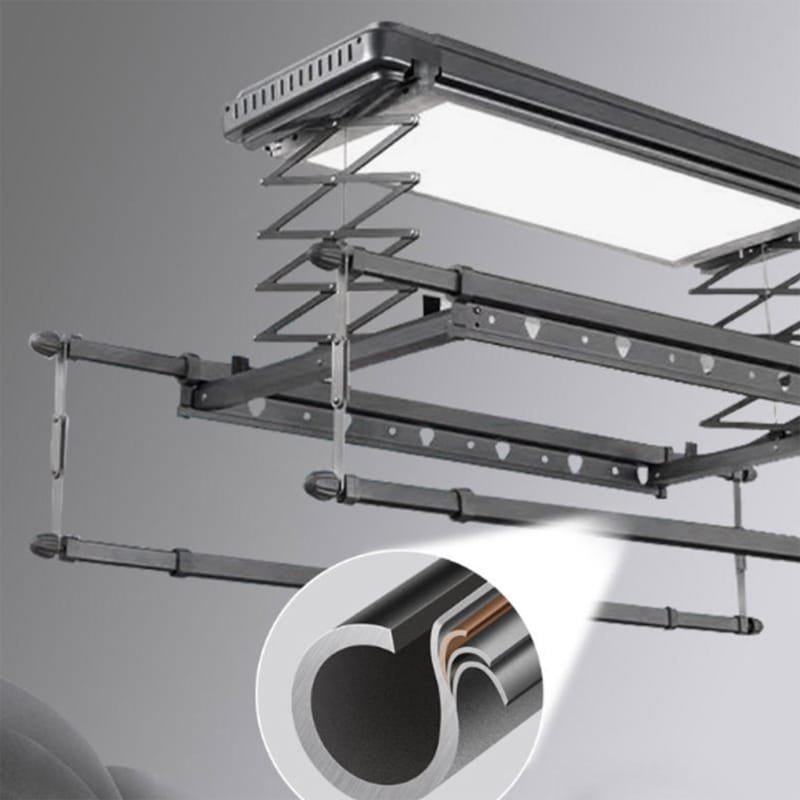
A drying rack can look compact in a product photo and still be frustrating to use every day. Some racks fold neatly but provide too little hanging area when opened. Others offer generous capacity yet become awkward objects that are difficult to store once the laundry is dry. The real value of a clothes drying folding rack lies somewhere between these two extremes.
For households with balconies, utility rooms, bathrooms, or limited indoor space, folding is not simply a convenient extra. It determines how easily the drying rack can coexist with normal life. A well-designed rack needs to open quickly, remain stable under wet laundry, provide enough separation between garments, and then reduce to a genuinely manageable size after use.
That makes folding drying racks an interesting product category from both a user and product-design perspective. The question is not simply whether the rack folds. The more useful question is: what happens to its capacity, stability, airflow, and storage footprint when it does?
A Folding Rack Only Saves Space If the Space Can Be Used Again
The phrase “space-saving” is used frequently for household laundry products, but not every folding design delivers the same result.
Consider a narrow apartment balcony. A floor rack may occupy almost the entire walking route when fully opened. Folding it after use solves that problem only if the collapsed rack can be placed against a wall, behind a door, inside a utility cabinet, or in another genuinely unobtrusive location.
If the folded structure remains wide, unstable, or difficult to carry, the household has simply exchanged one space problem for another.
This is why evaluating a clothes drying folding rack should involve two different dimensions: the working footprint and the stored footprint. The first determines how much room is needed during laundry; the second determines whether the room becomes useful again afterward.
The difference matters particularly in small apartments. A balcony that functions as a drying area in the morning might need to become a plant space, seating area, or clear walkway later in the day. Folding should enable that transition rather than merely make the drying rack slightly smaller.
The Geometry of the Fold Matters More Than It First Appears
There are several ways a drying rack can collapse, and each creates a different user experience.
Wing-style racks usually fold their side sections inward. Accordion structures collapse horizontally. Vertical tower racks may reduce their width while remaining relatively tall. Some ceiling-mounted systems take a different approach altogether: instead of folding onto the floor, they retract or move upward and release the occupied area below.
Traditional portable drying racks are often described as clothes horses or airers, and folding portable models are one of the established forms within this product family. A useful overview of the different types can be found in the discussion of the clothes horse.
These structural differences influence more than storage.
A folding joint changes how loads travel through the frame. An adjustable wing changes the position of wet garments. A telescopic rod changes hanging capacity without necessarily increasing the central footprint. Every moving component introduces another relationship between convenience and structural stability.
This is why two racks with similar dimensions can behave very differently once laundry is added.
Open Size Is Less Important Than Usable Drying Area
One of the easiest mistakes when comparing folding racks is focusing only on overall dimensions.
A large rack does not automatically provide more practical drying capacity. What matters is how much of the structure can actually hold garments without causing excessive overlap.
Imagine two racks with similar width. One has many closely spaced rods, while the other provides fewer rods with better separation. The first may appear to offer greater capacity, but dense clothing can restrict airflow and make the drying arrangement less practical.
Usable drying area depends on:
- spacing between rods;
- height differences between drying sections;
- whether long garments can hang without touching the floor;
- whether towels can be spread rather than folded over themselves;
- whether side wings remain stable when loaded;
- whether hangers can be used without interfering with adjacent clothing.
For this reason, product design should consider the type of laundry rather than simply maximizing the number of rails.
A household drying shirts and lightweight clothing has different needs from a family regularly handling towels, children’s clothing, bedding, and heavier garments.
The Best Folding Position Depends on What Is Being Dried
Laundry loads rarely look the same from one day to the next.
A small weekday wash may contain shirts, socks, and undergarments. The weekend load may include towels and trousers. Bedding introduces an entirely different problem because large fabrics require length and separation rather than many small hanging positions.
A useful clothes drying folding rack should accommodate this variation.
Adjustable wings can provide higher sections for dresses or trousers. Lower sections can handle smaller garments. Expandable rods can increase width for towels or bedding. Partial opening can be valuable when only a small amount of laundry needs drying.
This last point is often overlooked.
A folding rack does not always need to be either completely open or completely closed. If its structure allows stable intermediate positions, the user can match the drying area to the actual laundry load.
That can be more useful than simply maximizing total capacity.
Stability Becomes More Difficult as a Rack Becomes More Flexible
Every folding joint creates movement, and movement needs to be controlled.
A completely fixed frame can be designed around predictable load paths. A folding rack introduces hinges, locking points, telescopic components, or pivoting sections. These parts must remain easy to move while becoming sufficiently rigid once the rack is in use.
Wet laundry makes this challenge more significant because water adds considerable weight.
A towel that feels light when dry becomes substantially heavier after washing. If several heavy items are concentrated on one folding wing, the load may become uneven. Poorly balanced structures can twist, lean, or place unnecessary stress on the joints.
Good design therefore depends on more than strong metal.
The position of the legs, the angle of the support arms, the stiffness of the rails, the locking mechanism, and the distribution of the drying sections all influence stability.
A well-engineered folding rack should feel predictable. Users should not need to carefully balance every garment simply to keep the structure steady.
Folded Thickness Can Be More Valuable Than Folded Height
Storage space in real homes is rarely a large empty rectangle.
People store drying racks beside washing machines, behind doors, between cabinets, against balcony walls, or inside narrow utility spaces. In these situations, the thickness of the folded rack may matter more than its total length.
A tall but flat folded rack can often disappear against a wall. A short rack that remains bulky may be harder to store.
This changes the way a clothes drying folding rack should be evaluated.
Instead of asking only:
“How small does it become?”
It is more useful to ask:
“Where can it realistically go after it is folded?”
For apartment users, that question connects product dimensions with actual living patterns.
A folding system succeeds when storage requires little thought. If users repeatedly struggle to find somewhere to place it, the theoretical space-saving benefit loses much of its value.
Portable Folding Racks and Ceiling Systems Solve Different Problems
Folding does not necessarily mean portable.
Portable floor racks are valuable because they can move between rooms, follow sunlight, or be brought indoors when weather changes. They usually require no permanent installation and can be folded away after use.
Ceiling systems solve the same space problem from a different direction. Instead of removing the rack from the room, they move the drying structure out of the primary living zone.
YIHUI’s manual clothes drying rack range includes ceiling-operated solutions, demonstrating how space management can also be achieved through vertical movement rather than a conventional floor-folding frame.
Neither approach is universally better.
The choice depends on how the room is used.
| Household Situation | Folding Floor Rack | Ceiling / Retractable System |
|---|---|---|
| Rental apartment | Highly practical because installation is minimal | Depends on installation conditions |
| Very small balcony | May still occupy walking space while open | Keeps floor area largely available |
| Need to move laundry indoors and outdoors | Strong advantage | Usually fixed in one location |
| Frequent bedding drying | Depends heavily on rack width | Expandable rods can be useful |
| Need to remove equipment completely | Can be stored elsewhere | Remains installed overhead |
| Permanent laundry area | Convenient but requires storage after use | Can integrate more naturally into the room |
The best solution therefore begins with the room, not the product category.
Expandability Is Different from Folding, but the Two Ideas Work Well Together
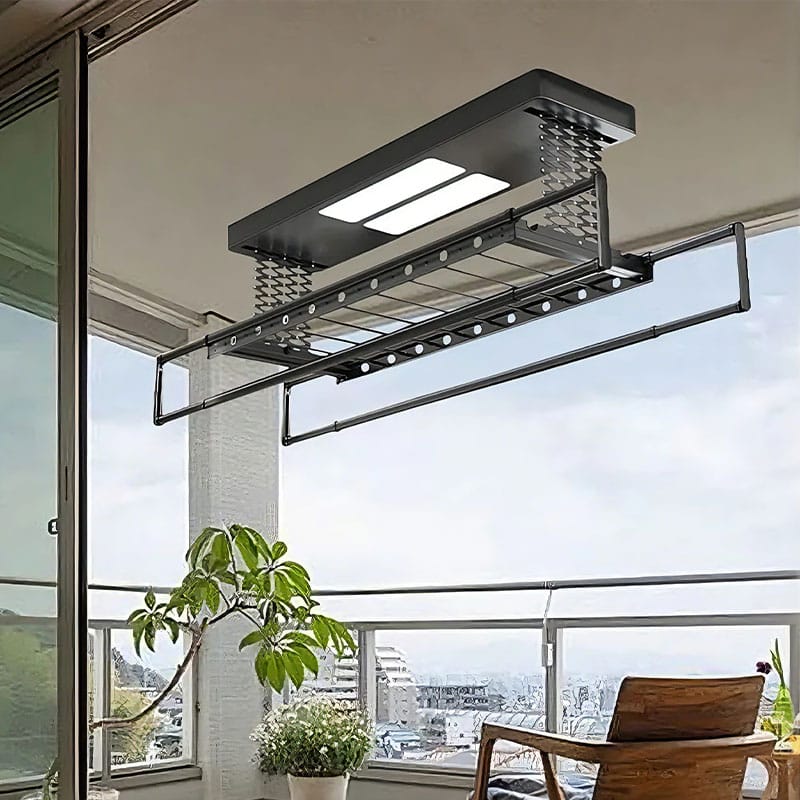
A folding structure reduces size after use. An expandable structure changes capacity during use.
These are related ideas, but they solve different problems.
For example, a drying system with telescopic rods can remain compact for an ordinary clothing load and extend when larger fabrics need more width. YIHUI’s Electric Ceiling Drying Rack 8828 uses retractable poles that extend outward to create additional drying space and return inward when that capacity is unnecessary.
The design principle is useful even beyond electric ceiling products.
Instead of making every drying rack permanently large enough for the household’s biggest laundry day, adaptable structures allow the product to change with the load.
This creates a more efficient relationship between capacity and space.
For future folding products, the most useful designs may therefore combine several types of movement: folding for storage, extension for capacity, and height adjustment for different garments.
Laundry Airflow Should Influence How the Rack Opens
Folding mechanisms are usually discussed as a storage feature, but they can also influence drying performance.
When a rack opens, it creates a three-dimensional arrangement of rods and garments. The spacing between those surfaces determines whether air can circulate around wet textiles.
If wings open too close to the central section, garments may overlap. If multiple levels are positioned directly above one another, dripping and restricted airflow can become more likely. If the structure creates sufficient vertical and horizontal separation, laundry can be arranged more effectively.
This means that the open position should not be treated simply as the maximum physical extension of the frame.
It should be designed as a drying environment.
Good geometry allows users to separate thick and thin garments, position towels where they have more exposed surface area, and avoid compressing clothing into dense rows.
A folding mechanism is therefore part of the drying system, not merely part of the storage system.
Small Garments Create a Different Design Challenge
Large drying rails receive most of the attention, but socks, underwear, baby clothes, and other small items can consume a surprising amount of rack space.
If every small garment occupies a full-length rod, the effective capacity of the rack falls quickly.
This is why some drying products incorporate clips, dedicated small-item sections, removable hanger bars, or multi-point hanging accessories.
The design challenge is to add this flexibility without turning the rack into a complicated collection of components.
For households with children, dedicated small-garment capacity can sometimes be more valuable than adding another large wing.
This illustrates a broader principle: useful capacity should be measured by the laundry a household actually dries, not simply by the number of rods shown in a product specification.
Outdoor Use Changes What “Convenient” Means
A rack that performs well in a laundry room may behave differently on a balcony.
Outdoor and semi-outdoor environments introduce wind, dust, direct sunlight, and changing humidity. Portability becomes useful because the rack can be repositioned, but the same lightweight construction that makes movement easy may reduce stability under windy conditions.
Surface condition also matters because the rack may repeatedly encounter moisture.
For users who move a folding rack between indoor and outdoor environments, handles, frame balance, smooth folding movement, and manageable weight can become as important as total drying capacity.
This again demonstrates why there is no single “best” folding rack design.
The ideal structure depends on how and where it will actually be used.
What Should Distributors Look at Beyond the Product Photo?
For distributors and private-label programs, foldable drying racks can appear deceptively simple. Many models look similar in photographs, making it tempting to compare them mainly by dimensions and appearance.
A more useful evaluation involves physically understanding the movement of the product.
How much force does opening require? Do the joints feel controlled or loose? Does the rack remain stable when only one side is loaded? Can it stand securely when partially opened? Is the folded structure easy to carry? Do components pinch fingers during closing? Can users understand the folding sequence without instructions?
Repeated movement is particularly important.
A folding rack may be opened and closed hundreds or thousands of times during its usable life. Hinges and locking components therefore deserve as much attention as the visible rails.
Surface finish, connection consistency, weld quality, and alignment also influence how the product feels during operation.
For this category, a premium user experience is often created by mechanical details that are difficult to communicate in a single image.
The Better Question Is Not “Does It Fold?”
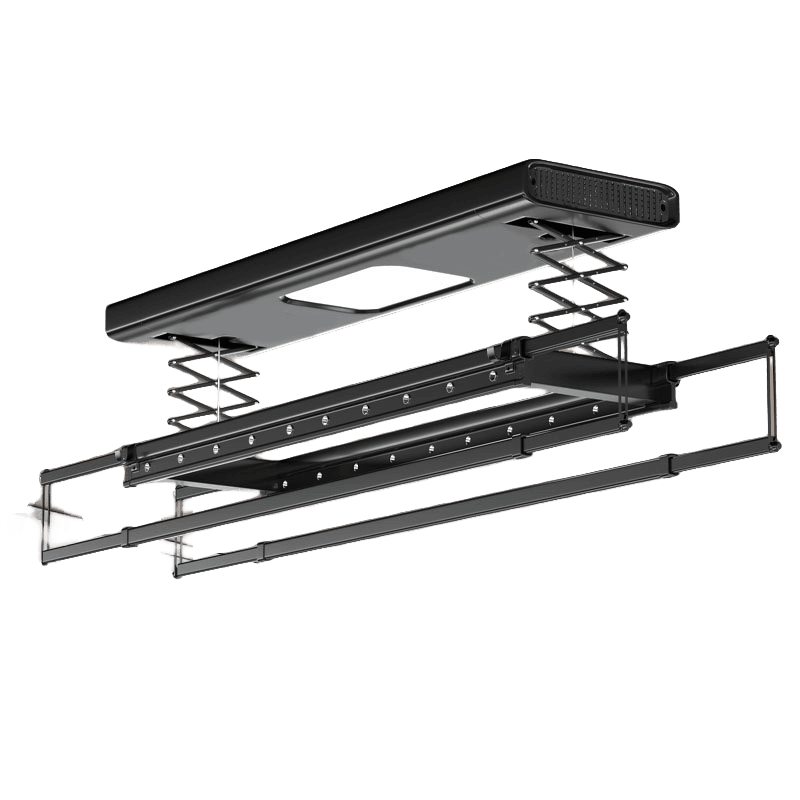
Almost every product described as folding will become smaller somehow.
That tells the user very little.
A better evaluation asks:
Does it fold quickly?
Does it remain stable when fully opened?
Can it operate at more than one size?
Does folding interfere with drying capacity?
Can the folded rack actually fit where the household intends to store it?
Does the open geometry allow reasonable garment separation?
Can different laundry types be arranged without fighting the structure?
These questions shift attention from the marketing label to the actual experience.
A clothes drying folding rack is successful when its moving structure makes everyday laundry easier rather than simply providing another mechanical feature.
Conclusion
The real advantage of a clothes drying folding rack is not that its frame can collapse. It is that the drying area can appear when needed and give the space back when the laundry is finished.
Achieving that balance requires thoughtful geometry, stable joints, practical rod spacing, manageable folded dimensions, and enough adaptability for different laundry loads.
Floor-standing folding racks remain useful because of their portability and simple storage. Ceiling and retractable systems offer another interpretation of space efficiency by moving drying equipment away from the floor rather than removing it from the room.
In both cases, the best design responds to real household behavior.
A rack that opens easily, holds laundry confidently, provides sensible airflow, and disappears naturally afterward delivers far more value than one that is merely described as foldable.
FAQ
What is a clothes drying folding rack?
A clothes drying folding rack is a drying structure that can be expanded for hanging laundry and collapsed into a smaller form when it is no longer required.
Is a larger folding rack always better?
No. Overall size should be considered together with usable rod spacing, stability, garment types, and the amount of storage space required after folding.
What makes a folding drying rack stable?
Frame geometry, support-leg placement, joint design, locking mechanisms, material stiffness, and balanced laundry distribution all contribute to stability.
Is a folding rack suitable for apartment balconies?
Yes, particularly when the folded dimensions fit the available storage area. Very narrow balconies may also benefit from ceiling-mounted or retractable drying systems that keep the floor clear.
Can folding drying racks handle bedding?
Some can, but the structure needs sufficient width and stable support. Expandable or telescopic drying sections can be particularly useful for towels, sheets, and larger fabrics.
Need Help Choosing the Right Clothes Drying Folding Rack?
If you’re evaluating clothes drying folding rack designs for different homes, balconies, or market requirements, our team can help you compare folding structures, usable drying capacity, storage dimensions, and application needs. Contact us today to discuss a drying solution that balances practical laundry space with convenient everyday storage.





