Table of Contents
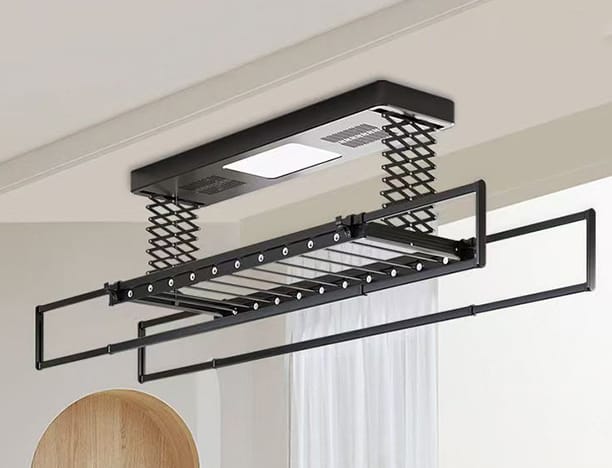
A carbon steel clothes drying rack should be selected by looking at the finished components and intended room conditions, rather than relying on the material name alone. The surface treatment, edges, fasteners and care instructions all affect the customer experience. YIHUI lists carbon steel for its manual ceiling products, while the ordered configuration still needs confirmation. This guide gives importers and dealers a practical way to review the coating and maintenance information for a carbon steel clothes drying rack before approving a sample.
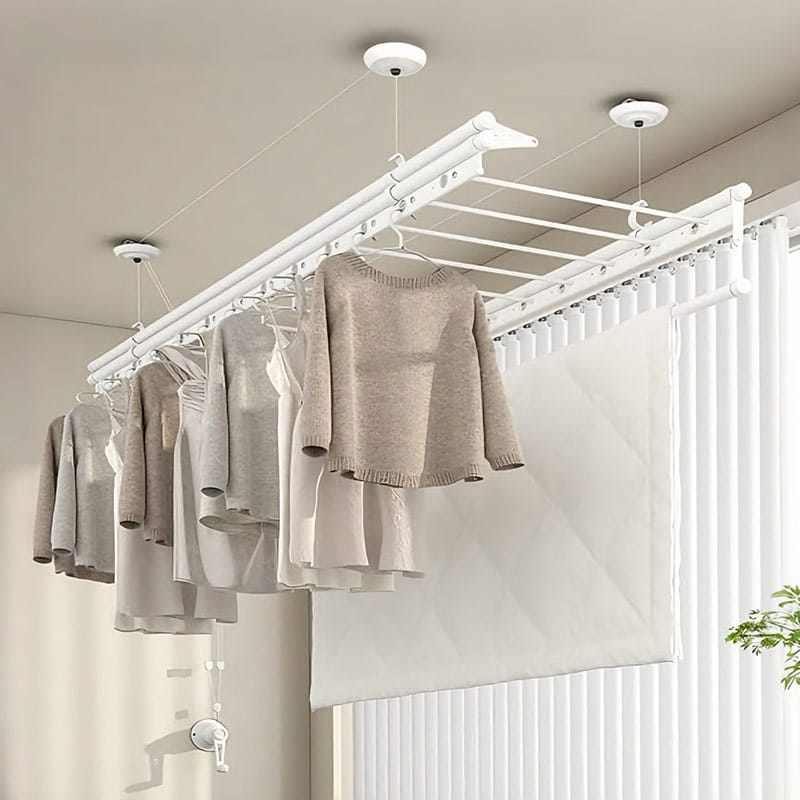
Confirm the carbon steel clothes drying rack materials
A product can contain different materials in its rails, brackets, cables, fasteners and handle. Ask for a component-level description rather than assuming that one metal name applies to the whole assembly. The quotation should identify the main load-carrying parts and the supplied finish. Keep decorative color names separate from the technical description of the surface treatment. A white appearance does not establish the coating process or thickness.
For a carbon steel clothes drying rack, connect the material description to the actual sample code and production specification. If the supplier offers several finishes, ask which one is being quoted for your market. A carbon steel clothes drying rack listing should not silently borrow a stainless-steel description from another model. Retain the approved specification and a reference sample where practical so future deliveries can be compared with the agreed product rather than a photograph alone.
Inspect the places wet garments can touch
Look at the full garment contact path, including the underside of rails, rail ends, junctions and any exposed fastener near fabric. Use ordinary handling and visual inspection within the supplier instructions. Check for visibly rough edges, loose caps, flakes or damaged areas that could catch fabric. Do not run destructive abrasion tests on a saleable product without an agreed test plan. A useful record names the location and includes a clear close photograph.
The carbon steel clothes drying rack sample should be examined in the configuration a customer receives, with the supplied end covers and fittings installed. Ask the supplier to explain any area that is intentionally uncoated or covered after assembly. A carbon steel clothes drying rack may look smooth from the front while a concealed edge remains relevant to fabric contact. Review those details before approving the finish for marketing photography or the first production order.
Separate appearance approval from durability evidence
An acceptable color match is a visual decision. Resistance to a particular exposure requires evidence appropriate to that exposure and the intended use. Ask what tests, if any, were performed, which components were tested and how the results relate to the supplied finish. A general certificate image without product identity or scope should not be used as proof that the ordered rack passed a specific test.
When comparing a carbon steel clothes drying rack with another material, keep the test basis consistent. Results from different methods or exposure conditions may not be directly comparable. Do not translate a laboratory result into a guaranteed number of years in every home. The carbon steel clothes drying rack purchasing file should preserve the actual test report where supplied, plus any limits in its scope. If no relevant report is available, describe the finish accurately and avoid unsupported claims about permanent corrosion resistance.
Describe the room exposure honestly
Ask where the equipment will be used: an enclosed utility room, a sheltered balcony or a position exposed to outdoor weather. These are different environments. The product instructions and supplier confirmation should establish which conditions are permitted. Do not assume outdoor suitability from a photograph taken near an open window. Nearby cleaning chemicals, persistent dampness and salt exposure may also be relevant questions for the supplier.
A carbon steel clothes drying rack selected for an ordinary indoor room should not automatically be offered for an exposed coastal balcony. Tell the supplier about the actual conditions and ask whether another configuration is more appropriate. A carbon steel clothes drying rack review should document those conditions in normal words so the sales team can match future inquiries to the approved use. Avoid vague terms such as all-weather when no defined exposure or supporting evidence has been agreed.
| Review area | Useful evidence | Claim to avoid without evidence |
|---|---|---|
| Material | Component-level supplier specification | Every part uses the same metal |
| Appearance | Approved finish sample and defect limits | A photo proves coating durability |
| Exposure | Written permitted-use conditions | Suitable for every outdoor location |
| Maintenance | Finish-specific cleaning guidance | No care is ever required |
Write a cleaning routine from the actual instructions
Ask for the recommended cleaning materials, frequency and restrictions for the finish. Keep the routine simple enough for an ordinary resident to follow. Remove laundry before cleaning and follow the product guidance for positioning and access. Do not recommend abrasive pads, strong cleaners or lubricants merely because they are common in other household maintenance tasks. A coating and a mechanical assembly can have different care requirements.
The carbon steel clothes drying rack care card should distinguish wiping accessible garment-contact surfaces from servicing cables, pulleys or fixing points. Those tasks may belong to different people. If the instructions do not explain how to address a stain or mark, ask the supplier before suggesting a treatment. A carbon steel clothes drying rack can be maintained more consistently when the seller provides specific approved steps instead of a generic promise that the product requires no maintenance.
Record transit damage before installation
Inspect the carton and product when received, using the agreed incoming-inspection process. Note whether a visible finish defect appears beside damaged packaging, a loose part or a contact point inside the carton. Keep the packaging until the supplier has reviewed a transport claim if that is part of the arrangement. Use photographs that show both the local defect and its position on the whole component.
For a carbon steel clothes drying rack, distinguish a scratch observed on arrival from wear reported after installation. That distinction helps determine what needs investigation without assigning blame prematurely. Do not conceal damage with an improvised touch-up method before the supplier has assessed it. The carbon steel clothes drying rack order should define how replacements or approved repairs are handled. Any repair method must preserve the intended function and finish requirements rather than merely improve the appearance for a photograph.
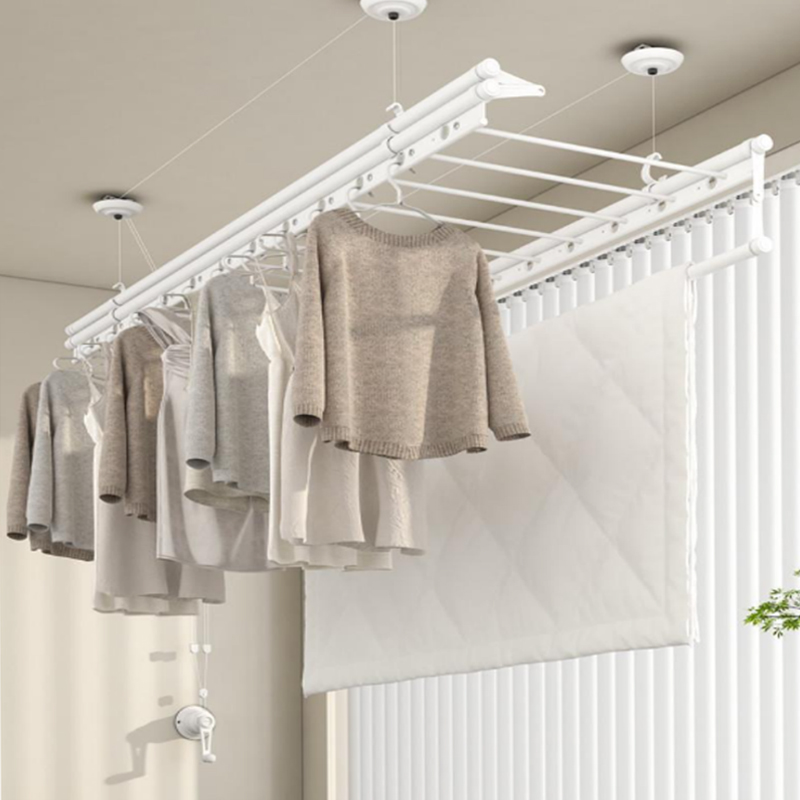
Create a useful report when a finish changes
Ask the user to report when the change was noticed, where it appears and what cleaning products were used. Request a photograph with enough surrounding detail to identify the component. Avoid asking residents to remove ceiling-mounted parts to obtain a better image. If the condition raises concern about safe use, route it through the supplier or installer and follow their instructions rather than diagnosing the structure from a customer message.
A carbon steel clothes drying rack service record should include the equipment identity and installation location. Several dark marks on different components may have different causes, so record observations separately. A carbon steel clothes drying rack distributor should not promise that every mark can be polished away or that every discoloration is structural damage. The useful next step is a documented assessment by the responsible supplier, using the actual finish and use conditions.
Approve a finish that matches the sales claim
The final approval should bring together the material description, finish specification, visual sample, permitted environment and care card. Check that product images show the supplied configuration. Explain optional colors as options rather than features included in every order. If a component changes during production, review whether the material description, garment-contact condition or cleaning guidance also needs to change.
Choose a carbon steel clothes drying rack using the complete product rather than a simple ranking of metal names. Another material may suit a different environment, while the approved coated configuration may meet the actual indoor brief. A carbon steel clothes drying rack sales page should give buyers enough information to ask the right questions about finish and care. Keep claims measurable and linked to evidence, and leave unsupported phrases such as rustproof for life out of the listing.
For general background on the product category, see the Wikipedia overview of drying-rack designs. Apply the current product instructions to the selected equipment.
Discuss your project with YIHUI
Share your intended installation environment, finish expectations and incoming-inspection needs with YIHUI. Ask for the current manual product material and care information, and review a sample before ordering. A carbon steel clothes drying rack inquiry is easier to evaluate when the required coating appearance, permitted exposure and support process are written together.
Review YIHUI Hand Ceiling Drying Racks and the YIHUI service options when preparing your inquiry.
Frequently asked questions
Is the whole rack made from carbon steel?
Not necessarily. Ask which components are covered by the material description. A carbon steel clothes drying rack can also contain other metals, covers or mechanical parts.
Does a painted finish prove corrosion performance?
No. Appearance and exposure performance are different questions. For a carbon steel clothes drying rack, request relevant evidence for the actual finish and intended conditions.
Can the rack be used on an exposed balcony?
Confirm the permitted environment with the supplier. A carbon steel clothes drying rack described for indoor use should not automatically be sold for outdoor weather exposure.
How should the rails be cleaned?
Use the approved cleaning routine for the supplied finish. Avoid inventing chemical or abrasive treatments for a carbon steel clothes drying rack when the instructions do not support them.
What helps with a coating complaint?
Provide the equipment identity, location of the change, photographs and relevant cleaning or exposure history. These details support assessment of the carbon steel clothes drying rack without speculative diagnosis.