
Table of Contents
Introduction
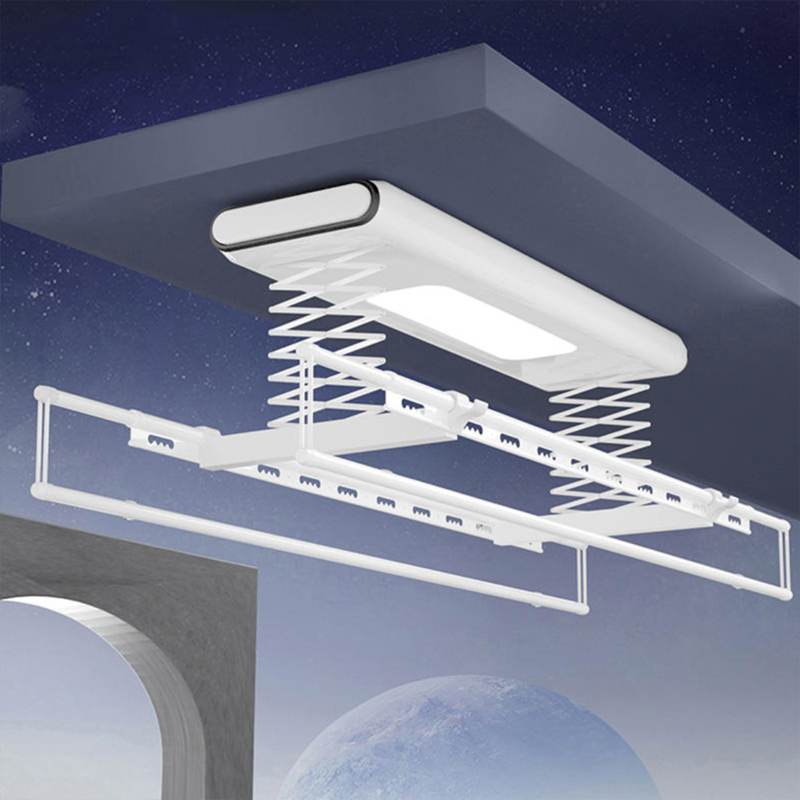
As residential spaces become more compact, homeowners are increasingly looking for ways to improve functionality without sacrificing comfort or interior aesthetics. Laundry areas, especially balconies and utility spaces, often require solutions that can provide sufficient drying capacity while keeping the surrounding area flexible. A ceiling electric drying rack addresses this challenge by using vertical space and automated lifting technology to create a more efficient drying environment.
Unlike traditional floor-standing racks or permanently fixed drying solutions, ceiling-mounted electric drying racks are installed above the living area and can be adjusted according to daily laundry requirements. When clothes need to be dried, the rack can be lowered for easy access. After use, it can be raised to free up valuable floor space.
This design approach makes ceiling electric drying racks particularly suitable for apartments, modern residential projects, and homes where space optimization is a priority. By combining intelligent control with practical installation, these systems represent an important development direction for modern laundry equipment.
Why Ceiling Installation Is Becoming a Preferred Choice for Drying Solutions
The biggest advantage of a ceiling electric drying rack comes from its ability to utilize unused vertical space. In many homes, balconies and laundry areas have limited floor space but sufficient overhead space that remains unused.
Traditional drying racks often occupy walking areas or interfere with other household activities. Ceiling-mounted systems solve this issue by moving the drying structure upward when it is not required.
This approach is especially valuable in urban apartments where every square meter needs to support multiple functions. A balcony can serve as both a laundry area and a leisure space because the drying rack can be adjusted according to usage needs.
The growing popularity of compact housing design has also encouraged architects and homeowners to consider products that combine practicality with better spatial organization.
How Does a Ceiling Electric Drying Rack Work?
A ceiling electric drying rack operates through a motorized lifting mechanism installed within a ceiling-mounted structure. The electric system controls the movement of the drying platform, allowing users to adjust its height through a control device.
During laundry activities, the rack can be lowered to a comfortable working position. After clothes are arranged, the system can lift the rack upward to improve airflow and keep the area below available for other purposes.
The main operating components usually include:
- Electric lifting motor
- Support frame
- Transmission mechanism
- Drying rods
- Control system
The relationship between the ceiling structure and lifting mechanism is critical. A well-designed system must maintain smooth movement while ensuring that the rack remains stable during operation.
For manufacturers, the engineering challenge lies in balancing lifting performance, structural strength, installation requirements, and long-term reliability.
Space-Saving Benefits of Ceiling Electric Drying Racks
Space efficiency is one of the main reasons why ceiling electric drying racks are becoming increasingly popular.
Because the system uses overhead space, it does not permanently occupy floors, walls, or furniture areas. This allows homeowners to maintain cleaner and more flexible interiors.
In small apartments, balconies often have limited room for multiple household functions. A ceiling electric drying rack provides a dedicated drying area while allowing the same space to be used for storage, relaxation, or other activities.
The adjustable height also improves convenience. Users can lower the rack when hanging clothes and raise it afterward, creating a more organized laundry routine.
This combination of flexibility and automation makes ceiling electric drying racks a suitable solution for modern residential environments.
Key Design Considerations for Ceiling Electric Drying Systems
The performance of a ceiling electric drying rack depends heavily on its structural design and installation quality.
The ceiling support system is one of the most important factors. Since the rack carries clothing loads and includes moving components, the installation structure must provide sufficient stability.
The lifting mechanism also requires careful engineering. Motors, transmission parts, and control systems need to work together smoothly to ensure reliable movement.
Another important factor is user experience. The control method should be simple and convenient, allowing users to operate the system without complicated procedures.
A successful ceiling electric drying rack design combines mechanical reliability with an appearance that integrates naturally into modern interiors.
Materials and Construction of Ceiling Electric Drying Racks
The materials used in ceiling electric drying racks influence durability, weight, and overall performance.
The supporting structure usually requires strong materials to maintain stability during lifting operations. Aluminum is often selected for components where lightweight performance is important, while other metal materials may be used for parts requiring additional strength.
Surface treatment also plays an important role because laundry environments often involve humidity. Proper finishing helps protect components and maintain product appearance over time.
Electrical components require additional protection and careful assembly. Motor systems, wiring, and control units need to be integrated properly to support safe operation.
Material selection and manufacturing precision together determine the reliability of the final product. More information about aluminum properties and applications can be found through aluminum.
Ceiling Electric Drying Rack Compared with Other Drying Solutions
Different drying systems provide different advantages depending on the available space and user requirements.
| Drying Solution | Installation Method | Main Advantages | Suitable Applications |
|---|---|---|---|
| Ceiling Electric Drying Rack | Ceiling-mounted with electric lifting | Maximizes vertical space and improves convenience | Apartments, balconies, modern homes |
| Wall Mounted Drying Rack | Wall installation | Stable and space-efficient | Laundry rooms |
| Folding Drying Rack | Portable structure | Easy storage and movement | Compact spaces |
| Floor Drying Rack | Floor placement | Simple operation | General household use |
Compared with floor-standing solutions, ceiling electric drying racks provide better space utilization. Compared with fixed wall racks, they offer greater flexibility through height adjustment.
For residential environments requiring automated laundry functions, electric clothes drying rack solutions provide integrated designs that combine lifting technology with practical drying functions.
Applications in Modern Residential Design
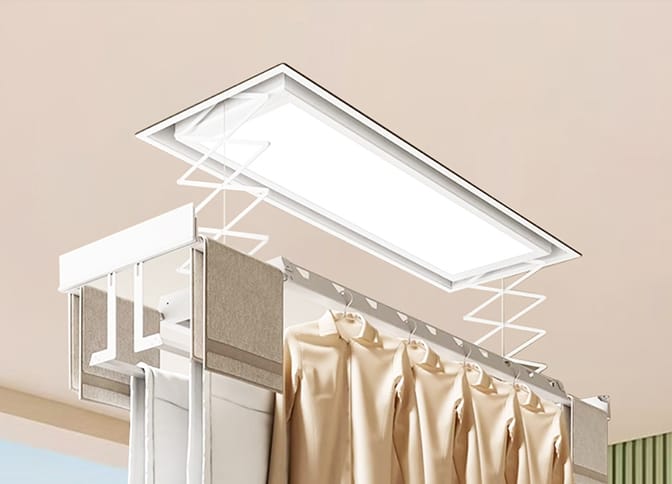
Ceiling electric drying racks are widely used in residential environments where efficient space management is important.
In apartment balconies, these systems help homeowners create functional laundry areas without reducing available living space. The ability to move the rack vertically allows balconies to serve multiple purposes.
In new residential developments, ceiling-mounted drying solutions can become part of modern home design by improving convenience and organization.
They are also suitable for households that prefer cleaner interior layouts. When the drying rack is raised, the visual impact is reduced, helping maintain a more comfortable living environment.
As residential design continues moving toward multifunctional spaces, ceiling electric drying racks provide a practical way to combine household needs with modern aesthetics.
Manufacturing and Quality Control Considerations
Producing a reliable ceiling electric drying rack requires precise coordination between mechanical manufacturing and electrical integration.
The production process includes structural component processing, motor installation, control system assembly, surface treatment, and functional testing.
Because the product operates through repeated lifting cycles, manufacturers need to evaluate movement stability, motor performance, connection strength, and safety functions.
Quality inspection should focus on:
- Lifting performance
- Structural balance
- Electrical reliability
- Control response
- Finished product appearance
A professional manufacturing process helps ensure that ceiling electric drying racks maintain stable performance during long-term residential use.
Choosing a Suitable Ceiling Electric Drying Rack Solution
Selecting a ceiling electric drying rack requires consideration of installation conditions, product functions, and household requirements.
The available ceiling structure should be evaluated before installation to ensure proper support. The size of the drying area, control method, and movement range should also match the intended application.
For different residential layouts, product design may need adjustments in dimensions, installation style, or functional configuration.
Modern laundry solutions increasingly focus on combining intelligent operation with efficient space management. Products such as smart laundry solutions reflect this trend by integrating practical household functions with modern design concepts.
Future Development of Ceiling Electric Drying Technology
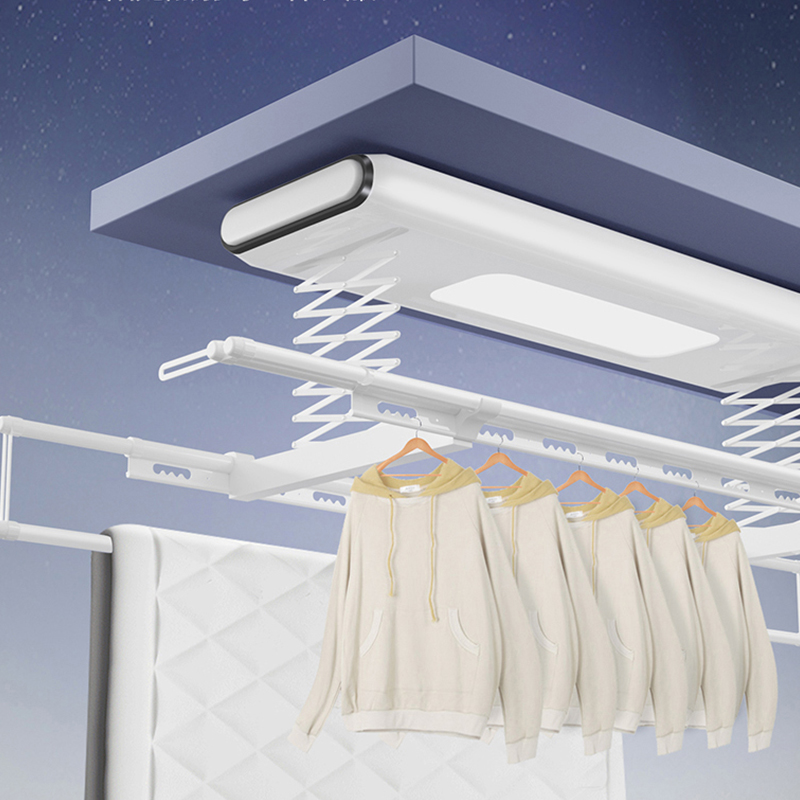
The future development of ceiling electric drying racks will continue to focus on smarter control, improved efficiency, and better integration with residential environments.
Manufacturers are exploring quieter motors, more compact lifting systems, and improved control interfaces to enhance user experience.
As smart homes become more common, ceiling-mounted drying systems may further integrate with connected household platforms and automated home management systems.
At the same time, space-saving design will remain a key focus as urban housing continues to prioritize efficient use of limited areas.
Conclusion
A ceiling electric drying rack provides an effective solution for modern homes that need both convenience and efficient space utilization. By using vertical space and automated lifting technology, these systems help create more flexible and organized laundry environments.
The success of a ceiling electric drying solution depends on structural design, installation quality, material selection, and reliable electrical systems. For manufacturers and suppliers, continuous improvement in engineering and production capabilities is essential to meeting the evolving needs of modern households.
As homes continue to become smarter and more multifunctional, ceiling electric drying racks will play an important role in future laundry solutions.
FAQ
What is a ceiling electric drying rack?
A ceiling electric drying rack is a laundry drying system installed on the ceiling that uses an electric mechanism to adjust the rack height automatically.
Why are ceiling-mounted drying racks suitable for apartments?
They make better use of vertical space and help keep balconies or laundry areas available for multiple purposes.
How does a ceiling electric drying rack move?
The system uses a motorized lifting mechanism controlled through an electric control system to raise and lower the drying platform.
What should be considered before installing a ceiling electric drying rack?
Important factors include ceiling support strength, installation space, rack size, and electrical requirements.
Can ceiling electric drying racks be customized?
Yes. Professional manufacturers can customize dimensions, functions, structures, and installation solutions according to different application needs.
Need Help Choosing the Right Ceiling Electric Drying Rack?
If you’re unsure which ceiling electric drying rack is the best fit for your home layout or project requirements, our experts are here to help. Contact us today for professional guidance and explore reliable drying solutions designed for modern residential spaces. Choose the right ceiling-mounted drying system to maximize space efficiency and create a smarter laundry environment.





