Table of Contents
Introduction
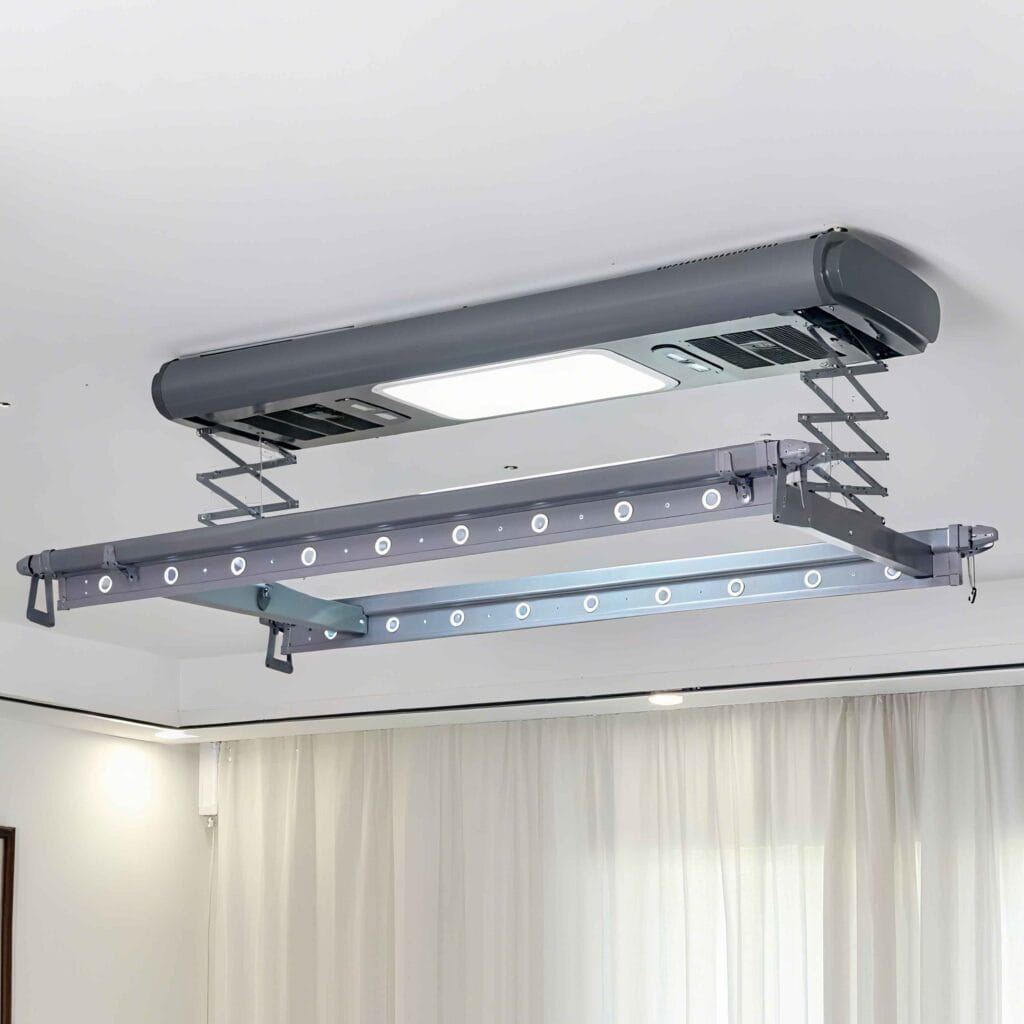
Laundry rack drying remains one of the simplest ways to handle garments that benefit from air drying, but the quality of the experience depends heavily on how the drying rack fits into the surrounding space. A rack that provides enough hanging length but blocks appliance doors, occupies the main walking route, or forces wet clothes too closely together may technically do its job while making the overall laundry routine less efficient.
A better approach is to treat the drying rack as part of the complete laundry layout rather than as temporary equipment added after everything else has been arranged. The position of the rack, its structural design, usable rail spacing, loading height, storage method, and relationship with ventilation all influence how practical it becomes during repeated use.
Different drying systems also use the room in different ways. Freestanding racks occupy floor area, wall-mounted systems use vertical surfaces, and ceiling-mounted designs move clothing into overhead space. Folding and retractable structures can reduce their footprint after use, while manual and electric lifting systems allow the drying position to change according to the stage of the laundry process.
For this reason, the question is not simply whether laundry rack drying works. The more useful question is which rack configuration provides enough practical drying capacity while interfering as little as possible with the rest of the room.
What Does Laundry Rack Drying Actually Need to Achieve?
The basic purpose of a drying rack is to support damp garments while moisture leaves the fabric, but good rack performance involves more than holding clothes above the floor. Wet garments need appropriate structural support, enough separation to avoid excessive overlap, and a position where surrounding air can move reasonably well around the fabric.
The rack also needs to fit naturally into the normal sequence of laundry tasks. Wet clothes are removed from the washing area, transferred to the drying zone, arranged on rails or hangers, left for a period of time, and then removed for folding or storage. If the rack creates an obstacle during several of these stages, its theoretical capacity becomes less important than the inconvenience it introduces.
This is why effective laundry rack drying should be evaluated through practical use rather than a single specification. The right system balances hanging space, accessibility, stability, room efficiency, and garment organization so that air drying becomes part of the routine rather than a temporary disruption.
Why Air Drying Still Has a Place in Modern Laundry Care
Air drying is part of the broader laundry process and can be useful for garments that users prefer to hang or lay out rather than place through another drying method. Shirts, trousers, towels, delicate garments, and larger textiles all create different drying requirements, which makes a flexible rack useful when one fixed arrangement cannot accommodate every load equally well.
The important point is that air drying should not be treated as simply placing as many wet garments as possible on a frame. Fabric thickness, garment shape, room conditions, and spacing all influence how the load behaves. A lightweight shirt can often hang efficiently from a hanger, while a thick towel benefits from greater exposed surface area and may occupy considerably more rail length.
A well-designed drying rack therefore provides enough flexibility to accommodate these differences. Rather than maximizing rail count alone, the structure should allow users to organize garments according to their actual size and drying characteristics.
Freestanding Laundry Rack Drying for Flexible Placement
Freestanding racks remain practical because they require no permanent wall or ceiling installation and can be moved when the room layout changes. For users who air-dry clothing occasionally or need to change the drying location, this flexibility can be more valuable than having a fixed drying zone.
The main compromise is floor space. Once the rack is open and loaded, it may remain in the same position for a substantial part of the laundry cycle. In a compact room, that can affect access to appliances, storage, baskets, or the main circulation path. The rack may fold into a very small package afterward, but its operating footprint is what determines whether it feels convenient during actual drying.
Freestanding laundry rack drying therefore works best where enough temporary floor space is available and the rack has a practical storage location after use. If the structure has to be moved repeatedly just to access other parts of the room, a wall-mounted or overhead solution may provide a more efficient layout.
Folding Racks and the Difference Between Storage Space and Working Space
Foldable racks are often selected because they become compact after use, but folded dimensions describe only one part of their performance. A rack that stores neatly can still occupy a surprisingly large area when its legs, side wings, or additional drying sections are fully extended.
The more meaningful measurement is the loaded footprint, which includes both the open rack and the garments hanging from it. Shirts on hangers can increase the effective width, towels hang below the rails, and bedding may spread across several sections at the same time. These dimensions determine whether people can still move naturally around the room while laundry is drying.
A useful foldable system should therefore perform well in both configurations. It should become compact enough to return useful space after drying, but it should also remain stable, accessible, and appropriately sized while carrying wet laundry. Storage convenience should complement drying performance rather than compensate for poor working dimensions.
Wall-Mounted Laundry Rack Drying for Clearer Floors
Wall-mounted racks transfer the drying function from the floor to a vertical surface. This can work particularly well where a suitable wall remains available near the washing area, because the rack can provide regular hanging capacity without requiring a portable frame to stand in the room.
Folding and retractable wall systems add another level of flexibility. The drying structure can extend outward when clothing needs to be arranged and return closer to the wall after use. This allows the same part of the room to perform different functions throughout the laundry cycle.
The main planning issue is extension clearance. A wall-mounted rack may look extremely compact when closed but project considerably farther into the room once opened and loaded. Cabinet doors, appliance access, shelving, and normal movement all need to remain functional in this operating position. A wall rack saves useful space only when the complete drying zone has been considered before installation.
Why Ceiling-Mounted Laundry Rack Drying Can Change the Layout
Ceiling-mounted drying takes a different approach by using overhead room volume rather than competing for either floor or working-height wall space. This can be particularly useful when appliances occupy much of the floor and cabinets or shelves already use the available walls.
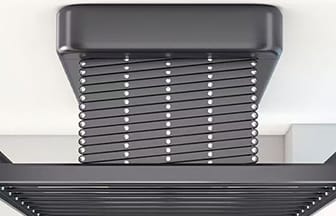
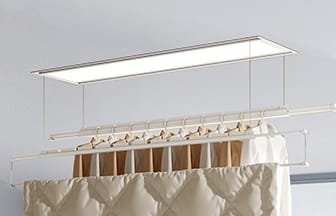
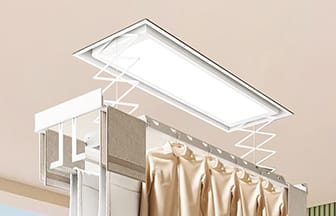
The main advantage comes from separating drying height from normal working height. A ceiling rack can keep clothing above the most active part of the room while leaving the area underneath available for other tasks. When the system can move vertically, the rack can also descend toward the user during loading and return upward afterward.
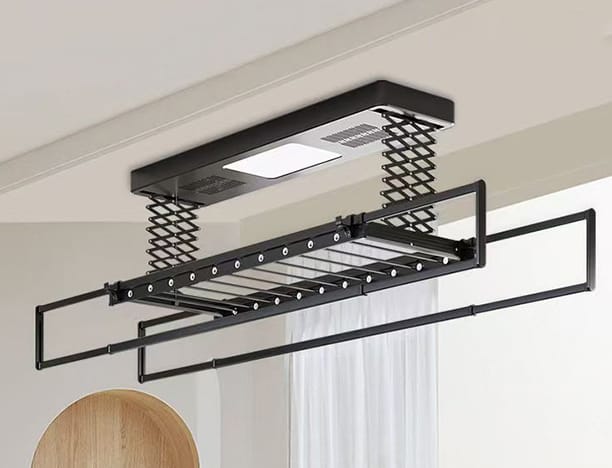
YIHUI’s automated clothes rack range applies this vertical-space principle through adjustable overhead drying structures. The value of this configuration is not simply that the rack is electric or ceiling mounted, but that it makes an otherwise difficult-to-reach part of the room usable for regular laundry drying.
Ceiling placement still requires careful measurement. The rack, its movement path, the longest garments, lighting, cabinets, and surrounding fixtures all need enough clearance. A successful overhead installation should make the room easier to use rather than simply transferring the drying obstruction from one location to another.
Comparing Laundry Rack Drying Systems
Different rack types become easier to compare when their effect on the room is considered alongside drying capacity. A portable rack provides location flexibility, while permanent wall and ceiling systems provide more predictable use of space. Folding, retractable, and lifting mechanisms add flexibility in different directions.
| Drying Rack Type | Main Space Used | Space During Drying | Storage Requirement | Accessibility | Best Fit |
|---|---|---|---|---|---|
| Freestanding rack | Floor | Moderate to high | Separate storage needed | Very easy | Flexible occasional drying |
| Foldable floor rack | Floor | Moderate to high | Compact after folding | Easy | Multipurpose spaces |
| Wall-mounted rack | Wall | Low floor impact | Remains installed | Easy | Open wall available |
| Retractable wall rack | Wall | Low floor impact | Compact against wall | Easy | Smaller laundry zones |
| Manual ceiling rack | Ceiling | Very low floor impact | Remains overhead | Adjustable | Frequent vertical drying |
| Electric ceiling rack | Ceiling | Very low floor impact | Remains overhead | Highly adjustable | Repeated daily use |
| Expandable overhead rack | Ceiling | Very low floor impact | Variable rail size | Adjustable | Changing laundry loads |
The best design is therefore determined by which part of the room can support drying with the least disruption. Floor racks remain sensible when portability matters, while wall systems are effective when vertical surfaces are available. Ceiling solutions become increasingly valuable as floor and wall space become more important for other functions.
Practical Drying Capacity Matters More Than Rail Count
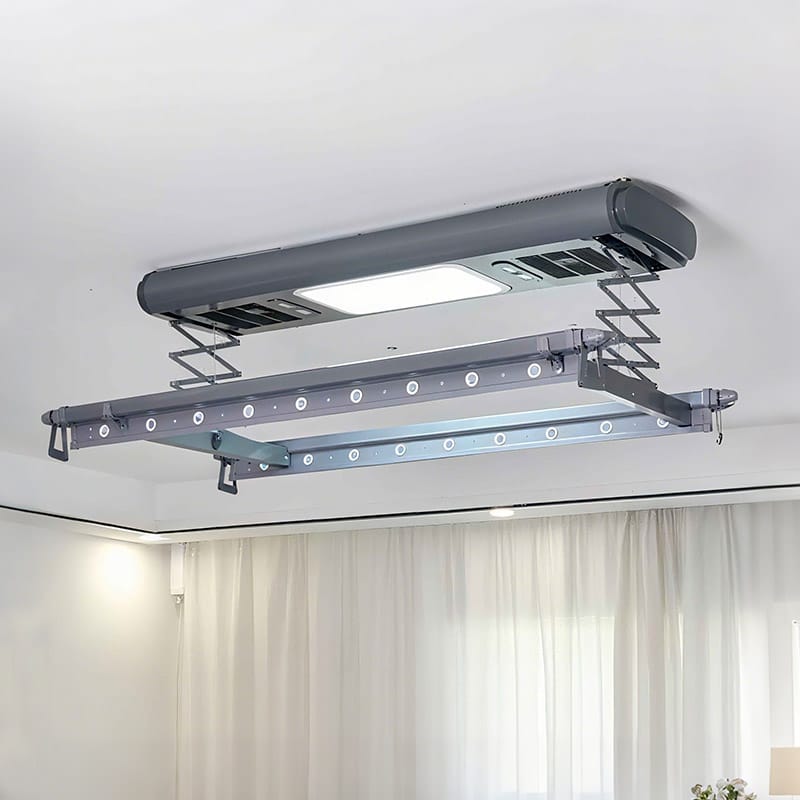
Laundry rack capacity can be misleading when it is reduced to the number of rails or the maximum amount of weight the structure can carry. Structural capacity is important because wet garments can place significant load on the frame, but practical drying capacity also depends on how comfortably those garments can be arranged.
A rack may be strong enough to support a large number of clothes while providing too little space for them to hang naturally. If thick towels, trousers, or bedding are pressed tightly together, the available rail length is being used to its theoretical maximum but not necessarily to its practical maximum. The better arrangement is the one that supports the load while still leaving enough room to organize different fabrics appropriately.
For this reason, users should think about the types of garments they normally air-dry. A large number of lightweight shirts may work efficiently with hanger positions, whereas towels and bedding benefit from longer and more open rails. A rack that allows users to vary spacing can often handle mixed laundry more effectively than a structure designed simply to provide the greatest possible number of bars.
How Rail Spacing Influences Laundry Rack Drying
Rail spacing affects both garment organization and the amount of fabric exposed to surrounding air. When wet textiles remain pressed together, parts of their surfaces have less opportunity to interact with moving air. This becomes more noticeable with thicker materials, folded sections, and layered garments.
The goal should not be to create unusually large gaps between every item, because lighter fabrics may dry comfortably with more moderate spacing. Instead, the rack should give users enough flexibility to adjust the arrangement according to what is being dried. Towels can be spread more widely, shirts can use hangers efficiently, and larger textiles can occupy additional rail length when necessary.
This is one reason expandable racks can be valuable. Extra rail length is not useful only because it allows more garments to be added. It can also create better separation for the same load, giving users greater control over how the available drying area is used.
Room Airflow Should Be Considered Before Rack Placement
Laundry rack drying depends not only on the rack but also on the environment around it. As moisture leaves wet fabric, it enters the surrounding air, so placing the rack where that air can circulate reasonably well contributes to a more practical drying setup.
A rack positioned tightly between cabinets or in a very enclosed part of the room can create a dense drying zone, particularly when the rails are fully loaded. More open placement gives users greater freedom to separate garments and prevents the structure from becoming visually and physically crowded.
This does not mean the rack needs a large empty room around it. The objective is simply to avoid unnecessary obstruction around the wet textiles. Room planning should therefore consider ventilation and garment spacing together rather than treating them as separate issues.
Materials and Structural Stability
Drying racks regularly encounter damp garments and changing loads, so materials and construction need to suit repeated use. Aluminum is commonly useful where relatively low component weight and corrosion resistance are important, particularly in folding, telescopic, or lifting structures. Stainless steel and appropriately treated steel can also provide effective structural solutions when the rest of the design matches the intended use.
The main frame material, however, is only one part of long-term performance. Hinges, brackets, fasteners, sliding connections, suspension components, and locking mechanisms all transfer load through the structure. A strong main rail cannot compensate for an unstable joint, which is why the complete assembly deserves more attention than a material label alone.
Moving racks introduce an additional consideration because repeated folding, extending, raising, or lowering places mechanical demands on connections. Good construction should allow the rack to operate smoothly while remaining stable in its normal working configuration after repeated use.
Why Wet-Laundry Weight Needs to Be Considered Differently
Laundry loads become structurally more demanding when fabrics contain water, and heavier items are rarely distributed perfectly across a rack. Towels may be grouped together, bedding may occupy one long section, and lighter garments may fill the remaining rails. This creates uneven loading even when the total weight remains within the intended capacity.
Freestanding racks need enough stability to resist unwanted movement when one side carries more weight. Wall-mounted systems transfer those forces through brackets and mounting points, while overhead racks rely on suspension components and secure ceiling installation. Telescopic sections also behave differently when wet garments are positioned farther from the central support.
Users can improve everyday stability by distributing heavier items across the available frame instead of concentrating them on one extension or side. This practical loading behavior is often more meaningful than treating maximum capacity as a single number without considering where the weight is located.
Manual Ceiling Racks for Simpler Vertical Drying
Manual ceiling systems provide a middle ground between fixed overhead rails and fully powered drying racks. They allow users to bring the drying structure toward a more accessible height before raising it again after garments have been arranged.
This can be particularly useful when ceiling space is available but fixed rails would be uncomfortable to reach. YIHUI’s manual clothes drying rack category uses this general concept to provide adjustable overhead drying without requiring the complete system to depend on motorized movement.
The practical advantage is that loading height and drying height no longer have to be identical. Users can handle wet clothing at a comfortable level while preserving greater clearance below the rack during the drying period. For frequent air drying, this can improve the workflow even when advanced electronic functions are unnecessary.
Electric Rack Drying and When Automation Adds Value
Electric lifting systems automate the vertical movement of an overhead rack, which can become useful when height adjustment occurs during nearly every laundry cycle. The rack can move downward for loading and upward afterward without requiring users to repeatedly operate a manual mechanism.
The value of automation should still be judged according to the problem it solves. If a fixed or manual rack is already easy to access and adjustment is infrequent, powered movement may provide limited additional benefit. If the drying rails need to move regularly between a high storage position and a lower loading position, electric control can make that process more consistent.
Structural quality remains more important than automation alone. Motorized movement should work together with stable suspension, appropriate mounting, reliable rails, and sensible load distribution. Technology improves a drying rack most effectively when it supports a sound mechanical design rather than replacing one.
Matching the Rack to Different Garments
Laundry rack drying becomes more efficient when the structure matches the textiles most frequently placed on it. Shirts can often use hangers, allowing several garments to be arranged along a rail without folding them over individual bars. Towels need more exposed surface area, while trousers and dresses require enough vertical clearance to hang without resting on surfaces below.
Bedding creates another challenge because its large surface area can occupy several sections of a rack at once. A wider or expandable structure may therefore provide more useful flexibility than a compact rack with a very high number of closely spaced bars.
Users who regularly dry mixed loads should prioritize adaptable rail arrangements. The ability to change garment spacing from one laundry cycle to another is often more useful than having a fixed configuration optimized for only one type of clothing.
How Laundry Frequency Changes the Best Rack Choice
A drying rack used occasionally has different requirements from one used almost every day. When air drying is infrequent, a foldable freestanding rack can be practical because its temporary floor occupation occurs only during certain laundry cycles. Once the garments are dry, the structure can be stored and the space completely recovered.
Frequent laundry rack drying increases the value of permanent space efficiency. If one load regularly replaces another, a portable rack may spend most of its time open, making its compact folded size much less relevant. A wall-mounted or ceiling-mounted system can provide a permanent drying location without requiring repeated setup and storage.
Frequency should therefore be considered before paying too much attention to individual features. The rack should simplify the pattern that occurs most often rather than perform exceptionally well in a storage condition that is rarely used.
Planning the Rack Around the Complete Laundry Workflow
A practical drying layout should make the transition from washing to hanging as direct as possible. The rack needs to be accessible from the normal washing area without blocking the appliance, while a basket should have somewhere to sit during loading. Once the garments are arranged, people should still be able to move through the room and reach frequently used storage.
The same logic applies after drying. Clothes should be easy to remove and transfer toward folding or storage without requiring the rack to be moved several times. This is particularly important with permanent wall or ceiling systems because their location becomes part of the long-term room layout.
Thinking through the entire sequence often reveals problems that product dimensions alone cannot show. A rack can fit perfectly into an empty section of a room while becoming inconvenient once people, baskets, garments, open doors, and other activities are added.
Common Laundry Rack Drying Mistakes
Choosing the largest rack that physically fits is one of the most common mistakes because additional dimensions do not always translate into useful capacity. An oversized floor rack may restrict movement, while an oversized ceiling system may interfere with cabinets or fixtures. A rack should be sized around normal laundry rather than an exceptional maximum load.
Another common issue is maximizing garment density. Filling every rail can make the rack appear efficient, but practical drying conditions may be better when thicker textiles have additional separation. Users should therefore treat available hanging space as flexible rather than something that must always be filled completely.
Construction can also be overlooked when attention is focused heavily on appearance or material. Hinges, fasteners, brackets, extension mechanisms, and mounting points deserve equal consideration because they control how the rack handles repeated movement and wet-laundry loads.
How to Choose the Right Laundry Rack Drying System
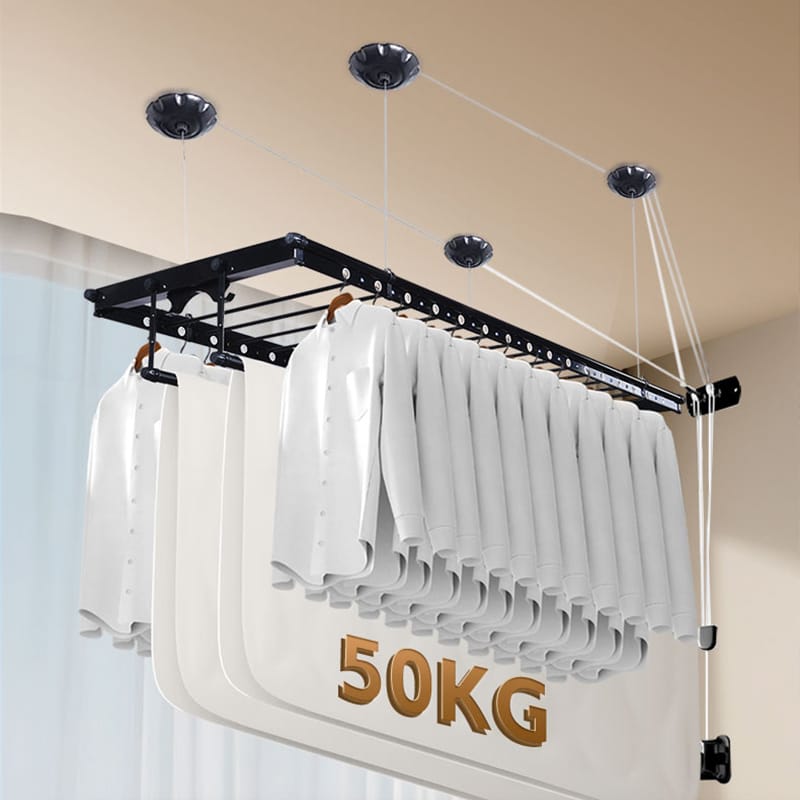
The selection process becomes easier when it begins with the available room rather than a preferred rack style. If temporary floor occupation causes little inconvenience, a freestanding rack may provide the simplest solution. When floors need to remain clear but a suitable wall is available, a folding or retractable wall rack can provide dedicated drying capacity without introducing another object into the walking area.
When both floor and wall areas already perform important functions, ceiling drying becomes more attractive. Manual or electric lifting can make overhead rails accessible while keeping the drying load away from the main working zone. This arrangement can be especially practical when air drying happens frequently and a permanent location simplifies the laundry routine.
Normal garment types and typical load size should then refine the decision. The right rack provides enough usable rail length, appropriate clearance, structural stability, and room for variable garment spacing without being unnecessarily oversized.
Conclusion
Laundry rack drying works best when the rack is selected according to the complete relationship between garments, available space, and the normal laundry routine. Freestanding racks provide excellent portability, folding designs recover space after use, wall-mounted systems preserve floors, and ceiling racks use vertical room volume that may otherwise remain underused.
The effectiveness of each option depends on more than capacity alone. Rail spacing affects how clothing can be organized, structural design influences stability under wet loads, and rack placement determines whether people can continue using appliances and storage comfortably while garments are drying.
Frequency also changes the ideal solution. Occasional air drying can favor portable structures, while frequent use makes permanent wall or ceiling installations more valuable. Adjustable systems add another level of flexibility by allowing capacity or working height to change according to the load.
A successful laundry rack drying setup should therefore feel integrated into the room. It should provide enough drying space when wet clothing needs it while creating as little interference as possible with everything else that happens around the laundry area.
FAQ
Is laundry rack drying suitable for everyday clothes?
Yes. Laundry rack drying can be used for many everyday garments when the rack provides enough support and appropriate spacing. Shirts, trousers, towels, and other textiles may require different rail arrangements, so practical capacity depends on garment type rather than simply the number of available drying bars.
Which type of rack is best for laundry rack drying in a small space?
Wall-mounted, retractable, and ceiling-mounted racks are often practical where floor space needs to remain available. Foldable floor racks can also work when temporary floor area is available. The best option depends on wall clearance, ceiling height, laundry frequency, garment size, and the room’s normal circulation route.
How much space should I leave between clothes on a drying rack?
There is no single spacing that works for every garment because fabric thickness and shape vary. Lightweight shirts can generally be arranged closer together than towels, denim, or bedding. The goal is to avoid unnecessary contact between damp surfaces and use available rail length to maintain reasonable airflow around the load.
Is a ceiling rack better for frequent laundry drying?
A ceiling rack can be particularly useful for frequent air drying when floor and wall space are needed for other purposes. Manual or electric lifting systems can lower the rails for loading and raise them during drying. Whether it is the best option depends on ceiling conditions, garment clearance, installation, and normal laundry volume.
What should I check before choosing a laundry drying rack?
Consider the rack’s fully loaded footprint, usable rail length, structural stability, garment clearance, material construction, mounting requirements, and normal laundry load. Also evaluate how the rack affects appliance access, cabinets, walking routes, ventilation, and storage so that drying does not make the surrounding room harder to use.