Table of Contents
Introduction
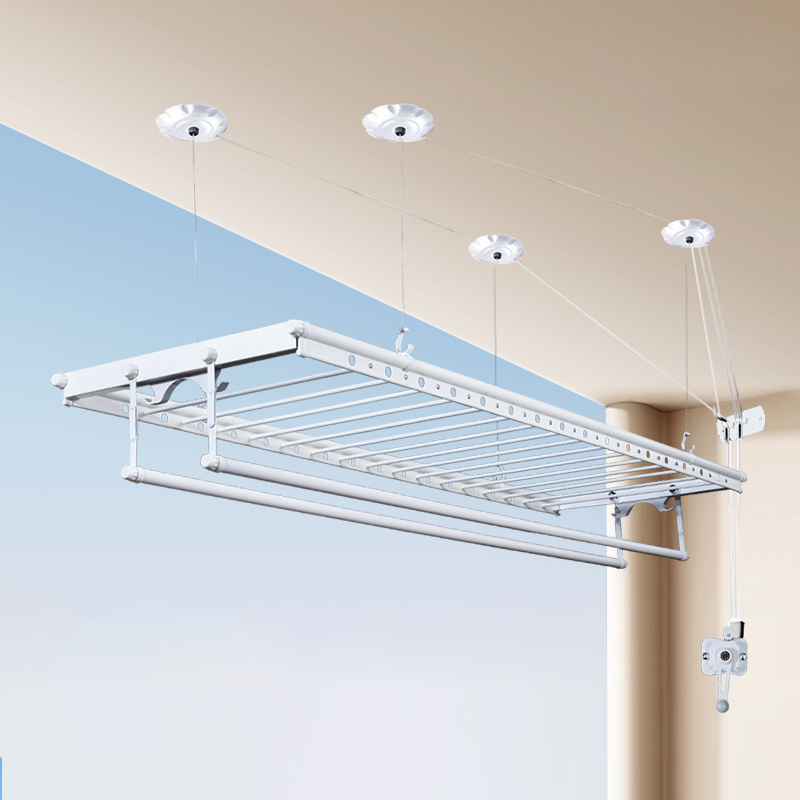
A drying rack does not need to occupy the floor to provide useful laundry capacity. In many laundry spaces, the ceiling represents one of the least-used surfaces in the room, while floor and wall areas are already shared by appliances, cabinets, baskets, shelves, and working surfaces. A ceiling mounted clothes drying rack changes this arrangement by moving wet laundry into the vertical space above the normal working zone.
The main advantage is not simply that the rack hangs overhead. A well-designed ceiling system can separate the height used for loading clothes from the height used while they are drying. Manual lifting mechanisms can bring the rails closer to the user, while electric systems can lower and raise the drying frame with less physical effort. Retractable rails can also increase hanging capacity only when additional space is required.
This makes ceiling drying particularly relevant when the goal is to improve the complete laundry workflow rather than simply add more hanging bars. The rack needs to fit the ceiling structure, remain accessible, provide appropriate garment spacing, support normal wet-laundry loads, and avoid interfering with cabinets, lighting, doors, or other equipment.
The following six benefits explain why ceiling-mounted drying has become an increasingly practical solution and, more importantly, what you should examine before deciding whether this type of rack fits your laundry space.
1. A Ceiling Mounted Clothes Drying Rack Uses Space That Often Goes Unused
The strongest advantage of a ceiling mounted clothes drying rack is its ability to create drying capacity without permanently sacrificing useful floor area. Traditional freestanding racks need a clear footprint whenever they are open, which can become inconvenient in a room where users also need to reach appliances, move baskets, open cabinets, and sort clothing.
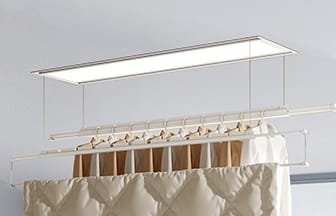
Ceiling drying approaches the same problem vertically. Wet garments occupy the upper part of the room while the floor underneath can remain available for other activities, provided the rack is installed at an appropriate height. This principle is similar to the traditional overhead clothes airer, but modern systems can combine suspended rails with lifting mechanisms, adjustable structures, and more flexible drying layouts.
The important point is that overhead installation should improve usable space rather than simply move an obstruction upward. A rack placed directly above frequently opened cabinets or positioned where long garments touch a work surface may still interfere with the room. For this reason, ceiling drying works best when the complete loaded area is considered during planning, including the rack, hanging clothes, vertical clearance, and nearby fixtures.
2. Adjustable Height Can Improve the Laundry Workflow
A fixed rack creates a compromise between accessibility and space clearance. If the rails are installed low enough to reach comfortably, they may remain in the main working area even while clothes are drying. If they are installed high enough to stay out of the way, repeatedly loading wet garments can become uncomfortable.
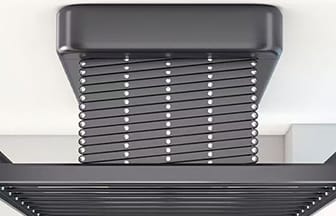
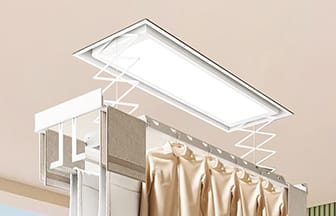
A height-adjustable ceiling mounted clothes drying rack solves this conflict by allowing the drying surface to occupy different positions during different stages of the laundry cycle. The rails can remain lower while shirts, towels, trousers, and other garments are being arranged, then move upward once loading is complete. This allows the rack to be accessible when interaction is required and less intrusive during the much longer drying period.
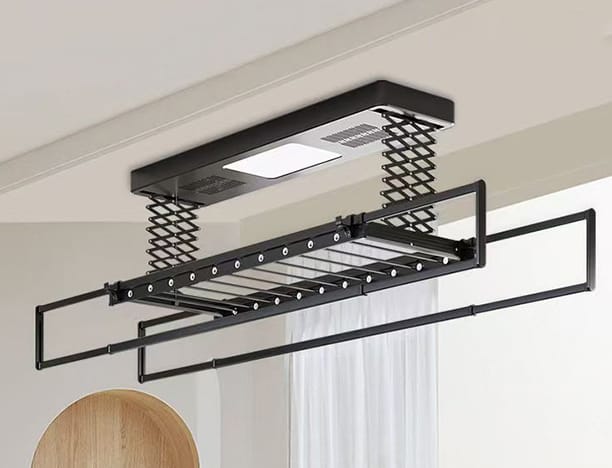
YIHUI’s ceiling clothes drying rack uses motorized lifting together with operational protection functions, illustrating how vertical adjustment can be incorporated into an overhead drying structure. For frequent laundry routines, this change in working height can matter more than simply increasing the number of drying rails.
When comparing adjustable systems, the lowered position deserves as much attention as the raised position. The lowest height should be comfortable for normal loading, while the highest position should provide enough clearance for people, furniture, appliances, and the longest garments normally placed on the rack.
3. Ceiling Drying Can Preserve Walls for Storage and Organization
Floor space is not the only area under pressure in a laundry room. Wall space is often equally valuable because cabinets, shelving, hooks, worktops, switches, windows, and doors all need somewhere to go. Installing a wall-mounted drying rack may solve the floor-space problem while reducing the amount of wall area available for storage.
A ceiling mounted clothes drying rack avoids much of this competition. Because the drying structure is supported overhead, the walls can remain available for cabinets or other organizational features. This can be particularly useful in a compact laundry layout where vertical storage is already important.
The benefit becomes clearer when you think of the room as a three-dimensional system. The floor supports movement and appliances, walls support storage and access, and the ceiling can provide the drying zone. Dividing these functions between different surfaces can make a small room more efficient without requiring every individual feature to become smaller.
This approach does require careful ceiling planning. Lighting, ventilation, structural features, and the movement path of an adjustable rack all need sufficient clearance. The ceiling should therefore be treated as functional space rather than simply an empty surface.
How Ceiling Mounted, Wall-Mounted, and Floor Racks Compare
Choosing a rack according to installation location is often more useful than comparing products only by capacity. Floor, wall, and ceiling systems each make different demands on the room, so the best design depends on which surface can be used with the least disruption.
| Drying Rack Type | Main Space Used | Floor Interference | Accessibility | Installation | Strongest Use Case |
|---|---|---|---|---|---|
| Ceiling mounted | Overhead space | Very low | High with lifting system | Permanent | Limited floor and wall space |
| Wall mounted | Vertical wall area | Low | Usually convenient | Permanent | Clear unused wall available |
| Freestanding | Floor area | High during drying | Very convenient | None | Flexible temporary placement |
| Foldable floor rack | Floor during use | Moderate to high | Convenient | None | Occasional air drying |
| Electric ceiling rack | Overhead space | Very low | Adjustable | Permanent | Frequent drying and height control |
| Retractable ceiling rack | Ceiling plus expandable rails | Very low | Depends on mechanism | Permanent | Variable laundry loads |
The table shows why ceiling installation is not automatically the correct answer. A freestanding rack may still be preferable when portability is more important than permanent space efficiency, while a wall-mounted system can work extremely well when an unused wall is already available. Ceiling systems become particularly valuable when the floor needs to stay open and walls already perform important storage or organizational functions.
4. Expandable Rails Can Create Capacity Without Permanent Bulk
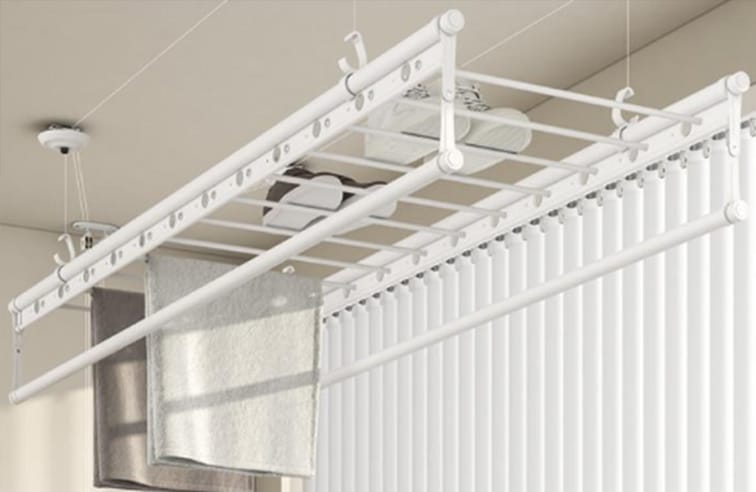
Laundry loads are rarely identical. One cycle may contain lightweight shirts, while another includes towels, trousers, bedding, or larger textiles. Selecting a permanently oversized drying rack for the largest possible load can leave unnecessary structure occupying the room during normal use.
Expandable ceiling systems provide another option. Telescopic or retractable rails allow users to increase drying length when larger loads require it and return to a more compact configuration afterward. YIHUI’s electric ceiling drying rack uses retractable poles to provide variable hanging space, demonstrating how capacity can change without requiring the complete installation to remain at its maximum dimensions.
This flexibility is useful because practical drying capacity is not simply a question of how many garments can physically fit. A rack also needs enough space for users to separate thicker fabrics and arrange different garment types appropriately. Additional rail length can therefore be used to improve spacing rather than merely increase the number of clothes packed onto the structure.
The mechanical quality of expandable sections still matters. A telescopic rail experiences different forces when fully extended, especially when wet laundry is placed farther from the main supporting structure. Connections should therefore remain stable throughout the intended extension range rather than feeling secure only when retracted.
5. Better Rail Planning Can Improve Practical Drying Capacity
Drying rack capacity is often reduced to a load rating or a number of available bars, but those measurements describe only part of everyday performance. Structural capacity tells you how much weight the rack system is designed to support, while hanging capacity reflects the rail length or number of available positions. Practical drying capacity goes further by considering how much wet laundry can actually be arranged while maintaining useful space between garments.
This distinction matters because a ceiling mounted clothes drying rack may be structurally capable of supporting a large load while still performing poorly if every garment has to be packed closely together. Thick towels, denim, layered clothing, and bedding generally need more exposed space than lightweight shirts. When damp surfaces remain pressed together, less air can move around them, so maximizing the number of items on the rack can work against effective air drying.
A more useful rack layout allows users to adjust garment spacing according to the load. Shirts may be placed relatively close together on hangers, while larger textiles can occupy longer sections of rail. For everyday use, this flexibility is often more important than maximizing the number of fixed hanging positions.
When comparing products, it is therefore worth looking beyond total rail count. Consider whether those rails can accommodate the types of garments you actually dry and whether the rack provides enough vertical clearance for longer items without allowing them to bunch against surfaces below.
Why Airflow Still Matters With Ceiling-Mounted Drying
Ceiling installation can make drying more space-efficient, but it does not change the basic process by which moisture leaves clothing. Water still needs to evaporate from damp fabric into the surrounding air, which means garment spacing and room ventilation remain important regardless of where the rack is mounted.
A ceiling rack should be positioned where clothes have enough surrounding space for air movement. Installing the structure tightly between tall storage units or placing every garment in direct contact with the next can reduce the exposed fabric area. This is particularly relevant when towels, trousers, or bedding are being dried because thicker textiles can retain moisture for longer than lighter garments.
The relationship between rack capacity and airflow should therefore be considered during normal loading. If an expandable rack provides additional rail length, that space does not always need to be filled with more clothing. It can also be used to spread the existing load more effectively. This creates a better balance between the structural capacity of the rack and the practical conditions required for air drying.
Ventilation within the room is equally important because evaporated moisture enters the surrounding air. A good drying layout should therefore combine an efficient rack position with appropriate room airflow rather than expecting the ceiling installation itself to determine drying performance.
6. Permanent Ceiling Installation Can Simplify Repeated Laundry Routines
Portable drying racks are flexible, but flexibility also creates repeated setup. A rack has to be taken out, unfolded, positioned, loaded, emptied, folded again, and returned to storage. For occasional air drying, this process may be entirely reasonable. When laundry is air-dried frequently, however, a permanent drying zone can reduce the number of steps involved.
A ceiling mounted clothes drying rack remains installed in a predictable location. The user does not need to find temporary floor space for every load or determine where the rack will be stored afterward. With a lifting system, the structure can remain overhead between interactions and move toward the user only when clothing needs to be loaded or removed.
This can make the laundry workflow more consistent. Wet garments move from the washing area to a known drying position, the rack rises during drying, and dry garments return to a convenient height for removal. The room does not need to be reorganized around temporary equipment every time clothing is washed.
The value of permanent installation increases with frequency of use. If air drying happens only occasionally, a portable rack may still be more practical. If it is part of the normal laundry routine, however, a dedicated ceiling system can become part of the room’s layout rather than an object that repeatedly has to be accommodated.
Materials and Construction Quality Matter in Suspended Systems
A ceiling mounted clothes drying rack is not simply a collection of horizontal rails. It is a suspended structure in which wet-laundry loads travel through several components before reaching the ceiling. The rails carry garments, joints connect the frame, suspension components support movement, and mounting hardware transfers the complete load into the building structure.
This makes construction quality particularly important. Aluminum can be useful in adjustable systems because its relatively low weight and corrosion resistance are suited to components that move repeatedly. Other metals may be used where different structural characteristics are required, but the main material alone does not determine overall durability.
Connection points deserve close attention because they often experience both movement and load. A strong rail connected through an unstable joint does not create a stable rack, and a well-designed frame still depends on suitable ceiling mounting. Telescopic sections introduce additional interfaces that must remain aligned after repeated extension and retraction.
For this reason, material selection should always be considered together with structural design. The most meaningful question is not simply which metal is used, but how the complete system manages wet-laundry weight during normal operation.
Load Distribution Can Be More Important Than a Single Capacity Number
Wet garments do not always create balanced loads. A group of towels may be placed on one side of the rack while lighter shirts occupy the other, or a large textile may place most of its weight on an extended rail. Even when the total load remains within the intended capacity, uneven distribution can change the forces acting on different parts of the structure.
A well-designed ceiling mounted clothes drying rack should accommodate the normal variation that occurs during everyday loading, but users can still improve stability by distributing heavier garments across the available rail area. Bedding, towels, and other heavier wet items are better spread across several structural sections than concentrated entirely at one end.
This becomes particularly relevant with retractable rails because extending the hanging position farther from the central frame can increase mechanical leverage on the supporting connection. The rated capacity should therefore be considered together with how and where that weight is normally placed.
Looking at capacity in this way produces a more realistic evaluation than simply selecting the rack with the largest stated number. Structural stability, hanging arrangement, and real laundry habits all contribute to how much useful capacity the system provides.
Manual or Electric Ceiling Mounted Clothes Drying Rack?
Manual and electric systems use the same fundamental idea: move the drying rack between a convenient loading height and a higher position. The main difference is how that movement is produced and how much interaction the user needs to provide.
A manual lifting rack can work well when adjustment is relatively infrequent and users are comfortable operating a mechanical system. Its structure can be comparatively straightforward while still providing the important benefit of adjustable height. For many laundry layouts, that may be enough to make overhead drying practical.
An electric rack becomes more useful when the system is raised and lowered frequently. Motorized movement can make the operating sequence more consistent and reduce the effort involved in handling the rack repeatedly. Electric configurations may also integrate additional control or protection functions, although those features should be evaluated according to whether they improve everyday use rather than simply increasing the feature list.
The decision should therefore depend on the laundry routine. If adjustable height is valuable but powered operation adds little, a manual mechanism may be sufficient. If frequent lifting is part of normal use, an electric system can provide a more convenient workflow.
Installation Height Should Be Planned Around Garments, Not Just People
Installation height is often judged according to whether users can reach the rack, but clothing dimensions are equally important. A rack positioned above a work surface may provide good clearance for shirts while allowing long trousers or dresses to touch the surface below. Bedding creates a different arrangement again because it may fold over several rails.
For a fixed ceiling rack, the installation height needs to balance accessibility and garment clearance directly. Adjustable systems provide more flexibility because the lowest position can be optimized for loading while the raised position provides additional space underneath during drying.
The surrounding room should also be included in the calculation. Cabinet doors, ceiling fixtures, shelves, appliance lids, and other moving elements should remain outside the rack’s operating path. If the rack includes telescopic rails, maximum extension should be measured rather than only the standard configuration.
A useful installation plan therefore considers the rack in three conditions: lowered and empty, raised and empty, and raised with the longest garments normally expected. This creates a much more realistic understanding of whether the selected location will remain practical.
Common Mistakes When Choosing a Ceiling Mounted Clothes Drying Rack
One of the most common mistakes is choosing the largest rack that physically fits the ceiling. Maximum dimensions do not automatically create the best laundry arrangement. An oversized structure may interfere with lighting, storage, or room movement while providing more capacity than the normal laundry routine actually requires.
Another mistake is focusing entirely on the load rating. A high structural capacity is useful, but rail spacing, garment clearance, and load distribution have just as much influence on everyday performance. A rack that supports a heavy load but forces every garment into close contact may be less useful than a more flexible structure with better spacing.
Installation height can also be misjudged when only the empty frame is considered. Long clothing changes the effective vertical footprint, while expandable rails change the horizontal footprint. Both should be included when evaluating clearance.
Finally, smart or electric functions should not replace examination of the basic structure. Smooth lifting, reliable joints, appropriate materials, secure mounting, and useful rail design form the foundation of the system. Additional features have value only when that foundation already works well.
How to Decide Whether Ceiling Mounting Is Right for Your Laundry Space
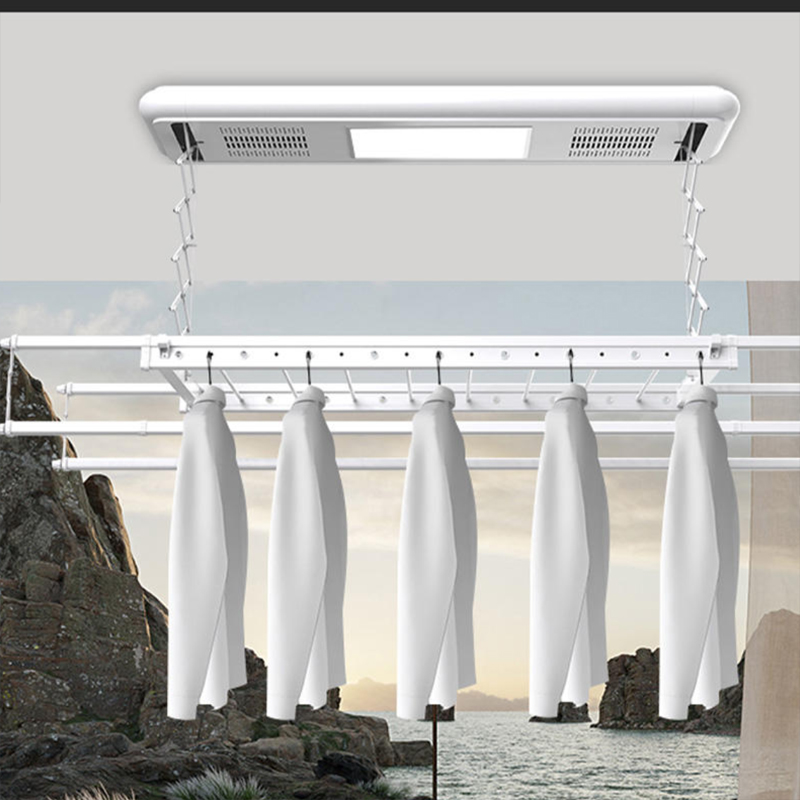
A ceiling mounted clothes drying rack is most valuable when the ceiling solves a real space problem. If a large floor area is already available and a portable rack causes no inconvenience, permanent overhead installation may offer limited additional benefit. If an unused wall provides convenient drying capacity, a wall-mounted rack may also be sufficient.
Ceiling mounting becomes more compelling when floors need to remain open, walls already support storage, and air drying is part of the regular laundry routine. Adjustable height adds further value when the best drying position would otherwise be difficult to reach directly.
Laundry volume and garment type should also influence the decision. Users who regularly dry larger loads may benefit from retractable rails, while those handling mainly shirts and lighter garments may need less overall hanging length. A rack should match the normal load rather than being designed around an exceptional maximum.
The most reliable approach is therefore to begin with the room and routine before choosing the product. When overhead space is genuinely the least disruptive place for wet laundry, ceiling mounting can create a more organized and efficient drying zone.
Conclusion
A ceiling mounted clothes drying rack can improve laundry-space efficiency by using overhead room volume instead of competing for floor and wall areas. Its real advantage, however, depends on how well the system is integrated into the complete laundry workflow.
Adjustable height can make loading more comfortable while keeping the rack out of the main working area during drying. Retractable rails can provide flexible capacity, and thoughtful rail spacing can help users organize different garments without unnecessary crowding. Permanent ceiling installation can also remove the repeated setup and storage required by portable drying equipment.
The strongest systems balance these convenience benefits with sound structural design. Materials, joints, mounting points, suspension components, load distribution, garment clearance, and airflow all influence practical performance. A high load rating or a long list of features cannot compensate for poor room planning.
When the rack is matched to the available ceiling space, normal laundry volume, and everyday operating needs, overhead drying can do more than save floor space. It can create a dedicated drying zone that remains accessible when needed and less intrusive when the rest of the laundry room is in use.
FAQ
Is a ceiling mounted clothes drying rack good for small laundry spaces?
Yes. A ceiling mounted clothes drying rack can be especially useful when floor area is limited and walls are already used for cabinets or storage. It creates drying capacity overhead while keeping the main working area clearer. Ceiling height, garment clearance, ventilation, and the rack’s movement range should still be measured carefully.
How much weight can a ceiling mounted clothes drying rack hold?
The appropriate capacity depends on the rack structure, suspension system, rails, mounting hardware, and manufacturer specifications. Wet towels and bedding can create substantial loads, so total weight should not be the only consideration. Distributing heavier garments across the structure can also improve everyday stability.
Is an electric ceiling mounted clothes drying rack better than a manual one?
An electric rack is useful when height adjustment happens frequently because powered lifting reduces repeated manual operation. A manual system can still provide effective adjustable overhead drying with a simpler mechanism. The better option depends on usage frequency, ceiling height, convenience expectations, installation, and maintenance needs.
How high should a ceiling mounted clothes drying rack be installed?
The correct height depends on ceiling dimensions, user accessibility, garment length, and the area below the rack. Adjustable systems can lower to a comfortable loading position and rise afterward. Planning should include long trousers, dresses, bedding, cabinets, lighting, and other objects within the rack’s complete operating zone.
Does a ceiling mounted clothes drying rack improve drying efficiency?
Ceiling mounting primarily improves space utilization rather than automatically making clothes dry faster. Effective air drying still depends on garment spacing, fabric thickness, humidity, temperature, and room airflow. A well-planned rack helps by providing enough usable rail space to arrange wet garments without excessive crowding.