Table of Contents
Introduction
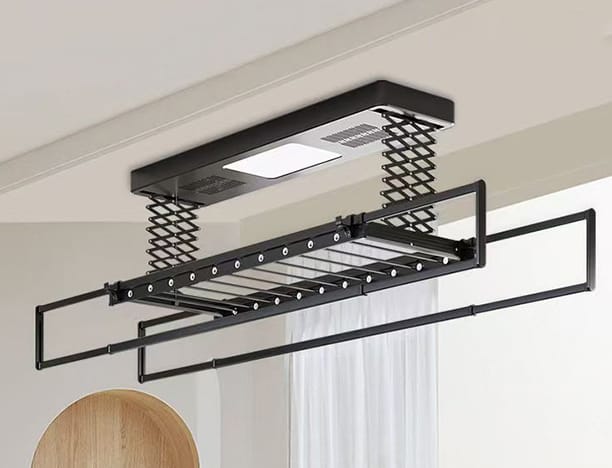
Efficient laundry management has become increasingly important as indoor spaces become more multifunctional and users look for practical ways to improve organization. Traditional floor-standing drying racks can provide useful drying capacity, but they often occupy valuable space and may affect the flexibility of indoor layouts.
A laundry drying rack ceiling mounted solution offers a smarter approach by using overhead space that is often overlooked. By installing the drying system on the ceiling, users can create a dedicated drying area while keeping floors open for movement, storage, or other activities.
With improvements in structural design, materials, and operation methods, ceiling-mounted drying racks have developed from simple household accessories into practical laundry solutions. They combine space efficiency, garment care, and convenient operation, making them suitable for modern homes, shared laundry environments, and professional applications.
This article explores how a laundry drying rack ceiling mounted system works, its benefits, important design factors, application scenarios, and future development trends.
Understanding the Design of a Laundry Drying Rack Ceiling Mounted System
A laundry drying rack ceiling mounted system is designed to attach a drying structure directly to the ceiling, allowing clothes to be dried without using additional floor space. Depending on the design, these systems may include fixed hanging bars, adjustable height functions, lifting mechanisms, or folding structures.
The main purpose of ceiling-mounted drying racks is to maximize vertical space while improving laundry organization. Many indoor areas have unused overhead space that can be transformed into a practical drying zone.
A typical ceiling-mounted drying rack includes:
- Ceiling support structure
- Drying bars or platforms
- Adjustable movement components
- Lifting or folding mechanisms
- Control systems for advanced models
The quality of a drying system depends on more than just its appearance. Structural stability, airflow design, and material performance all influence daily usability.
Garment drying efficiency is closely related to textile characteristics, as different fabrics respond differently to moisture and airflow. Information about textile materials and fabric structures shows why suitable drying environments play an important role in maintaining clothing performance and appearance.
Why Laundry Drying Rack Ceiling Mounted Systems Are Gaining Attention
As living spaces become more compact and functional, users increasingly need products that provide convenience without occupying unnecessary areas.
| Feature | Benefit |
|---|---|
| Ceiling installation | Uses unused overhead space |
| Space-saving design | Keeps floors available |
| Adjustable structure | Supports convenient garment handling |
| Stable frame | Provides reliable drying support |
| Flexible applications | Suitable for different environments |
Making Better Use of Vertical Space
The biggest advantage of a laundry drying rack ceiling mounted system is its ability to use vertical areas effectively.
Many rooms have limited floor space but sufficient ceiling height. By moving the drying area upward, users can maintain a more open room layout while still having enough capacity for daily laundry.
This approach is especially useful for compact laundry rooms, apartments, and multifunctional indoor spaces.
Improving Indoor Organization
A dedicated ceiling drying system helps create a more structured laundry routine.
Instead of placing portable racks in living areas or moving them around frequently, users can maintain a fixed drying location that improves organization and reduces clutter.
Supporting Cleaner Living Spaces
Floor-standing drying racks may interrupt room layouts when they remain open for long periods.
A ceiling-mounted solution keeps the lower area available for other purposes, helping create a cleaner and more organized environment.
Different Types of Laundry Drying Rack Ceiling Mounted Designs
Ceiling-mounted drying racks are available in different structures depending on user requirements and installation conditions.
Fixed Ceiling Drying Racks
Fixed designs provide a stable drying area that remains in one position.
Their advantages include:
- Simple structure
- Strong stability
- Easy daily operation
- Reliable performance
They are suitable for areas where the drying position does not need frequent adjustment.
Adjustable Ceiling Drying Racks
Adjustable systems allow users to change the height or position of the drying rack.
Benefits include:
- Easier clothing placement
- Better accessibility
- Flexible usage
- Improved user comfort
These designs are useful for households with different laundry needs.
Motorized Ceiling Drying Systems
Motorized systems provide automated movement through electric mechanisms.
They may include:
- Height adjustment
- Remote control operation
- Automated lifting
- Additional smart features
For professional laundry applications, product structure and manufacturing quality are essential. Reliable ceiling mounted drying rack solutions focus on combining durable construction with practical designs suitable for different environments.
Key Factors When Choosing a Laundry Drying Rack Ceiling Mounted Solution
Selecting a suitable ceiling-mounted drying rack requires careful consideration of several factors.
Structural Strength and Safety
Because wet clothing adds extra weight, the support structure must provide reliable performance.
Important considerations include:
- Ceiling compatibility
- Load-bearing ability
- Frame strength
- Installation quality
A stable structure ensures better safety and long-term usability.
Material Durability
Material selection affects the lifespan and performance of the drying rack.
Common materials include:
- Stainless steel
- Aluminum alloy
- Reinforced metal components
These materials are commonly chosen because they provide strength, corrosion resistance, and suitability for indoor laundry environments.
Installation Requirements
Before installation, users should evaluate:
- Available ceiling space
- Room layout
- Drying capacity requirements
- Usage frequency
A suitable design should match the actual environment rather than only focus on maximum size.
Laundry Drying Rack Ceiling Mounted Compared with Other Drying Methods
Different drying solutions provide different advantages depending on the environment.
| Drying Solution | Advantages | Limitations |
|---|---|---|
| Ceiling Mounted Drying Rack | Saves floor space and improves organization | Requires proper installation |
| Floor Drying Rack | Easy to move and reposition | Occupies room space |
| Traditional Hanging System | Simple structure | Limited flexibility |
Compared with Floor Drying Racks
Floor drying racks are popular because they can be moved easily. However, they may reduce available living space when used indoors.
A laundry drying rack ceiling mounted system provides a more permanent organization solution while keeping floor areas open.
Compared with Traditional Hanging Methods
Traditional hanging methods may not provide enough structure for efficient laundry management.
Ceiling-mounted racks create a dedicated drying area that improves organization and allows better control over garment placement.
How Ceiling Mounted Drying Racks Improve Modern Laundry Planning
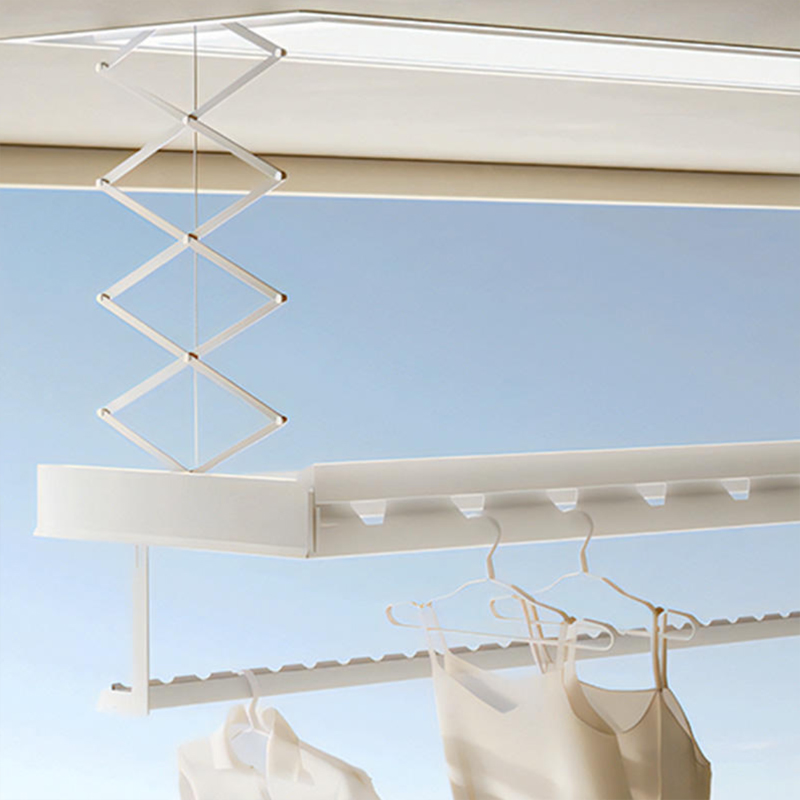
Laundry areas are increasingly becoming part of overall indoor design rather than separate functional spaces.
Supporting Space-Efficient Interior Layouts
Modern homes often require products that provide practical functions while maintaining a clean appearance.
Ceiling-mounted drying racks support this goal by reducing visual clutter and preserving usable floor space.
Creating Flexible Multi-Purpose Rooms
Many indoor areas serve multiple purposes. A laundry area may also function as a storage space or living area.
A ceiling-mounted drying solution allows users to maintain flexibility because the drying equipment does not interfere with normal activities.
Improving Laundry Workflow
A well-organized drying area can simplify daily routines.
Users can move clothing from washing to drying more efficiently while maintaining a cleaner and more structured environment.
Applications of Laundry Drying Rack Ceiling Mounted Systems
Ceiling-mounted drying solutions are suitable for different environments where space efficiency and organization are important.
Residential Applications
In homes, these systems can support:
- Daily garment drying
- Compact laundry rooms
- Space-saving home layouts
- Indoor clothing care
Their ability to reduce floor occupation makes them suitable for modern living spaces.
Commercial Applications
Commercial environments may also benefit from ceiling-mounted drying systems.
Potential applications include:
- Shared laundry facilities
- Residential buildings
- Hospitality spaces
- Professional garment care areas
In these environments, durability, maintenance convenience, and operational efficiency are important factors.
Maintenance Tips for Ceiling Mounted Drying Rack Systems
Proper maintenance helps improve performance and extend product service life.
Regular Cleaning and Inspection
Recommended maintenance practices include:
- Cleaning dust from surfaces
- Checking connection points
- Inspecting moving components
- Keeping the structure dry
Regular checks help maintain smooth operation.
Proper Loading Methods
Users should:
- Avoid excessive weight
- Distribute garments evenly
- Follow recommended operating methods
Balanced use reduces unnecessary stress on the structure.
Future Trends of Laundry Drying Rack Ceiling Mounted Solutions
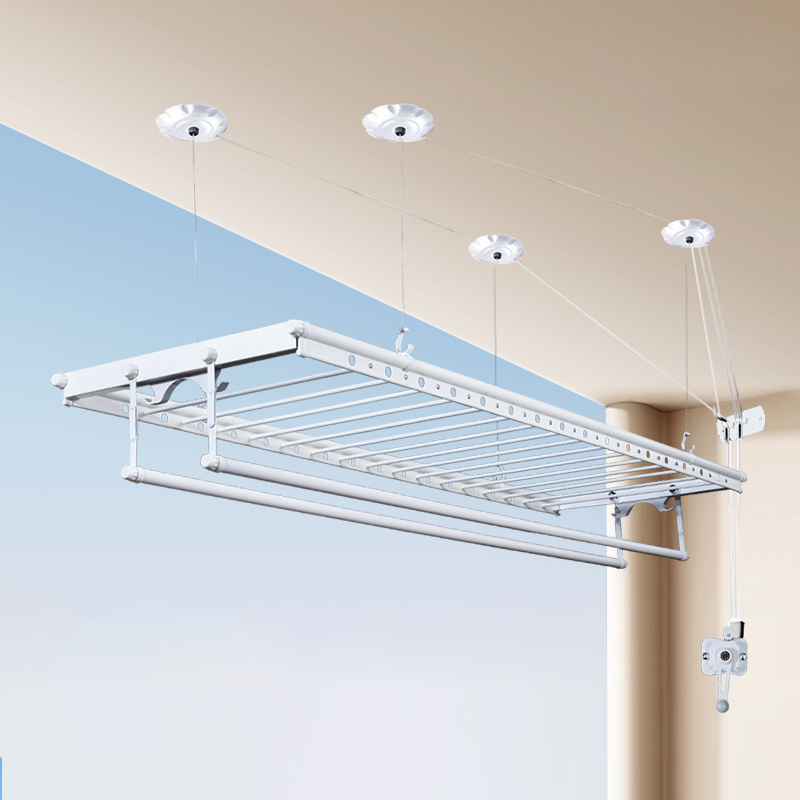
The development of laundry equipment continues to focus on smarter functions, improved efficiency, and better space utilization.
Increasing Smart Features
Future ceiling-mounted drying systems may include:
- More intelligent controls
- Improved automation
- Better energy efficiency
- Enhanced user interfaces
These improvements will make laundry management more convenient.
Greater Demand for Space-Saving Designs
As indoor areas become more valuable, products that combine functionality with compact design will continue to attract attention.
Ceiling-mounted drying solutions represent an important direction for future laundry space planning.
Conclusion
A laundry drying rack ceiling mounted system provides an effective solution for modern laundry environments by combining space efficiency, organized garment care, and flexible functionality.
Compared with traditional drying methods, ceiling-mounted designs help users make better use of indoor space while maintaining convenient daily laundry routines. Their advantages include reduced floor occupation, improved organization, and practical adaptability.
When selecting a ceiling-mounted drying rack, users should consider structural strength, material quality, installation conditions, and operational convenience. A properly designed solution can improve laundry efficiency while supporting modern space-saving lifestyles.
As homes and commercial environments continue to focus on flexible and intelligent solutions, laundry drying rack ceiling mounted systems will remain an important part of future laundry design.
FAQ
What is a laundry drying rack ceiling mounted system?
A laundry drying rack ceiling mounted system is a drying solution installed on the ceiling to provide hanging space for clothes while saving floor area. It uses vertical space to improve laundry organization.
What are the benefits of ceiling-mounted drying racks?
They help save indoor space, improve laundry organization, and create a dedicated drying area without occupying valuable floor space.
Is a ceiling-mounted drying rack suitable for small rooms?
Yes. Because it uses overhead space, it is especially suitable for compact rooms and areas where floor space is limited.
What materials are commonly used for ceiling drying racks?
Common materials include stainless steel, aluminum alloy, and reinforced metal components because they provide durability and moisture resistance.
How can I maintain a ceiling-mounted drying rack?
Regular cleaning, checking structural components, and avoiding excessive loading can help maintain performance and extend product lifespan.