Table of Contents
Introduction
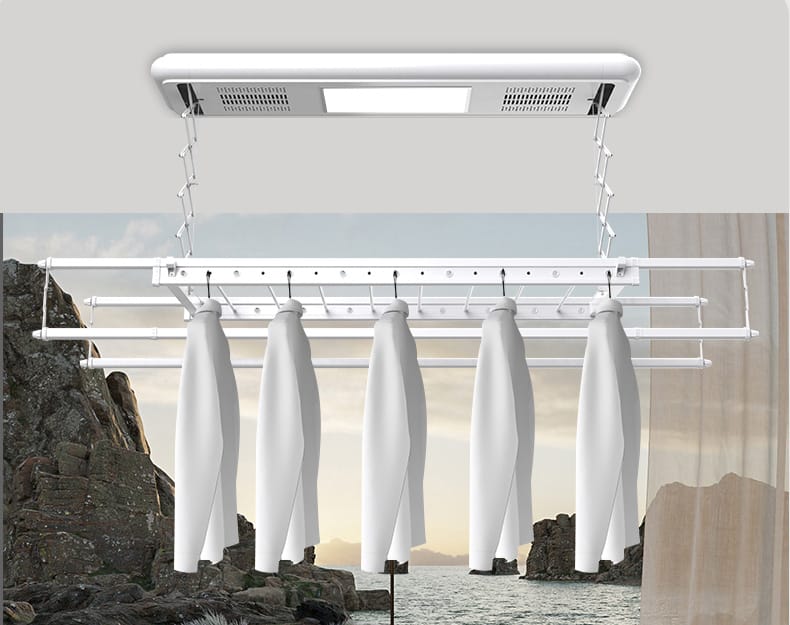
Laundry drying racks may appear to be simple household equipment, but choosing the right design involves more than finding enough bars to hold wet clothing. A drying rack becomes part of the complete laundry workflow, so its position, usable capacity, structural stability, garment spacing, accessibility, and storage method all influence how convenient the room feels during everyday use. The best solution is therefore not necessarily the largest rack or the one with the most features, but the design that fits naturally into the available space and the way laundry is normally handled.
Modern laundry areas also have to perform more functions within the same room. Appliances occupy floor space, cabinets and shelves compete for wall area, while baskets, garment-care tasks, and normal movement require additional clearance. This makes flexible and vertical drying solutions increasingly relevant because they can provide useful hanging capacity without permanently taking over the most valuable working areas.
Different laundry drying racks solve this problem in different ways. Freestanding models prioritize portability, folding racks reduce their footprint after use, wall-mounted designs shift drying away from the floor, while ceiling systems use overhead space that might otherwise remain unused. Understanding these differences makes it easier to select a rack based on real daily needs rather than appearance alone.
What Makes Laundry Drying Racks Practical for Everyday Use?
A practical drying rack should provide enough room for normal laundry while remaining easy to access and stable under wet loads. This balance is important because wet garments are heavier than dry ones, and towels, trousers, bedding, and layered clothing can place noticeably different demands on the structure. A rack that feels stable when empty may behave differently once larger wet items are distributed across its rails.
Space efficiency is equally important. A rack should not require users to repeatedly move furniture, block appliance doors, or sacrifice the main walking route whenever clothing needs to dry. In a compact room, even a relatively small freestanding rack can become inconvenient if it occupies the same floor area needed for baskets and appliance access.
Practicality also depends on how easily garments can be arranged. A rack with enough hanging length but very little space between rails may technically hold many items while making it difficult to separate thicker fabrics. For everyday air drying, useful capacity should therefore be judged by how well clothing can be arranged rather than simply by how many garments can physically fit.
Main Types of Laundry Drying Racks
Freestanding drying racks remain useful because they require little planning and can be moved according to available room space. Folding versions can be stored after use, making them especially suitable when air drying happens occasionally and there is enough temporary floor area during the drying period. Their main limitation is that the complete structure remains within the normal working zone while clothes are drying.
Wall-mounted laundry drying racks approach the space problem differently by using an available vertical surface. These racks may fold toward the wall or retract after use, allowing the floor to remain relatively clear. They work particularly well when one section of wall can be dedicated to laundry, although cabinets, windows, switches, and appliance doors can limit the amount of usable mounting space.
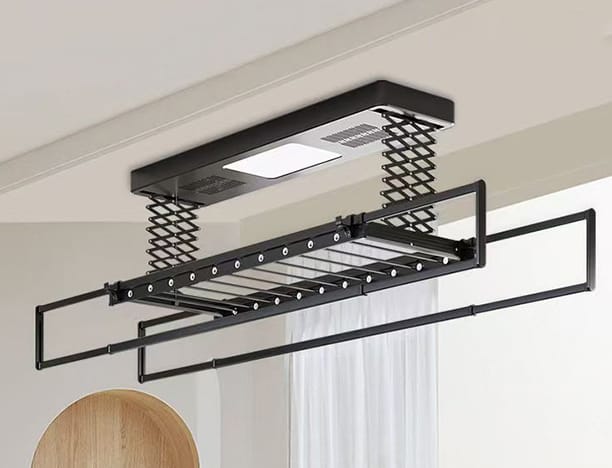
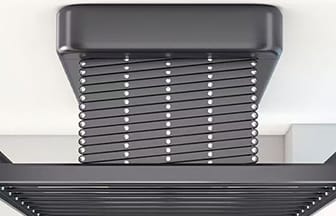
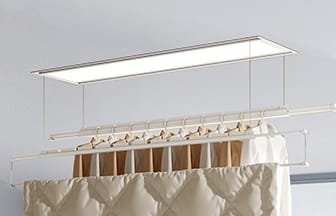
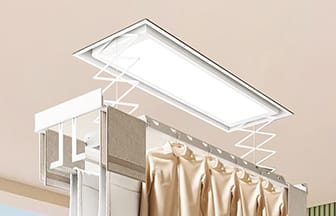
Ceiling-mounted racks move drying into the overhead area. This concept develops the principle of the traditional overhead clothes airer, where clothing is suspended above the main working zone rather than occupying floor space. Modern versions can include manual lifting, electric height adjustment, retractable poles, and more adaptable rail layouts, giving users greater control over how the drying zone interacts with the room.
Comparing Common Laundry Drying Rack Designs
No single rack configuration performs best in every environment because each one prioritizes different types of space and convenience. A freestanding rack is easy to reposition, while a wall-mounted system preserves the floor. Ceiling systems provide another level of space efficiency by using vertical room volume, although they require more careful installation planning.
| Rack Type | Main Space Used | Installation | Accessibility | Flexibility | Best Suited To |
|---|---|---|---|---|---|
| Freestanding rack | Floor | None | Very easy | High | Flexible temporary drying |
| Foldable floor rack | Floor during use | None | Easy | High | Occasional air drying |
| Wall-mounted rack | Wall | Permanent | Easy | Moderate | Rooms with open wall space |
| Retractable wall rack | Wall | Permanent | Easy | High | Compact multifunctional rooms |
| Manual ceiling rack | Ceiling | Permanent | Adjustable | Moderate | Preserving floors and walls |
| Electric ceiling rack | Ceiling | Permanent | Highly adjustable | High | Frequent overhead drying |
| Expandable ceiling rack | Ceiling | Permanent | Adjustable | High | Changing laundry volumes |
The table shows why selection should begin with the room rather than the rack itself. If floor space is not a concern, a portable rack may provide all the flexibility required. When floors and walls already support important functions, however, overhead drying can provide meaningful capacity without forcing the rest of the laundry room to reorganize around wet clothes.
How Room Size Changes the Best Drying Rack Choice
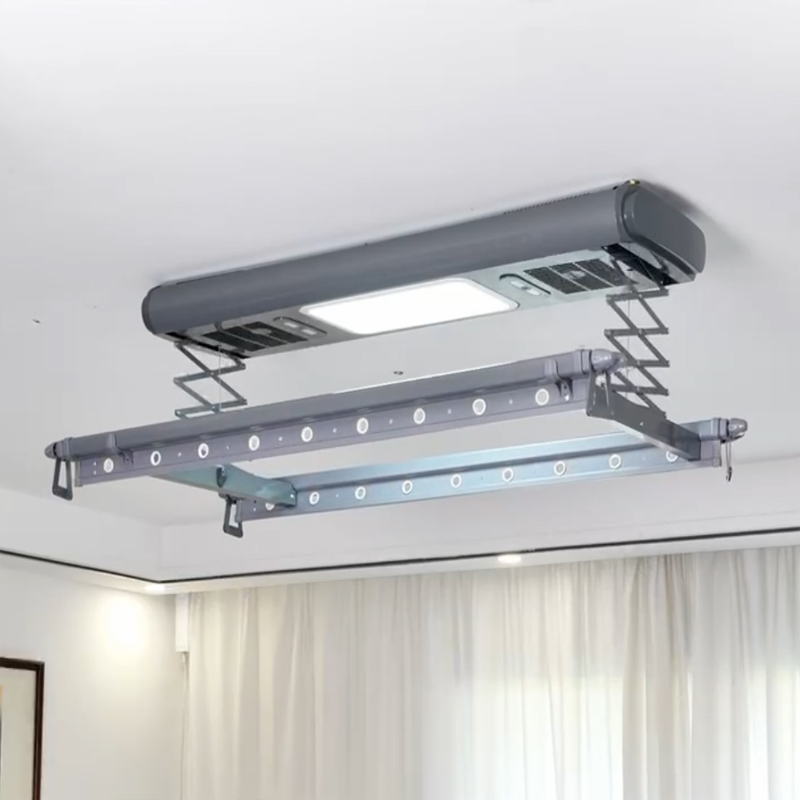
Small laundry areas benefit from designs that minimize permanent occupation of the working zone. A large floor rack may technically fit into the room but still create daily frustration if users have to squeeze around it to reach appliances or storage. In this type of environment, wall-mounted or ceiling-mounted laundry drying racks can use surfaces that interfere less with movement.
Medium-sized multipurpose spaces create a different challenge because the room may need to support both laundry and general storage. Folding and retractable designs can work well because the drying zone becomes available when required and reduces its footprint afterward. Ceiling racks can provide an additional advantage where vertical storage already occupies most of the walls.
Larger rooms offer greater freedom, but choosing the largest possible rack is still unnecessary. An oversized structure can make garments harder to organize, occupy more room than normal laundry volumes require, and encourage users to crowd too many items onto the same drying zone. Matching the rack to typical rather than exceptional loads usually produces a more balanced layout.
Floor Space Is Not the Only Space That Matters
Laundry-room planning often focuses heavily on floor dimensions, but wall and ceiling space can be equally important. Cabinets, work surfaces, shelving, windows, and electrical equipment frequently consume a large part of the walls, leaving less room than expected for a permanent drying rack. This is one reason overhead systems can become attractive even when the room itself is not extremely small.
Using ceiling space allows the drying function to exist on a different vertical level from most storage and appliances. YIHUI’s automated clothes rack range demonstrates how lifting structures can make this overhead zone accessible by lowering the drying rails toward the user during loading and raising them again afterward. The benefit comes from changing the rack’s position according to the stage of the laundry process rather than permanently fixing every function at the same height.
The same principle applies to wall-mounted racks. They can preserve floor area effectively, but their open position still needs to be evaluated because clothing may extend into the room. True space efficiency therefore depends on the entire loaded footprint rather than the size of the empty rack.
Understanding Real Drying Capacity
Drying capacity is often treated as a single specification, but several factors determine how much laundry a rack can actually handle well. Structural capacity describes how much wet weight the frame and supporting system are designed to carry, while hanging capacity relates to available rail length and garment positions. Practical drying capacity combines these considerations with the amount of spacing needed to arrange wet textiles without unnecessary crowding.
For everyday use, practical capacity is usually the most meaningful measure because clothing needs more than physical support. Thick towels, denim, bedding, and layered garments require more exposed space than lightweight shirts, so filling every available rail can reduce the usefulness of the drying area. A rack with moderate capacity and flexible spacing can therefore perform better than a larger structure that forces garments into constant contact.
Laundry habits should guide the final decision. A household that mainly air-dries shirts and smaller garments may benefit from numerous hanger positions, while frequent towels and bedding require longer, more open rails. Choosing according to typical textile types produces a much more realistic estimate of the capacity required.
Why Rail Spacing and Airflow Matter
Air drying depends on moisture leaving fabric and moving into the surrounding air, which means rack design must support more than garment weight. When damp textiles remain pressed closely together, less fabric surface is exposed to moving air, and thicker sections may remain wet for longer. Good rail spacing allows users to adjust the arrangement according to garment thickness rather than filling the rack at maximum density.
Room conditions also influence drying. A rack placed tightly between large cabinets or in a poorly ventilated corner may experience less air movement than one positioned in a more open part of the laundry area. This does not mean large clearances are required around every garment, but the drying zone should avoid unnecessary enclosure.
Expandable laundry drying racks can be particularly useful in this respect because additional rail length does not always need to accommodate more clothes. Users can also extend the structure to spread an existing load more effectively, improving practical spacing when towels, trousers, or larger garments need additional room.
Materials and Construction Quality
Aluminum, stainless steel, and coated steel are commonly used in laundry drying racks because each can provide useful structural properties in humid environments. Aluminum combines relatively low weight with corrosion resistance, which can be particularly valuable in folding, telescopic, or lifting structures where components move regularly. Stainless steel can offer strong moisture resistance, while coated steel can provide a robust frame when its protective surface and construction are appropriate for repeated laundry use.
The visible rails are only part of the structure, however. Hinges, fasteners, wall brackets, suspension cables, telescopic joints, locking mechanisms, and ceiling mounting points all contribute to long-term stability. A strong rail connected through a weak joint does not create a reliable rack, so evaluating the complete load path is more useful than concentrating on one material specification.
Moving systems deserve additional attention because repeated folding, sliding, raising, or lowering introduces mechanical wear. A well-designed rack should remain stable after repeated operating cycles and should not depend on excessive force to open, extend, or lock into position. Construction quality becomes especially important when the rack is used frequently rather than occasionally.
Freestanding vs Permanent Laundry Drying Racks
The main advantage of a freestanding rack is flexibility. It can be repositioned when room use changes and stored elsewhere after laundry has dried. This makes portable racks particularly appropriate when users do not want permanent installation or when the drying location varies according to available space and ventilation.
Permanent racks trade some of this location flexibility for a more predictable laundry workflow. Wall-mounted and ceiling-mounted structures remain ready for use, so users do not need to retrieve, unfold, position, and store the rack during every laundry cycle. This can become a meaningful advantage when air drying is part of the normal routine rather than an occasional garment-care method.
The decision therefore depends partly on frequency. If laundry drying racks are used only from time to time, portability may outweigh permanent space efficiency. When air drying occurs regularly, a dedicated wall or ceiling location can reduce repeated setup and make the overall room easier to organize.
Manual and Electric Ceiling Drying Systems
Manual ceiling racks provide adjustable overhead drying without requiring motorized movement. The user lowers the rack to a practical working height, arranges wet garments, and raises the structure afterward. This can provide an effective balance between vertical-space use and relatively straightforward mechanical operation.
Electric systems automate the same basic movement and can be especially useful when the rack is operated frequently. Instead of manually adjusting the height for every laundry load, the drying frame can move toward the user and return overhead with powered control. The practical value comes from making high ceiling space accessible rather than simply adding electronics to the rack.
For users who prefer a simpler adjustable structure, YIHUI’s manual clothes drying rack category provides an alternative way to use overhead space without depending on electric lifting. Choosing between manual and electric operation should therefore reflect ceiling height, usage frequency, desired convenience, maintenance expectations, and the importance of repeated height adjustment in the daily routine.
How to Plan the Rack Around Different Garments
Different garments require different types of drying space, so the rack should be selected according to what is actually washed rather than an abstract number of clothing pieces. Shirts can often be organized efficiently on hangers, while towels need broader exposure to surrounding air. Trousers and dresses require enough vertical clearance to hang naturally without resting on cabinets, appliances, or work surfaces below.
Bedding creates another type of demand because large textiles can occupy several rails and concentrate considerable wet weight across one part of the structure. Adjustable or expandable drying racks can provide greater flexibility for these occasional larger loads without requiring the rack to remain permanently oversized.
Garment variety is therefore one of the strongest reasons to prefer flexible rail layouts. A rack that provides several ways to distribute clothing can accommodate both normal smaller loads and larger textiles more effectively than a structure designed around one fixed arrangement.
Installation Height and Clearance
Correct installation requires more than measuring the empty rack against the available wall or ceiling. Garments change the dimensions of the drying zone, so users need to consider the longest textiles normally placed on the rack. A ceiling system positioned comfortably above a cabinet for shirts may still allow trousers or bedding to touch the surface below.
Wall-mounted racks require similar planning because clothing can extend farther into the room than the frame itself. Cabinet doors, appliance doors, shelves, windows, and walking routes should remain functional when the rack is fully open and loaded. Measuring only the stored configuration can create an unrealistic impression of how much space the system actually needs.
Adjustable ceiling racks provide greater flexibility because loading and drying can occur at different heights. The lowered position should remain comfortable for arranging wet garments, while the raised position needs enough clearance for people and surrounding equipment. Both conditions should be considered before the installation location is finalized.
Load Distribution and Everyday Stability
Wet laundry creates more structural demand than an empty rack, and the load is rarely distributed perfectly. Several towels may be placed on one side while lighter shirts occupy another, or bedding may concentrate weight across an extended section. These everyday loading patterns influence how forces move through rails, hinges, brackets, legs, cables, and mounting points.
A well-designed rack should remain stable during normal variation, but users can still reduce unnecessary stress by spreading heavier items across the available structure. This is especially important for folding wings, telescopic rails, and suspended systems where weight positioned farther from the central support can create additional leverage.
Maximum load ratings should therefore be considered together with distribution and garment type. The strongest everyday setup is not necessarily the one with the highest single capacity figure, but the rack whose structure supports the way laundry is realistically arranged.
Common Mistakes When Choosing Laundry Drying Racks
A common mistake is choosing according to folded or stored dimensions without evaluating the rack while it is fully loaded. Compact storage is useful, but wet clothes may remain on the open structure for many hours, making the working footprint far more important during daily use. Garment overhang, cabinet access, appliance doors, and walking routes should all be considered before deciding that a rack is genuinely space-saving.
Another mistake is treating maximum rail count as maximum useful capacity. If clothes need to be packed too closely together, airflow around damp fabric can be reduced, particularly with towels and thicker textiles. A more flexible rail arrangement that allows variable spacing often provides better real-world drying conditions.
Users may also pay too much attention to the main frame material while overlooking joints and mounting components. Folding mechanisms, extension rails, brackets, and suspension points experience significant mechanical stress and can strongly influence long-term reliability. A drying rack should always be evaluated as a complete structure.
How to Choose Laundry Drying Racks for Your Routine
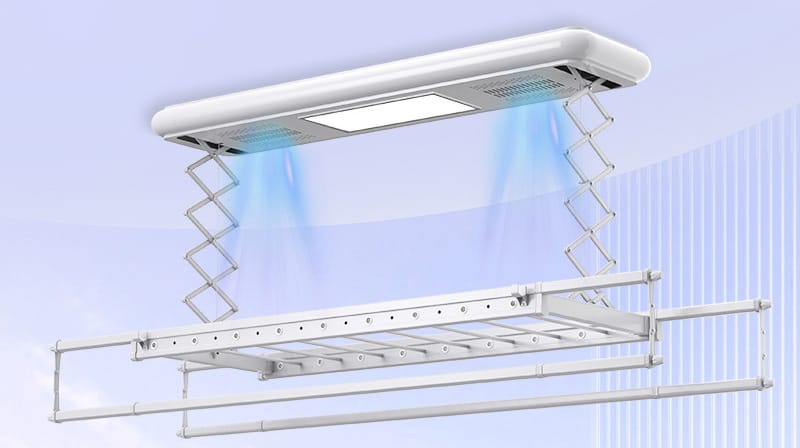
The most reliable selection process begins with the room. Determine whether the floor, wall, or ceiling provides the least disruptive location for drying, and measure the complete working area rather than only the rack itself. This immediately narrows the range of designs that can fit comfortably within the available space.
Next, consider normal laundry volume and garment type. A rack should comfortably handle the clothes that are air-dried most often without being sized around an unusually large occasional load. Users who regularly dry towels and bedding may value longer expandable rails, while lighter everyday garments can make hanger positions more important.
Frequency should also influence the decision. Portable and foldable racks offer excellent flexibility for occasional use, while permanent wall and ceiling systems can create a more efficient routine when drying happens regularly. The best laundry drying racks are ultimately the ones that reduce repeated inconvenience rather than simply providing the largest possible drying surface.
Conclusion
Laundry drying racks perform best when they are selected as part of the entire laundry space rather than treated as isolated household accessories. Floor racks provide portability, wall-mounted systems preserve floor area, and ceiling-mounted designs use vertical room volume that may otherwise remain underused. Each type can work well when its structure matches the room and normal laundry habits.
Capacity should be evaluated through garment arrangement, wet weight, rail spacing, and airflow rather than a single specification. Materials and structural stability matter, but connection points, folding mechanisms, telescopic rails, mounting systems, and load distribution are equally important for long-term performance.
The ideal drying rack also fits naturally into the daily workflow. Users should be able to move laundry from washing to hanging without blocking appliances or repeatedly reorganizing the room. Once clothing is dry, the rack should either return valuable space to the room or remain in a dedicated position that does not interfere with other tasks.
When available space, laundry frequency, garment types, practical capacity, and accessibility are considered together, drying racks become more than somewhere to hang wet clothes. They become part of a better-organized and more efficient laundry environment.
FAQ
What type of laundry drying racks work best in small spaces?
Wall-mounted, retractable, and ceiling-mounted laundry drying racks usually work well when floor space is limited because they use vertical or overhead areas. Foldable floor racks can also be suitable when temporary floor space is available. The best choice depends on wall clearance, ceiling height, garment length, and drying frequency.
Are ceiling laundry drying racks better than freestanding racks?
Ceiling racks are particularly effective when the goal is to preserve floor and wall space, while freestanding racks provide greater portability and require no permanent installation. Neither is universally better. Air-drying frequency, room layout, available ceiling structure, storage needs, and loading accessibility should guide the choice.
Which material is best for laundry drying racks?
Aluminum, stainless steel, and properly coated steel can all work effectively. Aluminum offers relatively low weight and good corrosion resistance, while stainless steel performs well in humid environments. Overall durability also depends on joints, brackets, hinges, fasteners, surface treatments, and the structural design of the complete rack.
How much laundry should I put on a drying rack?
The appropriate amount depends on the rack’s structural capacity, usable rail length, garment type, and available spacing. Avoid filling every rail if wet garments remain tightly packed together. Towels, bedding, and heavier clothing generally need more space than lightweight shirts, and heavy items should be distributed across the structure.
How can I make laundry dry more effectively on a drying rack?
Arrange garments with enough separation for surrounding air to reach damp fabric and avoid unnecessary overlapping, particularly with thick towels and layered clothing. Position the rack where room ventilation can support air movement, and use available rail length to improve spacing rather than simply placing the maximum possible number of garments on it.