Table of Contents
Introduction
Drying clothes may seem like a small part of daily life, but it has a bigger impact than many people realize. The way you dry laundry affects your energy use, clothing lifespan, indoor comfort, fabric quality, and even the amount of space you need at home.
For many households, machine drying is convenient, but it is not always the best choice. It can use more energy, expose fabrics to high heat, cause shrinkage, and increase wear on clothes over time. That is why more people are looking for a practical laundry drying rack outdoor solution.
A laundry drying rack outdoor gives you a simple, low-cost, and fabric-friendly way to dry clothes naturally. Whether it is placed on a balcony, patio, garden, terrace, or laundry area, it can help you reduce machine drying, protect clothing, and make better use of outdoor airflow and sunlight.
This article explains why an outdoor laundry drying rack can be a better alternative to machine drying, what benefits it offers, which types are available, and how to choose the right one for daily use.
What Is a Laundry Drying Rack Outdoor?
A laundry drying rack outdoor is a clothes drying rack designed for outdoor use. It allows wet laundry to dry naturally through sunlight, wind, and open-air ventilation instead of relying on a tumble dryer or heated appliance.
Compared with indoor racks, outdoor drying racks usually need better weather resistance, stronger structure, and more durable materials. Common options include foldable drying racks, wall-mounted drying racks, retractable drying racks, rotary drying racks, stainless steel drying racks, and balcony-mounted clothes drying racks.
The main purpose is simple: give clothes enough space and airflow to dry efficiently outside.
For homeowners, renters, apartment users, and families, an outdoor laundry drying rack can be a practical daily tool. It is especially useful when you want to dry clothes without increasing electricity use or exposing garments to high heat.
Why Machine Drying Is Not Always the Best Option
Machine drying is fast, but speed comes with trade-offs. A tumble dryer uses heat, rotation, and airflow to remove moisture quickly. That makes it convenient, especially for thick towels, bedding, and urgent laundry. However, it is not ideal for every fabric or every situation.
High heat can cause some garments to shrink, fade, stretch, or lose their original texture. Repeated tumbling can also increase friction, which may wear down fibers over time. Delicate fabrics, sportswear, underwear, sweaters, baby clothes, and certain blended materials often last longer when dried more gently.
Machine drying also requires electricity and appliance space. If you run a dryer frequently for small loads, socks, shirts, or lightweight clothing, the convenience may not always justify the energy use.
That is where a laundry drying rack outdoor becomes valuable. It offers a slower but gentler drying method that uses natural airflow instead of mechanical heat.
Key Benefits of Using a Laundry Drying Rack Outdoor
One of the biggest benefits is energy saving. Outdoor drying does not require electricity. Once the rack is set up, sunlight and air do the work. For users who want to reduce everyday energy consumption, this is one of the simplest changes to make.
Another benefit is better fabric care. Clothes dried outdoors are not exposed to high dryer temperatures or constant tumbling. This helps reduce shrinkage risk, fabric stress, and surface wear. For garments you want to keep in good condition, outdoor air drying is often a safer choice.
A laundry drying rack outdoor also helps keep indoor spaces more comfortable. Drying clothes indoors releases moisture into the room, which can make the air feel damp if ventilation is poor. Outdoor drying moves that moisture outside, helping reduce indoor humidity and laundry odor.
Outdoor racks are also flexible. A foldable rack can be moved and stored easily. A wall-mounted or retractable rack saves floor space. A larger heavy-duty rack can handle towels, bedding, and family laundry. This makes outdoor racks suitable for different living spaces, from small balconies to larger patios.
Laundry Drying Rack Outdoor vs Machine Drying
The right drying method depends on your priorities. If you need clothes dry as quickly as possible, machine drying is usually faster. If you care about energy use, fabric protection, and low-cost daily drying, a laundry drying rack outdoor is often the better option.
| Comparison factor | Laundry drying rack outdoor | Machine drying |
|---|---|---|
| Energy use | No electricity needed | Requires electricity |
| Fabric care | Gentle on most fabrics | May cause shrinkage or wear on some garments |
| Drying speed | Depends on weather, airflow, and fabric thickness | Usually faster |
| Space requirement | Balcony, patio, garden, terrace, or outdoor wall space | Requires appliance space |
| Best for | Daily clothes, delicate garments, towels, small to medium loads | Urgent drying, heavy loads, bedding |
| Maintenance | Simple cleaning and rust prevention | Appliance cleaning, lint removal, possible repairs |
| Environmental impact | Lower daily energy demand | Higher energy demand during use |
The table shows why many users do not need to choose only one method. A smart laundry routine can use both. Machine drying can handle urgent or heavy laundry, while an outdoor drying rack can manage everyday clothes more gently and economically.
How Outdoor Drying Protects Clothes
Clothing damage often happens slowly. A shirt may not look damaged after one dryer cycle, but repeated heat and tumbling can gradually weaken fibers. Elastic materials may lose stretch, printed designs may crack, and delicate fabrics may become rougher.
A laundry drying rack outdoor reduces this stress. Clothes hang naturally without being tossed around. The drying process is slower, but it is also gentler.
This is especially useful for items such as:
Sweaters and knitwear
Underwear and delicate garments
Baby clothes
Sportswear and stretch fabrics
Shirts and lightweight trousers
Clothes with prints, embroidery, or special finishes
To protect clothes even more, turn darker items inside out, avoid placing delicate fabrics under harsh direct sunlight for too long, and use hangers or flat drying positions for garments that may stretch.
Outdoor Drying and Energy Savings
One reason people search for laundry drying rack outdoor products is the desire to reduce energy use. A drying rack uses no power during operation, making it one of the most cost-friendly drying methods available.
Machine dryers are convenient, but they rely on electricity every time they run. If a household uses a dryer for every laundry load, the energy adds up over time. Replacing part of that routine with outdoor drying can reduce appliance use without changing how often you wash clothes.
The most practical approach is not always to stop using a dryer completely. Instead, use outdoor drying when the weather and schedule allow it. For example, shirts, socks, towels, light bedding, and everyday clothing can often be dried outdoors, while the machine dryer can be reserved for rainy days, urgent loads, or thick fabrics that need faster drying.
This balanced method helps improve efficiency without sacrificing convenience.
Best Places to Use a Laundry Drying Rack Outdoor
A laundry drying rack outdoor can work in many different spaces. The best location depends on airflow, sunlight, available space, and how much laundry you usually dry.
A balcony is ideal for compact or foldable racks. It gives apartment users a practical drying area without needing a garden or large yard. A wall-mounted rack can also be useful if balcony floor space is limited.
A patio or terrace works well for medium and large drying racks. These areas usually provide more room for towels, bedding, and multiple garments.
A garden or backyard can support larger heavy-duty drying racks or rotary clotheslines. This is useful for families or users who wash larger loads.
A laundry area with outdoor access can be fitted with a retractable or wall-mounted rack. This keeps drying close to the washing area and makes the process more convenient.
The best location should have good airflow, stable ground or mounting, and enough space for clothes to hang without touching walls, floors, or plants.
Types of Outdoor Laundry Drying Racks
There are several common types of outdoor laundry drying racks, and each one has its own advantages.
A foldable laundry drying rack is easy to move, store, and use in small spaces. It is a good option for balconies, patios, and users who do not want permanent installation.
A wall-mounted drying rack saves floor space. It is useful for balconies, laundry areas, and narrow outdoor walls. Some models fold back when not in use.
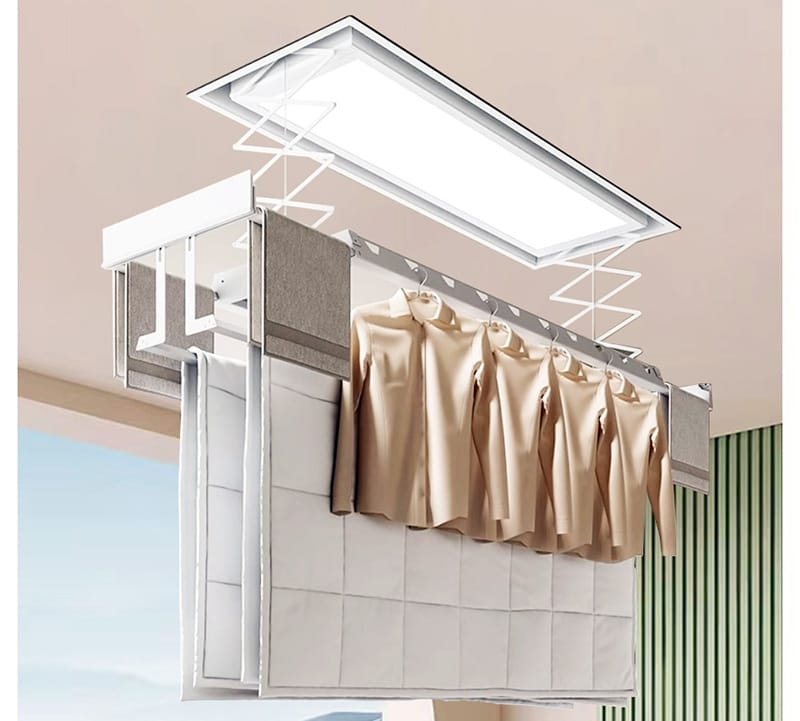
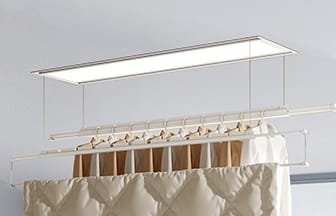
A retractable drying rack or retractable clothesline is ideal for limited spaces. It can be extended when needed and hidden away after drying.
A rotary drying rack provides a large drying area while using a compact footprint. It is often suitable for gardens or open outdoor spaces.
A stainless steel drying rack is a strong choice for outdoor use because it offers better durability and rust resistance when properly finished and maintained.
A heavy-duty laundry drying rack outdoor is suitable for towels, bedding, jeans, and larger loads. It should have a stable structure, strong joints, and a good weight capacity.
How to Choose the Right Laundry Drying Rack Outdoor
Start with the space you have. For a small balcony, choose a foldable, wall-mounted, or retractable design. For a patio or garden, a larger freestanding or rotary rack may be more practical.
Next, consider capacity. If you usually dry only shirts, socks, and underwear, a compact rack may be enough. If you often dry towels, bedding, or family laundry, choose a larger model with strong load-bearing ability.
Material is very important for outdoor use. Stainless steel, aluminum alloy, and coated metal are common choices. The rack should resist rust, moisture, and outdoor exposure. Smooth surfaces also help prevent fabric snagging.
Stability matters too. Outdoor racks may face wind, uneven ground, and heavier wet clothes. Look for strong legs, secure locking joints, and reliable mounting hardware for wall-mounted models.
Ease of storage is another factor. If your outdoor space is shared or limited, a foldable or retractable rack is easier to manage.
Finally, think about daily convenience. A rack that is easy to open, close, move, clean, and store is more likely to be used regularly.
Common Mistakes to Avoid
The first mistake is buying a rack that is too small. If clothes are packed tightly together, drying becomes slower and less effective. Always leave space for airflow.
The second mistake is ignoring material quality. Outdoor products need to handle moisture and changing weather conditions. A weak or poorly coated rack may rust or become unstable over time.
The third mistake is placing the rack in a poor location. A shaded, windless, or crowded area will slow drying. Choose a spot with good air movement and enough open space.
Another mistake is leaving clothes outside too long. Outdoor drying is useful, but clothes should be collected once dry to avoid dust, moisture, or unnecessary sun exposure.
It is also important not to overload the rack. Wet towels, jeans, and bedding can be heavy. Spread the weight evenly and follow the product’s recommended load capacity.
Tips for Faster Outdoor Drying
Spin clothes properly before hanging them. The less water left in the fabric, the faster they dry outdoors.
Shake each garment before placing it on the rack. This helps reduce wrinkles and opens the fabric for better airflow.
Leave space between clothes. Air movement is one of the most important factors in outdoor drying.
Place thicker items where they receive more airflow. Towels, jeans, and bedding need more open space than lightweight shirts.
Turn clothes inside out when needed. This can help protect colors and printed surfaces from long sun exposure.
Use hangers for shirts and dresses if the rack design allows it. This improves airflow and helps maintain shape.
Bring clothes in once they are dry. This keeps them fresh and prevents unnecessary exposure to dust or moisture.
Is a Laundry Drying Rack Outdoor Suitable for Small Spaces?
Yes, a laundry drying rack outdoor can be very suitable for small spaces if you choose the right design.
For small balconies, a foldable rack is often the easiest option. It can be opened during drying and stored when not in use. Wall-mounted racks are also helpful because they keep the floor clear.
Retractable racks work well when you need drying space only part of the time. You can extend them for laundry and retract them afterward.
The key is to match the rack to the space instead of choosing only by drying capacity. A large rack may hold more clothes, but it can make a small balcony difficult to use. A compact rack with smart spacing may be more practical for daily laundry.
Maintenance Tips for Outdoor Drying Racks
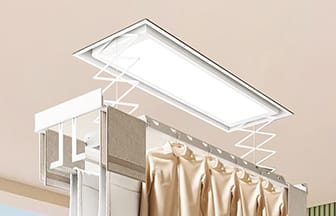
Outdoor drying racks need simple but regular care.
Wipe the rack surface to remove dust, moisture, and residue. This keeps clothes clean and helps protect the material.
Check joints, hinges, screws, and mounting parts. Outdoor use can loosen parts over time, especially on foldable or wall-mounted racks.
Keep the rack dry when not in use if possible. Even rust-resistant materials last longer when properly maintained.
For foldable racks, store them in a sheltered area during long periods of non-use. This helps protect the frame and joints.
Avoid using harsh cleaning chemicals that may damage protective coatings. A soft cloth and mild cleaner are usually enough.
Conclusion
A laundry drying rack outdoor is a better alternative to machine drying when your goal is to save energy, protect clothes, reduce running costs, and make use of natural airflow. It may not dry clothes as quickly as a tumble dryer, but it offers long-term benefits that many households value.
It is especially useful for daily laundry, delicate fabrics, small outdoor spaces, balconies, patios, gardens, and users who want a simpler drying routine. With the right design and proper placement, an outdoor drying rack can become one of the most practical tools in your laundry setup.
If you want a drying method that is affordable, gentle, space-friendly, and easy to use, a laundry drying rack outdoor is worth considering.
FAQ
What is a laundry drying rack outdoor?
A laundry drying rack outdoor is a clothes drying solution designed for balconies, patios, gardens, terraces, or outdoor laundry areas. It helps clothes dry naturally with sunlight and airflow, without using electricity.
Is a laundry drying rack outdoor better than machine drying?
A laundry drying rack outdoor is better for saving energy, protecting fabrics, and reducing running costs. Machine drying is faster, but outdoor air drying is gentler on clothes and more suitable for daily laundry.
What materials are best for an outdoor laundry drying rack?
Stainless steel, aluminum alloy, and coated metal are good choices for outdoor use. These materials offer better rust resistance, strength, and durability when exposed to moisture and changing outdoor conditions.
Can I use a laundry drying rack outdoor on a balcony?
Yes, a laundry drying rack outdoor can be used on a balcony. Foldable, wall-mounted, and retractable designs are especially suitable for small spaces because they save floor space and are easy to store.
How do I make clothes dry faster on an outdoor drying rack?
Spin clothes well before hanging, shake garments open, leave space between items, and place the rack in a well-ventilated area. Good airflow and proper spacing help clothes dry faster and stay fresher.
Need Help Choosing the Right Laundry Drying Rack Outdoor?
If you’re unsure which laundry drying rack outdoor is best for your balcony, patio, garden, laundry area, or daily drying needs, our experts are here to help. Contact us today for a personalized recommendation, and find a durable, space-saving, and practical drying solution for your home or project. Don’t let laundry take up more time, energy, or space than it should—get in touch now and make outdoor clothes drying easier and more efficient!