
Table of Contents
Introduction
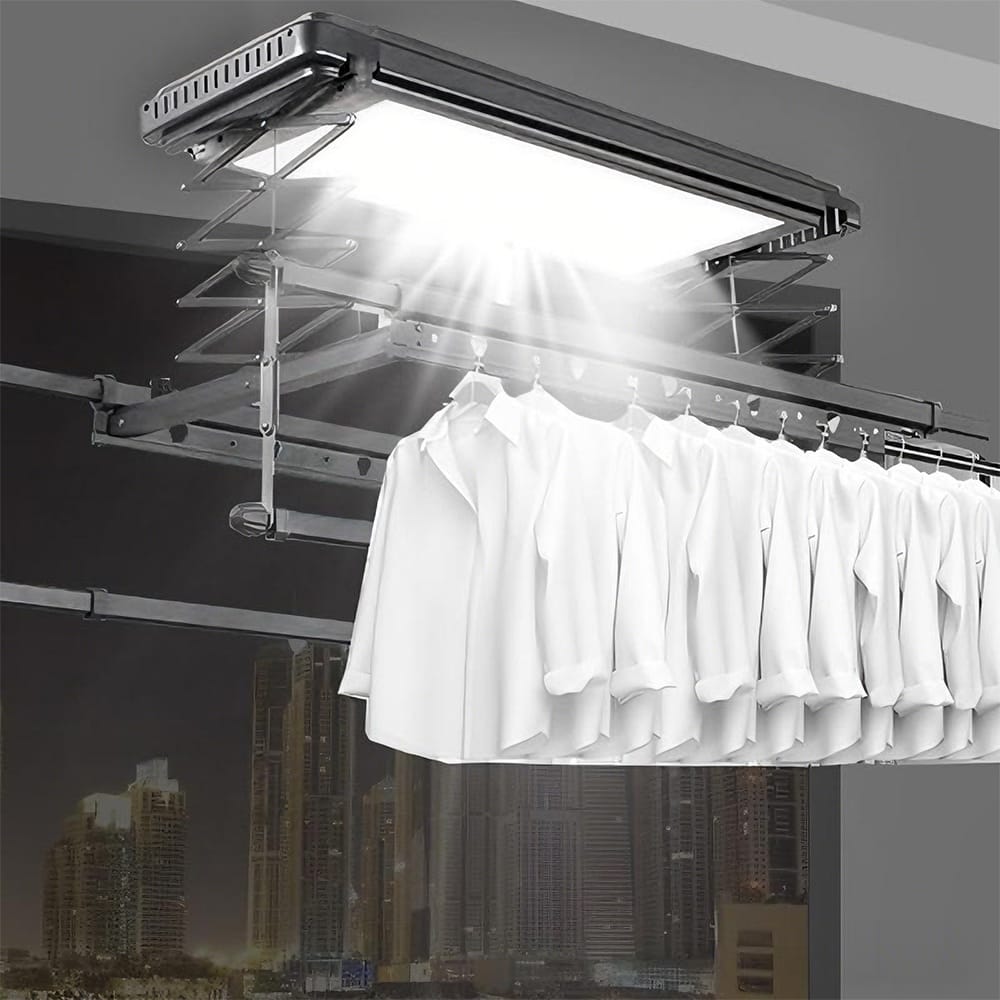
A drying rack may spend only a few hours holding wet clothes, but it still has to live somewhere for the rest of the week. That simple fact is what makes a fold up drying rack for clothes different from a fixed laundry fixture. Its usefulness is determined not only by how much clothing it can support when open, but also by how easily it returns the room to normal afterward.
This distinction is especially important in apartments and homes without dedicated laundry rooms. A rack may be opened beside a window in the morning, moved away from furniture while clothes are drying, and folded into a narrow storage position later in the day. Each of those transitions becomes part of the user’s regular laundry routine.
A good fold-up rack should therefore be judged as a moving object rather than a static frame. The opening sequence, locking points, stability under wet loads, partly opened positions, folded thickness, carrying balance, and storage location all affect whether the product genuinely saves space.
The best rack is not necessarily the one that becomes smallest. It is the one that moves naturally between drying and storage without making either stage inconvenient.
The Thirty Seconds Before Drying Matter More Than Most Product Photos Show
Product photographs usually show drying racks fully opened and neatly filled with clothing. They rarely show the moments before that image becomes possible.
The user has a basket of wet clothes nearby. The rack is stored behind a door or beside a cabinet. It needs to be removed, carried into an open area, unfolded, stabilized, and positioned before the first shirt can be hung.
If this process is awkward, the inconvenience repeats every laundry cycle.
A rack that needs several loose parts to be assembled may eventually remain permanently open simply because nobody wants to repeat the setup. A frame that snaps open unpredictably can be frustrating in a narrow room. Legs that need excessive force to separate may make an otherwise compact design less practical.
This is why opening behavior deserves the same attention as drying capacity.
Ideally, the structure should communicate what happens next through its physical design. Users should understand where to grip it, which section moves first, and when the rack has reached a stable working position without studying a complicated sequence every time.
For everyday household equipment, intuitive movement is a form of product quality.
Folding Is Really a Sequence of Controlled Joints
A fold-up rack works because several rigid sections are allowed to move relative to one another.
The visible result is simple: a large rack becomes small. Mechanically, however, this requires hinges, pivots, stops, locking elements, or sliding connections to coordinate several parts of the frame.
A hinge is fundamentally a mechanical bearing that allows limited rotational movement between connected objects. In a drying rack, that basic principle becomes important because the joint must allow movement during folding while becoming sufficiently controlled when the rack is carrying clothes.
Too much resistance makes setup difficult. Too little resistance can make the structure feel loose.
The challenge increases over time. A rack may be opened and closed hundreds of times in normal household use. A joint that feels acceptable when new may develop play if the connection is poorly designed or manufactured.
This is why folding quality cannot be understood only from the frame material. The movement points themselves determine how the structure feels throughout its usable life.
A Rack That Folds Quickly but Opens Poorly Has Only Solved Half the Problem
Compact storage receives most of the attention in fold-up products, but the open state lasts for hours.
When fully deployed, the rack must behave more like a stable piece of temporary furniture than a collapsible object.
Its legs should establish a reliable base. Side wings should not sag noticeably under ordinary garment loads. Locking sections should remain where the user places them. Clothes should be accessible without the structure shifting whenever a hanger is removed.
The transition from flexible to rigid is therefore central to the design.
During storage, movement is desirable.
During drying, unnecessary movement is undesirable.
A well-designed fold up drying rack for clothes handles both conditions without asking the user to add braces, repeatedly adjust legs, or carefully balance every garment.
Partial Opening Can Be More Useful Than Maximum Capacity
Not every laundry cycle fills an entire rack.
A weekday load may include only several shirts and lightweight garments. Opening a large structure to its maximum width for such a small load wastes space.
This is where partial deployment becomes useful.
If one wing can remain folded while another is used, the rack can adapt its footprint to the actual laundry volume. If a multi-level structure allows selected sections to open independently, users can create only the capacity they need.
This changes the meaning of foldability.
Instead of a product having only two states—closed and fully open—it can behave as an adjustable drying surface.
For small homes, that can be more valuable than a slightly smaller final folded size because it reduces space occupation during the several hours when laundry is actually drying.
The practical question is therefore not only “How small does it fold?”
It is also “How many useful sizes can it become?”
Storage Thickness Is Often More Important Than Storage Length
A folded drying rack may still be relatively tall. That is not necessarily a problem.
Homes often contain narrow unused storage zones rather than large empty cupboards. The space behind a door, beside a wardrobe, between an appliance and wall, or against a utility-room cabinet may accept a tall, flat object extremely well.
Thickness becomes critical in these locations.
A rack that folds into a slim vertical profile can disappear into a narrow gap even if its overall height remains substantial. A shorter product that collapses into a bulky bundle may require far more valuable storage volume.
This distinction is easy to miss when specifications focus on one folded measurement.
Users should think about the exact storage position first and then evaluate whether the collapsed geometry fits that space naturally.
A fold up drying rack for clothes saves space only when the folded object has somewhere realistic to go.
Where Does the Rack Go When the Clothes Are Dry?
This sounds like a basic question, but it is one of the best ways to judge whether a folding product matches a home.
Imagine several common possibilities.
Behind a door, the rack needs to be thin enough that the door can still open fully. Beside a washing machine, it needs a narrow footprint and should not obstruct hoses or access. Inside a utility cabinet, folded height becomes important. Against a balcony wall, the structure needs to remain stable rather than slowly opening or sliding.
Storage orientation matters as well.
Some racks are designed to stand vertically when closed. Others need support from a wall. Some are easiest to store horizontally.
The ideal configuration depends on the household rather than on a universal definition of compactness.
This is why drying rack selection benefits from measuring the storage space before comparing maximum drying capacity.
Wet Towels Are the Fastest Way to Expose a Weak Folding Design
Lightweight shirts are forgiving.
Wet bath towels are not.
They add considerable weight and often concentrate that weight across one section of the rack. If a folding wing is long and only lightly supported, several towels can reveal bending or movement that was invisible when the structure was empty.
Uneven loads matter even more.
A user may place towels on one wing and small garments on another without thinking about weight distribution. The rack should tolerate normal household behavior rather than require perfect symmetry.
Testing with wet laundry therefore provides much more useful information than testing with empty hangers.
The structure should be evaluated for frame stiffness, joint movement, leg stability, and whether the open geometry changes noticeably once weight is added.
A product that remains predictable under imperfect loading is far easier to live with.
Folded, Open and Loaded Are Three Different Products
The same drying rack behaves very differently depending on its state.
| Rack Condition | Main Question | What Good Design Should Achieve |
|---|---|---|
| Folded | Where can it be stored? | Slim, controlled shape that is easy to carry |
| Opening | Is setup intuitive? | Smooth movement without awkward force |
| Partly open | Can capacity match a small load? | Stable intermediate configuration |
| Fully open | Does it occupy space efficiently? | Useful drying area with clear access |
| Loaded | Does wet laundry change stability? | Predictable support under realistic weight |
| Folding after use | Is closing convenient? | Controlled movement without unnecessary steps |
Thinking about the rack this way prevents one specification from dominating the decision.
A very slim folded product may still be difficult to open. A large-capacity rack may become unstable under wet towels. A structurally strong model may be inconvenient if closing requires several separate actions.
Good fold-up design needs to perform across the whole cycle.
Pinch Points Deserve Attention in Products That Move Every Week
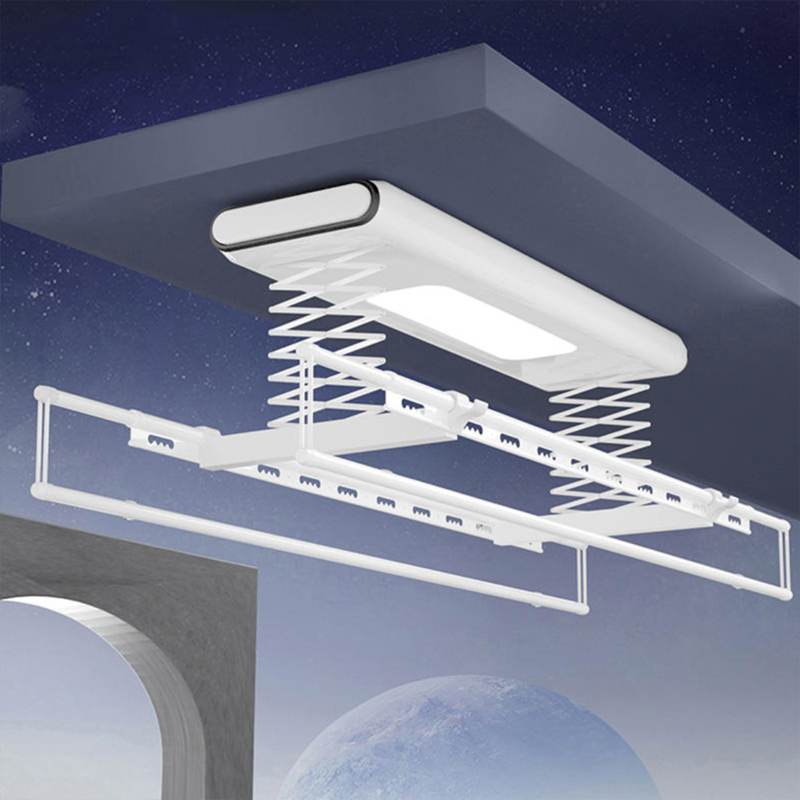
Any structure with folding sections creates areas where two components move toward one another.
These points deserve thoughtful design because users regularly place their hands near hinges, legs, and locking sections while opening or closing the rack.
The goal should be to make the intended hand positions obvious and keep frequently gripped areas away from narrowing gaps.
Movement should also be predictable.
If a leg suddenly collapses after a lock is released, the user may instinctively try to catch it. Controlled closing is preferable to a mechanism that relies on gravity or abrupt movement.
For families where several people use the same rack, intuitive mechanical behavior becomes even more important because not every user will learn a specific folding technique.
This type of safety is rarely the most visible feature of a drying rack, but it strongly affects everyday confidence.
Carrying Balance Matters Between the Laundry Room and Storage Space
A portable rack does not remain in one location.
It may move from a bedroom to a sunny window, from a laundry room to a balcony, or simply from its drying position back to storage.
Once folded, the frame should be easy to hold without sections swinging open unexpectedly.
Weight distribution also matters.
A long rack with most of its weight concentrated at one end can feel awkward even when its total mass is relatively low. A slightly heavier but well-balanced frame may actually be easier to carry.
The placement of joints and legs affects this experience because folded components determine where the center of mass sits.
For product evaluation, carrying the rack through a normal doorway or around furniture can reveal design issues that never appear when the product remains stationary.
Folding Floor Racks and Vertical Racks Save Space in Opposite Ways
A conventional fold-up rack frees space by physically becoming smaller.
A ceiling rack frees space by changing location.
The distinction matters because some homes have very little storage space even though their ceiling area is largely unused.
YIHUI’s existing folding clothes rack for drying guide discusses portable folding structures as one approach to temporary laundry space. A portable rack can be completely removed after use, which remains a major advantage when households need to move drying between different rooms.
Overhead systems take another approach. Instead of carrying the structure away, they leave it installed and move the drying zone vertically.
Neither method is inherently better.
A household that dries clothes twice a week and has convenient storage may prefer a fold-up floor rack. A family drying laundry almost every day may eventually find repeated setup and storage less convenient than a permanent overhead system.
The right approach depends on how frequently the equipment changes between its active and inactive states.
Expanding and Folding Solve Opposite Sides of the Same Problem
Folding reduces the rack after use.
Expansion increases it when additional drying space is required.
Combining both principles can create a more adaptable product.
For example, an ordinary clothing load may need relatively little width. Bedding, towels, or a larger family wash may suddenly require much more. If the structure can extend only when necessary, maximum capacity does not need to determine its everyday size.
This principle can also be seen in YIHUI’s Electric Ceiling Drying Rack 8828, where retractable poles extend outward to increase drying space and return inward when that width is unnecessary.
Although an overhead retractable system is structurally different from a portable fold-up rack, both designs follow the same useful idea: laundry equipment should change size according to the task.
That is more efficient than forcing users to live permanently with the dimensions required by their largest laundry day.
A Fold-Up Rack Should Not Need Empty Floor Space Just to Close
Closing behavior deserves special attention in compact rooms.
Some racks require their side wings to swing through a large arc before the frame can collapse. That may work perfectly in an open showroom but become awkward beside a bed or washing machine.
A well-planned folding path considers where the moving parts travel.
Can the rack be closed while standing beside it rather than walking around every side? Do the legs move inward within the existing footprint? Do extended wings need to be cleared of surrounding furniture before they can fold?
These questions are especially relevant for products marketed toward apartments.
A rack should not require more temporary space to close than it required while drying.
Floor Conditions Change How a Folding Rack Feels
Homes contain very different flooring surfaces.
Tile can be smooth. Wood may need protection from scratches. Vinyl can behave differently under narrow feet. Slightly uneven balcony surfaces can change the way a lightweight frame distributes load.
The contact points beneath the rack therefore matter.
Feet should provide sufficient grip while avoiding unnecessary damage to household surfaces. Their placement should support the rack effectively in both fully and partially opened positions.
A rack that shifts every time a towel is removed may feel unstable even if the frame itself is structurally strong.
For folding products, this interaction becomes more important because the leg geometry changes during setup and storage.
The base should feel deliberate at every useful open position.
The Fastest Folding Mechanism Is Not Necessarily the Best One
Speed sounds attractive.
A rack that opens in seconds appears convenient. But if quick movement is achieved through loose joints, abrupt spring action, or poorly controlled sections, the result may be less comfortable over time.
The better goal is effortless predictability.
Users should be able to open and close the rack without struggling, but the structure should also provide enough feedback that they know when it is secure.
This is similar to well-designed folding furniture: the mechanism disappears from attention because movement feels natural.
A drying rack is used too frequently for the folding action to remain a novelty.
After several months, users are unlikely to care that it opens exceptionally fast. They will care that the hinges still feel controlled and that nothing needs to be realigned before every load.
Product Photography Should Show the Rack Closed Too
For distributors and product teams, fold-up racks create an unusual presentation problem.
Most marketing images emphasize maximum capacity because an open rack covered with garments immediately communicates its purpose.
But storage is half of the product proposition.
Customers should also be able to understand the folded profile, how the legs sit when closed, whether the rack can stand vertically, and where someone might realistically store it.
Useful product information should therefore show at least three conditions: fully open, partly configured if applicable, and fully folded.
Dimensions should follow the same principle.
Providing only maximum open measurements tells buyers how much room the product consumes during drying but not whether it fits the space where it will spend most of its inactive time.
For a fold up drying rack for clothes, the closed configuration deserves almost equal attention.
Who Benefits Most from a Fold-Up Drying Rack?
Fold-up racks are especially useful where laundry space changes throughout the week.
Renters can use them without permanently modifying walls or ceilings. Apartment residents can reclaim floor area after laundry is finished. Shared homes can move the rack between rooms. Households with occasional indoor drying can deploy it only when weather requires.
They can also work well as secondary drying equipment.
A home with a permanent overhead rack may still use a portable fold-up model during larger laundry days or when certain garments need to be positioned elsewhere.
The product is less compelling when it remains open permanently.
If a household never folds or moves the rack, some of the design complexity is providing little practical value. In that situation, a fixed or overhead solution may use space more efficiently.
Foldability is most valuable when the household genuinely transitions between drying and non-drying uses of the same area.
What Should Distributors Test Before Approving a Fold-Up Design?
A visual inspection is not enough.
Open the rack repeatedly and listen to the joints. Use it at partial extension if the design permits. Load one side with wet towels. Carry it while folded. Store it behind a door. Place it on smooth flooring. Close it in a narrow room.
Then repeat the process.
The first opening may feel excellent because every component is new. Repeated movement provides a better indication of whether connections maintain their alignment.
Attention should also be given to end caps, locking components, joint tolerances, leg movement, surface finish around moving parts, and whether the rack remains compact once carried.
The strongest products often distinguish themselves through these small repeated interactions rather than dramatic specifications.
The Real Measure of Space Saving Comes After Laundry Day
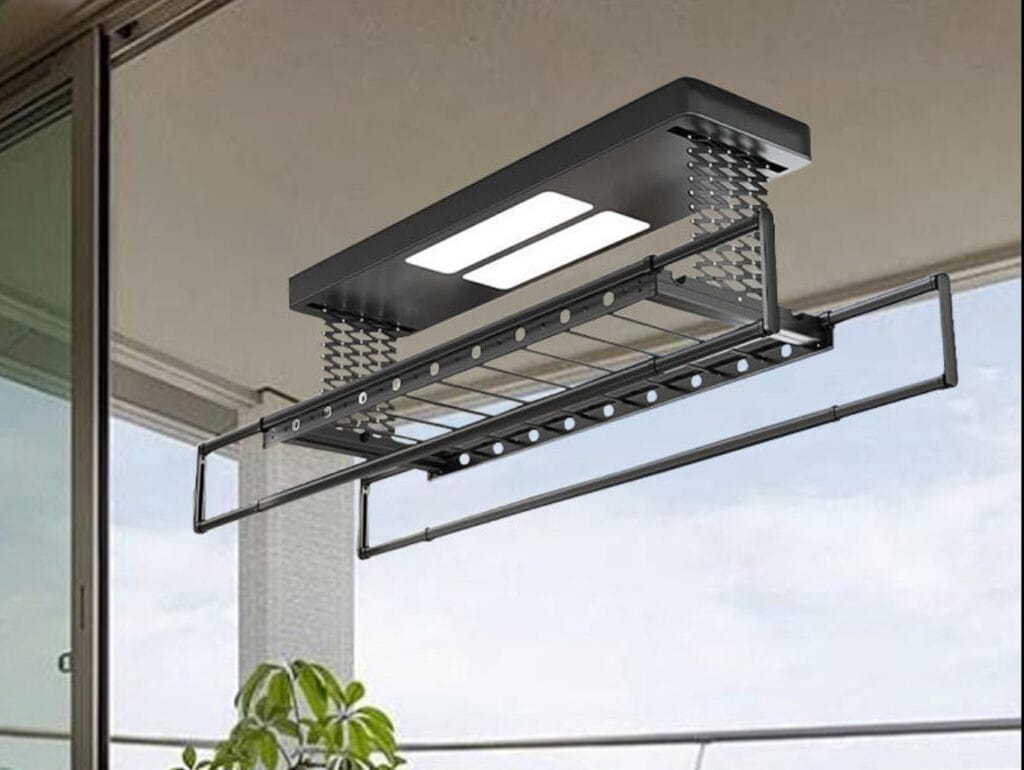
A fold-up rack earns its place in the home after the last garment has been removed.
Can it disappear into the storage location with little effort?
Can the family immediately use the room again?
Does the folded structure stay closed?
Can one person move it easily?
Will the user actually bother putting it away?
That final question may be the most important.
If the design makes folding and storage sufficiently simple, users are likely to complete the cycle and regain their space. If the process feels inconvenient, the rack may remain permanently open regardless of what the product description promises.
True space efficiency therefore depends as much on human behavior as mechanical dimensions.
Conclusion
A fold up drying rack for clothes should be understood as a product that repeatedly transforms between two roles.
When open, it needs to behave like stable drying equipment with sufficient capacity, useful garment spacing, and dependable support under wet loads. When closed, it needs to behave like a compact household object that is easy to carry, easy to store, and unlikely to get in the way.
The quality of that transformation is what separates a genuinely useful folding rack from one that merely has movable parts.
Hinge behavior, partial opening, folded thickness, carrying balance, floor contact, joint control, and realistic storage location all deserve attention alongside traditional specifications such as rail length and overall capacity.
The best fold-up rack does not simply become smaller.
It makes laundry space temporary.
When the clothes are dry, the room becomes the room again.
FAQ
What is a fold up drying rack for clothes?
A fold up drying rack for clothes is a collapsible laundry structure that opens to provide drying space and folds into a smaller configuration for storage when it is not being used.
What folded measurement matters most?
It depends on the intended storage location. Folded thickness is often particularly important when the rack will be stored behind a door, beside an appliance, or against a wall.
Can a fold-up drying rack be used partly open?
Some designs allow individual wings or sections to remain folded while other areas are used. This can reduce the working footprint for smaller laundry loads.
How should folding rack stability be evaluated?
The rack should be tested with realistic wet garments, including uneven loads. Leg geometry, joint control, locking mechanisms, and frame stiffness all influence stability.
Is a fold-up floor rack better than a ceiling drying rack?
They solve different problems. A fold-up rack can move and disappear completely into storage, while a ceiling rack preserves floor space by moving the drying area vertically. The better option depends on laundry frequency, room layout, and installation conditions.
Need Help Choosing the Right Fold Up Drying Rack for Clothes?
If you’re evaluating a fold up drying rack for clothes for apartments, family laundry, compact interiors, or different market applications, our team can help you compare folding behavior, stored dimensions, usable drying area, stability, and everyday handling. Contact us today to discuss a drying solution that works efficiently when it is open and fits naturally into the home when it is closed.





