Table of Contents
Introduction
Drying clothes indoors can be convenient, but it is not always easy. Clothes may take too long to dry, towels can stay damp, rooms may feel humid, and a regular drying rack can quickly take up valuable floor space. For people who live in apartments, small homes, shared spaces, or areas where outdoor drying is not always practical, indoor laundry can become a daily challenge.
That is why an electric drying rack has become a smart choice for modern indoor clothes drying. It combines the simplicity of a traditional drying rack with gentle heat, helping clothes dry faster while using less space than a large drying appliance. It is especially useful for everyday garments, delicate fabrics, baby clothes, socks, underwear, towels, and small laundry loads.
An electric drying rack is not designed to replace every drying method. A tumble dryer may still be better when you need to dry heavy bedding or large loads quickly. But for daily indoor laundry, an electric drying rack offers a practical balance of convenience, fabric care, energy control, and space efficiency.
This guide explains why an electric drying rack is worth considering, how it works, what benefits it offers, how to use it correctly, and what to look for before buying one.
What Is an Electric Drying Rack?
An electric drying rack is a clothes drying rack that uses gentle electric heat to help laundry dry faster indoors. Instead of relying only on room temperature and natural airflow, it warms the drying bars or drying area so moisture can evaporate more efficiently from wet clothes.
You may also see this product described as a heated drying rack, heated clothes airer, electric clothes drying rack, folding electric drying rack, portable electric drying rack, or indoor electric drying rack. These names are often used for similar products, although the design and features may vary.
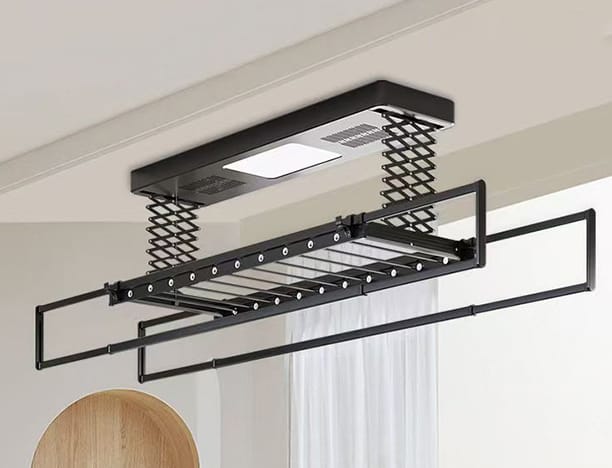
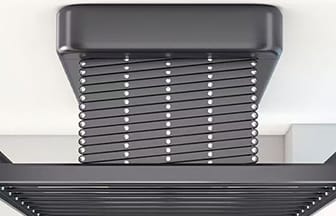
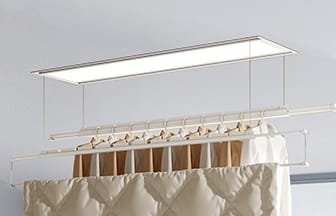
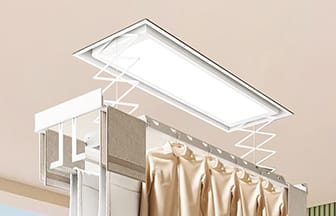
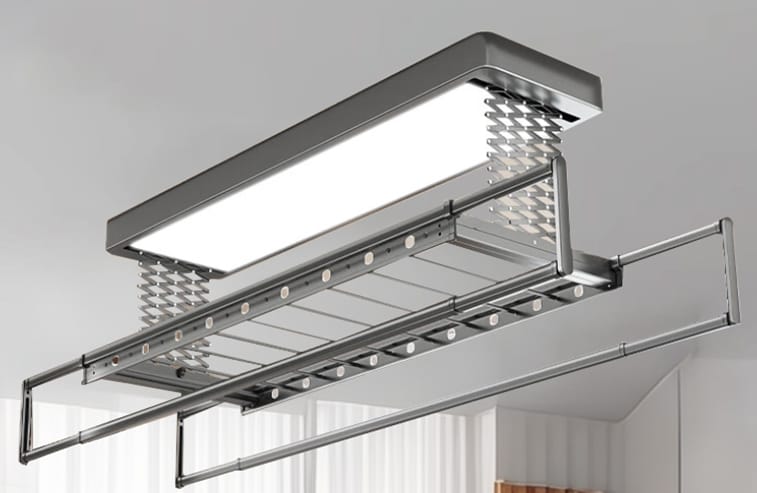
Common styles include foldable electric drying racks, wall-mounted electric drying racks, ceiling-mounted drying racks, heated racks with covers, and electric drying racks with fans. Some are simple plug-in models with heated rails, while others include timer control, temperature settings, remote control, warm air circulation, or smart lifting functions.
The goal is simple: make indoor clothes drying faster, easier, and more reliable.
Why Indoor Clothes Drying Needs a Better Solution
Indoor laundry drying is often more complicated than it looks. A normal drying rack may work well in a warm, ventilated space, but it can be slow in colder or more humid conditions. When clothes stay wet for too long, they may develop a damp smell. At the same time, moisture from laundry enters the room, which can make the indoor environment feel uncomfortable if ventilation is poor.
A tumble dryer solves the speed problem, but it also has drawbacks. It takes up appliance space, uses electricity during each cycle, and may be too harsh for delicate fabrics. Some clothes can shrink, stretch, fade, or wear out faster when exposed to high heat and repeated tumbling.
An electric drying rack sits between these two methods. It is faster than passive air drying, gentler than machine drying, and easier to use in compact spaces. For many households, that makes it a more balanced indoor drying solution.
How an Electric Drying Rack Works
Most electric drying racks use low-temperature heating elements inside the bars or frame. When the rack is turned on, the heated surface helps warm the clothes and encourages moisture to evaporate.
However, heat alone does not dry clothes effectively. Airflow is also important. Clothes dry faster when warm, moist air can move away from the fabric and fresh air can circulate around each garment.
That is why spacing matters. If clothes are packed tightly together, drying will be slower even if the rack is heated. For better results, garments should be spread out with small gaps between them. Thicker items should be placed where they receive more warmth and airflow, while lighter clothes can be placed on outer rails.
Some electric drying racks include a cover or fan system. A cover can help retain warmth around the clothes when it is designed for the product. A fan can improve air movement and speed up drying. Models with timers can also help control running time and reduce unnecessary energy use.
Key Benefits of Using an Electric Drying Rack
An electric drying rack offers several practical benefits for indoor laundry.
First, it helps clothes dry faster than a regular drying rack. This is especially useful during rainy days, cold weather, or humid conditions when passive drying can take too long.
Second, it is gentle on clothing. Because it does not tumble garments and usually uses lower heat than a dryer, it can be a better choice for delicate clothes, sweaters, baby clothes, underwear, sportswear, and fabrics that may shrink or deform under high heat.
Third, it saves space. Many electric drying racks are foldable or wall-mounted, making them suitable for apartments, small laundry rooms, bathrooms, balconies, and shared living spaces. When not in use, they can often be folded and stored away.
Fourth, it gives you more control over daily laundry. You do not need to run a full dryer cycle for a few shirts or socks. You can dry small loads more efficiently and keep essential clothes ready for use.
Fifth, it can help reduce reliance on machine drying. If you use a tumble dryer less often for small or delicate loads, you may lower energy use and reduce fabric wear over time.
Electric Drying Rack vs Regular Drying Rack vs Tumble Dryer
Different drying methods serve different needs. The best choice depends on your space, fabric type, drying speed requirement, and laundry habits.
| Drying method | Best for | Drying speed | Energy use | Fabric care | Space requirement | Practical note |
|---|---|---|---|---|---|---|
| Electric drying rack | Daily indoor laundry, small loads, delicate clothes | Medium | Low to moderate, depending on wattage and time | Gentle | Compact, often foldable | Good balance of speed, convenience, and fabric protection |
| Regular drying rack | Low-cost air drying in well-ventilated spaces | Slow | No electricity | Very gentle | Needs floor or balcony space | Best when airflow and room conditions are good |
| Tumble dryer | Large loads, urgent drying, towels, bedding | Fast | Higher energy use per cycle | May be harsh on some fabrics | Needs appliance space | Best when speed is the main priority |
| Dehumidifier with rack | Humid indoor drying areas | Medium | Depends on model and runtime | Gentle | Needs space for both items | Helps manage indoor moisture |
| Wall-mounted drying rack | Small laundry rooms or bathrooms | Slow to medium | None or electric, depending on model | Gentle | Saves floor space | Good for fixed indoor drying areas |
This comparison shows why an electric drying rack is useful. It does not need to compete directly with a tumble dryer. Instead, it fills the gap between slow passive drying and high-energy machine drying.
Why an Electric Drying Rack Is Smart for Small Spaces
Space is one of the biggest reasons people choose an electric drying rack. In apartments or compact homes, a traditional rack can block walkways, occupy the bathroom, or make a laundry area feel crowded.
A foldable electric drying rack solves this problem by offering temporary drying space when needed. After the clothes are dry, the rack can be folded and stored. Wall-mounted designs are even better for narrow spaces because they do not take up much floor area. Ceiling-mounted models can also use vertical space effectively, especially in laundry areas or enclosed balconies.
For small-space living, the best electric drying rack is not always the largest one. A well-designed rack with enough bar spacing, stable support, and easy storage can be more practical than a bulky model with too much capacity.
Why It Is Better for Delicate Clothes
Many fabrics do not respond well to high heat or constant tumbling. Sweaters can stretch or shrink. Elastic materials may lose flexibility. Printed clothes may fade or crack. Lightweight fabrics can become rough after repeated dryer cycles.
An electric drying rack provides a gentler drying method. Clothes stay in place while low heat supports evaporation. This reduces mechanical stress and helps garments keep their shape for longer.
It is especially useful for:
Baby clothes
Underwear
Sweaters
Sportswear
Stretch fabrics
Shirts and lightweight trousers
Clothes with prints or decorations
Delicate garments should still be dried carefully. Avoid overloading the rack, use lower heat settings if available, and follow the garment care label. For items that may stretch, flat drying may be better than hanging.
Energy Use: Is an Electric Drying Rack Efficient?
An electric drying rack usually uses less power at one time than a large drying appliance. However, total energy use depends on wattage, drying time, fabric thickness, laundry volume, room temperature, and airflow.
A simple way to estimate energy use is:
Wattage ÷ 1,000 × hours used = electricity consumption in kWh
For example, a lower-wattage rack used for a moderate amount of time may be more suitable for small daily loads than running a full drying cycle. But if clothes are overloaded, the room is too humid, or the rack is left running longer than necessary, energy efficiency can decrease.
To improve efficiency, choose a rack with a timer, match the rack size to your laundry volume, spin clothes well before drying, and leave enough space between garments. Good airflow is just as important as heat.
Best Uses for an Electric Drying Rack
An electric drying rack is most useful for regular indoor laundry rather than large heavy-duty drying.
It works well for daily clothes such as shirts, socks, underwear, light trousers, uniforms, baby clothes, and casual wear. It is also helpful for towels, although thicker towels will need more time and better spacing.
It is a smart choice for rainy days, winter laundry, humid weather, and places where outdoor drying is not always possible. If you often find clothes still damp after a full day on a regular rack, an electric drying rack can improve drying reliability.
It is also practical for partial loads. Instead of using a tumble dryer for a few items, you can place them on the electric drying rack and let them dry gently.
For delicate clothes, it offers a safer alternative to machine drying. You can dry garments more slowly without exposing them to strong heat or tumbling.
How to Choose the Right Electric Drying Rack
Start by looking at the available space. If you need flexibility, choose a foldable electric drying rack. If you want to save floor space, consider a wall-mounted model. If you have a dedicated laundry area or balcony space, a ceiling-mounted electric drying rack may be more suitable.
Next, check the drying capacity. A compact rack may be enough for one person or small daily loads. A larger rack is better for families, towels, or multiple garments. However, bigger is not always better if your space is limited.
Material quality is also important. Stainless steel, aluminum alloy, and coated metal are common options. The rack should feel stable, resist moisture, and have smooth surfaces that will not snag fabric.
Safety features should not be ignored. A good electric drying rack should include stable construction, safe wiring, timer control, overheat protection, and clear instructions. If it will be used in a bathroom, laundry room, or humid space, safety and proper placement are even more important.
Also consider convenience features such as remote control, adjustable bars, drying cover, fan-assisted drying, temperature control, and easy folding. These features are not always necessary, but they can improve the user experience.
Common Mistakes to Avoid
One common mistake is overloading the rack. Too many clothes reduce airflow and slow down drying. Heavy wet garments can also put pressure on the frame.
Another mistake is placing clothes too close together. Even with heated bars, garments need airflow to dry properly. Leave gaps between items whenever possible.
Some users place the rack in a closed, damp room and expect fast results. This is not ideal. A ventilated space helps moisture move away from the clothes and improves drying speed.
Another mistake is using a random cover. If the product does not include or recommend a drying cover, do not cover it with blankets, plastic, or thick fabric. This may trap heat incorrectly and affect safe operation.
Finally, do not ignore care labels. An electric drying rack is gentle, but some garments still require special drying methods.
Practical Tips for Faster Indoor Clothes Drying
Spin clothes well before placing them on the rack. The less water left in the fabric, the faster it will dry.
Shake clothes before hanging. This opens the fabric, reduces wrinkles, and improves airflow.
Place thicker garments on the warmest or most open parts of the rack. Towels, jeans, and hoodies need more time and more space.
Avoid layering several garments over one bar. One layer dries better than a thick stack of fabric.
Use ventilation. A slightly open window, exhaust fan, or moisture-control device can help reduce indoor humidity.
Use the timer. Running the rack for a controlled period helps manage energy use and prevents unnecessary operation.
Safety Tips for Using an Electric Drying Rack Indoors
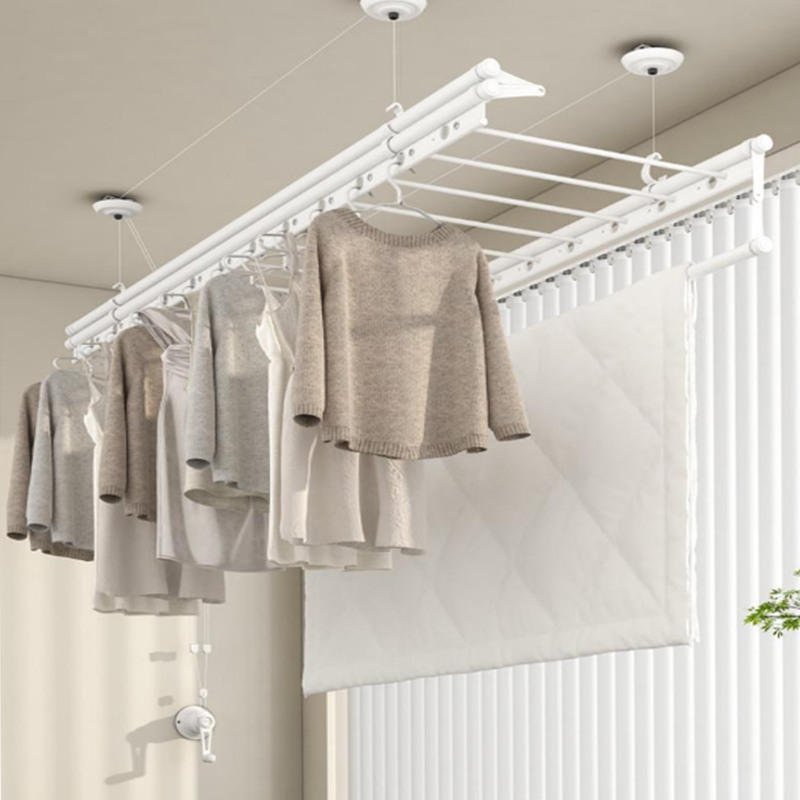
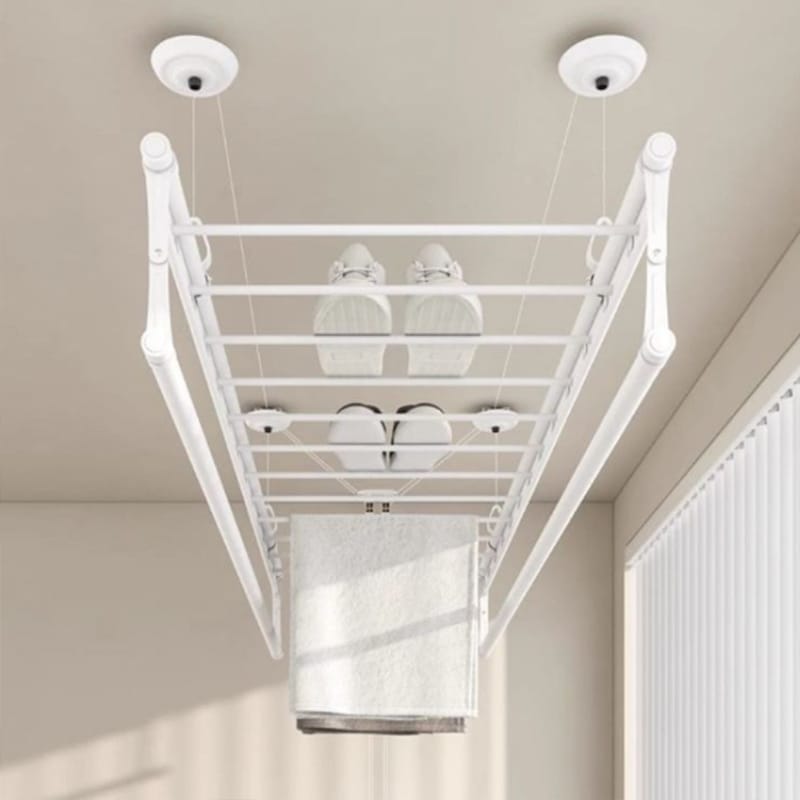
Use the rack on a stable surface or install it securely if it is wall-mounted or ceiling-mounted. Stability is especially important when drying heavy wet clothes.
Keep the power cord away from water, sharp edges, and high-traffic areas. Do not use the rack if the cord, plug, or heating area appears damaged.
Do not overload the rack beyond its recommended capacity. Spread clothes evenly to maintain balance.
Keep children and pets away from heated areas while the rack is operating.
Use only accessories designed for the product. If the rack comes with a cover, use it according to the instructions. If not, avoid covering the rack.
Always follow the manufacturer’s guidance for operating time, placement, cleaning, and storage.
Conclusion
An electric drying rack is a smart choice for indoor clothes drying because it offers a practical balance of speed, fabric care, energy control, and space-saving convenience. It is faster than a regular drying rack, gentler than a tumble dryer, and easier to use in small homes, apartments, laundry rooms, and indoor drying areas.
It is especially useful for daily laundry, delicate garments, rainy days, winter clothes drying, baby clothes, underwear, towels, and partial loads. While it may not replace a tumble dryer for every heavy or urgent load, it can reduce unnecessary machine drying and make indoor laundry more manageable.
If your current indoor drying routine feels slow, crowded, or inconvenient, an electric drying rack can be a simple and effective upgrade.
FAQ
What is an electric drying rack?
An electric drying rack is an indoor clothes drying rack that uses gentle heat to help laundry dry faster than a regular rack. It is useful for apartments, laundry rooms, rainy days, and everyday indoor clothes drying.
Is an electric drying rack good for indoor clothes drying?
Yes, an electric drying rack is a practical choice for indoor clothes drying. It helps reduce drying time, saves space, and provides a gentler alternative to machine drying for daily garments and delicate fabrics.
Does an electric drying rack use a lot of electricity?
Most electric drying racks are designed for low to moderate energy use, but the total cost depends on wattage and running time. Choosing a model with a timer can help control electricity use more efficiently.
Can an electric drying rack dry towels and thick clothes?
Yes, an electric drying rack can dry towels and thicker clothes, but they usually need more time than lightweight garments. For better results, leave enough space between items and avoid folding thick fabrics too tightly.
Is an electric drying rack safe to use at home?
Yes, an electric drying rack is safe when used correctly. Choose a stable model with safety features such as timer control and overheat protection, avoid overloading it, and always follow the manufacturer’s instructions.
Need Help Choosing the Right Electric Drying Rack?
If you’re unsure which electric drying rack is best for your home, apartment, laundry room, or indoor clothes drying needs, our experts are here to help. Contact us today for a personalized recommendation, and find a safe, efficient, and space-saving drying solution for everyday laundry. Don’t let damp clothes slow down your routine—get in touch now and make indoor drying easier, faster, and more convenient!