
Table of Contents
Introduction
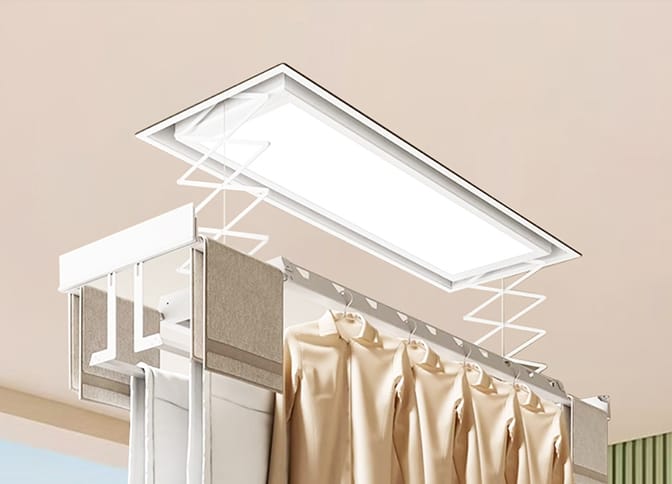
A freshly washed shirt can be completely clean and still look disappointing after drying. The shoulders may lose their shape, the sleeves may twist, or deep creases may remain where the fabric was folded over a narrow rail. These problems do not come from the washing machine. They often begin with what happens immediately afterward.
The way clothing is supported while wet has a direct influence on how it behaves during drying. That makes an electric clothes drying hanger more than a place to suspend laundry. When hanging structure, electric movement, drying assistance, and garment spacing are considered together, the system can become part of the clothing-care process itself.
This perspective is different from evaluating a drying system only by how many garments it can hold. A crowded rack may offer impressive capacity on paper while making shirts overlap and restricting air around heavier fabrics. A well-planned hanging system can achieve a better balance between garment support, accessible loading, airflow, and efficient use of household space.
For homes where much of the wardrobe consists of shirts, dresses, jackets, uniforms, or other garments that are normally stored on hangers, this distinction becomes particularly useful.
Wet Clothing Behaves Differently from Dry Clothing
Wet textiles are heavier and less structurally stable than dry garments.
Water held in the fibers increases the weight pulling downward on shoulders, seams, sleeves, and waistbands. A shirt that normally hangs comfortably in a wardrobe can behave differently immediately after washing because the fabric is carrying additional moisture.
How the garment is supported during this period matters.
If a shirt is folded over a horizontal bar, the middle of the garment carries much of the load and a strong fold line can form. If it is placed on a suitable hanger, the weight is distributed more naturally across the shoulder area.
This does not mean every garment should automatically be hung. Heavy knitwear, for example, may stretch under its own wet weight and can require different care. The important point is that drying arrangement should match garment construction instead of treating every textile in exactly the same way.
The familiar shape of the clothes hanger itself was developed around the form of human shoulders so coats, shirts, blouses, dresses, and similar garments could remain suspended more naturally. A useful background explanation of this everyday object can be found in the Wikipedia overview of clothes hangers and their forms.
An electric drying system builds on that simple idea by making the entire hanging zone easier to position and use.
The Journey from Washing Machine to Wardrobe Can Be Shorter
A typical shirt may pass through several different arrangements during one laundry cycle.
It leaves the washing machine in a basket. It is transferred to a drying rail or rack. After drying, it is removed again, placed on a hanger, and finally moved into the wardrobe.
For clothes that are normally stored on hangers, some of those steps can be reduced.
Placing a shirt on an appropriate hanger shortly after washing means the same basic orientation can continue throughout drying. Once the garment is dry, less rearrangement may be required before storage.
An electric clothes drying hanger can make this workflow easier when its drying zone lowers to an accessible position. Instead of first placing all wet clothes into a temporary structure and reorganizing them later, users can prepare garments individually and position them in the form in which they will ultimately be stored.
This is a small change to the laundry process, but repeated across dozens of shirts every month, small changes become meaningful.
Shoulder Shape Is an Important Part of Hanger Design
Not all hangers support clothing in the same way.
A thin straight hanger may work adequately for lightweight shirts but provide poor support for structured jackets. A hanger with broader shoulders spreads the garment load across a larger area. Rounded edges can also reduce sharp pressure points on fabric.
For an electric clothes drying hanger system, this creates an interesting design consideration: the drying machine and the actual clothing hanger should be treated as connected elements.
The main drying structure may be mechanically strong and technologically advanced, but garment care can still be poor if the hanging accessories do not suit the clothing being dried.
A useful system should therefore consider hanger spacing, hanger attachment points, available vertical clearance, and the types of garments typically handled.
For residential users, the practical question becomes less about maximum hanger count and more about whether those hangers can support clothing naturally without pressing garments against one another.
Shirts, Dresses and Jackets Need Vertical Space More Than Rail Space
Traditional drying racks are often evaluated according to horizontal rail length. Hanger-based drying changes the calculation.
A shirt suspended vertically does not need a long section of horizontal rail, but it requires clear space underneath. Dresses and longer garments need considerably more.
This makes height an important part of the drying layout.
A low floor-standing rack may provide many bars but still be unsuitable for a long dress because the hem touches lower rails or the floor. A height-adjustable overhead system can offer more flexibility by allowing longer garments to hang freely.
This is one reason vertical movement can be particularly useful in hanger-oriented drying systems.
During loading, the structure can remain at a comfortable working height. Once garments are arranged, additional vertical clearance can be created by raising the drying area.
The mechanism therefore changes not only accessibility but also the type of clothing the space can accommodate.
Garment Spacing Matters More Than Maximum Hanger Count
Consider ten freshly washed shirts placed on ten hangers.
If the hangers are compressed tightly together, the shirts may touch across their sleeves, sides, and backs. The system technically holds ten shirts, but much of their fabric surface is no longer freely exposed to surrounding air.
Move the same ten hangers farther apart and the drying environment changes.
Air can move more freely around each garment, sleeves separate more naturally, and the fabric is less likely to remain pressed against another wet surface.
This is why maximum hanger capacity can be a misleading measure of practical performance.
An electric clothes drying hanger should provide enough hanging positions to organize laundry efficiently without encouraging users to compress the entire load into the smallest possible area.
For mixed laundry, spacing can also be adjusted according to fabric thickness. A lightweight shirt may require less separation than a thick hoodie or jacket.
The goal is not to leave unused space unnecessarily. It is to create useful spacing instead of theoretical capacity.
Electric Movement Makes the Most Difference During Loading
The motor is often presented as the most technologically impressive part of an electric drying system. In daily use, its biggest contribution may be much simpler.
It brings the hanging area to the user.
Attaching individual hangers to a rail above head height becomes tiring when repeated across an entire laundry load. Reaching upward while handling wet clothing also makes it harder to arrange garments carefully.
A lowered hanging zone changes the task.
Users can see the available positions clearly, distribute heavier and lighter garments more deliberately, adjust spacing, and make sure sleeves or hems are not tangled before raising the system again.
YIHUI’s electric hanger range includes powered lifting products designed around this type of height adjustment. The existing Electric Hanger 8868 product page provides one example of a ceiling-mounted electric hanger system intended to raise and lower the drying structure.
The practical value of electric movement is therefore closely connected to ergonomics rather than automation for its own sake.
Electric Drying Assistance and Electric Lifting Are Different Functions
The phrase electric clothes drying hanger can refer to products with very different levels of functionality.
Some use electricity primarily to move the hanging structure. Others combine motorized lifting with active drying functions such as air circulation or controlled heat.
These functions should be evaluated separately.
Electric lifting affects access and space management. Assisted airflow affects the environment around wet clothes. Temperature control introduces another variable related to textile care.
Combining these functions can be useful, but a longer feature list is not automatically better.
For example, garments that require gentle treatment may benefit more from appropriate spacing and controlled airflow than aggressive heat. Heavy items may need structural support more than additional electronic functions.
YIHUI’s Electric Cloth Hanger 8818 is an example of a current product that combines powered lifting with assisted drying functions, illustrating how electric movement and drying support can exist within one system.
The important product-design question is whether these functions work together coherently.
Different Garments Create Different Drying Problems
A hanger-oriented drying system becomes easier to understand when the laundry is divided by garment type.
| Garment Type | Main Drying Concern | Useful Design Consideration |
|---|---|---|
| Dress shirts | Shoulder shape and creasing | Suitable hanger profile and good spacing |
| Dresses | Vertical clearance | Higher hanging position with unobstructed length |
| Jackets | Wet weight and structure | Strong support and wider hanger spacing |
| Trousers | Secure suspension | Suitable clips or horizontal hanger support |
| Uniforms | Frequent repeated drying | Accessible loading and organized hanger positions |
| Lightweight blouses | Fabric sensitivity | Gentle handling and adequate separation |
| Heavy knitwear | Potential stretching | Follow garment care instructions rather than hanging automatically |
This variation is why an electric clothes drying hanger should not be treated as a universal answer for every textile.
Good laundry management begins with garment care instructions and fabric behavior.
The electric system provides a controllable drying environment, but users still need to choose a suitable drying method for each garment.
A Better Drying Layout Can Also Reduce Wrinkle Formation
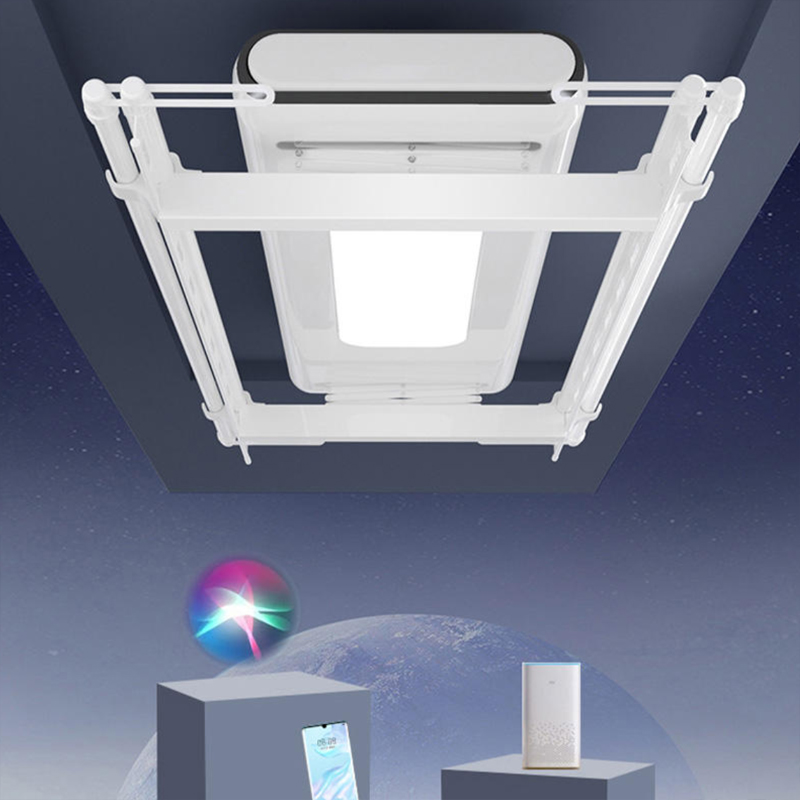
Drying does not replace ironing, steaming, or garment finishing, but the way clothing is positioned can influence how severely it wrinkles.
A shirt folded unevenly over a rail can develop pronounced creases along the fold. Sleeves trapped underneath other garments can dry in twisted positions. Clothing removed from the washing machine and left compressed in a basket for an extended period may also become more difficult to straighten.
Placing appropriate garments on hangers earlier in the process allows gravity to help the fabric settle into a more natural orientation.
Before hanging, gently straightening seams, collars, cuffs, and sleeves can further improve the result.
An electric hanger system makes this easier because users can prepare garments at a comfortable working height rather than trying to straighten them while reaching overhead.
This illustrates a recurring theme: the best benefits often come not from the motor alone, but from how the motor changes user behavior around the garment.
Indoor Laundry Benefits from Keeping Clothing Off the Floor
Floor-standing racks can provide excellent flexibility, but indoor floor area is increasingly valuable.
In a small apartment, an open drying rack may block access to cabinets or reduce the usable width of a room. A chair may need to be moved every time laundry is dried. In a narrow balcony, walking between the washing machine and window can become awkward.
Moving hanger-based drying overhead reduces this conflict.
The garments still occupy space, of course. A row of shirts hanging from the ceiling has physical volume. But the supporting equipment does not create the same footprint as a floor rack.
This allows the area beneath the laundry to remain more flexible, depending on garment length and installation height.
For frequent indoor drying, that difference can be more valuable than simply making a portable rack fold smaller.
Long Garments Need to Be Included in the Room Plan
A drying system is sometimes planned using only the dimensions of the machine itself.
This can lead to problems.
A ceiling-mounted unit may fit perfectly between two cabinets, but a dress hanging beneath it may interfere with a counter. Trousers may overlap the washing machine lid. Shirts positioned close to an inward-opening window can prevent the window from moving freely.
The correct planning volume is therefore:
rack + hangers + garments.
This three-dimensional approach is especially important for electric systems because their height changes.
The lowered loading position needs clear space around the user. The raised drying position needs enough clearance for the clothing. The surrounding room still needs to function in both states.
Designing around the empty machine alone misses much of the real application.
The Hanger Rail Should Match Normal Household Habits
People develop very consistent clothing habits.
Some households dry almost everything on hangers. Others use hangers mainly for shirts and dresses while towels and underwear go onto horizontal rods. Families with school uniforms may handle large numbers of similar garments every week.
This affects what kind of electric drying system makes sense.
A household dominated by hanging garments benefits from plentiful hanger attachment points and vertical clearance. A family regularly drying bedding needs long rods in addition to hanger positions. A mixed system may be more useful than a product focused exclusively on one method.
This is why electric drying racks frequently combine horizontal poles and dedicated hanger positions.
The rack should reflect the wardrobe, not force the wardrobe to adapt to the rack.
Small Details Around the Hanger Can Influence Everyday Use
The difference between an acceptable product and an enjoyable one is often found in small mechanical details.
Do hangers slide too easily when the rack moves?
Are attachment positions far enough apart?
Can users place hangers onto the rail with one hand?
Are sharp edges avoided around frequently touched areas?
Do hanger holes accommodate common hanger hooks?
Can shirts be removed without disturbing neighboring garments?
None of these questions sounds technologically sophisticated.
Yet these are exactly the interactions users repeat every laundry day.
For manufacturers and product teams, examining these details can produce greater improvements than simply adding another remote-control mode.
When Air Assistance Is Useful
Natural air drying can work effectively when the room has suitable ventilation and garments are spaced well. However, indoor conditions vary substantially.
Rainy periods, humid climates, enclosed balconies, and low natural airflow can make drying slower.
Air-assisted electric hanger systems can help create movement around the garments when environmental conditions are less favorable.
The effectiveness still depends on layout.
Blowing air toward a tightly packed wall of clothing will not create the same conditions as circulating air around separated garments. The physical arrangement remains part of the drying process.
This means active drying and good rack geometry should be designed together.
An electric clothes drying hanger is most effective when technology supports sensible textile placement instead of trying to compensate for poor arrangement.
What Should Be Evaluated Beyond Motor Specifications?
For distributors and product developers, electric hanger systems can easily become specification-driven.
Motor type, power rating, remote range, and control options are measurable and easy to place in a product table. They do not describe the entire experience.
A useful product evaluation should also examine what happens with actual laundry.
Load the system with wet shirts.
Add a heavy jacket on one side.
Hang several long garments.
Lower the rack and observe whether users can comfortably reach the outer positions.
Raise it again and check whether clothing remains stable.
Listen to the mechanism in a room rather than a large open production area.
Try removing one shirt from the middle without disturbing the others.
These tests reveal how the product behaves as clothing equipment rather than merely as an electromechanical device.
The Goal Is Not to Automate Hanging Clothes Completely
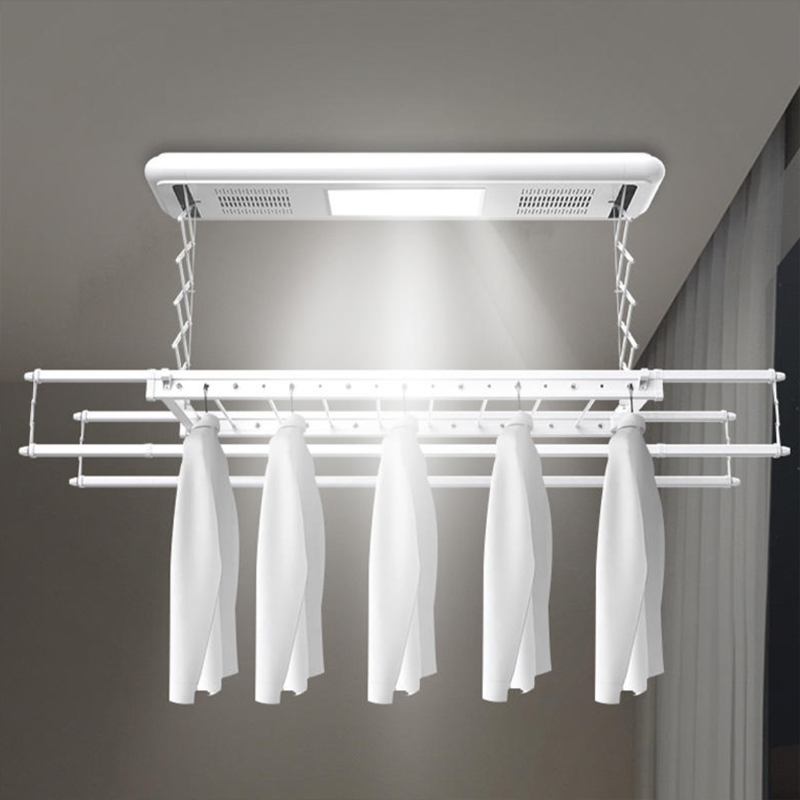
The phrase “electric clothes drying hanger” might suggest a future in which machines perform the entire task automatically.
That is not necessarily where the greatest value lies.
For most households, the physically demanding part is not placing a shirt onto a hanger. It is managing height, space, repeated overhead movement, and the drying environment after the garment is hung.
Automation is most useful when it removes those points of friction.
The user can still choose the correct hanger, straighten the garment, and decide where it should go. The electric system then supports that decision by positioning the drying zone more conveniently.
This division of work is practical because humans remain good at judging garments while mechanical systems are good at repeated controlled movement.
Good household automation does not need to replace every human action. It should remove the actions that add effort without adding value.
Conclusion
An electric clothes drying hanger creates an interesting bridge between laundry equipment and garment care.
Its value is not limited to motorized lifting or assisted drying. By allowing clothes to remain properly suspended, making hanger positions easier to reach, improving garment separation, and moving the drying area away from valuable floor space, the system can change the entire stage between washing and wardrobe storage.
The most useful designs recognize that different garments behave differently. Shirts, dresses, jackets, trousers, towels, and knitwear do not share the same drying requirements.
A thoughtful hanger-based system therefore combines accessible movement with appropriate spacing, sufficient vertical clearance, stable support, and drying functions that match realistic household conditions.
When these elements work together, electricity is no longer the main story. The real improvement is a simpler clothing-care routine in which garments can move from washing to drying and eventually back into storage with fewer unnecessary steps.
FAQ
What is an electric clothes drying hanger?
An electric clothes drying hanger is a powered laundry system that supports hanging garments and may use electricity for lifting, positioning, airflow, or other drying-related functions depending on the product design.
Is an electric clothes drying hanger suitable for shirts?
Yes. Shirts are well suited to hanger-based drying when an appropriate hanger is used because the garment can remain in a natural suspended position while drying.
Can every garment be dried on a hanger?
No. Garment-care instructions should always be considered. Some heavy knitwear and delicate textiles may stretch or require flat drying rather than suspended drying.
Does more hanger capacity mean better drying?
Not necessarily. Garments need reasonable separation. Excessive hanger density can cause fabrics to touch and restrict airflow around wet clothing.
What should be considered when installing an electric hanger system?
Important factors include available ceiling space, loading height, garment length, surrounding windows and furniture, electrical requirements, hanging capacity, and the household’s normal laundry habits.
Need Help Choosing the Right Electric Clothes Drying Hanger?
If you’re evaluating an electric clothes drying hanger for different garment types, balconies, indoor laundry spaces, or residential applications, our team can help you compare hanging layouts, lifting functions, drying assistance, vertical clearance, and practical clothing-care requirements. Contact us today to discuss a solution that makes everyday garment drying more organized, accessible, and convenient.





