Table of Contents
If you’ve ever struggled with limited space or cumbersome floor racks, you know how frustrating doing laundry can be. A ceiling mounted drying rack offers a practical, space-saving, and efficient solution for modern homes. By lifting your clothes overhead, you free up floor space, increase airflow for faster drying, and maintain a cleaner, more organized environment.
This guide walks you through everything you need to know about ceiling mounted drying racks—from choosing the right model and understanding installation requirements to learning how to maximize drying efficiency. By the end, you’ll have actionable insights to make a confident decision that suits your home.
Why Traditional Drying Racks Fall Short

Floor racks have long been a staple for air-drying clothes. However, in many households, they cause more problems than they solve. They take up precious floor space, are easily knocked over, and often leave laundry areas cluttered.
Meanwhile, electric dryers, while convenient, consume significant energy. According to the Energy Saving Trust, replacing a tumble dryer with air-drying options can save a typical household hundreds of kilowatt-hours annually, reducing both energy costs and environmental impact.
Ceiling mounted drying racks address both space and energy concerns. By utilizing vertical space, they free up your living area while letting your clothes dry naturally and efficiently.
What Is a Ceiling Mounted Drying Rack?
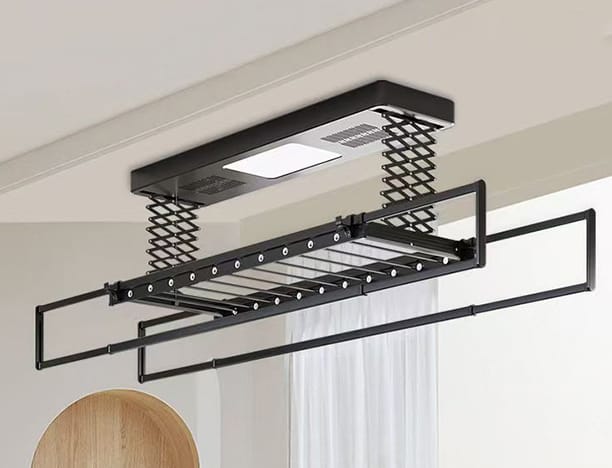
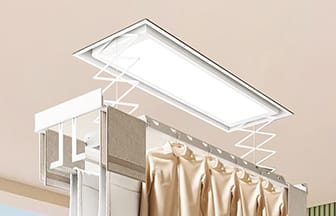
A ceiling mounted drying rack is a system installed overhead, allowing clothes to be suspended above the floor. The racks can be lowered and raised using manual pulley systems or motorized controls for automatic operation.
Unlike wall-mounted racks, ceiling systems can handle heavier loads and stay out of the way when not in use. They are available in various designs, including foldable, retractable, and adjustable-height models, making them suitable for apartments, balconies, and multi-purpose rooms.
For a broader overview of suspended clothes airers, see Clothes Airer Overview.
Key Benefits of a Ceiling Mounted Drying Rack
Space Optimization
By moving laundry overhead, you immediately reclaim floor space. This is particularly valuable in small apartments, laundry rooms, or multifunctional living areas. Users report that installing a ceiling mounted drying rack often frees up 1–2 square meters of usable floor space.
Faster Drying Through Better Airflow
Warm air naturally rises, which helps clothes dry faster when suspended near the ceiling. Proper airflow reduces dampness and prevents unpleasant odors. According to Engineering Toolbox, increasing vertical airflow can decrease drying time by 20–30%.
Safer and More Stable
Ceiling-mounted racks are less likely to tip over than freestanding floor racks, providing a safer environment for children and pets. Many models include anti-drop mechanisms and secure locking systems.
Preserves Fabric Quality
High-heat electric dryers can damage fibers, shrink fabrics, and fade colors over time. Air-drying on a ceiling mounted rack is gentler on your clothing, extending its lifespan.
Real-Life Example: Apartment Laundry Upgrade
A couple living in a 60-square-meter apartment struggled with a foldable floor rack that constantly blocked pathways. After installing a ceiling mounted drying rack:
- Floor space increased by 1.5 square meters
- Laundry dried 25% faster due to improved airflow
- No longer needed to move racks in and out daily
- Heavier items like jeans and towels could be dried safely
This case illustrates how ceiling mounted solutions integrate seamlessly into modern homes, providing both convenience and efficiency.
Manual vs. Motorized Ceiling Mounted Racks
Choosing the right rack depends on your lifestyle and budget.
| Feature | Manual Pulley Rack | Motorized Rack |
|---|---|---|
| Operation | Pulley-based | Motorized lift |
| Effort | Moderate | Minimal |
| Installation | Simple | More technical |
| Convenience | Basic | High |
| Cost | Lower | Higher |
Motorized systems are particularly convenient for households with frequent laundry loads or limited mobility. Manual pulley racks are simpler and more cost-effective, but require physical effort to operate.
Material Considerations
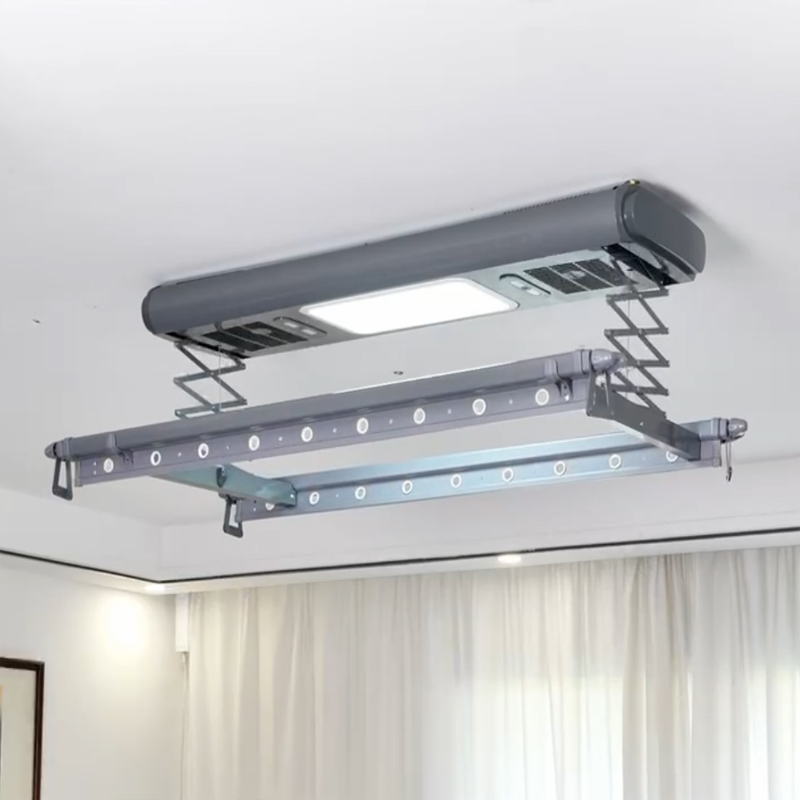
High-quality ceiling mounted drying racks are usually made from metal alloys such as aluminum or stainless steel. These materials provide:
- High load capacity
- Resistance to corrosion and moisture
- Long-term durability
Avoid low-quality plastics or untreated metals, as these may bend, rust, or fail over time. For more information on material selection and corrosion resistance, see Corrosion Overview.
Choosing the Right Ceiling Mounted Rack for Your Home
- Weight Capacity: Estimate your average laundry load. Towels, jeans, and blankets can quickly add 15–30 kg. Choose a rack rated above your typical weight to ensure safety.
- Ceiling Structure: Reinforced ceilings or concrete slabs are ideal. Drywall may require additional anchors or brackets. Structural load guidance can be found at Engineering Toolbox.
- Height Adjustability: Adjustable racks allow you to lower the system for easy loading and raise it for drying.
- Safety Features: Look for anti-drop, overload protection, or limit-stop mechanisms.
Installation Overview
Typical installation involves:
- Identifying load-bearing points
- Marking and leveling mounting positions
- Securing brackets into structural supports
- Attaching rails and lifting mechanisms
- Testing operation and load stability
Professional installation is recommended for ceilings with uncertain structural support.
Maintenance Tips
Proper maintenance ensures longevity:
- Monthly: Clean rails to remove dust or moisture
- Quarterly: Inspect joints and fasteners
- Annually: Test safety mechanisms and load limits
With proper care, ceiling mounted racks can last for years with minimal maintenance.
Energy and Environmental Benefits
Air-drying clothes reduces reliance on electric dryers, lowering energy bills and environmental impact. According to U.S. Environmental Protection Agency, air drying can significantly reduce household electricity consumption.
Comparison of Drying Methods
| Drying Method | Space Usage | Energy Use | Fabric Care |
|---|---|---|---|
| Ceiling Mounted Rack | Very Low | Very Low | Excellent |
| Floor Rack | High | None | Moderate |
| Electric Dryer | Medium | High | Moderate |
Conclusion
A ceiling mounted drying rack is a practical, space-saving, and energy-efficient solution for modern homes. It improves airflow, supports heavy loads, protects fabrics, and keeps your living space organized. If you want a smarter, more reliable way to handle daily laundry, installing a ceiling-mounted rack is a choice you won’t regret.
FAQ
Is a ceiling mounted drying rack suitable for daily use?
Yes. Many households rely on ceiling-mounted racks as their primary drying solution.
Can it support heavy items like blankets or towels?
Yes, as long as the rack is rated for the load and properly installed.
Do I need professional installation?
Not always, but recommended if your ceiling structure is uncertain.
Will metal racks rust over time?
High-quality aluminum or stainless steel models are corrosion-resistant.
Is it suitable for small apartments?
Absolutely. Ceiling racks save floor space, making them ideal for compact living areas.
Looking for a ceiling mounted drying rack that combines efficiency, safety, and long-lasting durability?
If you’re unsure which model or capacity best suits your home, our experts are ready to guide you. Contact us today for personalized advice and see how a ceiling-mounted drying solution can make your daily laundry faster, safer, and more convenient. Don’t wait—optimize your space and upgrade your laundry experience now!