Table of Contents
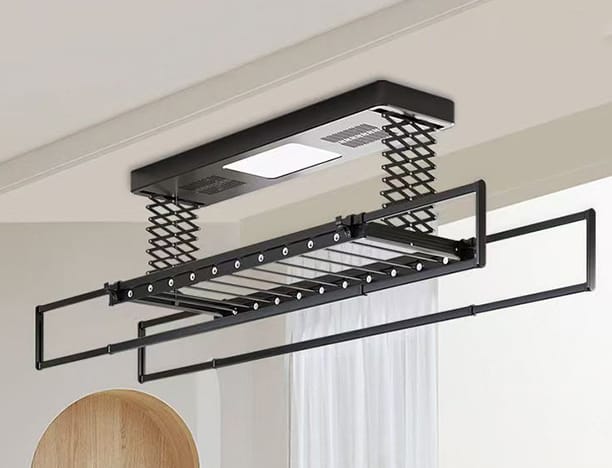
A ceiling mounted clothes airer purchase should begin with the actual laundry routine and room constraints. A designer planning an integrated laundry zone should draw the rack casing, rail travel and removable service covers alongside the cabinetry. This guide helps buyers, distributors and project teams evaluate the ceiling mounted clothes airer through room fit, a representative sample and written acceptance criteria. Use the current configuration and instructions for any final product decision.
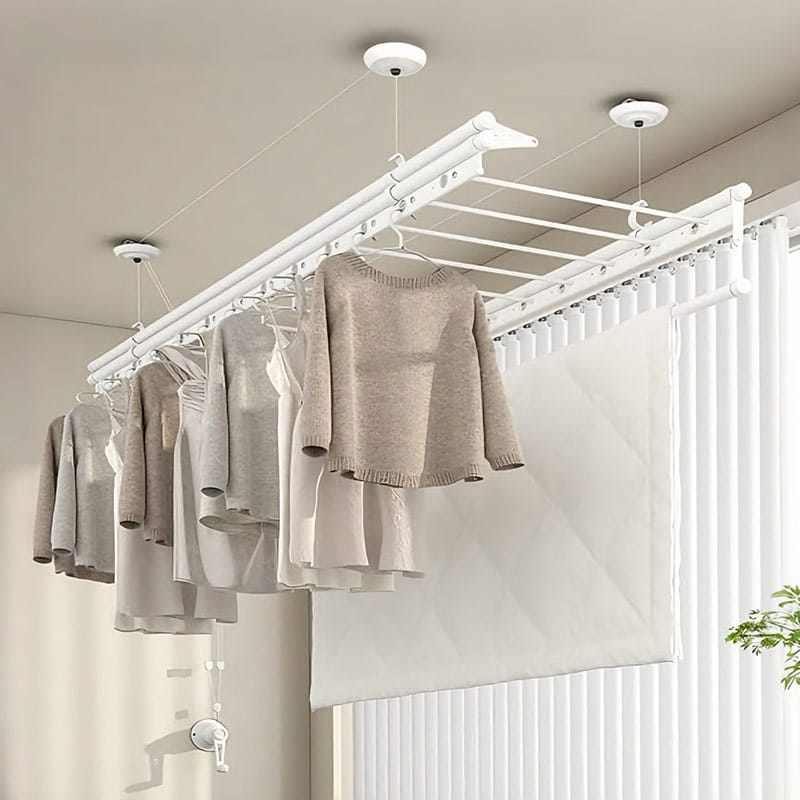
Joinery and Service Access in practice
A designer planning an integrated laundry zone should draw the rack casing, rail travel and removable service covers alongside the cabinetry. Leave access to the mounting and maintenance points described in the installation drawing. Ask the contractor to flag any site change that affects those spaces. Approve the final arrangement after the cupboard doors and appliances are fitted. A clean visual finish should still allow ordinary inspection and service.
The decision for this ceiling mounted clothes airer should be recorded against three specific points: joinery coordinated with moving rails; removable covers remain accessible; site changes reviewed before completion. Keep the observation, the document reference and the person responsible for resolving any exception together. This turns a broad product enquiry into a review that another buyer or installer can follow.
Ceiling Mounted Clothes Airer: coordinate the rack with joinery drawings
Include a ceiling mounted clothes airer in the room drawings early enough to coordinate cupboards, bulkheads and finishing details. Show where the casing opens and how an installer reaches fasteners. Concealing a mechanism behind trim without preserving the service access can turn a minor repair into removal of finished work.
The drawing package for a ceiling mounted clothes airer should distinguish fixed building elements from moving rails and removable covers. Obtain the current installation drawing and agree responsibility for supporting structure. When room dimensions change during construction, revisit the rack location before fabrication. A signed finish sample does not resolve a conflict between a cabinet door and a lowered rail.
Account for the finish and the humid environment
Choose the finish of a ceiling mounted clothes airer with the room environment in mind. Ask which materials are used in the rails, fixings and mechanism and how exposed edges are protected. A general description such as metal or corrosion resistant does not identify every component that may be exposed to damp air.
For a ceiling mounted clothes airer, request the supplier's cleaning guidance and limitations on exposure. An enclosed balcony can have persistent condensation even when rain does not enter. Keep product selection, ventilation and cleaning as separate decisions. A coating can protect a surface, but it cannot correct an unresolved moisture source or guarantee that an indoor product is suitable for open weather.
Protect garment shape during drying
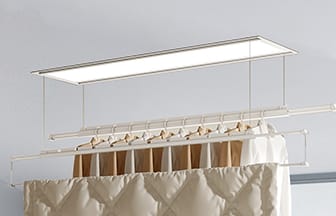
A ceiling mounted clothes airer supports garments, but the garment label determines the appropriate drying method. Some knitwear needs flat support and can stretch when hung wet. Use a separate suitable surface where required and avoid describing a hanging rack as appropriate for every fabric. Trial the hangers and clips with representative items.
When presenting the ceiling mounted clothes airer, explain which part of the routine it supports and which items need another arrangement. Look for sharp edges, rough joints or concentrated contact marks on the sample. A purchasing team can reduce customer disappointment by showing a realistic mixed-load routine instead of implying that every textile can be treated in the same way.
Keep the product and carton measurements separate
Record the ceiling mounted clothes airer dimensions in three states where relevant: deployed product, folded or parked product and shipping carton. Include the units and the drawing reference. These measurements answer different questions about room fit, storage and freight. A carton can be much larger than the assembled mechanism or narrower than the deployed base.
Before approving the ceiling mounted clothes airer listing, compare each published measurement with the intended field. Ask the warehouse to measure a packed sample and the evaluator to measure the deployed unit. Keep tolerances or configuration differences visible. This simple distinction prevents costly misunderstandings when a buyer uses a shipping dimension to plan a finished room.
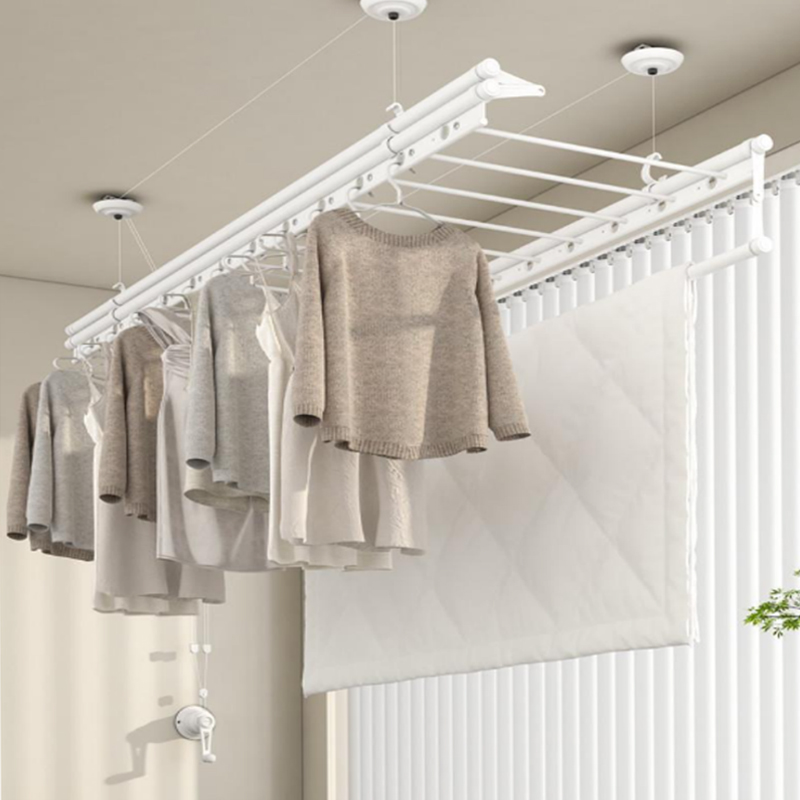
Map the full installed envelope
Measure a ceiling mounted clothes airer in every relevant state: parked, lowered, extended and loaded with garments. A product's casing size does not describe the space occupied by wet clothes. Draw the rail positions and include the hanger hook, garment length and room needed for a person to load comfortably.
For a ceiling mounted clothes airer, record the distance to doors, cupboards, lights, windows and appliances. Check movement across the whole range rather than only at its endpoints. A dimensioned room sketch helps an installer identify conflicts before drilling. Use the current product drawing to establish mounting positions; dimensions inferred from a photograph are unsuitable for installation planning.
Check conflicts with access and building services
Place a ceiling mounted clothes airer where it does not obstruct access to ventilation equipment, electrical junctions or maintenance panels. Consider how technicians will reach the rack itself. A location that looks tidy on opening day may become expensive to service when cabinetry or a glazed enclosure is added later.
Coordinate the ceiling mounted clothes airer with lighting, window hardware and nearby appliances during design. Check the route for a ladder or service platform and the ability to remove the casing using the approved procedure. In shared or managed buildings, confirm the appropriate installation permissions and coordination process before work starts. Treat these as project-specific requirements rather than universal rules for every home.
Review packaging around vulnerable components
Packaging for the ceiling mounted clothes airer should protect long rails, projecting arms, finish surfaces and small accessories during the intended journey. Examine a packed sample for movement and contact between parts. Ask the supplier which transit checks have been performed and whether they cover the current pack design and distribution route.
For the ceiling mounted clothes airer, agree how transport damage will be documented at receipt. Photograph the unopened carton, identification and internal protection before discarding packing. Keep damage patterns separate from manufacturing defects. A crushed corner, a loose component and a missing accessory require different corrective actions even if all three appear as a return in the sales system.
Review the product after the room is furnished
Revisit the ceiling mounted clothes airer layout after cupboards, appliances and everyday storage are in their final positions. A product approved in an empty room can lose clearance as the project develops. Repeat the operating or folding sequence and check access to windows, doors and maintenance areas.
Keep the final ceiling mounted clothes airer arrangement with the handover photographs. If furniture changes later, reassess the path before normal use continues. This is particularly useful for managed apartments and retail displays, where the person altering the room may not know the original installation assumptions. A visible room plan helps preserve the clearance that the product needs.
Decision checklist and comparison
Use the following comparison for the ceiling mounted clothes airer evaluation. The alternatives describe evidence quality, not a claim that one brand always performs better. Resolve missing information before accepting an equivalent product or releasing the batch.
| Approach | When it may fit | Confirm before choosing |
|---|---|---|
| Fixed rail arrangement | The usual load fits a stable, known footprint | Room clearances and usable garment spacing |
| Retractable rail arrangement | The room benefits from changing rail length | Both dimensional states and extension-specific loading conditions |
| Separate secondary drying area | Occasional loads exceed the core arrangement | Garment-care needs, circulation and storage of additional equipment |
Product configuration to discuss
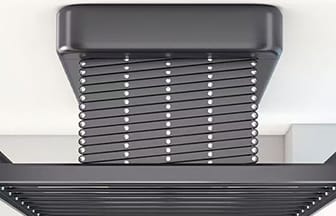
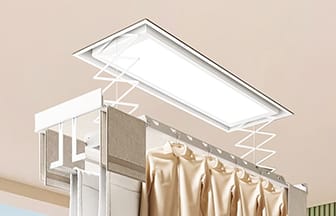
For a relevant starting point, review YIHUI Hand Ceiling Drying Racks with YIHUI. Treat the listed product as a candidate for the ceiling mounted clothes airer brief and confirm the current drawing, included components, finish and installation or assembly requirements. Product-family photographs do not establish that every option is supplied together.
Compare the relevant YIHUI product category and ask about configuration and supply services. Keep requested features separate from those already confirmed for the selected model.
Independent reading
For independent background, read EPA guidance on moisture control. Use this background when reviewing the room environment. It does not certify a particular rack or replace a project-specific ventilation assessment.
Request a configuration review
Send YIHUI your ceiling mounted clothes airer brief with the intended market, room or storage dimensions, routine laundry type and planned order quantity. Include joinery coordinated with moving rails as a specific review item. Ask for a configuration proposal and sample plan before committing to a bulk order. Use the enquiry form below or the contact page to start the discussion.
Frequently asked questions
What should I check first for a ceiling mounted clothes airer?
Begin with joinery coordinated with moving rails. Match it to the actual room or sales brief, then confirm the current configuration and instructions. A sample should demonstrate the feature that determines your purchase decision.
Which documents should accompany a ceiling mounted clothes airer quote?
Request a current drawing, feature list, packing list and installation or assembly instructions. For this brief, also document removable covers remain accessible. Ask the supplier to identify options and any unresolved differences.
How should I evaluate a ceiling mounted clothes airer sample?
Use the intended garments, hangers and room or display conditions. Record the setup and observations so another person can repeat the review. Include site changes reviewed before completion in the acceptance record.
Can a similar-looking ceiling mounted clothes airer be substituted?
Review the supplied revision, dimensions, components and instructions before approving a substitute. Similar appearance does not establish compatible controls, an equivalent mechanism or the same permitted loading conditions.
What information helps YIHUI review my ceiling mounted clothes airer enquiry?
Supply the destination market, quantity, intended use, useful dimensions and required functions. State that the main topic is joinery and service access and include photographs or a sketch where these clarify the practical constraint.