Table of Contents
Introduction
Laundry solutions are more than just functional tools—they can transform the way you manage household chores. Choosing the right drying system affects not only efficiency but also the aesthetics and space utilization in your home. Ceiling dry racks and wall-mounted racks are two popular options, each offering unique advantages. Understanding their differences helps you make an informed decision, ensuring that your laundry area is both practical and space-efficient.
Efficient drying systems can reduce energy usage and prevent fabric damage. According to studies on indoor drying methods, clothes dried using well-ventilated racks tend to retain their color and texture longer compared to machine drying. This highlights the importance of selecting the right rack type for long-term clothing care.
What is a Ceiling Dry Rack?

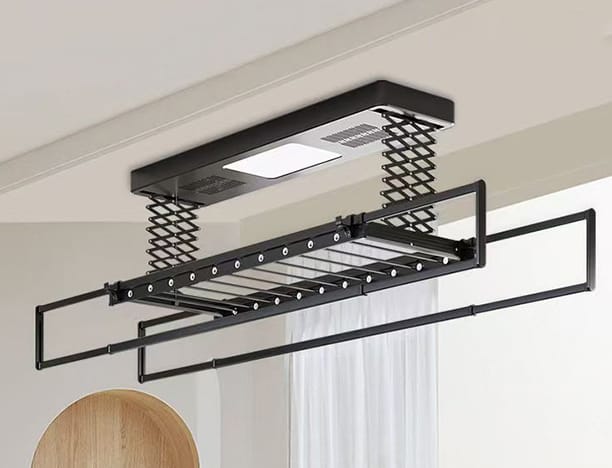
A ceiling dry rack is a suspended laundry system installed overhead, often retractable or equipped with a pulley mechanism. It allows you to dry clothes without occupying floor or wall space, making it ideal for apartments, small laundry rooms, or homes with limited storage.
Types and Mechanisms
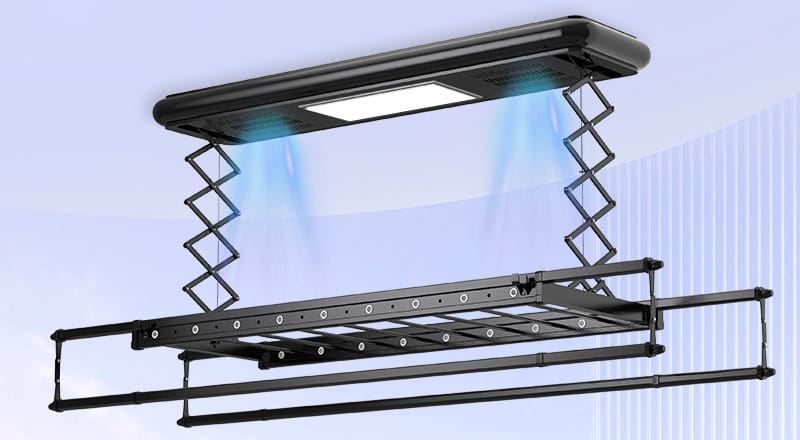
Ceiling racks come in various designs: manual pulley systems, retractable racks, and electric automatic racks with remote control. Materials often include aluminum, stainless steel, or high-grade plastic, ensuring durability while remaining lightweight. Some models also include built-in LED drying lights or adjustable rods, providing both practicality and convenience.
Ceiling dry racks are particularly useful when you need to maximize vertical space while keeping your laundry area organized. They are also effective for delicate fabrics since the suspension allows air to circulate freely, reducing wrinkles and damage.
What is a Wall-Mounted Laundry Dry Rack?
Wall-mounted racks attach directly to a wall, offering a sturdy solution for indoor laundry. They are generally fixed or foldable, providing flexibility depending on your room layout. Wall-mounted racks are ideal when ceiling installation is not feasible or when you prefer easier access to your clothes.
Key Features
Most wall-mounted racks are made of stainless steel, aluminum, or heavy-duty plastic. They can accommodate a moderate load and are often adjustable in width to fit different spaces. Foldable models allow you to collapse the rack against the wall when not in use, freeing up space for other activities.
While wall-mounted racks are easier to install, they require a free wall area, which may limit placement options in small rooms.
Key Differences Between Ceiling and Wall-Mounted Dry Racks
Understanding the differences between ceiling and wall-mounted laundry racks can help you choose the one that best fits your home. The table below summarizes the main factors:
| Feature | Ceiling Dry Rack | Wall-Mounted Dry Rack |
|---|---|---|
| Space Utilization | Excellent, uses overhead space | Moderate, occupies wall area |
| Load Capacity | High, depends on installation | Moderate, limited by wall strength |
| Installation Complexity | Medium to high, may require ceiling reinforcement | Low to medium, usually simpler |
| Maintenance | Easy if retractable, some models require occasional pulley checks | Easy, foldable models need periodic cleaning |
| Cost | Varies, generally higher for automatic models | Generally lower, simple designs are inexpensive |
| Best For | Small apartments, space-conscious homes | Accessible, easy-to-install spaces |
According to home organization surveys, over 60% of users in compact living spaces prefer ceiling dry racks due to their space-saving benefits.
Pros and Cons of Ceiling Dry Racks
Advantages
- Saves floor and wall space, ideal for compact homes
- Supports heavier loads with proper installation
- Can include retractable or automatic features for convenience
- Reduces wrinkles and promotes faster air circulation
Disadvantages
- Installation can be more complex
- May require reinforcement depending on ceiling type
- Cost is generally higher for advanced models
Pros and Cons of Wall-Mounted Dry Racks
Advantages
- Easy to install without ceiling reinforcement
- Accessible height for everyday use
- Foldable options free up wall space when not in use
Disadvantages
- Limited load capacity
- Occupies wall space that could be used for storage or decoration
- May not be suitable for very small rooms
How to Choose the Right Laundry Dry Rack for Your Home
When selecting between a ceiling dry rack and a wall-mounted model, consider the following:
- Room Size: Ceiling racks are ideal for small spaces; wall-mounted racks work well if you have a free wall.
- Ceiling Type: Ensure your ceiling can support the weight of the rack plus wet clothes.
- Laundry Load: Larger families may benefit from higher-capacity ceiling racks.
- Manual vs Automatic: Automatic ceiling racks save effort but come at a higher cost.
- Budget: Simple wall-mounted racks are more cost-effective, while retractable or electric ceiling racks offer more features.
Installation Tips and Safety Guidelines
Proper installation ensures safety and longevity:
- Ceiling Dry Rack: Use anchors suitable for ceiling material, ensure load capacity is verified, and follow manufacturer guidelines for pulley or motorized systems.
- Wall-Mounted Dry Rack: Ensure screws are mounted into studs or strong anchors, avoid overloading, and keep rack height convenient for everyday use.
- Maintenance: Regularly check screws, pulleys, and rods. Wipe metal parts to prevent rust and ensure smooth operation.
Conclusion
Choosing between a ceiling dry rack and a wall-mounted laundry rack depends on your space, needs, and budget. Ceiling dry racks are ideal for small, compact areas where maximizing vertical space is essential. Wall-mounted racks are simpler, easier to install, and accessible for everyday use. Consider your laundry load, room layout, and desired features when making a decision. By understanding the differences and evaluating your household needs, you can select a laundry drying solution that improves efficiency, maintains clothing quality, and fits seamlessly into your home environment.
FAQ
What is the difference between ceiling and wall-mounted laundry racks?
Ceiling racks maximize vertical space, often support heavier loads, and can be retractable. Wall-mounted racks are simpler, easier to access, and occupy wall space.
How much weight can a ceiling dry rack hold?
Load capacity varies by model and installation, typically ranging from 20 to 50 kilograms for manual racks and up to 70 kilograms for reinforced or automatic models.
Which rack is better for small apartments?
Ceiling dry racks are usually preferred in small apartments due to their space-saving design and vertical utilization.
Are ceiling racks safe for heavy or delicate clothes?
Yes, when installed properly, they can safely hold heavy loads, and delicate fabrics benefit from gentle air circulation without machine agitation.
Need Help Choosing the Right Ceiling Dry Rack?
If you’re unsure about which ceiling dry rack is best for your home or laundry space, our experts are here to help. Contact us today for a personalized consultation, and ensure your laundry system is space-efficient, safe, and tailored to your needs. Don’t wait—get in touch now to make your laundry routine easier and more organized!