Table of Contents
Managing laundry efficiently is one of the most common day‑to‑day challenges in modern homes and commercial environments. Whether you live in a compact apartment, a multi‑family residence, or operate a facility handling high laundry loads, you’ve likely looked for solutions that save space, reduce energy costs, and make drying clothes easier. One of the best options available today is the ceiling clothes drying rack—a system that leverages unused vertical space while offering convenience, durability, and often automation.
In this comprehensive guide, you’ll learn everything you need about ceiling clothes drying racks: how they work, why they’re gaining popularity, how to choose the right one for your space, real‑world performance examples, installation and maintenance tips, comparison with other drying solutions, and common questions answered. This article goes beyond general advice—it provides detailed insights and practical steps you can apply immediately.
What Is a Ceiling Clothes Drying Rack?
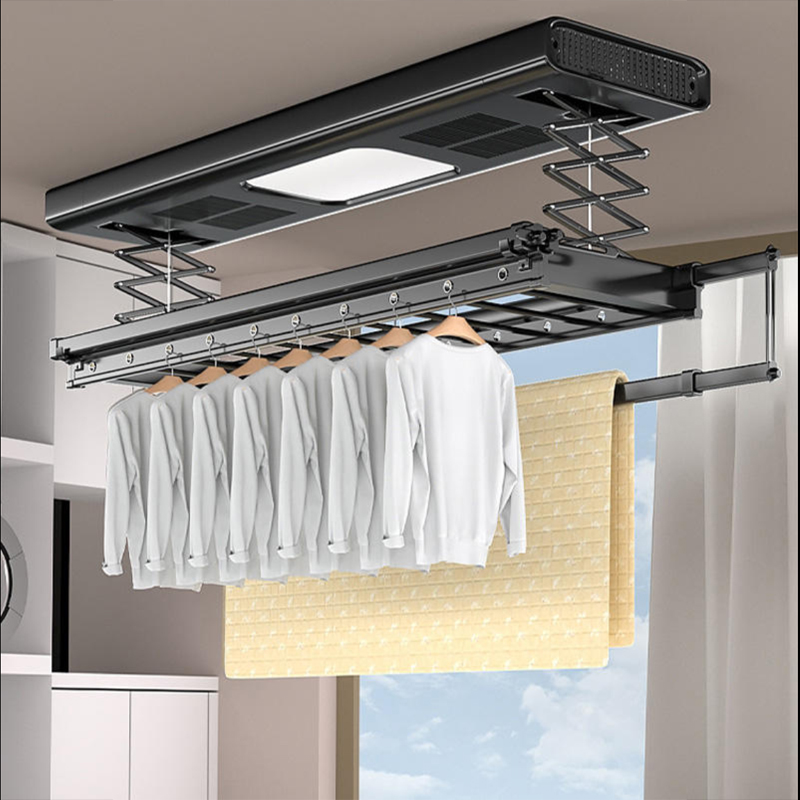
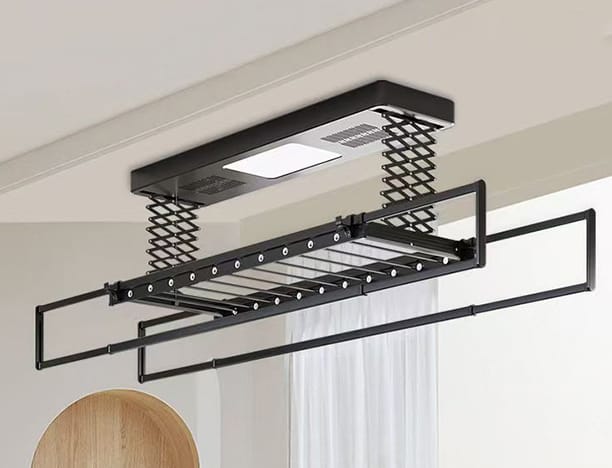
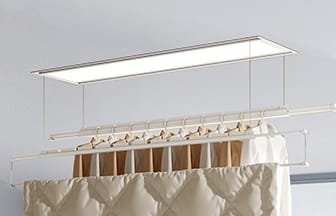
A ceiling clothes drying rack is a type of laundry drying system that is mounted to the ceiling instead of placed on the floor. By suspending clothes overhead, these racks free up floor space and make the most of vertical room area. Traditional drying racks tend to occupy significant floor space, making them impractical in small laundry rooms or compact homes. Ceiling racks, on the other hand, convert unused overhead space into an efficient drying zone.
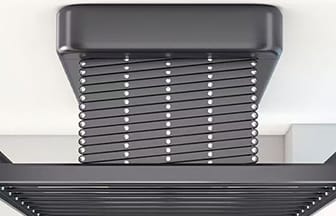
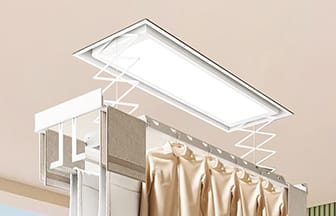
Some ceiling racks are manual, with pulley systems that lower and raise the drying bars, while others are motorized or automated, offering remote control or automatic lifting. Modern designs may also include airflow enhancements or sterilization options to improve drying speed and hygiene.
For a general overview of how different drying systems are described, see the page on clothes airers:
Why Ceiling Clothes Drying Racks Matter in Modern Laundry
1. Space Optimization in Compact Homes
In many urban living situations, space is at a premium. Standard floor racks can take up valuable living area that could otherwise be used for furniture, storage, or movement. Ceiling clothes drying racks allow you to free this floor space and make your laundry area more functional.
A 2023 housing study reported that over 70% of residents in small‑footprint apartments identify space efficiency as their top priority when selecting household equipment.
2. Enhanced Safety and Stability
Floor drying racks can be easily bumped, tipped, or shifted, especially when placed in high‑traffic areas. Ceiling racks are fixed in place, reducing the risk of accidents, and ensuring that hanging clothes are out of the way of daily activities.
3. Improved Drying Performance and Airflow
Ceiling racks often allow better airflow around your clothes because they are suspended away from walls and furniture. Better airflow usually translates to faster drying times and reduced musty smells. Automated racks with adjustable height can position clothes directly in breezier zones in a room.
4. Energy Efficiency Compared to Tumble Dryers
Ceiling clothes drying racks require no electricity for the drying process, and even the motor on automated models uses far less energy than a traditional dryer.
5. Better Fabric Care
High‑heat drying in a machine can degrade fabrics over time, causing shrinkage or wear. Hanging clothes gently on a ceiling rack preserves fabric integrity, extending the lifespan of garments.
Anatomy of a Ceiling Clothes Drying Rack
To understand the value you get from a ceiling clothes drying rack, it helps to know how the system is built. Below is a breakdown of common components and their roles:
| Component | Purpose |
|---|---|
| Ceiling Mount Support | Provides structural attachment to ceiling |
| Drying Bars / Rails | Horizontal elements where clothes are hung |
| Motor / Pulley Mechanism | Enables raising and lowering of the drying rack |
| Remote or Control Interface | Allows user to operate the rack easily |
| Airflow / Sterilization Add‑ons | Optional systems to speed drying or enhance hygiene |
| Safety Locks / Stops | Prevents accidental drops or over‑extensions |
Case Studies: Real‑World Impact of Ceiling Clothes Drying Racks
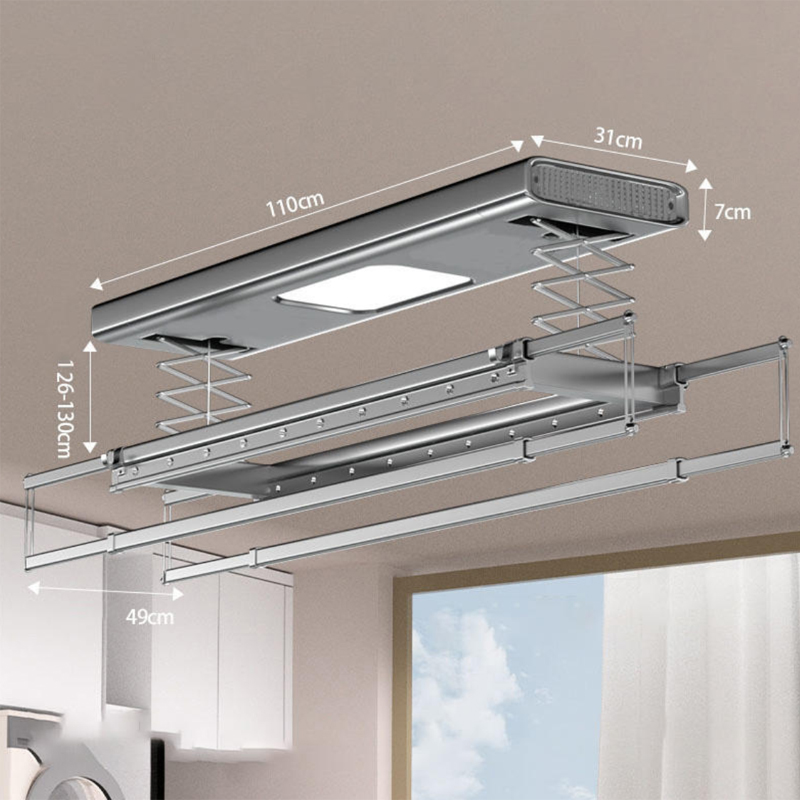
Case Study 1: Urban Apartment Maximizes Living Space
Scenario: A couple living in a 50 square meter apartment struggled with a traditional floor drying rack that cluttered their living space.
Solution: They installed a ceiling clothes drying rack with motorized lift and remote control.
Outcome:
- Freed up 1.2 square meters of useful floor space
- Reduced drying time by 25% due to better airflow
- Improved apartment aesthetics and usability
Case Study 2: Shared Laundry Room in a Multi‑Unit Building
Scenario: A multi‑unit building with a shared laundry room faced congestion, with residents competing for floor drying space.
Solution: The property manager installed two ceiling clothes drying racks with adjustable height.
Outcome:
- Left more room for folding and sorting
- Significantly reduced wait times for drying space
- Increased resident satisfaction scores in quarterly surveys
Choosing the Right Ceiling Clothes Drying Rack
Selecting a ceiling clothes drying rack depends on several factors, including your space, laundry habits, and budget. Here are the most important considerations:
Load Capacity
Different models support varying maximum weights. You’ll want a system that can safely hold the expected laundry loads. Residential racks usually support 15–30 kg, while commercial options can handle 30–50 kg or more.
Ceiling Structure and Mounting
Proper installation starts with evaluating your ceiling. Drywall alone won’t support much weight; sturdy joists or concrete ceilings provide better anchoring points. Reinforcements may be needed if your ceiling lacks structural support.
Manual vs. Automated Systems
- Manual Pulley Systems: Cost‑effective and reliable, but require physical effort to raise and lower racks.
- Automated Ceiling Clothes Drying Racks: Use motors to lift and lower, often via remote control. These are easier to use but slightly more expensive.
Additional Features
Here are some commonly available add‑ons that can make a difference:
- Remote controls or wall panels
- Adjustable height presets
- UV or airflow systems for enhanced drying
- Safety locks or automatic stops
Installation: Step‑by‑Step Guide
Installing a ceiling clothes drying rack requires careful attention to detail to ensure safety and performance. The following steps outline a typical installation process:
Step 1: Locate Ceiling Joists or Support Beams
Use a stud finder to locate structural elements in your ceiling. If your ceiling lacks adequate support, consider adding reinforcement.
Step 2: Mark Mounting Points
Use a level to ensure accurate alignment and consistent height across all mounting points.
Step 3: Drill Pilot Holes
Before securing hardware, drill pilot holes to prevent cracking or splitting.
Step 4: Install Mounting Brackets
Securely fasten heavy‑duty screws or bolts into support beams. The strength of your mounting points is critical for long‑term stability.
Step 5: Attach Drying Rail and Mechanism
Connect the drying bars or rails to the mounted brackets. If your system includes a motor or pulley, follow the manufacturer’s instructions for wiring and mechanical setup.
Step 6: Test Movement and Safety Interrupts
Before placing laundry on the rack, test the raising and lowering motions to ensure smooth operation and proper safety stops.
Maintenance and Long‑Term Care
A ceiling clothes drying rack should serve you for many years, but like any mechanical system, it benefits from periodic care.
Monthly Checks
- Wipe down rails to remove dust and lint
- Verify that screws and bolts are still tight
Quarterly Inspections
- Test any motorized functions
- Inspect cables, pulleys, and moving parts
Yearly Servicing
- Lubricate any moving joints as recommended by the manufacturer
- Check for any signs of wear or metal fatigue
Comparing Ceiling Racks with Other Drying Methods
Below is a high‑level comparison between ceiling clothes drying racks, floor racks, and tumble dryers, focusing on practicality, energy, and convenience:
| Feature | Ceiling Clothes Drying Rack | Floor Drying Rack | Tumble Dryer |
|---|---|---|---|
| Floor Space Utilization | Very High | Low | Moderate |
| Installation Requirements | Moderate | Very Low | High |
| Energy Consumption | None | None | High |
| Drying Speed | Moderate | Slow | Fast |
| Portability | Low | High | Fixed |
| Maintenance | Low to Moderate | Low | Moderate to High |
| Fabric Care Sensitivity | Gentle | Gentle | Moderate to Harsh |
This table highlights why many households and shared laundry facilities are turning to ceiling clothes drying racks for balanced performance and convenience.
Real‑World Data and Performance Insights
In a recent laundry trends survey, 42% of respondents cited lack of space as the primary pain point in home laundry rooms. Ceiling clothes drying racks directly address this concern by moving drying functions overhead.
Another data point from a smart home adoption report shows that 25% of homeowners with automated living systems prefer motorized drying racks over conventional methods because of the convenience factor—especially among users aged 25–45.
Common Mistakes to Avoid
Even with the best rack, mistakes during installation and use can lead to issues:
- Ignoring Ceiling Support: Installing into drywall without reinforcement can lead to failure.
- Overloading Laundry: Exceeding the rack’s weight capacity stresses the system.
- Neglecting Maintenance: Dirt buildup can interfere with smooth movement.
- Improper Height Selection: Hanging clothes too low or too high can defeat the purpose of space saving.
Final Thoughts
A ceiling clothes drying rack is not just a tool — it’s a transformational part of modern laundry management. From maximizing valuable space to improving laundry flow and reducing energy costs, these solutions fit homes and facilities of every type. Whether you’re renovating your laundry area or adding smart features to your home, integrating a ceiling drying rack can simplify your daily routines and enhance overall comfort.
When selecting your next drying system, consider load capacity, installation type, smart features, and your space constraints to make a choice that fits both your immediate needs and long‑term lifestyle.
FAQ
Are ceiling clothes drying racks worth the investment?
Yes. They offer space savings, gentle fabric care, and often better energy efficiency compared to traditional drying solutions.
Can I install a ceiling rack myself?
If you’re comfortable with basic tools and your ceiling has adequate support, you can install it yourself. For motorized systems or uncertain ceiling structures, professional installation is recommended.
Do ceiling drying racks dry clothes faster?
They don’t use heat like tumble dryers, but better airflow and strategic placement often result in faster drying than floor racks.
Are automated ceiling racks more expensive?
They cost more initially than manual racks, but the convenience and time savings often justify the price for many users.
Can I use ceiling racks outdoors?
Outdoor installations are possible, but ensure the materials are corrosion‑resistant and suitable for your climate.
How do ceiling racks handle heavy fabrics?
High‑quality models with stronger mounting and load ratings can support heavier fabrics like towels and blankets.