Table of Contents
An automatic clothes drying rack purchase should begin with the actual laundry routine and room constraints. For a property manager, a useful care record connects the rack to the apartment and notes the inspection date, visible condition and any reported change in operation. This guide helps buyers, distributors and project teams evaluate the automatic clothes drying rack through room fit, a representative sample and written acceptance criteria. Use the current configuration and instructions for any final product decision.
Inspection and Care Schedule in practice
For a property manager, a useful care record connects the rack to the apartment and notes the inspection date, visible condition and any reported change in operation. Review accessible rails and contact surfaces under the current manual. Escalate frayed cable, tilt, looseness or abnormal noise instead of treating cleaning as a repair. Set the inspection interval from the supplier's guidance and actual environment, then adjust through documented service advice.
The decision for this automatic clothes drying rack should be recorded against three specific points: location and model tied to care record; visible damage escalated promptly; cleaning products follow finish guidance. Keep the observation, the document reference and the person responsible for resolving any exception together. This turns a broad product enquiry into a review that another buyer or installer can follow.
Automatic Clothes Drying Rack: make inspection part of normal ownership
Keep an automatic clothes drying rack clean according to the current manual and inspect visible moving parts before use. Look for unusual rail alignment, frayed visible cable, loose hardware, damaged coating or changes in motion. Stop using the rack when damage or abnormal behavior appears and obtain the appropriate service assessment.
For an automatic clothes drying rack, maintenance frequency should follow the supplied instructions and the actual environment. A dusty utility area may need a different cleaning routine from a sheltered room. Avoid adding oil, abrasive products or chemical cleaners unless the manufacturer permits them. Keep a dated service record so a recurring symptom can be recognized rather than treated as a series of unrelated incidents.
Collect useful information for remote diagnosis
When a customer reports a problem with an automatic clothes drying rack, ask for the model label, a description of the last normal operation and clear photographs of the installation. Record whether lighting and motion are both affected, whether the controller indicates a command and whether the rails remain level. Keep people clear of unexpected movement.
The support process for an automatic clothes drying rack should separate checks a user can safely perform from work reserved for a qualified technician. Do not ask customers to open an energized enclosure or bridge a protection device. A good diagnosis form reduces repeated questions and lets the service team decide whether the issue concerns power, control, installation, loading or a mechanical component.
Distinguish indoor shelter from outdoor exposure
Specify the environment for the automatic clothes drying rack: enclosed utility room, covered balcony or open exterior. These conditions differ in rain, wind, sunlight and temperature. Ask the supplier which are supported and what evidence or instructions define the limit. An installation photograph under a roof does not establish all-weather suitability.
For the automatic clothes drying rack, record any exposure restrictions in the product listing and installer brief. If wind can move garments or rain can reach electrical parts, reassess the location with the supplier and installer. Do not borrow an outdoor claim from a superficially similar model. Matching the product to the intended environment is part of selection, not an afterthought after installation.
Review packaging around vulnerable components
Packaging for the automatic clothes drying rack should protect long rails, projecting arms, finish surfaces and small accessories during the intended journey. Examine a packed sample for movement and contact between parts. Ask the supplier which transit checks have been performed and whether they cover the current pack design and distribution route.
For the automatic clothes drying rack, agree how transport damage will be documented at receipt. Photograph the unopened carton, identification and internal protection before discarding packing. Keep damage patterns separate from manufacturing defects. A crushed corner, a loose component and a missing accessory require different corrective actions even if all three appear as a return in the sales system.

Calculate energy from measured operation
Assess an automatic clothes drying rack with actual operating time and measured consumption where practical. A light rating does not represent the energy use of an entire appliance, and a motor rating does not mean the motor runs throughout the drying period. Identify which functions operate continuously and which are intermittent.
For an automatic clothes drying rack, energy in kilowatt-hours is power in kilowatts multiplied by operating hours for a constant load. Where a controller cycles a heater or fan, use a suitable meter and the full cycle instead of assuming constant operation. Apply the customer's tariff separately. Compare the same laundry outcome and include any room dehumidification used, rather than claiming savings from unrelated nameplate figures.
Distinguish lifting from active drying
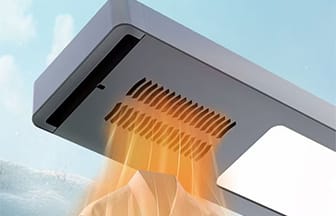
An automatic clothes drying rack may use power to move its rails while laundry still dries mainly through room air. Lighting, a fan and heating are separate functions, each with its own power and operating conditions. Ask for a function list and the rating of each fitted component. Do not assume a motorized rack behaves like a tumble dryer.
Evaluate the automatic clothes drying rack against the outcome you need: easier loading, free floor space, supplementary airflow or a measured drying routine. If faster drying is the main purchasing reason, compare samples with equivalent garments and starting moisture under recorded room conditions. An unqualified speed claim cannot show whether the improvement came from the rack, the washing machine spin or a change in ventilation.
Train staff with a realistic demonstration
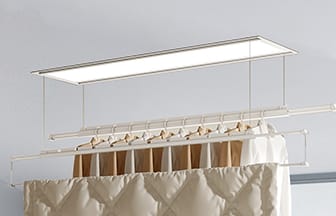
Train the team to explain the automatic clothes drying rack through a normal laundry routine and the current instructions. Demonstrate its deployed or lowered state, garment arrangement and storage or parking position. Include the limitations that change a buyer's decision, such as mounting requirements, exposure restrictions or a separate surface for flat-dry garments.
A staff member should be able to show the automatic clothes drying rack without inventing an answer about an undocumented feature. Give them a clear route for technical questions and a current configuration sheet. Consistent demonstrations improve the quality of enquiries and help customers compare designs using the same practical criteria.
Ask for care instructions that match the finish
The cleaning routine for the automatic clothes drying rack should match its coating, plastics and mechanism. Request the current care sheet and identify products or methods the supplier excludes. Avoid assuming that a cleaner suitable for a plain steel rail is also suitable for a painted casing or a controller.
For the automatic clothes drying rack, demonstrate wiping and drying accessible surfaces according to the manual and explain which areas users should leave to service staff. Keep moisture away from components that require protection. Clear care guidance preserves appearance and makes a later service assessment easier because damage from an unsuitable cleaning method can otherwise resemble a product defect.
Decision checklist and comparison
Use the following comparison for the automatic clothes drying rack evaluation. The alternatives describe evidence quality, not a claim that one brand always performs better. Resolve missing information before accepting an equivalent product or releasing the batch.
| Approach | When it may fit | Confirm before choosing |
|---|---|---|
| Dealer-held compatible spares | An installed base needs a predictable local service route | Part numbers, revision coverage and permitted replacement work |
| Supplier parts on demand | A channel can accommodate the agreed sourcing interval | Availability terms, diagnosis information and freight responsibility |
| Assembly replacement | The supplier specifies replacement at assembly level | Approval procedure, installation work and written warranty scope |
Product configuration to discuss
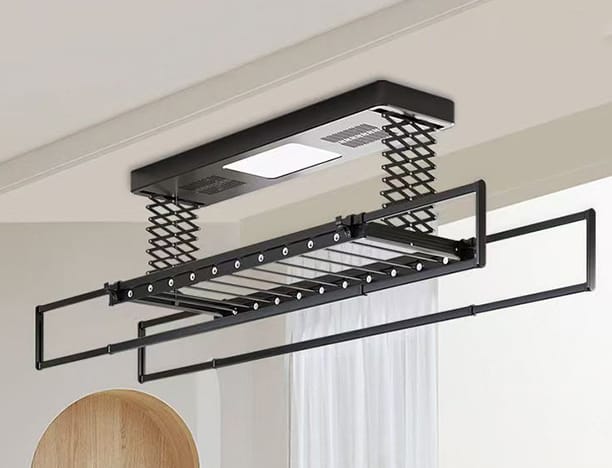
For a relevant starting point, review YIHUI Automatic Clothes Rack 866 with YIHUI. Treat the listed product as a candidate for the automatic clothes drying rack brief and confirm the current drawing, included controls, finish and installation or assembly requirements. Product-family photographs do not establish that every option is supplied together.
Compare the relevant YIHUI product category and ask about configuration and supply services. Keep requested features separate from those already confirmed for the selected model.
Independent reading
For independent background, read Wikipedia overview of drying-rack designs. Use this background to understand the names used for different rack arrangements. Confirm specifications from the supplier rather than treating a general overview as a model test.
Request a configuration review
Send YIHUI your automatic clothes drying rack brief with the intended market, room or storage dimensions, routine laundry type and planned order quantity. Include location and model tied to care record as a specific review item. Ask for a configuration proposal and sample plan before committing to a bulk order. Use the enquiry form below or the contact page to start the discussion.
Frequently asked questions
What should I check first for an automatic clothes drying rack?
Begin with location and model tied to care record. Match it to the actual room or sales brief, then confirm the current configuration and instructions. A sample should demonstrate the feature that determines your purchase decision.
Which documents should accompany an automatic clothes drying rack quote?
Request a current drawing, feature list, packing list and installation or assembly instructions. For this brief, also document visible damage escalated promptly. Ask the supplier to identify options and any unresolved differences.
How should I evaluate an automatic clothes drying rack sample?
Use the intended garments, hangers and room or display conditions. Record the setup and observations so another person can repeat the review. Include cleaning products follow finish guidance in the acceptance record.
Can a similar-looking automatic clothes drying rack be substituted?
Review the supplied revision, dimensions, components and instructions before approving a substitute. Similar appearance does not establish compatible controls, an equivalent mechanism or the same permitted loading conditions.
What information helps YIHUI review my automatic clothes drying rack enquiry?
Supply the destination market, quantity, intended use, useful dimensions and required functions. State that the main topic is inspection and care schedule and include photographs or a sketch where these clarify the practical constraint.