Table of Contents
A laundry drying rack with fan needs clear airflow paths and a room that can manage moisture from wet clothes. A fan in the equipment does not automatically mean that humid air is removed from the building. Buyers should examine garment placement, nearby obstructions and the approved cleaning method before promising performance. This guide focuses on those practical details for distributors and renovation teams. Confirm that the ordered laundry drying rack with fan actually includes the fan configuration being discussed, because similar-looking models may have different functions.
Identify the laundry drying rack with fan configuration
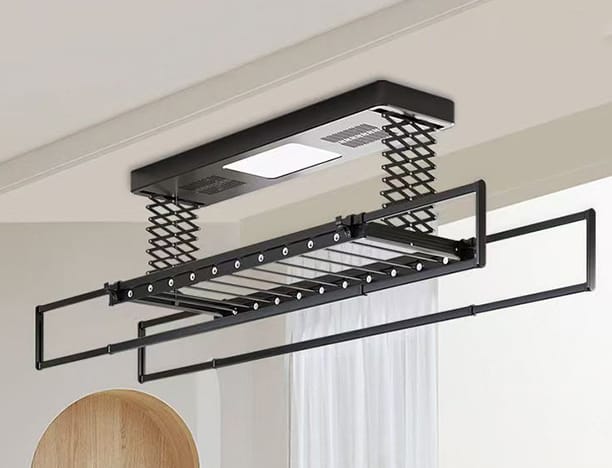
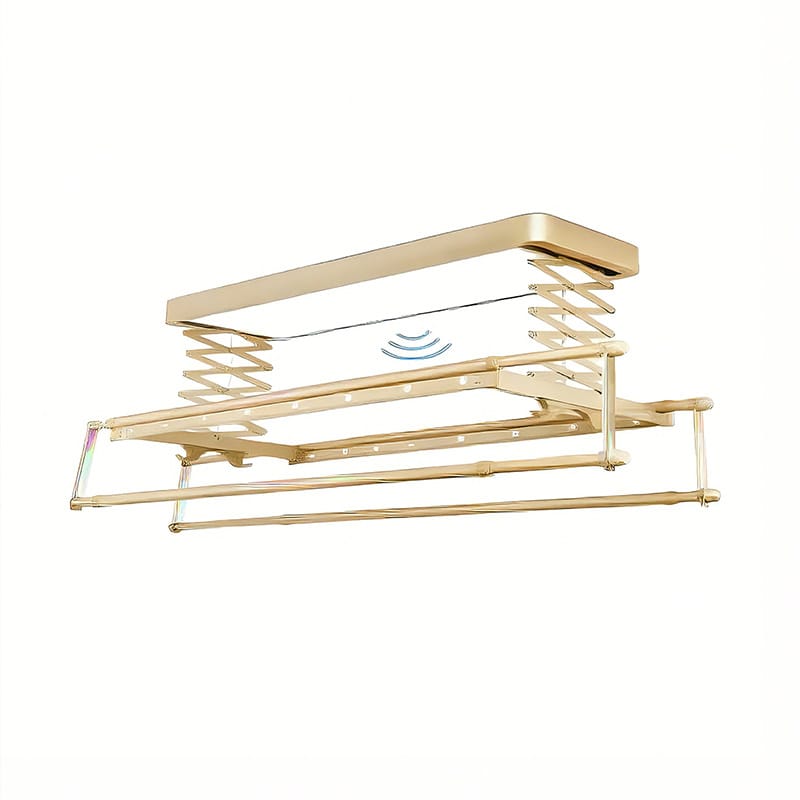
Ask the supplier where air enters and leaves the equipment and which visible grilles belong to the fan system. Request the operating guide for the quoted configuration. A light panel or decorative slot should not be identified as an air outlet from appearance alone. Establish whether the fan is a separate selectable function and whether any other drying feature is included. Keep those functions distinct in the product comparison.
For a laundry drying rack with fan, obtain the documented operating limitations and access requirements before planning nearby cabinetry. Ask whether the grille can be cleaned by the user and how that should be done. Do not infer a removable filter from a similar model. The laundry drying rack with fan specification should name only the parts and functions confirmed for the offered unit. That gives the installer and customer a common reference when discussing airflow or maintenance.
Keep clothing clear of documented airflow openings
Prepare a representative laundry arrangement and compare it with the instructions for clearance around the equipment. Avoid draping a large garment over the housing or using the upper structure as an extra shelf. If the instructions specify a clearance, use that value for the actual configuration. Do not invent a universal distance that may conflict with the design. Check the arrangement at the intended drying position rather than only while the bars are lowered.
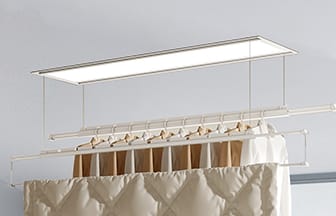
A laundry drying rack with fan may have plenty of rail length while still being poorly arranged for airflow. Shirts packed tightly together can shield one another, and a large towel can affect the space around neighboring items. Adjust the layout within the loading instructions and record what changed. A laundry drying rack with fan demonstration is more credible when the product photographs show the same sensible spacing used in the trial instead of an overloaded display.
Distinguish circulation from moisture removal
Air circulation around fabric and moisture removal from the room are different functions. The EPA explains that controlling indoor moisture is central to preventing mold problems. Use that as a reason to review the room's moisture management, not as evidence that a particular drying rack prevents mold. Discuss persistent dampness with the appropriate building professional rather than covering it with a product performance claim.
When specifying a laundry drying rack with fan, identify the existing ventilation arrangement and any building restrictions on its use. A fan incorporated in a rack may circulate room air without exhausting it outdoors. Confirm the actual system rather than assuming an exhaust connection exists. The laundry drying rack with fan should be offered as equipment within the room plan. It cannot establish that the whole laundry area has adequate ventilation or resolve an unrelated building water problem.
Review the room with cupboards and doors in place
A product demonstration in an open display area can hide restrictions that appear after installation. Show the equipment position relative to cupboards, shelves, ceiling features and doors. Check the current installation instructions for required clearances and service access. Make sure future cabinet doors will not cover an intake or prevent approved cleaning. Resolve conflicts in the design stage rather than leaving residents to work around them.
For a laundry drying rack with fan, the renovation drawing should identify the equipment body and the permitted movement area. Include the actual hanging garments where they affect access. Ask the installer to confirm that the chosen arrangement follows the product documentation. A laundry drying rack with fan should not be enclosed in joinery merely to improve the appearance unless that installation is explicitly supported. Good room coordination preserves normal operation and the ability to service the equipment later.
| Issue | What to review | What the result can establish |
|---|---|---|
| Air path | Documented openings and garment clearance | Whether the proposed layout follows instructions |
| Room moisture | Existing ventilation and observed dampness | Whether a building review is needed |
| Care | Approved accessible cleaning tasks | Who can clean which parts |
| Performance claim | A defined method and stated conditions | A result for those conditions only |
Agree on a simple accessible cleaning routine
Request the manufacturer-approved method for cleaning accessible grilles and surrounding surfaces. Follow the stated power isolation and access instructions. Do not insert tools into openings, remove covers or wet electrical parts as an improvised cleaning method. If a task requires a service technician, identify that boundary in the resident guide. User care should be described separately from internal servicing so customers do not mistake a brief cleaning note for permission to dismantle the housing.
The laundry drying rack with fan care record should state what was cleaned, by whom and when. Use the recommended interval or condition-based guidance supplied for the model. Avoid declaring every unit maintenance-free when lint or dust may need attention. A laundry drying rack with fan can only be supported properly if the customer knows which signs to report, how to identify the model and which routine tasks are permitted without opening the equipment.
Observe performance without changing several things at once
If the buyer wants to compare garment arrangements, keep the laundry set and room conditions as similar as practical. Record the garment types, washing-machine spin setting, spacing, room ventilation and selected equipment functions. Do not compare a light shirt in a ventilated room with a heavy towel in a closed room and attribute the difference to the fan. Keep any observation tied to the conditions under which it occurred.
For a laundry drying rack with fan, assess whether the operating instructions can be followed with the representative load. Note areas where fabric bunches or where an item remains folded over itself. Those observations may suggest a different arrangement, but they are not a universal drying-time rating. A laundry drying rack with fan listing should use verified test conditions for numerical performance claims. Where no such evidence exists, explain the available functions and practical placement requirements instead.
Handle a weak-airflow report through service
A customer may describe a problem as weak airflow even when the underlying observation is noise, an unresponsive control or a garment that remains damp. Ask which function was selected, what changed and when normal behavior was last observed. Request the model identity and relevant accessible photographs. Do not ask residents to reach inside a grille, run the equipment with covers removed or carry out electrical checks.
The laundry drying rack with fan support record should distinguish the user's observation from a technical diagnosis. The supplier can then decide whether approved cleaning, an instruction review or a service visit is appropriate. For a laundry drying rack with fan sold through dealers, agree on the escalation contact before launch. Keep the exact configuration in the record because parts and operating steps may differ even when two housings look similar.
Build the airflow questions into the buying brief
A complete inquiry includes the room layout, typical garments, expected drying position and access for approved care. Add the supplier's answers about fan controls, openings, permitted clearances and service responsibilities. This creates a more useful comparison than a single fan-power figure without context. The quality of the instructions matters because customers need to reproduce the approved arrangement in an occupied home.
Select a laundry drying rack with fan only after its configuration and installation requirements match the proposed room. If the room needs separate ventilation work, keep that scope visible in the project. A laundry drying rack with fan should be described with specific confirmed functions and reasonable operating guidance. Avoid claims that it sterilizes garments, eliminates all moisture or delivers the same drying time in every climate unless suitable evidence for those exact claims is available.
For general room-moisture guidance, consult the EPA guide to moisture control in the home. Apply the current product instructions to the selected equipment.
Discuss your project with YIHUI
Send YIHUI your room drawing, usual laundry types and proposed cabinet layout. Request confirmation of the fan configuration, operating instructions and cleaning access before finalizing the order. We can discuss a laundry drying rack with fan brief that separates the equipment functions from the room ventilation and installation work.
Review YIHUI Electric Ceiling Drying Rack 8828 and the YIHUI service options when preparing your inquiry.
Frequently asked questions
Does the rack fan remove moisture outdoors?
Do not assume so. Confirm the actual arrangement. A laundry drying rack with fan may circulate indoor air while the room relies on a separate ventilation system.
Can clothing cover the equipment housing?
Follow the loading and clearance instructions. A laundry drying rack with fan should not have documented air openings covered by garments or improvised storage.
Can users remove the grille for cleaning?
Only if the manufacturer assigns that task to the user and gives instructions. For a laundry drying rack with fan, separate accessible cleaning from internal service work.
Does a fan guarantee a fixed drying time?
No. Garment type, retained moisture, spacing and room conditions affect the result. Numerical claims for a laundry drying rack with fan need a defined test basis.
What should a weak-airflow complaint include?
Report the model, selected function, observed change and relevant accessible photographs. The laundry drying rack with fan service team should determine the next approved step.