
Table of Contents
Introduction
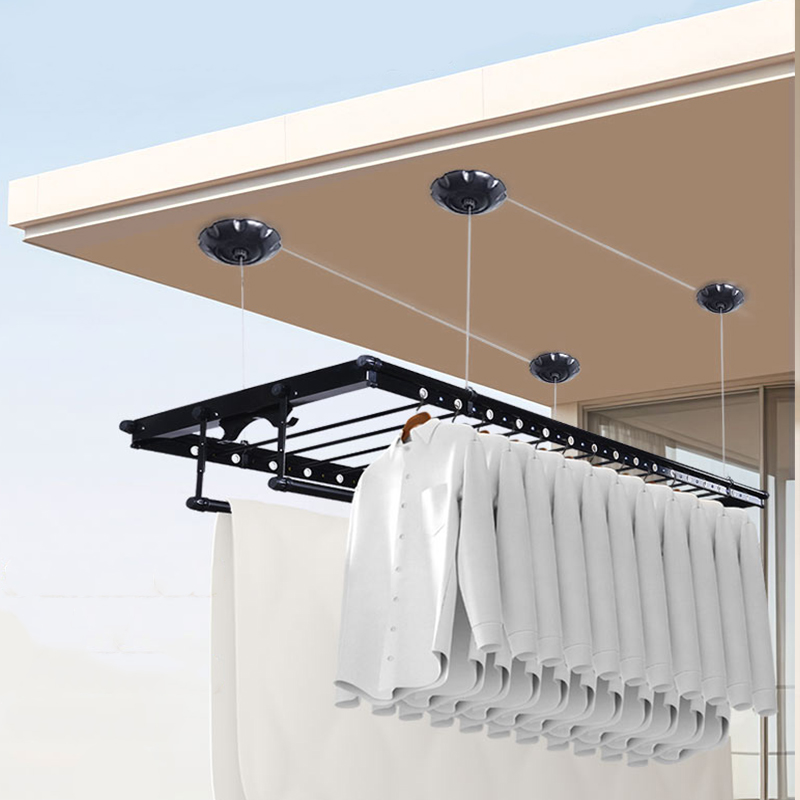
A drying rack does not actually dry clothes.
It creates the conditions in which water can leave them.
That distinction becomes important when planning an air drying rack laundry area. Two households can hang the same shirts on similarly sized racks and experience very different drying times simply because the garments are spaced differently, the rooms have different ventilation, or one rack is positioned where air can move around the fabrics more freely.
Natural air drying looks simple because it requires relatively little equipment. Yet a good drying setup involves several variables working together: exposed fabric area, distance between garments, room humidity, airflow, textile thickness, rack height, and the volume of laundry placed into the available space.
For homes that prefer air drying, the most useful rack is therefore not always the one with the largest stated capacity. A better rack is one that helps wet fabrics release moisture while fitting naturally into the household’s available space and laundry routine.
Air Drying Starts with Water Leaving the Fabric
When clothes come out of a washing machine, water remains within and between textile fibers. During air drying, that moisture gradually moves from the fabric into the surrounding air.
The process continues most effectively when the air immediately around the garment does not remain saturated with moisture.
This explains why a shirt hanging alone in moving air often behaves differently from the same shirt compressed between two wet towels. The shirt has not changed, but the environment around it has.
An effective air drying rack laundry setup therefore needs open space around garments.
Users sometimes attempt to improve capacity by placing as many items as possible onto every rail. The rack appears efficient because no hanging position is empty, but the result can be a dense wall of damp fabric.
More clothing on the rack does not necessarily mean more efficient drying.
The objective should be useful capacity rather than maximum physical capacity.
Think About Air Paths, Not Just Hanging Rails
A drying rack creates a three-dimensional arrangement of wet fabric.
Air needs pathways through that arrangement.
Imagine a rack with several horizontal rails placed close together. If thick towels cover most of those rails, the gaps between fabrics become narrow. Moisture released from one towel enters the small air space around the next towel, while fresh air has less opportunity to circulate through the load.
Now imagine the same towels separated across the rack.
The number of towels has not changed, but much more fabric surface is exposed.
This is why rack geometry matters.
Rail spacing, different drying levels, side wings, hanger positions, and expandable sections can all influence how easily laundry can be separated.
For air drying, empty space is not wasted space. Some empty space is part of the drying system.
The Best Place for a Rack Is Rarely the Most Convenient Empty Corner
When households choose where to open a drying rack, the decision often begins with floor space.
There is an empty corner, so the rack goes there.
But an empty location is not automatically a good drying location.
A corner enclosed by two walls may offer less air movement than a position closer to an open window. A narrow utility room may keep the laundry out of sight but retain moisture around densely arranged garments. A balcony may provide better natural airflow but expose the rack to stronger movement or weather.
The ideal position balances several needs.
The rack should not block normal household movement. Garments need enough surrounding clearance. The area should support reasonable ventilation, and the rack should remain stable throughout the drying period.
For indoor air drying, room layout and drying performance therefore need to be considered together.
Laundry Density Matters More Than Laundry Count
Imagine a rack described as holding twenty garments.
That number tells very little about how those garments will behave while wet.
Twenty lightweight children’s shirts create a completely different drying environment from twenty thick sweatshirts. Ten bath towels may occupy more useful drying surface than several dozen small garments.
Textile thickness, size, and water retention change what the rack can handle effectively.
A more useful way to think about air drying rack laundry capacity is by load type.
| Laundry Load | Main Challenge | Better Rack Arrangement |
|---|---|---|
| Lightweight shirts | Preventing garments from touching | Use hangers with moderate separation |
| Bath towels | Large wet surface and greater weight | Spread across wider sections with open gaps |
| Jeans and trousers | Dense fabric and longer drying time | Allow more surrounding space |
| Children’s clothing | Many small pieces | Use dedicated small-item positions |
| Bedding | Large continuous fabric area | Use long rods and avoid excessive folding |
| Mixed family laundry | Different drying requirements | Separate thick and thin fabrics into zones |
This approach produces a more realistic understanding of capacity than a simple garment number.
Shirts Often Dry Better When the Rack Supports Hangers Properly
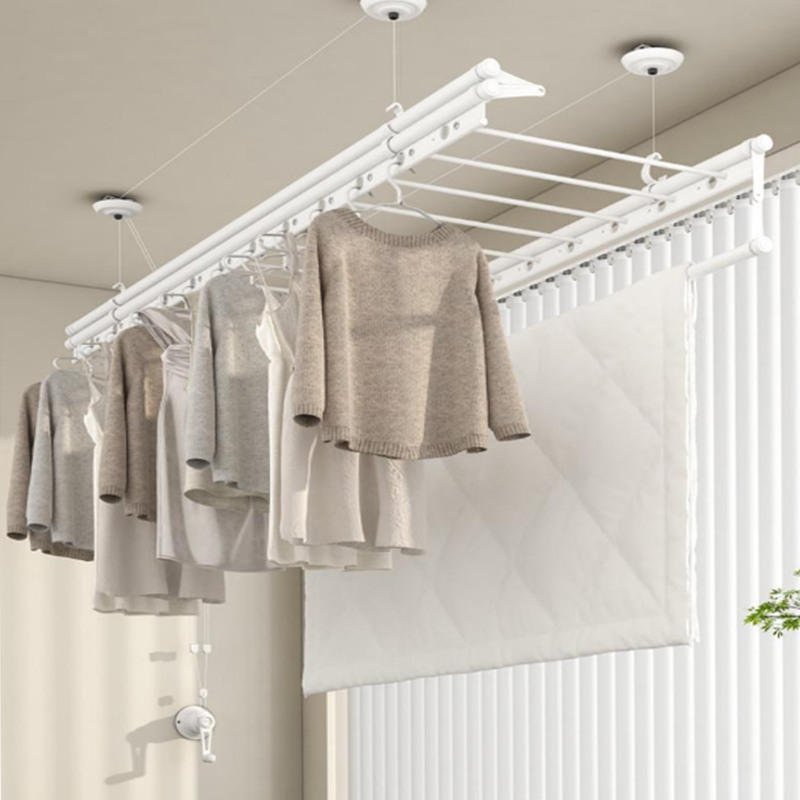
Horizontal rails work well for many textiles, but garments such as shirts and blouses can benefit from drying in a hanging position.
Using suitable clothes hangers exposes both sides of the garment while allowing sleeves to hang naturally rather than being folded across a bar.
The effectiveness still depends on spacing.
Placing twenty hangers tightly together creates very little separation. Leaving practical gaps allows air to move between garments and makes the drying zone easier to manage.
Hanger positions can therefore be an important feature in air-drying systems, particularly for households with wardrobes dominated by shirts, uniforms, dresses, and similar clothing.
An air drying rack does not need to treat every textile in the same way. Combining hanging points with horizontal drying rods can make the structure more adaptable to the actual contents of a laundry load.
Towels Are Usually the First Items That Need More Room
Wet towels expose weaknesses in both rack capacity and airflow.
They are heavy, broad, and relatively dense. Folding one towel over a narrow rail creates two layers of damp fabric directly against each other. Placing several towels closely together then creates additional restrictions around them.
If space permits, opening towels more widely improves exposed surface area.
This is one reason long drying rods can be more useful than large numbers of short rails for households that regularly air-dry bath towels.
Towels can also affect the rest of the rack.
A row of large wet towels placed directly in front of lightweight garments can create a barrier to natural air movement. Separating heavy textiles from lighter clothing often produces a more practical drying arrangement.
The rack should help users create these zones instead of forcing every textile into identical spaces.
Bedding Changes the Meaning of Drying Capacity
Sheets and duvet covers are among the most demanding items for an air-drying rack.
Their weight is only part of the problem.
The larger challenge is surface area.
If a sheet is folded four times before being placed over a short rail, much of the wet fabric sits against another wet layer. Although the sheet physically fits on the rack, the arrangement does not make efficient use of the available air.
Longer rods or expandable sections allow large textiles to open more fully.
This is where adaptable drying structures become useful. A household may not need maximum width for daily shirts and underwear, but the same rack suddenly requires substantially more space when bedding appears.
Rather than designing the entire laundry area around the largest possible load every day, adjustable drying sections can create additional width only when required.
Air Drying and Powered Drying Are Not the Same Process
An air drying rack laundry setup uses the surrounding environment to remove moisture from textiles. A tumble dryer operates differently, using a cabinet-like drum and forced air circulation as part of a powered appliance.
Air drying and powered tumble drying follow different drying principles. An air drying rack relies on surrounding airflow, garment spacing, temperature, and humidity, while a tumble dryer uses an enclosed mechanical system to remove moisture from textiles.
This distinction matters when evaluating household drying methods.
A drying rack does not need to imitate a tumble dryer to be useful. Its strengths are different.
Natural drying provides an open structure where garments can remain suspended or spread across rails, while powered drying appliances use enclosed mechanical systems to remove moisture.
Some modern drying racks add assisted airflow or other electric functions, but those features should be understood as additions to the rack rather than proof that all drying methods work in the same way.
Manual Overhead Racks Can Still Support an Air-Drying Routine
Air drying does not require the rack to stand on the floor.
In rooms where floor space is limited, moving the laundry overhead can create a more permanent natural-drying zone without requiring powered drying assistance.
A manually operated ceiling rack can be lowered while users arrange clothing and raised afterward so that the floor becomes available again.
Manual ceiling drying systems can use a mechanical crank and steel-wire lifting structure to raise and lower the drying area without relying on electric power. This type of design is suitable for households that want adjustable overhead drying space while keeping the operating mechanism relatively simple.
This type of arrangement illustrates an important point about air drying: the rack does not need complex drying technology if the surrounding environment already provides suitable conditions.
The role of the structure may simply be to place garments where they can hang effectively while keeping the household space practical.
For naturally ventilated balconies, that simplicity can be valuable.
Indoor Air Drying Needs More Attention to Moisture
Outdoor drying has access to a much larger volume of surrounding air.
Indoor drying does not.
When wet clothes release moisture inside a closed room, that moisture remains within the indoor environment until it is removed through ventilation, air exchange, or other moisture-management methods.
This does not mean clothes cannot be air-dried indoors. It means the room becomes part of the system.
Opening windows when conditions allow, maintaining reasonable garment separation, avoiding extremely dense loads, and selecting appropriate drying locations can all improve the practical indoor experience.
The effect becomes more noticeable when families dry several laundry loads in a compact apartment.
A small amount of clothing in a well-ventilated room creates a very different environment from bedding and towels packed into a closed bedroom.
Air drying should therefore be planned according to both rack capacity and room capacity.
The Rack Should Follow the Air, Not Fight It
A portable drying rack has one important advantage that fixed systems do not: it can move.
During a sunny morning, the rack might sit close to a balcony opening. If rain begins, it can move indoors. During winter, another room may provide a more suitable drying environment.
This flexibility can improve natural drying because users can respond to changing household conditions.
However, portability should not be confused with simply having a lightweight frame.
The rack also needs stable handling, a sensible folded shape, and enough structural strength to move while carrying or after carrying repeated wet loads.
For households that frequently switch between indoor and outdoor drying, the route between those locations should be considered when selecting the rack.
Door widths, steps, balcony thresholds, and storage positions can matter just as much as maximum rail length.
Direct Sunlight Is Useful, but It Is Not the Only Way to Air-Dry Clothes
Air drying is often visually associated with bright sunlight.
In reality, airflow and surrounding conditions also play important roles.
A shaded but well-ventilated location may still provide useful drying conditions. This can be particularly relevant for garments where prolonged strong sunlight may not be desirable.
Different textiles respond differently to drying environments, which is why garment-care labels remain important.
The rack should provide options rather than force every item into the same location.
A portable rack can move between sunny and shaded areas. A ceiling rack can use the upper volume of a ventilated balcony. Indoor systems can position clothes near suitable air movement without occupying the entire room.
Natural drying is therefore less about finding the strongest sun and more about creating appropriate conditions for the specific laundry.
More Space Between Thick Items Can Make the Whole Load Work Better
One thick garment can affect several lightweight garments around it.
A hoodie holds more water and presents a denser textile structure than a thin shirt. If several hoodies are placed together, the local drying zone becomes very different from an area containing lightweight clothing.
Separating fabrics by thickness can improve how the rack is used.
Instead of arranging garments randomly as they leave the washing machine, households can reserve more open positions for heavy fabrics and place lightweight garments together in areas where moderate spacing is sufficient.
This does not require complicated organization.
It simply means treating the rack as a drying layout rather than a storage shelf.
For families handling mixed laundry, this small change can make the same rack feel substantially more capable.
Why a Full Rack Can Be a Sign of Poor Planning
Empty rails can look inefficient.
From an air-drying perspective, they may be intentional.
If a rack is so full that garments overlap, the additional item may reduce drying conditions for several neighboring pieces. The theoretical capacity has increased while practical performance has decreased.
This is one reason published maximum capacities should be treated as limits rather than targets for every load.
Users should consider what happens once clothing becomes three-dimensional.
Sleeves extend sideways. Towels hang below their rails. Dresses occupy vertical volume. Sheets may cover several positions at once.
The fully loaded rack therefore behaves differently from the empty frame shown in dimensions.
Practical planning should leave enough freedom for the laundry itself.
The Drying Area Should Be Easy to Reach from the Washing Machine
Natural drying still involves physical work.
Wet laundry must move from the washing machine to the rack one item at a time.
If the air drying area is located far from the washing machine, every load requires carrying a heavy basket through the home. If the rack is placed too high, users perform repeated overhead movements while handling wet garments.
A better laundry layout reduces these unnecessary steps.
Where possible, the rack should sit near the normal washing area while still benefiting from appropriate air movement.
Ceiling systems can help when horizontal space near the machine is limited. Portable racks provide another solution when the best drying location changes throughout the day.
The broader selection of laundry drying rack configurations shows how manual, electric, ceiling-mounted, and portable approaches can solve different spatial problems around the same laundry routine.
The key is not choosing the most sophisticated configuration.
It is choosing the layout that shortens the journey between wet laundry and suitable drying space.
Natural Drying Can Be Designed as a Daily System
Air drying is sometimes treated as the absence of technology.
That is too simplistic.
A good natural-drying setup is still a system.
The washing machine influences how much residual water remains in the textiles. The rack determines how garments are supported. The room provides surrounding air. Windows and ventilation influence air exchange. Users decide how densely the laundry is arranged.
Changing any one of these elements can change the experience.
This is why an air drying rack laundry area deserves intentional planning, particularly in households that use it several times every week.
A poorly positioned rack turns drying into a recurring inconvenience.
A well-positioned one becomes almost invisible as a household process: wash, hang, allow air to move, remove dry clothing, and return the space to normal use.
What Should Be Tested When Evaluating an Air-Drying Rack?
A useful test should involve actual wet laundry rather than an empty product.
Start with several shirts and observe whether hanger positions provide enough separation. Add towels and check whether they can be spread without covering most of the remaining rails. Place heavier trousers on one side and observe stability.
Then test the surrounding space.
Can people walk around the rack?
Can the window still open?
Can garments be removed from the middle without disturbing everything else?
Does the rack remain convenient when only half the capacity is required?
If it folds, can it be stored immediately after the laundry is removed?
These questions reveal whether the rack supports a real laundry routine rather than merely providing an impressive number of hanging positions.
Air Drying Works Best When the Rack Disappears from Attention
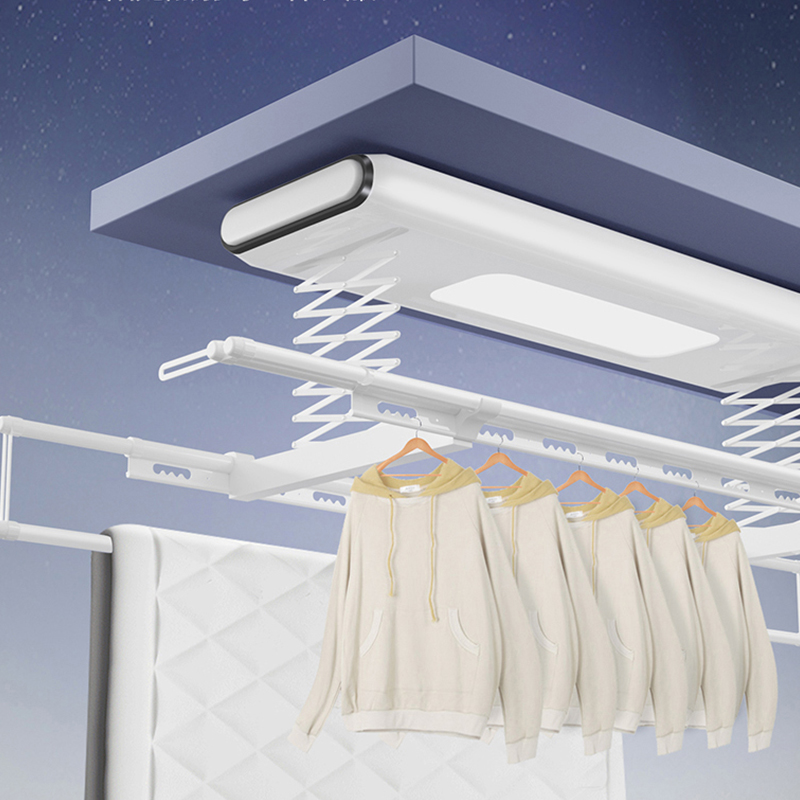
Good household equipment does not need to become the center of the room.
During drying, the rack should hold laundry securely and provide sensible garment separation. Once drying is finished, it should either fold away, move overhead, or remain compact enough that the surrounding area returns to its normal purpose.
This is particularly important because air drying takes time.
Unlike a short household task, wet clothing may remain on the rack for hours. The drying structure therefore needs to coexist with other activities rather than simply perform well for a few minutes.
Floor racks achieve this through flexible placement and storage.
Ceiling racks use vertical space.
Expandable designs adjust capacity according to the laundry load.
Each strategy approaches the same objective differently: provide enough drying space without permanently allowing laundry equipment to dominate the home.
Conclusion
An air drying rack laundry setup works best when it is treated as an environment rather than simply a piece of furniture.
The rack supports the garments, but airflow, humidity, fabric thickness, spacing, room layout, and laundry volume determine how effectively that structure can be used.
More rods are not always better. More garments on the rack are not always more efficient. A large structure placed in poor conditions can perform less naturally than a smaller rack with sensible spacing and better air movement.
The strongest air-drying solutions give households control over three things: where the laundry sits, how much room each fabric receives, and how the drying area fits into everyday living space.
For some homes, that means a portable folding rack beside a window. For others, it may mean a manual ceiling rack that uses a naturally ventilated balcony without occupying the floor.
The technology can remain simple.
What matters is whether the entire drying environment works together.
FAQ
What is an air drying rack laundry setup?
An air drying rack laundry setup uses an open rack or hanging structure to allow wet clothing to dry through exposure to surrounding air rather than relying entirely on an enclosed tumble-drying appliance.
How much space should be left between clothes on a drying rack?
There is no universal distance because fabric thickness, garment size, room airflow, and humidity vary. Clothes should generally be separated enough to avoid unnecessary overlap and allow surrounding air to reach the fabrics.
Are towels harder to air dry than lightweight clothes?
They can be. Towels are thicker, retain more water, and often occupy more surface area, so giving them additional space on the rack can improve the drying arrangement.
Can an air drying rack be used indoors?
Yes. Indoor air drying is common, but room ventilation, moisture levels, garment density, and rack position should be considered because moisture released by wet textiles enters the indoor air.
Is a manual ceiling rack suitable for air drying?
Yes. A manual ceiling rack can provide adjustable overhead drying space without powered drying functions. Its effectiveness still depends on garment spacing and surrounding environmental conditions.
Need Help Choosing the Right Air Drying Rack Laundry Solution?
If you’re comparing air drying rack laundry solutions for balconies, apartments, indoor laundry areas, or different household applications, our team can help you evaluate drying capacity, garment spacing, rack configuration, available room space, and everyday laundry requirements. Contact us today to discuss a drying solution that supports natural airflow while keeping the laundry area practical and organized.





