Table of Contents
If you’ve ever felt that laundry takes up more space, time, and energy than it should, you’re not alone. As living spaces become more compact and lifestyles more efficiency-driven, people are rethinking how everyday tasks are handled. One solution that continues to gain attention is the ceiling hanging clothes drying rack—a system designed to lift your laundry off the floor, free up space, and improve drying efficiency without relying heavily on energy-hungry appliances.
This article is written from your perspective as a user. Whether you live in an apartment, manage a busy household, or simply want a cleaner and more efficient laundry setup, you’ll find practical insights, real scenarios, and actionable advice you can apply immediately.
Why Traditional Drying Methods No Longer Fit Modern Living
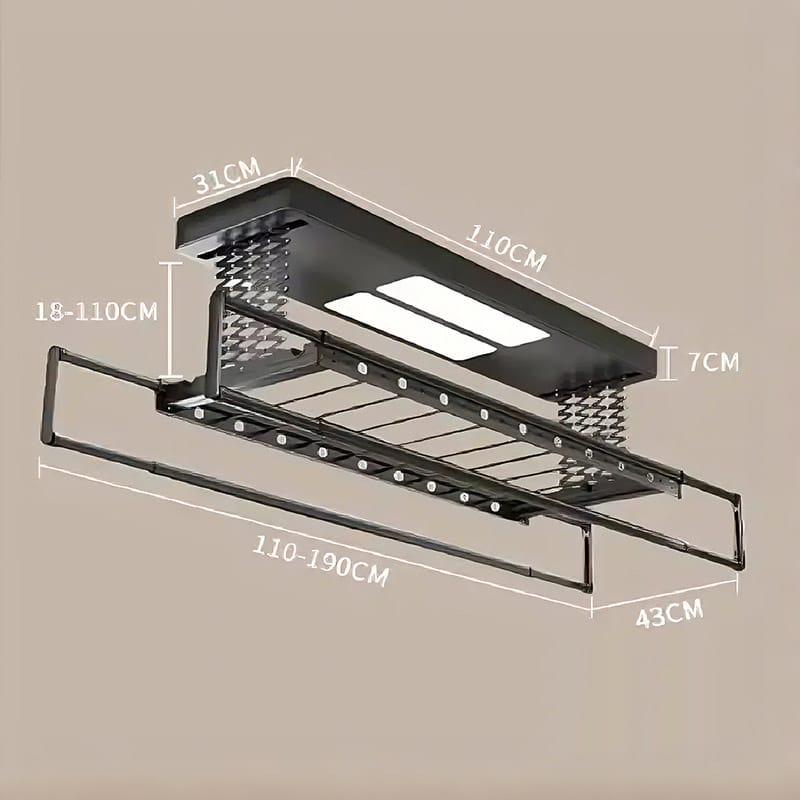
For many years, drying clothes meant spreading a rack across the floor or relying on an electric dryer. While both options still exist, they no longer match the needs of modern homes.
Floor drying racks occupy valuable space and disrupt daily movement. Electric dryers consume significant energy and may shorten the lifespan of fabrics. According to research shared by the Energy Saving Trust, air-drying clothes instead of using tumble dryers can noticeably reduce household energy consumption over time.
As homes become more space-conscious and energy-aware, ceiling-based drying solutions have emerged as a practical alternative.
What Is a Ceiling Hanging Clothes Drying Rack?
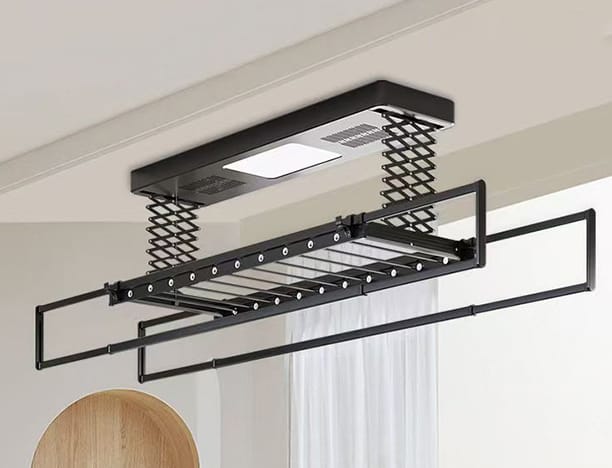
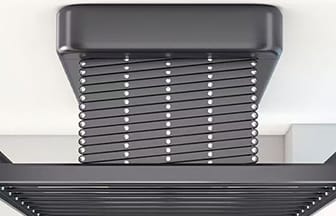
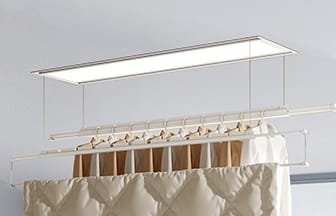
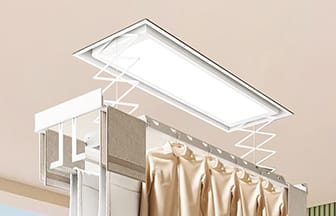
A ceiling hanging clothes drying rack is a laundry drying system installed overhead, using vertical space instead of floor area. Clothes are suspended on horizontal rails that can be raised or lowered manually or automatically. When not in use, the rack stays close to the ceiling, leaving the room fully functional.
Unlike wall-mounted racks, ceiling systems distribute weight vertically, allowing them to handle heavier loads while remaining unobtrusive. Many modern designs also include adjustable height settings and built-in safety mechanisms.
Why Ceiling Hanging Clothes Drying Racks Are Gaining Popularity
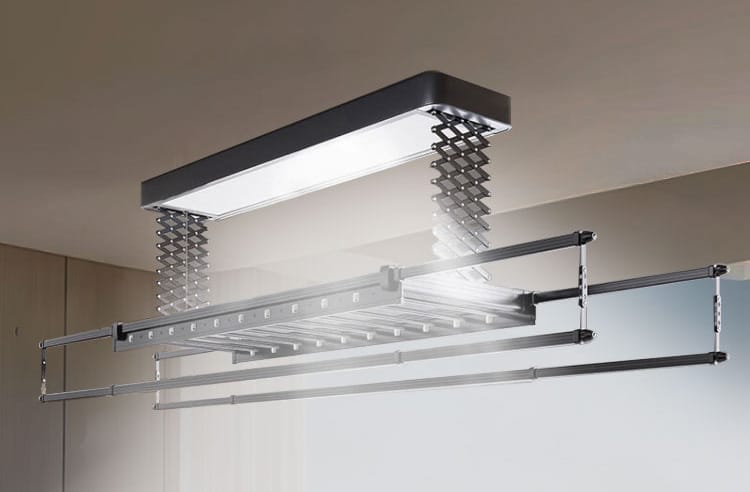
Making Better Use of Vertical Space
Ceiling space is often underutilized in residential environments. By moving the drying process upward, you immediately reclaim floor space. This is especially valuable in apartments, laundry rooms, and multi-purpose living areas.
Recent housing studies indicate that more than 60% of residents prioritize vertical storage and ceiling-based solutions when upgrading household utilities.
Improved Airflow and Faster Drying
Warm air naturally rises, which means clothes positioned higher often dry more evenly. Hanging laundry closer to the ceiling improves air circulation and reduces moisture retention.
The relationship between airflow and drying efficiency is explained in detail in this technical overview of air flow principles.
Gentle Drying That Protects Fabrics
High heat from electric dryers can damage fibers over time. Air drying on a ceiling hanging clothes drying rack allows garments to dry naturally, helping maintain shape, elasticity, and color.
A Cleaner and More Organized Living Space
When laundry is lifted overhead, your living space feels less cluttered. Many users notice that rooms look cleaner simply because drying clothes are no longer at eye level or blocking walkways.
Manual vs. Automated Ceiling Hanging Clothes Drying Racks
Not all ceiling racks work the same way. Understanding the differences helps you choose the option that fits your lifestyle.
| Feature | Manual System | Automated System |
|---|---|---|
| Operation | Pulley or hand-lift | Motorized lift |
| Physical Effort | Moderate | Minimal |
| Installation | Simpler | More technical |
| Convenience | Basic | High |
| Cost Level | Lower | Higher |
Automated systems are especially appealing if you frequently handle large laundry loads or prefer maximum convenience.
Real-Life Use Case: Small Apartment Laundry Upgrade
Imagine living in a compact apartment where a foldable drying rack blocks access to your balcony most of the day.
After installing a ceiling hanging clothes drying rack, one household reported:
- More than 1 square meter of reclaimed floor space
- Faster drying due to improved airflow
- A cleaner, more organized living area
- No need to move racks in and out daily
The improvement wasn’t just about saving space—it was about integrating laundry into daily life without disruption.
How to Choose the Right Ceiling Hanging Clothes Drying Rack
Load Capacity
Laundry weight adds up quickly, especially when drying towels, jeans, or bedding. Always choose a system with a rated capacity higher than your average load.
Typical load ranges:
- Light use: 15–20 kg
- Family use: 25–35 kg
- Heavy use: 40 kg and above
Ceiling Structure and Safety
A secure installation depends on ceiling structure. Concrete ceilings and reinforced beams are ideal. Drywall ceilings may require additional reinforcement.
Height Adjustability
Being able to lower the rack for loading and raise it for drying improves usability and reduces strain.
Built-In Safety Features
Look for systems with anti-drop protection, overload limits, or automatic stop functions to ensure long-term reliability.
Installation Overview: What You Should Expect
Most ceiling hanging clothes drying racks follow a similar installation process:
- Locate load-bearing ceiling points
- Mark and level mounting positions
- Secure brackets into structural supports
- Attach lifting mechanisms and drying rails
- Test movement and load stability
If you’re unsure about ceiling strength, professional installation is recommended.
Maintenance and Long-Term Care
Maintenance requirements are minimal but important:
- Monthly: clean rails and check fasteners
- Quarterly: inspect lifting components
- Annually: test safety systems and load limits
With proper care, a ceiling hanging clothes drying rack can remain reliable for many years.
Environmental and Energy Considerations
Air drying significantly reduces electricity use. According to information published by the U.S. Environmental Protection Agency, reducing dependence on electric dryers helps lower overall household energy consumption and environmental impact.
Comparing Drying Methods
| Drying Method | Space Usage | Energy Use | Fabric Care |
|---|---|---|---|
| Ceiling Hanging Rack | Very Low | Very Low | Excellent |
| Floor Drying Rack | High | None | Good |
| Electric Dryer | Medium | High | Moderate |
This comparison highlights why ceiling-based systems are becoming a preferred choice for modern households.
Final Thoughts
A ceiling hanging clothes drying rack offers a practical, space-saving, and energy-conscious approach to laundry. By lifting clothes overhead, you reduce clutter, protect fabrics, and create a more efficient living environment.
If you’re looking for a drying solution that aligns with modern living habits while remaining reliable and easy to use, this system is well worth considering.
FAQ
Is a ceiling hanging clothes drying rack suitable for daily use?
Yes. Many households rely on it as their primary drying solution.
Can heavy items like blankets be dried safely?
Yes, as long as the rack is rated for the load and installed correctly.
Does it work in rooms with limited ventilation?
Yes, although better airflow can speed up drying.
Is professional installation necessary?
Not always, but it is recommended if ceiling structure is uncertain.
How long does installation take?
Typically one to three hours, depending on system complexity.